Top 10 Refrigerators for Small Kitchens
Floor space is valuable in any commercial kitchen. Cafes, restaurants, bars, and concession stands often operate in tight spaces and must position equipment strategically to meet demand and fulfill each menu item. Because small kitchens can't accommodate larger refrigeration units, operators must optimize their workflow by distributing ingredients across several smaller units that fit the floor plan.
"Smaller kitchens often need upright refrigerators, undercounter units, and specialized equipment because they may not have room for a walk-in." — Anderson Dolton, Business Development Manager at Traulsen
Key Takeaways
- Small kitchens benefit from a mix of undercounter and compact reach-in refrigerators
- Drawers, pans, and adjustable shelves help keep product organized
- Position refrigeration near the point of use but away from heat-producing equipment
- Compare configurations, pricing, and dimensions to meet your requirements
Best Refrigeration Styles for Small Kitchens
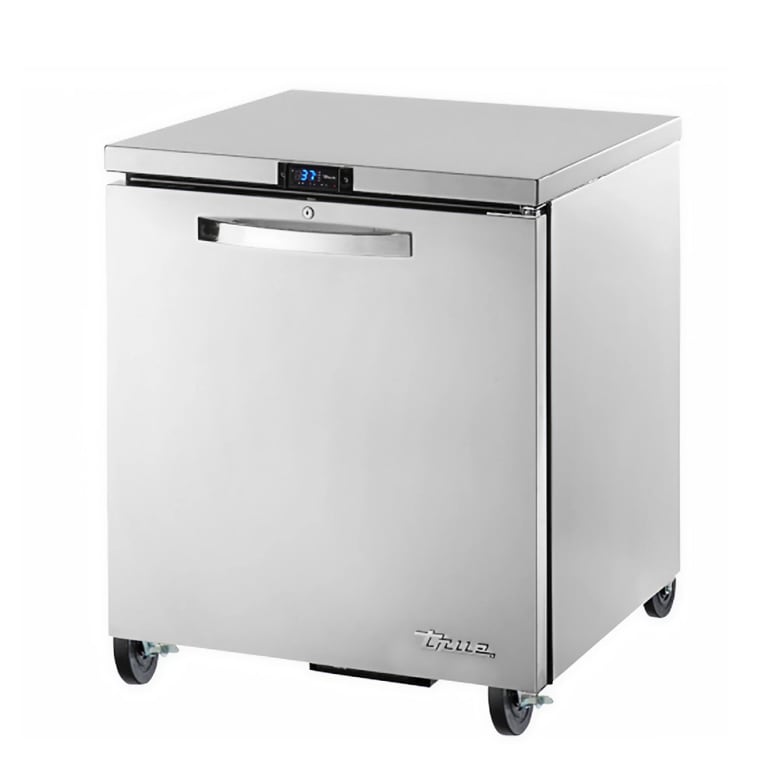
1. Single-Section Undercounter Refrigerator
Undercounters are one of the most versatile small commercial refrigerators available. Most units are approximately 27 inches wide and designed to fit underneath standard 36-inch-high counters or ADA-compliant 34-inch-high counters. Undercounters typically feature stainless steel or aluminum construction with solid, self-closing doors and as many as three interior shelves. They come outfitted with casters or stationary legs.
Best For: Compact general-purpose storage in food trucks or concession stands
Recommended Models:
- Premium: True TUC-27-HC~SPEC3-LP
- Midrange: Hoshizaki VUR27A
- Value: MoTak MUR-28-A
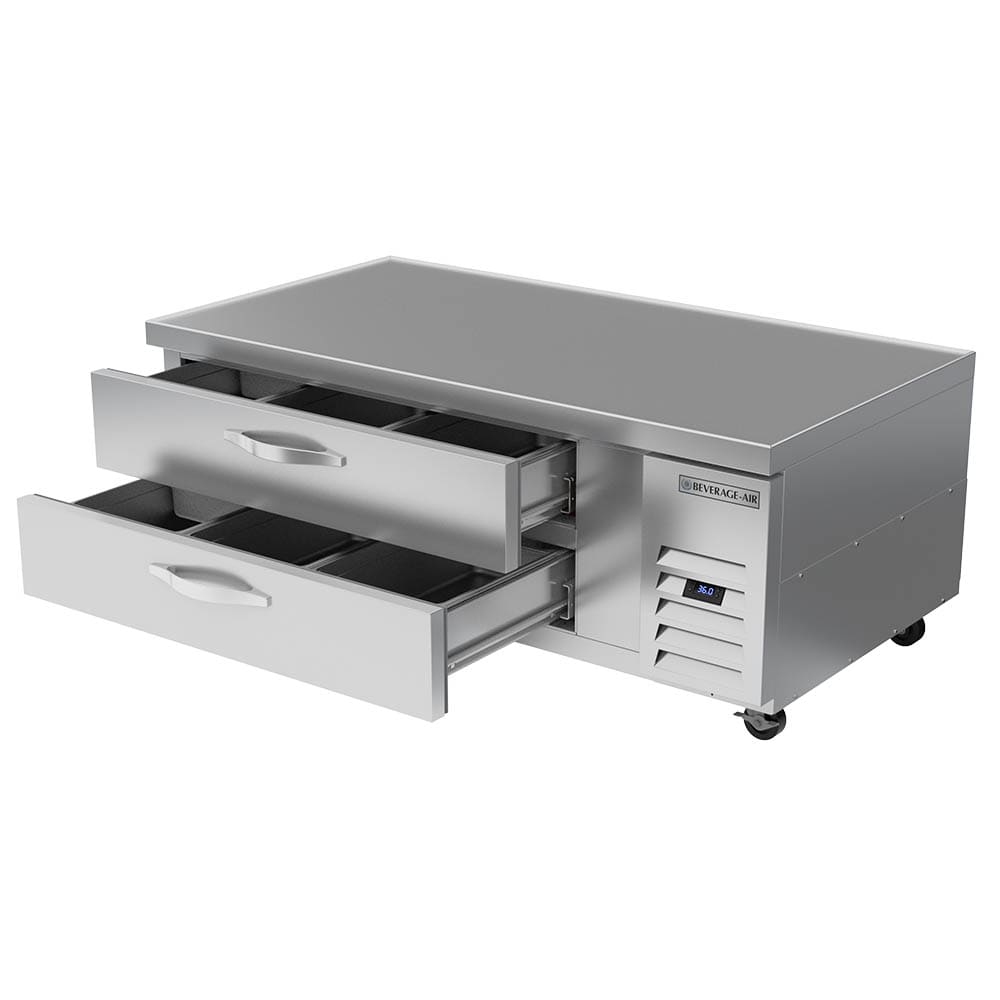
2. Chef Base
Chef bases are short refrigeration units featuring heavy-duty tops capable of holding cooking equipment—ideal for maximizing storage within the cookline. Chef bases can range from 39 to 129 inches wide and come with two or more drawers designed to hold standard food pan sizes. Operators should confirm the manufacturer's equipment weight and heat restrictions before installation.
Best For: Point-of-use ingredient storage under cookline equipment
Recommended Models:
- Premium: Southbend 20084SB
- Midrange: Beverage-Air WTRCS60HC
- Value: MoTak MCBR48-D-X
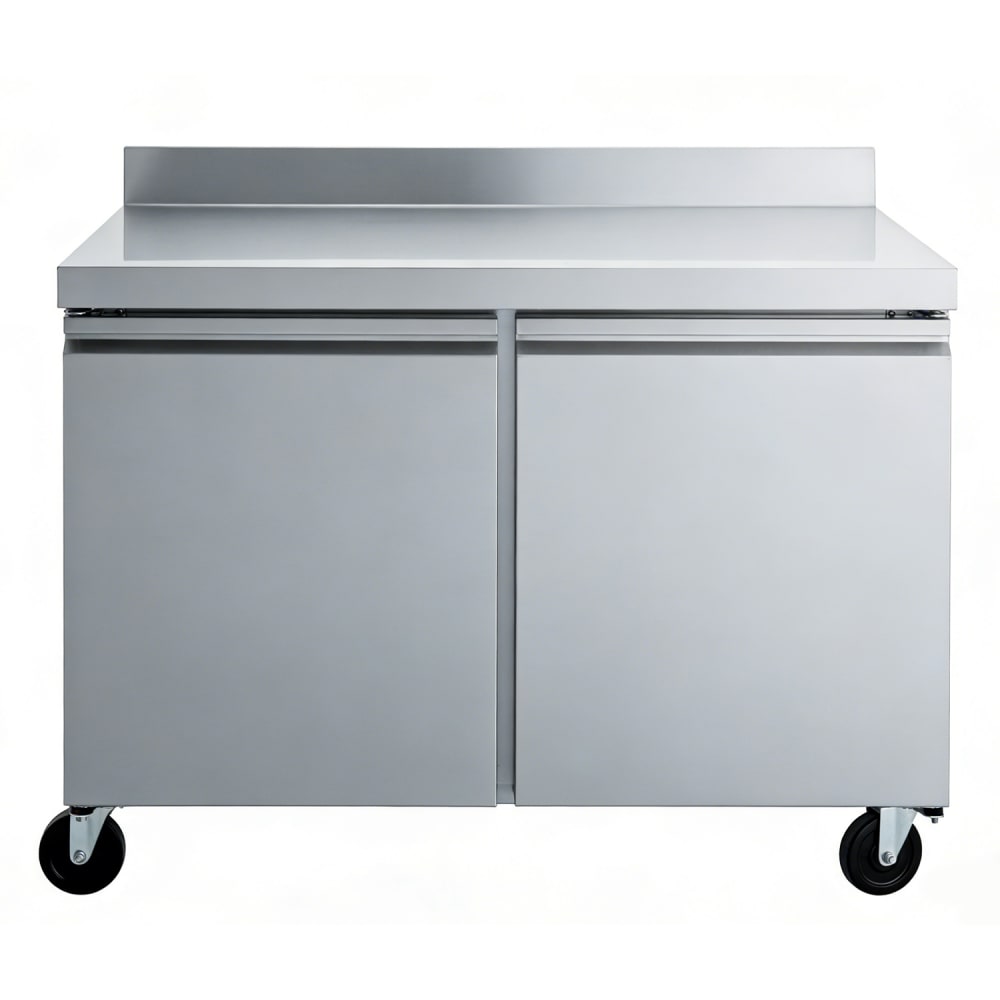
3. Worktop Refrigerator
Worktops have similar cabinet dimensions to undercounter units, but they feature heavy-duty tops designed to support food preparation or light equipment. Worktop refrigerators feature full-width work surfaces with backsplashes to contain spills and debris. They're available in one or more sections with solid doors or drawers.
Best For: Operations prioritizing efficient prep
Recommended Models:
- Premium: Continental DRA68NSSBS
- Midrange: Turbo Air TWR-48SD-N
- Value: 5O7O MEWR48A
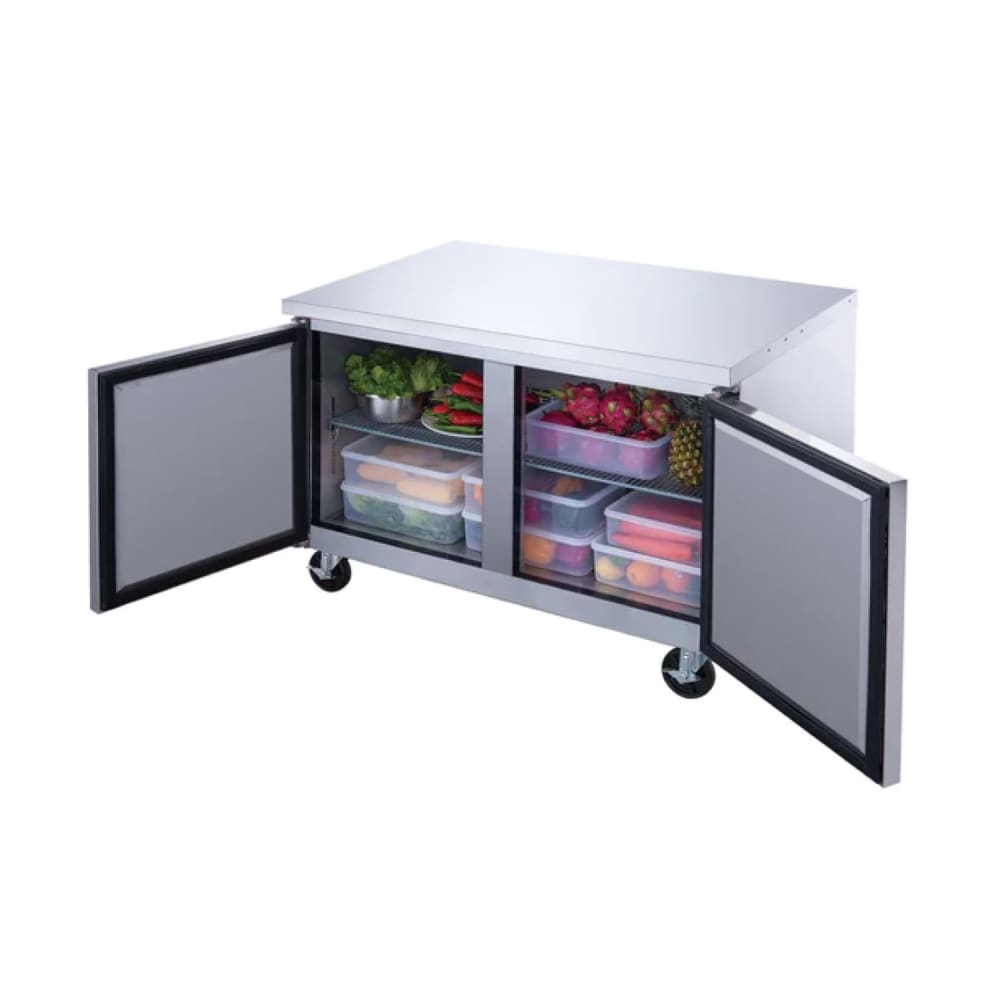
4. Multi-Section Undercounter Refrigerator
Undercounters with two or more sections support a wider range of storage needs and come with independently adjustable shelves. Multi-section undercounters typically include the same features as single-section units, including locking doors, casters, digital controls, and optional drawers that accommodate food pans. Units with right- or left-mounted compressors perform best when the compressor is positioned on the farthest side from cooking equipment, while models with rear-mounted refrigeration systems should be installed slightly away from the wall.
Best For: Cold storage beneath large prep surfaces
Recommended Models:
- Premium: Hoshizaki ULR93B-D6
- Midrange: True TUC-93-HC
- Value: Dukers DUC36R
5. Single-Section Reach-In Refrigerator
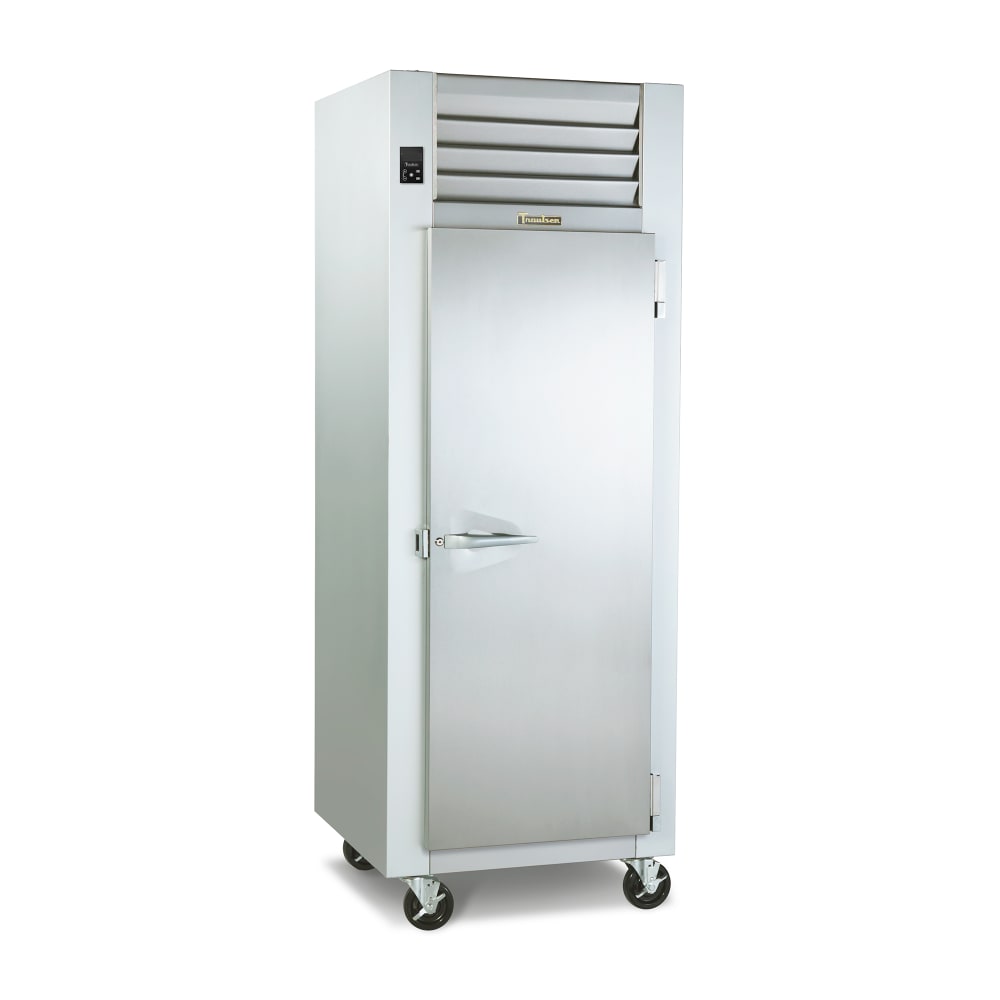
Reach-in refrigerators are used in most commercial kitchens. Single-section refrigerators serve small kitchens well because they're typically between 26 and 36 inches wide with 10 to 30 cubic feet of available storage. Most units can fit through standard doors and are equipped with heavy-duty casters. They come with top- or bottom-mounted refrigeration systems and feature durable racks. Specialized units include roll-in and pass-thru designs, as well as models with Dutch doors.
Best For: General-purpose storage when undercounter capacity is insufficient
Recommended Models:
- Premium: Traulsen RHT126WUT-HHS
- Midrange: True T-23-HC
- Value: MoTak MSD-1DR-BAL-19-X
6. Countertop Prep Rail
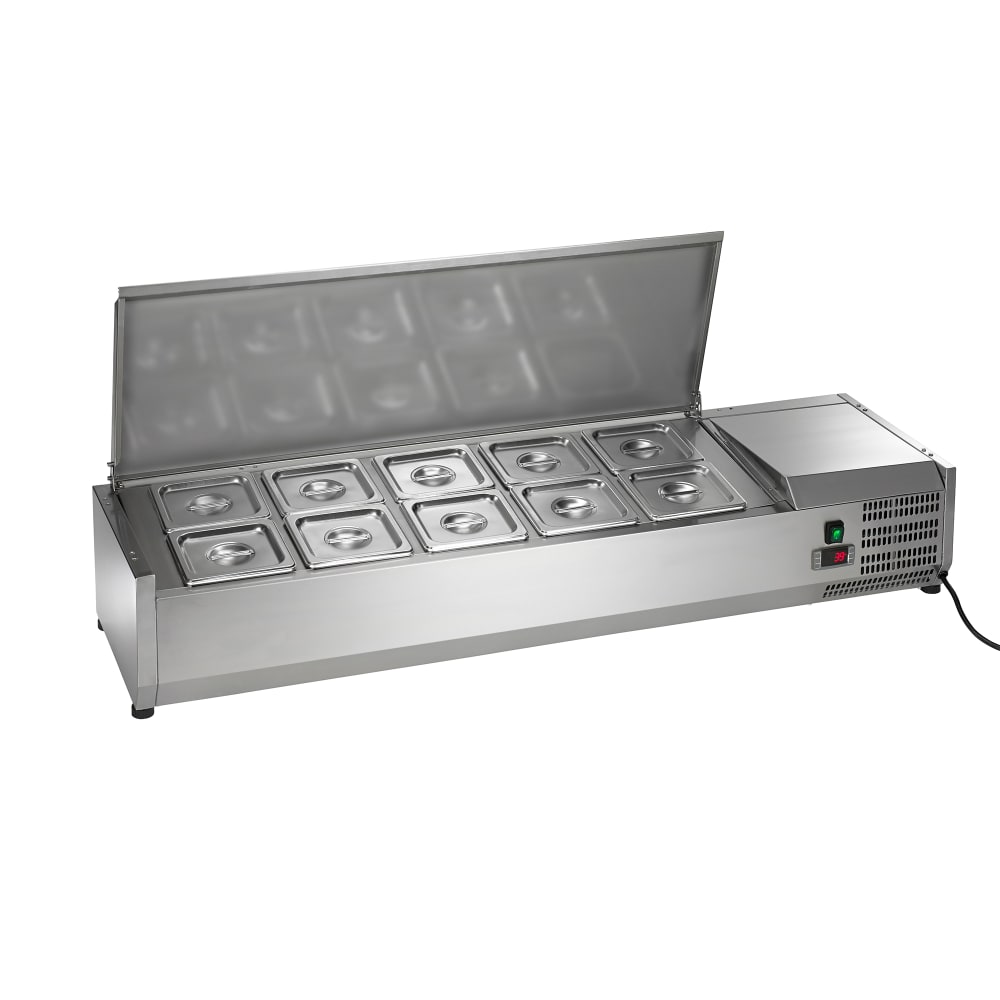
Countertop prep rails are compact units that keep food pans chilled for convenient ingredient access. Models accommodate various stainless steel or plastic food pan sizes, with larger models holding 10 or more pans. Some units come with insulated covers to conserve energy during downtime, while others have sneeze guards that enable customer-facing service.
Best For: Front- or back-of-house sandwich and salad prep stations
Recommended Models:
- Premium: Delfield CTP 8160-NBP
- Midrange: Arctic Air ACP55
- Value: Omcan 46679
7. Standard Prep Table
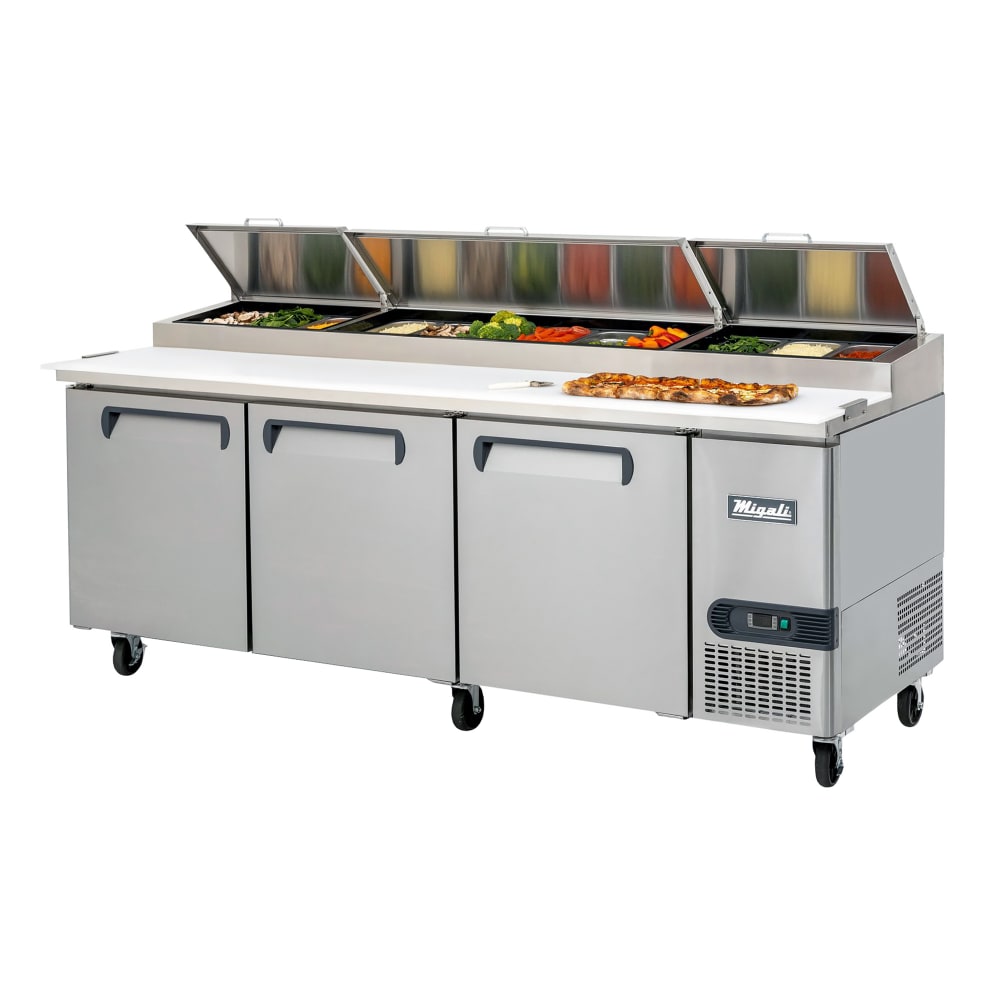
Refrigerated prep tables provide effective workstations for creating sandwiches, salads, wraps, and pizzas. They combine a refrigerated prep rail and cutting board with one to four undercounter-style refrigerated sections, which typically feature doors but may also include drawers. These bases are often filled with ingredients for restocking the prep rail and holding ingredients overnight.
Best For: Efficient ingredient assembly
Recommended Models:
- Premium: Traulsen TS090HT
- Midrange: Migali C-PP93-HC
- Value: MoTak MST-48-X
"A reliable prep station is essential because it supports the pace, organization, and temperature control needed during service." — Vitangelo Recchia, Owner, Bella Napoli Pizzeria & Restaurant; Marra Forni Ambassador
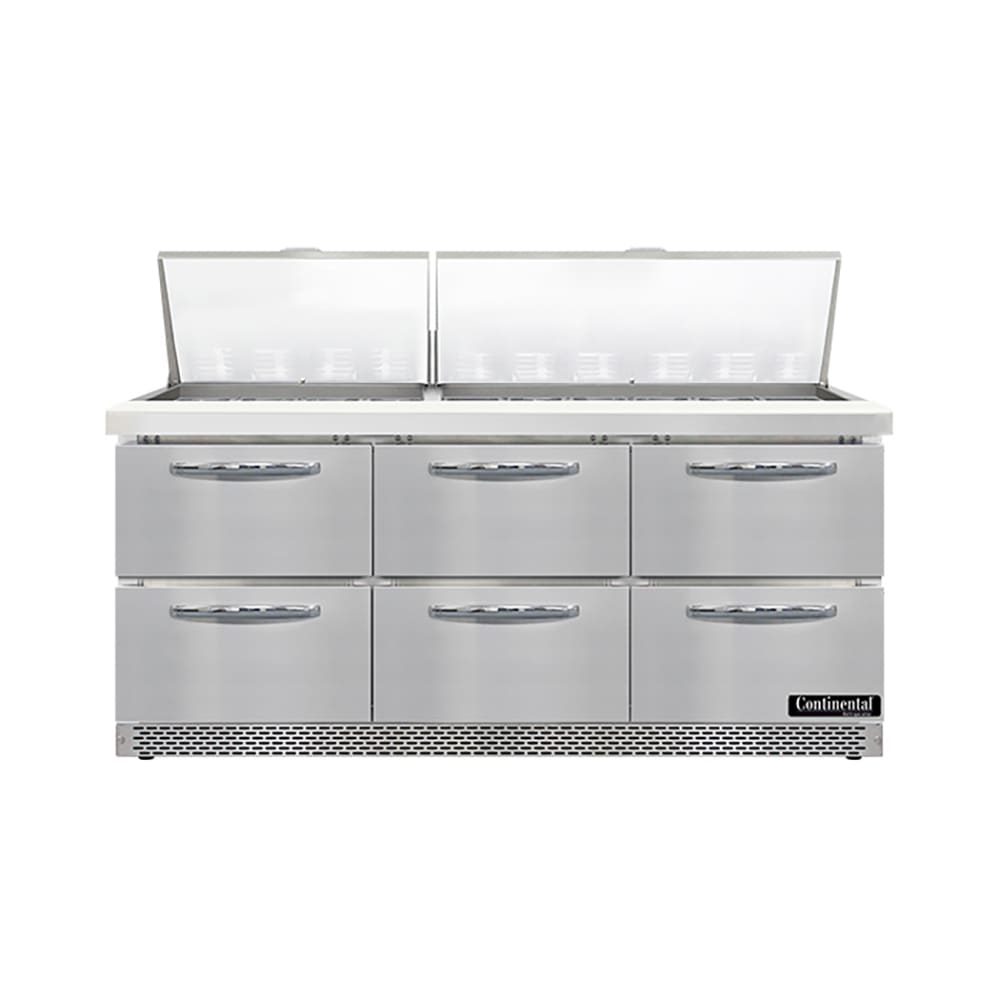
8. Mega-Top Prep Table
Mega-top prep tables have the same refrigerated bases as standard prep tables but feature larger refrigerated rails and shallower cutting boards. While standard prep tables typically accommodate two rows of pans, mega-top units can hold three, providing additional capacity for ingredients. These units are designed for high-volume service, but they aren't well suited for pizza preparation because of their shallow cutting boards.
Best For: High-volume sandwich or salad prep
Recommended Models:
- Premium: Continental SW72N30M-HGL-FB-D
- Midrange: Maxx Cold MXCR60MHC
- Value: MoTak MST-48-18-X
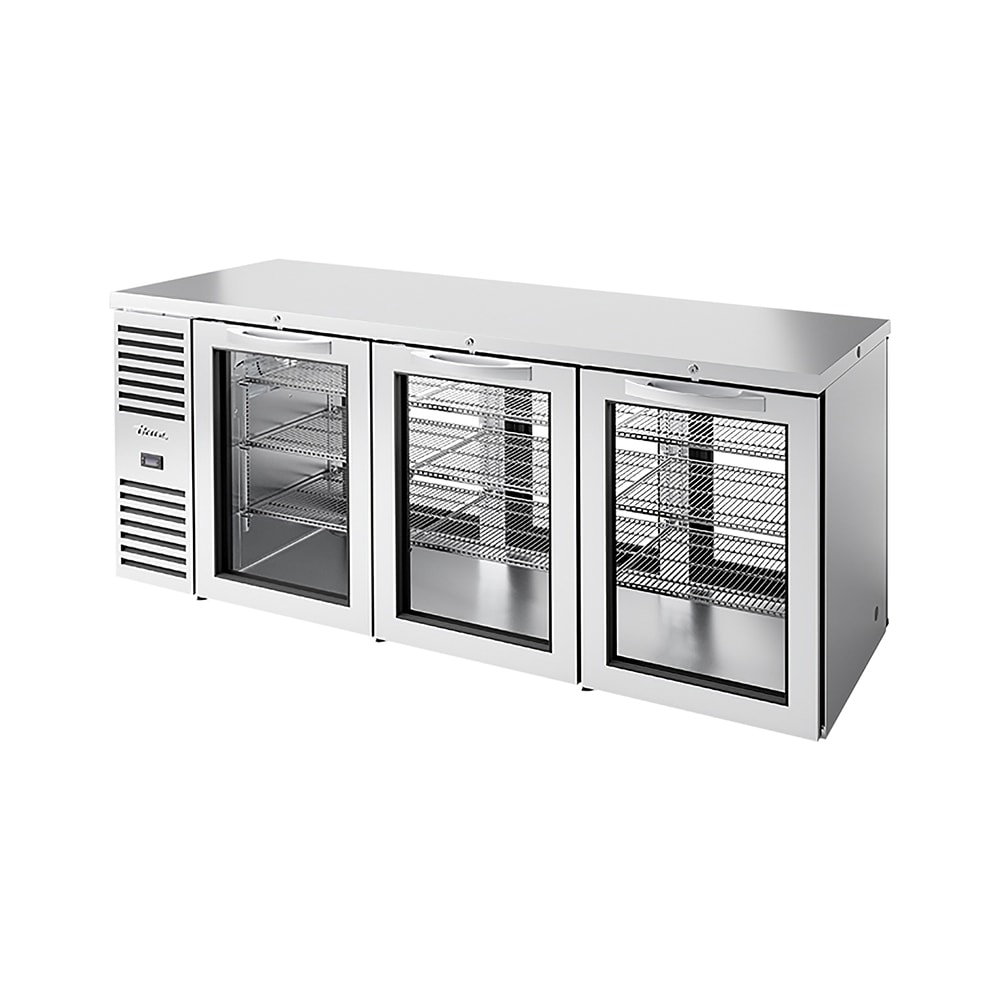
9. Back Bar Refrigeration
Back bar refrigerators store and display bottles and canned beverages in bars, breweries, restaurants, and other beverage-service operations. Their low-profile designs fit beneath counters, while glass doors help employees identify products without opening the cabinet. Related space-saving options include glass chillers and direct-draw beer dispensers.
Best For: Chilled bottle and can storage in beverage-service areas
Recommended Models:
- Premium: True TBR84-PTSZ1-L-S-GGG-GGG-1
- Midrange: Beverage-Air BBN48HC-G-B
- Value: MoTak MBB-2D-60-G-X
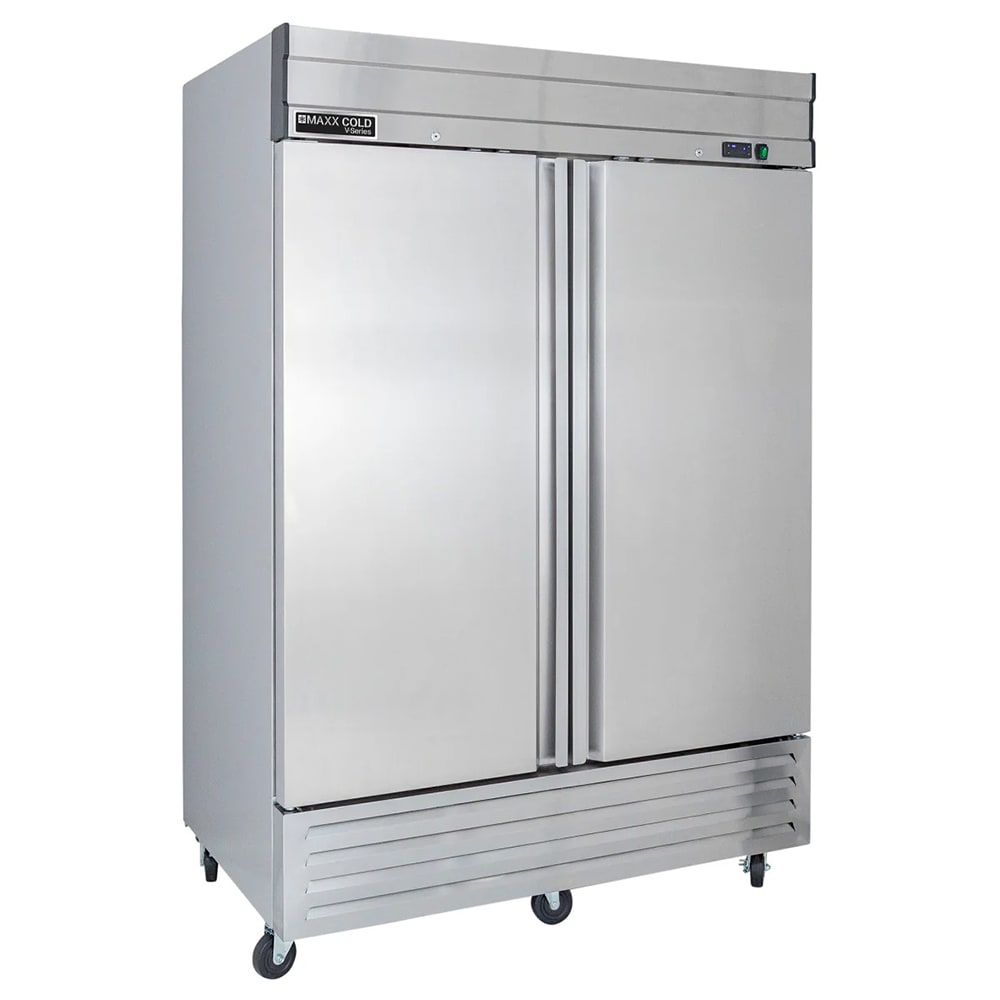
10. Two-Section Reach-In Refrigerator
Two-section reach-in refrigerators hold 40 to 50 cubic feet of storage for high-volume needs. While they won't fit in the smallest of kitchens, they provide ample storage for small- to medium-sized kitchens. Available configurations include roll-in, pass-thru, and roll-thru units with top- or bottom-mounted refrigeration systems.
Best For: Bulk storage in small- to medium-sized kitchens
Recommended Models:
- Premium: Traulsen RET232NUT-HHS
- Midrange: True T-49-HC
- Value: Maxx Cold MVR-49FDHC
Shop All Refrigeration at KaTom
KaTom offers a wide selection of commercial refrigeration equipment designed for kitchens of every size. Explore undercounter refrigerators, prep tables, reach-ins, chef bases, and other space-saving models to find the right fit for your operation.
KaTom's Design + Build team uses advanced CAD programs and in-house installation to help operators maximize their floor plan. A dedicated team of Foodservice Equipment Specialists ensures you find the models that meet your needs.
FAQs About Refrigerators for Small Kitchens
When should operators choose a chef base instead of an undercounter refrigerator?
A chef base is a practical choice when operators need refrigerated drawer storage directly beneath countertop cooking equipment. This configuration keeps frequently used ingredients close to the cookline, but chef bases usually provide less storage capacity than undercounter refrigerators of a similar width. An undercounter refrigerator is generally the better choice when maximizing flexible, general-purpose storage is the priority.
What clearance does a commercial refrigerator need for ventilation?
Commercial refrigerator clearance requirements depend on the location and ventilation design of the refrigeration system. Front-breathing models may require little or no clearance at the sides or back, while side- and rear-breathing units typically need several inches of open space for proper airflow. Always follow the manufacturer's installation instructions and avoid placing the refrigeration system directly beside heat-producing equipment or another unit's compressor.
Are drawers or doors better for compact refrigerated storage?
The best configuration depends on what will be stored in the unit. Doors provide access to open compartments with adjustable shelving and are suitable for containers and ingredients of various sizes. Drawers are often configured to hold standard food pans, providing convenient access to fresh or prepared ingredients at a cooking or prep station.
Are refrigerated prep rails safe for holding ingredients overnight?
Refrigerated prep rails are generally designed to keep ingredients at food-safe temperatures during service. Unless the equipment is specifically rated for overnight storage, operators should cover the pans and move the ingredients to an enclosed refrigerated compartment at the end of the day. Always follow the equipment manufacturer's instructions and local food-safety regulations.
How can operators improve workflow when positioning refrigeration equipment?
Kitchen layouts vary by operation, but refrigeration should generally be positioned to create a clear path between storage, prep, and cooking areas.


