
Bagel Shop Equipment Startup Guide
Bagel shops are experiencing a notable resurgence and expansion across the globe, driven by nostalgia, cultural appeal, and the convenience bagels offer as a quick breakfast item. In 2025, the global market reached $5.89 billion, and it's expected to reach $7.89 billion by 2031.1 Today, bagel shops have evolved to serve breakfast sandwiches, breakfast bowls, and coffee drinks, providing breakfast quickly while appealing to a wide range of tastes.
Opening a bagel shop requires careful planning. Before ordering equipment, operators should define the menu, estimate peak production volume, confirm available space and utilities, and map the full dough-to-service workflow so every purchase supports the operation.
In this article, we'll cover everything a bagel shop needs before the grand opening.
Already planning your space? Talk to a KaTom equipment specialist about equipment sizing, utility requirements, and layout.
Key Takeaways
- Your concept and menu should drive your equipment list, not the other way around
- Size mixers, proofing equipment, boiling equipment, ovens, baking sheets, and cooling racks around peak demand rather than daily demand
- Evaluate gas and electrical capacity, water connections, ventilation, and equipment clearances before signing a lease or ordering major equipment
- Budget for startup costs plus working capital needed after opening
- Use a soft opening to test staff, equipment, and service flow before the grand opening
Bagel Shop Startup Planning at a Glance
1. Decide What Type of Bagel Shop to Open
Your concept affects nearly every equipment decision. A small bagel shop may need compact production equipment and efficient display space, while a wholesale bakery needs high-capacity mixers, proofing cabinets, and ovens.
Before choosing equipment, answer the following questions:
- Who are the target customers: commuters, students, office workers?
- How many bagels must be ready before opening each day?
- Will the menu include cream cheese spreads, eggs, meats, sandwiches, or coffee?
- How many staff members can work comfortably behind the counter during peak service?
- What operational features will distinguish the business from nearby competitors?
- Will the shop offer catering or delivery?
Not sure what equipment your concept requires? Talk to a KaTom specialist before finalizing the equipment list.
2. Research Your Market and Evaluate Locations
Market research helps determine whether the area can support your concept, and location evaluation determines equipment feasibility. A space with good foot traffic may still create costly problems if it lacks sufficient power, drainage, or ventilation.
Evaluating a new space? KaTom Design + Build can help assess equipment layout and site requirements before you make major purchasing decisions.
3. Create Your Bagel Shop Business Plan
A bagel shop business plan should connect the concept, menu, equipment, staffing, and budget into one operating model. The plan should outline how your operation will handle receiving, storage, production, service, and cleaning. Define the menu and expected volume before building the equipment list so purchases reflect the operation's actual needs.
4. Estimate Bagel Shop Startup Costs
Bagel shop startup costs vary widely by location, menu, seating options, and equipment. Instead of relying on a broad national average, build the budget by category and separate necessary opening costs from expenses that can wait.
5. Fund Your Bagel Shop
Funding should cover both opening purchases and the cash needed to operate after opening. A shop that spends every available dollar on construction and equipment may struggle to cover payroll, ingredients, rent, or repairs during the first months of service. Common funding sources include:
- Owner capital
- Business partners
- Commercial loans or SBA-backed loans
- Investors
- Equipment financing or leasing, where appropriate
6. Register the Business and Secure Licenses
Licensing and inspection requirements vary by state, county, and city. Confirm current rules, fees, and application requirements with local agencies and qualified professionals before signing a lease or ordering equipment. Common requirements may include:
- Business registration
- Federal tax identification number
- State and local tax registration
- Foodservice permits
- Health department approval
- Certificate of occupancy
- Fire inspection
- Building permits
- Sign permits
- Mobile vending permits if operating a cart, truck, or kiosk
- Food handler or manager certification
7. Finalize the Menu and Supplier Plan
Determine the menu first, then select equipment that supports it. Plain bagels, specialty bagels, sandwiches, cream cheeses, and coffee each add different production, refrigeration, prep, and service requirements.
Finalize suppliers for flour, yeast, toppings, cream cheese, coffee, bottled or canned beverages, packaging, cleaning chemicals, and replacement smallwares before opening.
8. Design the Layout for Efficient Workflow
The bagel shop's layout should support service speed, quality, safety, cleaning, and restocking. A practical bagel production flow may look like this:
- 1 Mixing
- 2 Sheeting and cutting
- 3 Proofing
- 4 Boiling
- 5 Baking and cooling
- 6 Packaging or displaying
Need help turning your menu and service model into a workable layout? Explore KaTom Design + Build.
9. Build the Bagel Shop Equipment List
Mixers — Match Capacity to Dough Volume
Before buying a mixer, calculate the batch size needed to hit your production goal. Start with projected bagels per batch, dough weight per bagel, number of batches per day, and the amount of time available for mixing. Then confirm that the mixer is rated for the dough type and batch size you plan to run. Consider:
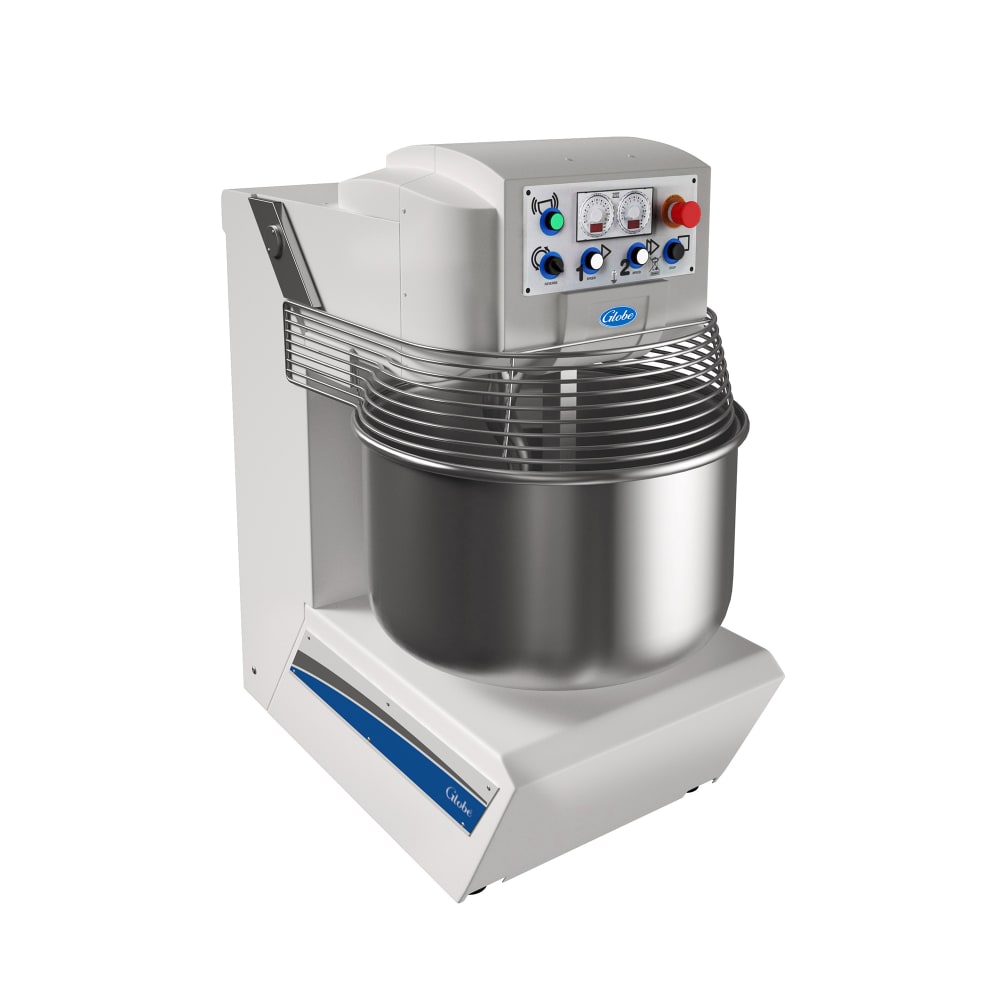
- Dough weight per batch
- Number of batches per production window
- Bowl capacity and usable capacity
- Countertop vs. floor model
- Dough hook or attachment needs
- Voltage, phase, amperage, and plug type
- Clearance for bowl removal and cleaning
For additional guidance on selecting a mixer, check out KaTom's commercial mixers buyers' guide.
Dough Sheeters — Standardize Dough Thickness Before Cutting
Dough sheeters are not required for every bagel shop, but they can be useful when the menu expands beyond traditional handmade bagels. Operations that serve pastries, flatbreads, or other rolled items may benefit from a dough sheeter to improve thickness consistency. Determine these details before buying:
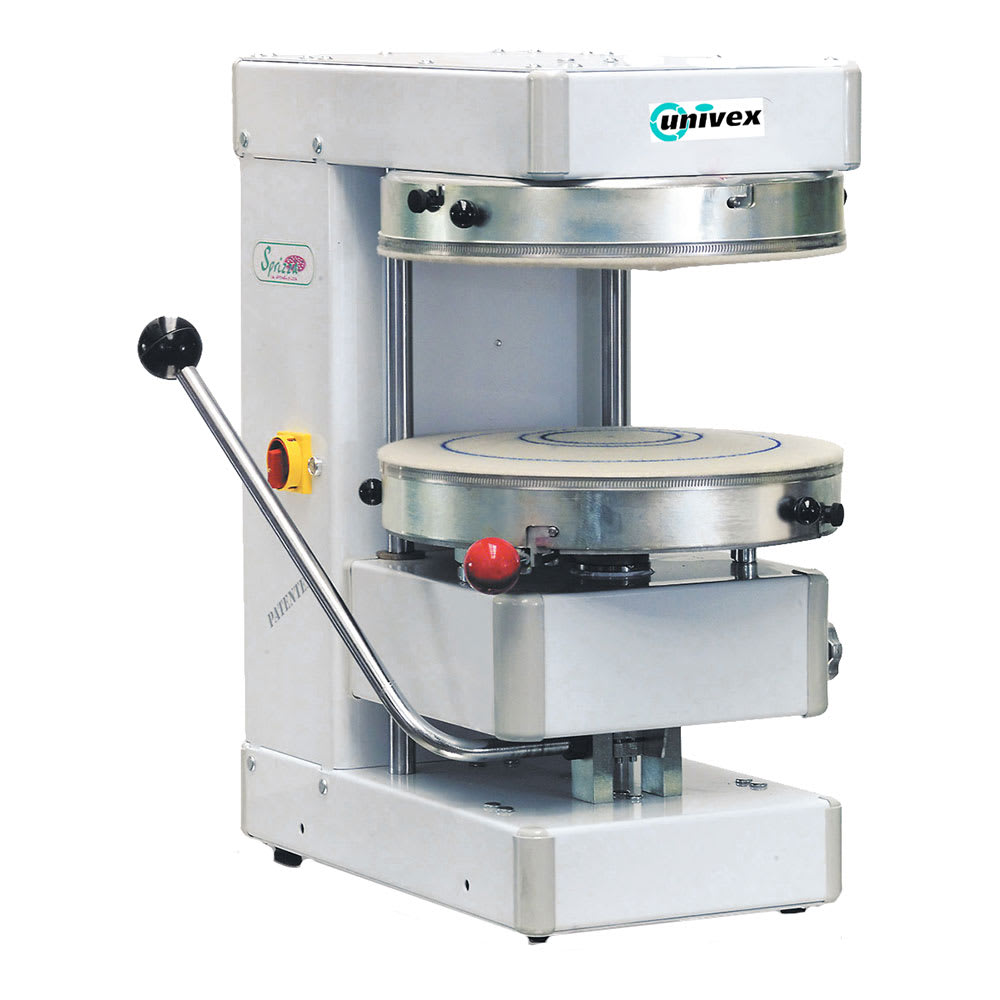
- Product type: Confirm the unit supports the weight and consistency of the dough required by the menu
- Roller width: Match the working width to the size of the dough pieces being processed
- Countertop vs. floor model: Choose based on space, volume, and production layout
- Cleaning needs: Smooth surfaces, removable platforms, and splash-resistant designs support bakery sanitation
- Electrical requirements: Verify voltage, amperage, plug type, and available circuits before ordering
Food Scales — Standardize Dough and Ingredient Portions
Food scales help bagel shops maintain consistent dough formulas, portion sizes, topping amounts, and finished product weights. Even small variations in flour, water, yeast, salt, or dough portioning can affect texture, proofing time, baking consistency, and batch yield. Scales can provide an affordable way to improve repeatability before investing in higher-volume dough preparation equipment.
Choose food scales based on how they will be used:
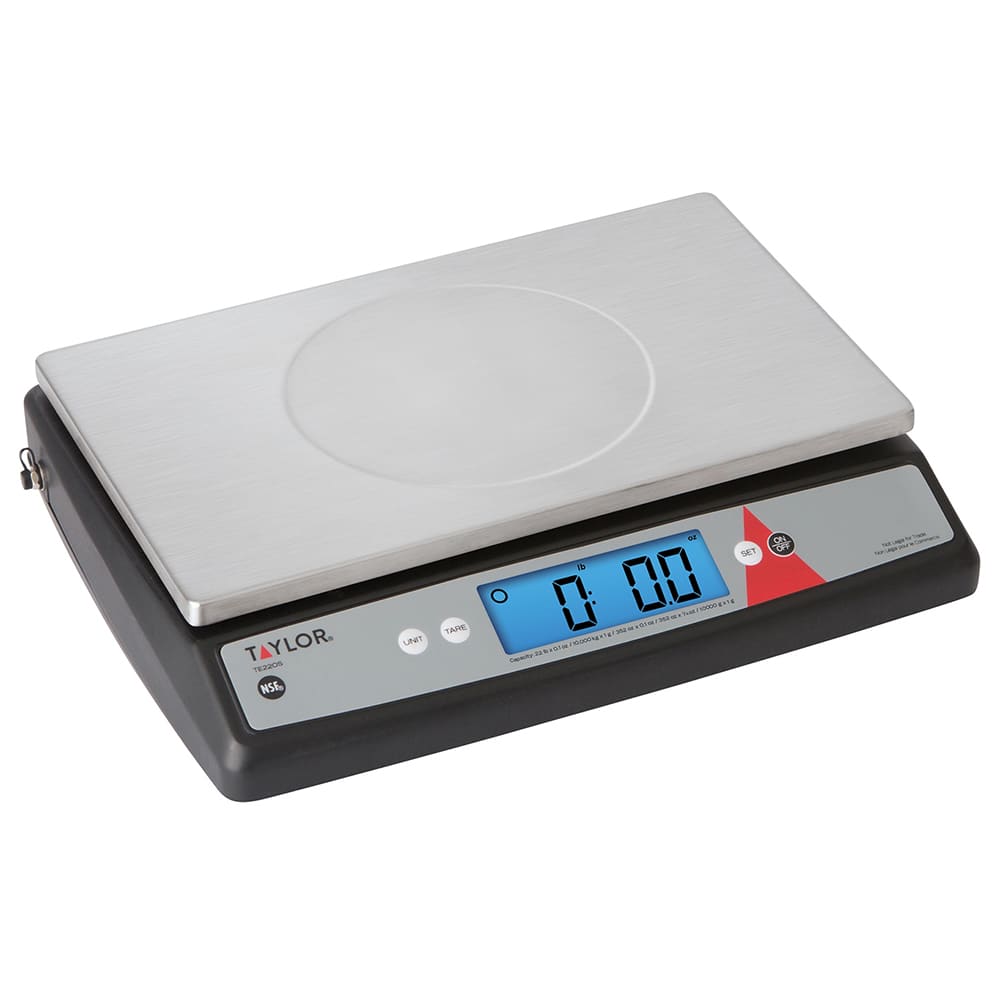
- Ingredient scaling: Select a scale with enough capacity for flour, water, and other bulk ingredients
- Dough portioning: Use a scale with clear readouts and reliable precision for individual bagel weights
- Counter space: Compact scales fit smaller prep areas, while larger platforms support bulk mixing and production
- Cleaning needs: Smooth surfaces, removable platforms, and splash-resistant designs support bakery sanitation
- Power source: Battery-powered scales add flexibility, while electric models reduce battery replacement needs in high-use areas
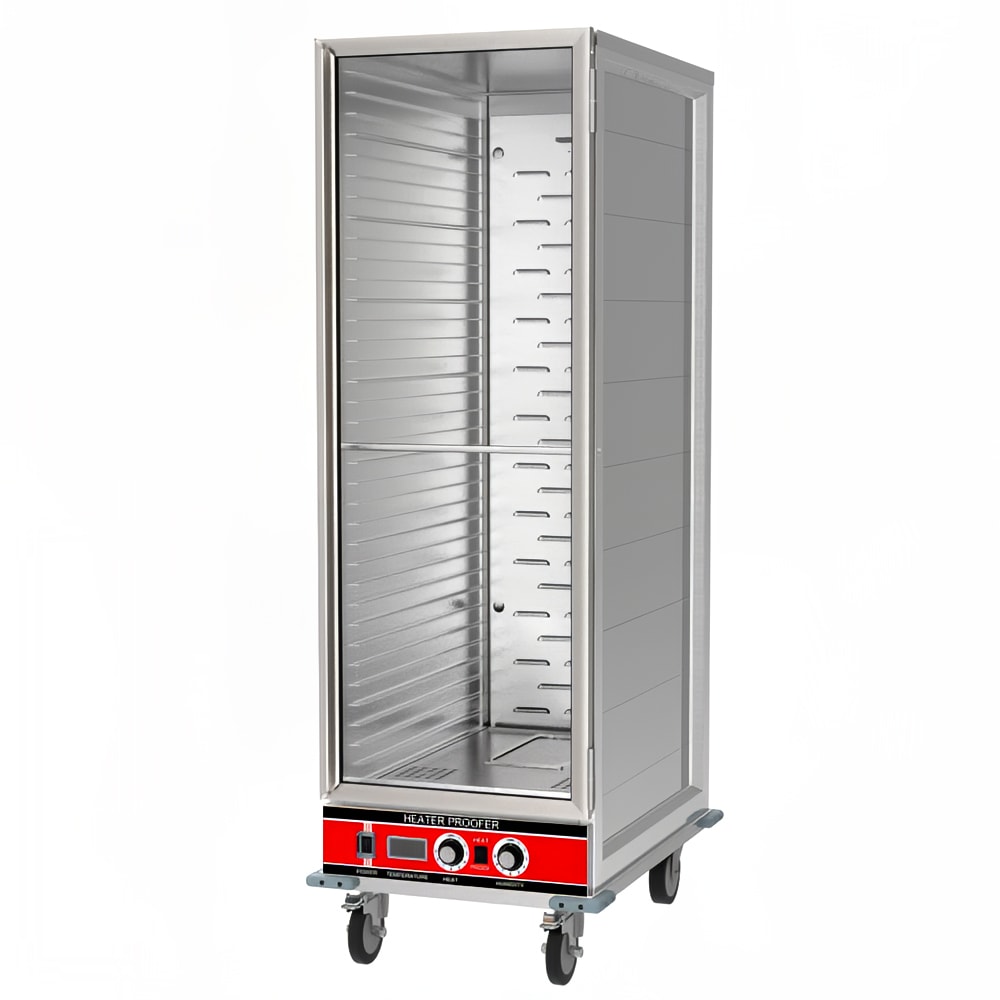
Proofing Cabinets — Control Conditions for Rising Dough
Proofing affects dough texture and consistency. A proofer must hold enough pans to avoid creating a bottleneck. Choose proofing equipment based on:
- Number of bagels that must be proofing at one time
- Pan or box size
- Cabinet capacity
- Temperature and humidity control
- Door style and visibility
- Electrical requirements
- Mobility and cleaning access
Ovens — Keep up With Baking Demands
Operations use different kinds of ovens based on available resources and the desired product. These can include combi ovens, deck ovens, or convection ovens. When evaluating ovens, compare:
- Bagels per bake cycle
- Bake time and recovery
- Pan size compatibility
- Deck, convection, or combi format
- Gas or electric utilities
- Ventilation requirements
- Door swing and loading clearance
- Heat impact on the surrounding workspace
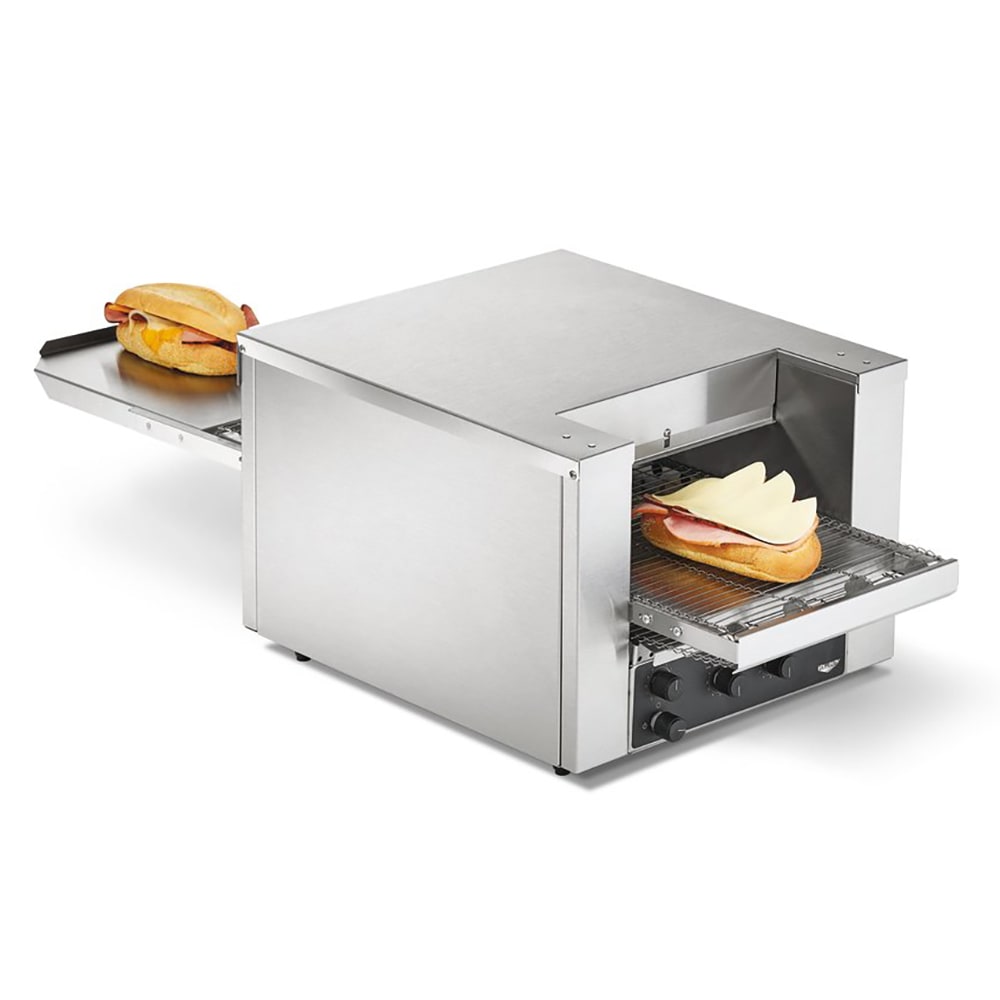
KaTom's bakery oven buyers guide provides additional guidance on selecting an oven for baking.
Toasters — Quickly Toast Bagels During Service
Toasters support consistent, high-volume toasting to help shops keep up with breakfast rushes. Toasters should be chosen based on throughput and available counter space. Consider these factors when choosing toasters:
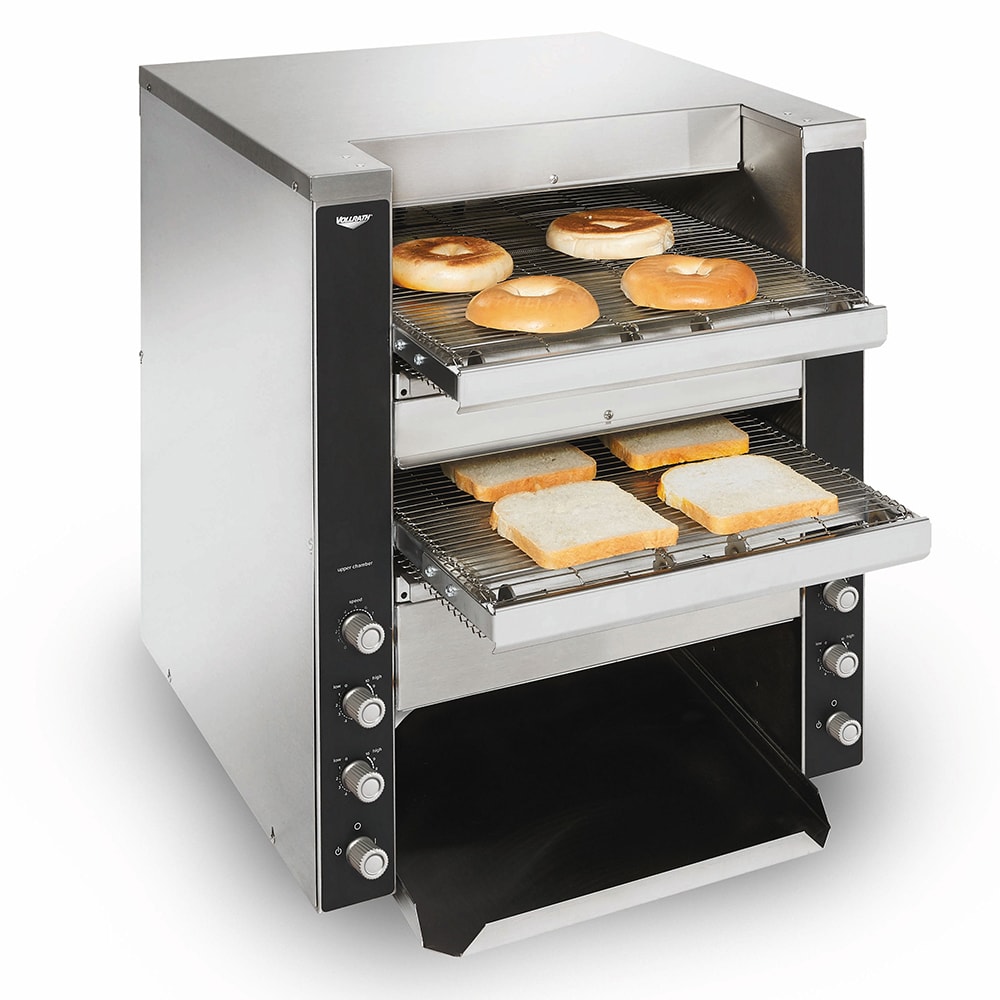
- Peak orders per hour: Size the toaster around the busiest service window rather than average daily traffic
- Bagel size and thickness: Confirm slots, belt clearance, or loading areas can accommodate the shop's products
- Electrical requirements: Verify voltage, amperage, plug type, and available counter circuits
- Heat and clearance: Allow safe space around the toaster, especially near POS stations, packaging, and customer-facing counters
Prep Tables — Support Organization and Assembly
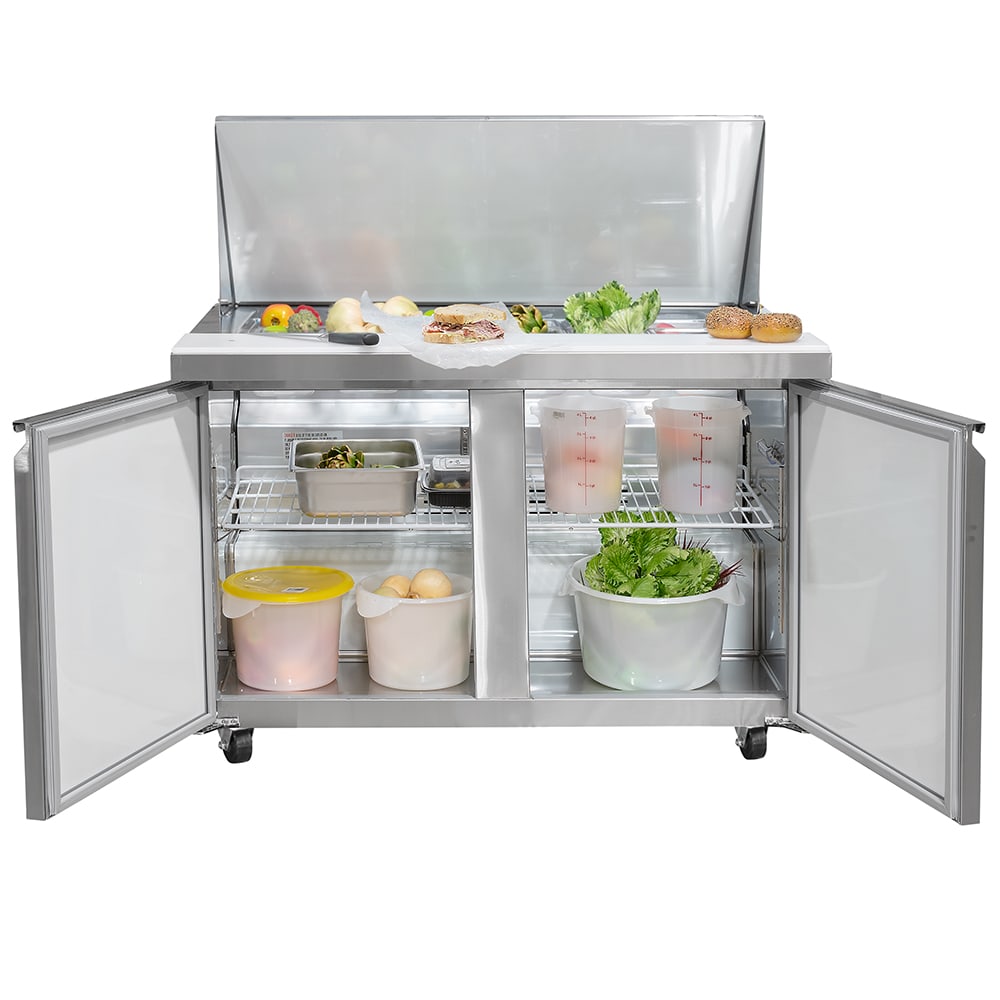
Prep tables provide dedicated space for shaping dough, adding toppings, assembling sandwiches, and organizing tasks. The right table setup helps reduce cross-traffic between production and service areas, especially when staff are mixing, proofing, boiling, baking, slicing, and preparing customer orders all at the same time. Choose prep tables based on where they fit in the workflow:
- Dough preparation: Larger work tables near mixers and ingredient bins support dividing, weighing, and shaping dough
- Topping station: Tables give staff a place to apply sesame seeds or seasonings before moving pans to the oven
- Sandwich assembly: Refrigerated prep tables keep spreads, vegetables, eggs, meats, and toppings close to the service line for streamlined sandwich assembly
- Storage needs: Undershelves can hold mixing bowls, proofing boxes, sheet pans, smallwares, or packaging
Coffee Brewers — Support Hot Beverage Service
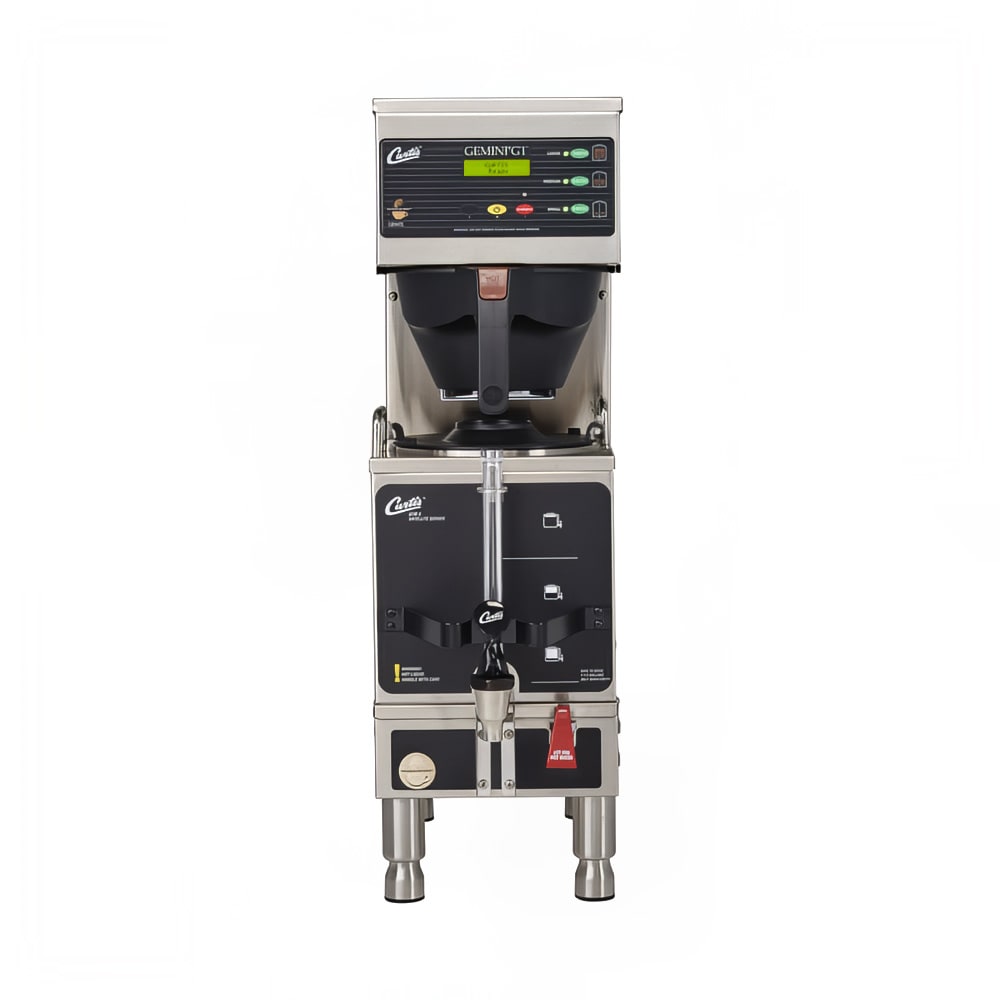
Coffee is a natural add-on for bagel shops. The right brewer should match expected volume and service style. Evaluate coffee brewers by:
- Cups per hour: Size the brewer around peak demand rather than average daily sales
- Water connection: Pour-over brewers offer placement flexibility, while automatic brewers require a water line
- Holding method: Thermal servers and airpots help maintain coffee quality without relying on warming plates
- Electrical requirements: Confirm voltage, amperage, plug type, and circuit availability before ordering
Where to Spend vs. Where to Save on Bagel Shop Equipment
A higher price does not automatically mean a better fit. Prioritize spending where equipment capacity, consistency, and durability affect production, and save where additional equipment capacity or features do not directly support the menu or expected volume.
Don't Order Until You Know
Do not order major bagel shop equipment until the menu, production volume, site conditions, and installation requirements are clear. Know the following before buying:
- Equipment dimensions
- Doorway and hallway clearance
- Voltage, phase, and amperage
- Hood, ventilation, and fire suppression requirements
- Water connections and drain requirements
- Production and capacity requirements
- Local code requirements
- Service access
Not sure whether a unit will work in your space? Ask a KaTom equipment specialist before ordering.
10. Set up Inventory, Technology, and Operating Systems
Before opening a bagel shop, build systems that help staff receive ingredients, prep batches, track sales, and replenish inventory consistently.
11. Hire and Train Staff
Staffing should match both the menu and the equipment layout. Even excellent equipment will not solve problems involving a workforce that lacks proper training. Common roles for bagel shop workers include:
- Dough mixer or baker
- Shaper or prep cook
- Boiling and oven operator
- Sandwich prep staff
- Counter and packaging staff
- Coffee or beverage staff
- General management
Training should cover:
- Recipes
- Weighing ingredients
- Proofing timing
- Bagel boiling
- Oven operation
- Coffee brewing
- Restocking display cases
- Food safety
- Cleaning
- Equipment startup and shutdown
- POS use
- Packaging
12. Market the Bagel Shop and Prepare for Opening
Marketing should begin before the grand opening. A soft opening can help test your operation. Customers may forgive a limited preview menu, but they will remember long waits, missing products, and inconsistent quality. Provide:
- A website with accurate contact, hours, menu, location, and parking information
- A Google Business Profile and other local business listings
- Social media profiles
- Menu and location photography
- Local partnerships and community outreach
- Opening-date promotion
- Email and SMS marketing, where appropriate
Host a Soft Opening
Use a soft opening to test the bagel shop under controlled demand and identify bottlenecks before the grand opening. Run a realistic production schedule and track where delays occur. Test:
- Dough mixing speed
- Proofing timing and cabinet capacity
- Boiling station throughput
- Oven recovery and bake consistency
- Toasting speed and consistency
- Display case restocking
- Coffee brewer output
- POS and payment speed
- Packaging
- Staff communication
- Equipment performance
Bagel Shop Opening Checklist
Use this checklist to track key planning, equipment, staffing, inspection, and opening tasks before launching a bagel shop.
| Task | Complete? |
|---|---|
| Choose a bagel shop concept | |
| Research competitors and local demand | |
| Develop preliminary menu | |
| Determine startup and operating costs; secure funding | |
| Evaluate location and utilities | |
| Register business | |
| Obtain licenses and permits | |
| Secure insurance | |
| Finalize menu and suppliers | |
| Design production workflow | |
| Create supplies and equipment list | |
| Verify equipment specs match available utilities | |
| Order and install equipment | |
| Set up POS and inventory systems | |
| Order and receive opening inventory | |
| Hire and train staff | |
| Complete required inspections | |
| Hold soft opening | |
| Address operational bottlenecks | |
| Host grand opening |
Ready to Build Your Bagel Shop Equipment List?
KaTom can help operators compare ovens, toasters, dough mixers, dough sheeters, stock pots, baking sheets, proofing cabinets, coffee brewers, display cases, and prep tables based on menu, production volume, available space, utilities, installation requirements, and service model. Choose equipment that supports the way the shop receives, stores, prepares, and serves bagels during peak periods.
Frequently Asked Questions About Opening a Bagel Shop
How much does it cost to open a bagel shop?
Cost varies by location, construction requirements, menu, equipment capacity, and service model. Use actual quotes, lease terms, contractor estimates, and local permit costs to build a final budget.
Do bagels have to be boiled before baking?
Traditional bagel production includes boiling bagels before baking them. When planning a bagel shop, account for boiling capacity, water, drainage, ventilation, safety clearance, and workflow between the boiling station and oven.
How do you choose the right mixer for a bagel shop?
Choose a mixer by calculating dough weight per batch, batches per production window, and peak daily output, then confirm the mixer has appropriate bowl capacity, fits the space, and matches available electrical utilities.
What type of oven is best for bagels?
The best oven depends on the product, volume, utilities, and desired baking process. Deck ovens, convection ovens, and combi ovens can all appear in bagel operations, but operators should compare pan capacity, bake time, recovery, energy type, ventilation, and footprint before choosing.
References
- Bagel Market Size & Share Analysis - Growth Trends and Forecast (2026 - 2031). Mordor Intelligence. Accessed September 2026.
