What Equipment Does a Bar Need?
When opening a bar, having the right bar equipment to serve your customers can make or break your business. Running a successful bar doesn't just depend on your drinks; quality bar equipment will help you not only exceed customer expectations but also ensure you are able to meet health codes and regulations to keep your doors open. Below, we cover all the major types of bar supplies and equipment to help you choose the best fit for your operation.
Refrigeration
Bar refrigeration spans a wide range of products, including bottle coolers, glass chillers, and draft beer systems. These item keep drinks properly chilled and allow staff to serve popular draft beer and wine, so finding the right refrigeration equipment is essential to a bar's success.

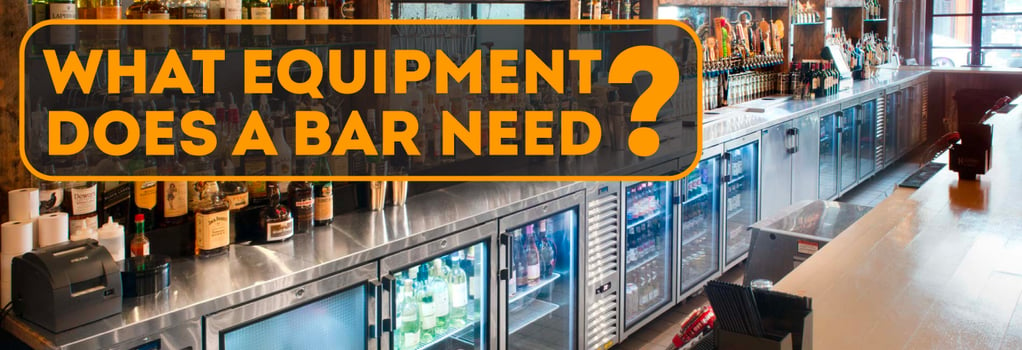
Back bar coolers are undercounter refrigerators made for holding bottles or cans. They can have one to three sections with solid or glass doors that swing or slide open. The size of the unit determines how often items need to be restocked, but the stocking process can be streamlined with a pass-through option featuring doors on both sides. Such models can even be restocked from a walk-in cooler on the other side of a wall in the bar.

Finding the right draft beer system is essential to bars serving craft and domestic beer. The dispenser's storage capacity, columns, and taps determine how many beers a bar can serve and how many kegs can be kept close at hand. Some draft beer systems include a refrigerated section perfect for storing your most popular cans and bottles close for easy serving. Draft systems that pipe in beer from kegs stored in a walk-in cooler also are available.

Bottle coolers can be purchased with or without refrigeration systems. If you'll be serving outdoors or just want mobility, you may be better off with a model that cools drinks with ice instead of refrigeration, as some refrigerated units don't work as well outside. These coolers allow you to store beer by the case and are generally rated by how many bottles they can hold. Larger models can hold roughly 40 cases of bottles and more than 50 cases of cans.

A glass chiller lets you serve drinks in frosted glasses, keeping the drinks cold longer. Units that open from the top or front are available, and these are generally rated by how many mugs the chiller can hold. Freestanding units can typically hold more than 200 glasses while countertop models chill one glass at a time.

If you plan on serving wine, you may also need a wine cooler. Wine coolers hold bottles at optimal serving temperatures with most models featuring glass doors that let the unit double as a merchandiser. Some units have more than one zone that allows you to hold both white and red at different temperatures simultaneously. There are full-size and undercounter options available.

Like draft beer systems, wine kegerators dispense wine from one or two taps. You should determine how much wine you expect to serve to settle on the capacity, columns, and taps you need. These units can hold one to eight kegs and are available with several exterior finishes including stainless and black-coated steel.
Ice Makers & Ice Bins
Ice makers come in several configurations, ensuring you'll be able to find the best fit for your needs. When purchasing an ice maker, you should consider how much ice you need each day, the ice shape that best fits your drinks, and how much room you have for an ice machine.
To determine how much ice your bar requires, simply calculate how many seats it has – on average, you should allot 3 pounds of ice for each customer. Multiply the number of seats you have by three, and you'll end up with the number of pounds you'll want your ice machine to produce daily. If you end up with an odd number, you'll want to round up to be on the safe side.
Ice machine heads and bins can be bought as a pair or purchased separately. You can choose to purchase a larger ice maker bin separately if you'll use most of the ice at one time because more storage will be required to hold all the prepared ice until it's time to serve it. Alternatively, you may need a high-production head with a smaller bin if you'll be using ice at a steady pace throughout the day. Make sure your ice machine head and bin are compatible if you choose to purchase them separately.
Ice comes in several shapes: full cube, half cube, flake, nugget, crescent, and gourmet. Flake ice is especially popular for blended drinks since it breaks down easily, while nugget ice is a favorite with some customers because it's chewable and takes on the flavor of the drink. While half-cube, full-cube, and gourmet ice aren't typically used for blended beverages, half and full cubes are the most popular for cooling soft drinks. However, gourmet ice is growing in popularity in bars, particularly for those wanting to provide a unique presentation of high-end liquors, which may also yield higher profit margins with larger ice.
When determining how much space you have for an ice machine, you need to consider both footprint and vertical space. While full-size ice machines produce more ice on average, undercounter machines are available that can still provide high-volume production. Keep in mind that these machines require clearance for air circulation with those needs varying by machine. Each model has a stated clearance requirement, which may be on any or all of the four sides, so be sure you can accommodate that clearance in addition to the size of the machine.
Once you've picked the perfect ice machine, you'll need somewhere to store the ice it produces. In most bars it's helpful to have a bar ice bin. A bar ice bin allows your bartenders to keep ice close so they can make drinks quickly. Bar ice bins are either dropped into a countertop or are stand-alone models on legs; they can hold between 23 and 180 pounds.
While some bar ice bins are just a bin with a drain in the bottom, others are built with features that make them especially useful. Some may have a speed rail on the front, bottle storage on the side, or a blender shelf. Bar ice bins typically come with covers, which are available on hinges or in a sliding configuration to best suit your needs.
Drinkware
When your customer orders a drink, nearly as important as the drink itself is the drinkware it's served in. Because your customers will be touching and holding drinkware, it's important to ensure it leaves a good impression. In some cases, the glass can even enhance the flavor of the drink being served, so having the right kind of glass can make a big difference in how your bar is perceived.

Bar drinkware is available in glass or plastic variations. Plastic options vary from clear, heavy, glass-like materials to lightweight, colorful cups. Some local regulations restrict the use of glass in bars, especially in establishments serving customers outdoors, so plastic drinkware is a great option for those locations. Plastic is also a viable option for operators simply wishing to avoid broken glass.
Glass drinkware is usually clear, though some feature a splash of color. While glass is more fragile than plastic, these glasses are durable enough to withstand commercial use. Glassware can also add an upscale feel to your establishment that plastic can't.
It's important to note that many cocktails, liquors, and wines are typically served in a specific type of glass, so you may want to have an idea of your menu before shopping for these items. Some beers can be served in an all-purpose pint glass, but if you're serving craft beers, you can enhance the experience by providing glasses made to complement each type of beer.
Blenders
If you plan on offering blended cocktails at your bar, you will need a blender to crush the ice and combine the ingredients of the drink. There are two main types of blenders to choose from: bar blenders and spindle mixers. Spindle mixers are great for creating a froth for sour drinks. Additionally, these mixers are capable of whipping fresh cream if you prefer to make your own whipped cream for liqueur coffees and other sweet cocktails.

Bar blenders come in several options to meet low- and high-volume needs. The containers range from 32 ounces to 11⁄2 gallons and are available in stainless steel, clear plastic, or glass. While stainless steel is the most durable option, many bartenders prefer to be able to see into the container for more control over the drink. Other features, such as pulse and timer options, can streamline operation. Many bar owners prefer blenders with a sound enclosure to reduce noise disruptions and prevent disturbing customers nearby.
Bar Glass Washers
Whether you plan to wash your bar glasses in a warewasher or by hand, there are glass washers to help your glasses sparkle. If you are washing by hand, a glass brush can help you reach inside the glasses to be sure you have removed all debris. Most of these models have suction cups, allowing them to stay firmly in place as you clean.
Another option is an undercounter or countertop glass washer – a type of dishwasher specially made for washing glasses. Some of these are rotary style, meaning the glasses rotate in one side and out the other, while others have a door that opens from the front and allows you to slide a glass rack in. These are available with high- or low-temperature sanitization, and usually feature built-in chemical pumps.
Bar Sinks
Bar sinks streamline your workflow and help keep your operation up to health department codes. Compartment sinks can have anywhere from one to four compartments and often have drainboards on one or both ends. These provide a place for you to wash dishes and, depending on the number of compartments, may have one or two faucets. Most compartment sinks for bars are made at underbar height to seamlessly fit your setup.
Hand sinks must be provided by law in most locations. These sinks can be drop-in sinks or standalone, with the latter on legs or with storage included underneath. Speed rails, soap dispensers, and other accessories make the sinks more convenient and easy to use, encouraging frequent handwashing.
Bar Matting
Bar matting includes liners for storage shelves as well as raised bar mats. Bar and shelf liners generally promote drainage and are available in several colors to aid in organization or match your bar's decor. These come in several shapes and sizes and may be rolled so you can cut the liner to fit the surface you're using.
Bar mats are raised mats meant to go on the bar to collect small spills and prevent glasses from skidding. These are available in small drip-tray sizes and in long strips meant to span the length of the bar. Some also go on serving trays for a nonslip surface.
Bartending Supplies
Bartending supplies help your bartenders make drinks more efficiently, ensuring they're providing your customers with the best-tasting drink possible. While many of these items are small, most are essential for a successful bar.

Liquid pourers help bartenders with portion control, which prevents waste and ensures drinks have a consistent amount of alcohol. These can also prevent spills to minimize messes.

For any mixed drink, your bartender may need a cocktail shaker. Cocktail shakers help your bartenders mix and chill a drink, then pour it while straining out the ice. These are available in stainless steel and plastic.

A bar garnish caddy keeps garnishes as well as straws, napkins, and stirrers close by. These are typically utilized behind the bar, though they can also be placed on countertops for customer access.

Even if every beer you stock has a screw-top, a bottle opener is usually faster at the disposal of a skilled bartender. Bottle openers can save time and improve the work flow of serving bottled drinks.

Pour bottles, or store-and-pour units, let you customize your own storage system for drink mixes and make it easy to convert the bottles from ready-to-serve to ready-to-store.

Strainers and funnels can streamline the bartender's job. A strainer enables them to pour just the liquid while straining out ice or herbs, and a funnel helps direct the pour to prevent messes.

Bar towels are available in several colors for organization. These are soft, absorbent towels for cleaning spills and messes on the bar counter or on table tops throughout your bar.

Ranging in size from 1⁄2 an ounce to 2 ounces, a jigger helps measure appropriate amounts of liquor. Though they are commonly used to serve small pours, shot glasses also help bartenders measure liquor.

Glass rimmers help your bartenders easily garnish glasses for cocktails with salt or sugar. Most rimmers have at least two sections, one of which contains a sponge to hold lime juice or other liquid to help the salt or sugar adhere.

Bar spoons enable bartenders to mix drinks by hand, while muddlers can help add flavor by crushing the herbs or fruit included in the recipe. Bar spoons are typically made of stainless steel and muddlers are available in wood and stainless steel.

If your bar offers wine, several wine service supplies are needed such as corkscrews and foil cutters, coasters, and decanters. These supplies can enhance your bar's wine service while providing adequate storage for wine bottles.

Ice molds are an efficient way to get your desired ice shape. These molds, along with other bartending supplies such as cutting boards and bottle cap catchers, can help make your bartenders' jobs easier.
Liquor Storage

To provide your customers with a diverse selection, you will likely need to keep many different liquor bottles behind the bar. A liquor display can hold a few to a few dozen bottles of liquor to simultaneously store and merchandise stock. Most of these displays are in tiers to best showcase the bottles, and some are lighted to help draw eyes to your offerings. A speed rail holds fewer bottles, though it can be mounted on the counter's front to keep your most popular liquors within reach.
Wait Service Supplies
To provide your customers with a diverse selection, you will likely need to keep many different liquor bottles behind the bar. A liquor display can hold a few to a few dozen bottles of liquor to simultaneously store and merchandise stock. Most of these displays are in tiers to best showcase the bottles, and some are lighted to help draw eyes to your offerings. A speed rail holds fewer bottles, though it can be mounted on the counter's front to keep your most popular liquors within reach.
Wait Service Supplies
If your bar offers table service, wait service supplies are a necessity. A hostess station can be a nice touch in an upscale bar, so your hostesses have a space to greet customers and store menus. A waitress station is generally a little larger, featuring more storage for cups, cleaning supplies, and pitchers of drinks.
To transport food and drinks from the kitchen or bar to your customers, you'll need serving trays. These are available in an assortment of colors and materials to ensure you can find a tray to match your decor. Many trays also feature a nonskid bottom or cork liner to make transporting items as easy as possible. Check presenters and tip trays give customers an easy way to pay and enable your servers to provide quick change.
