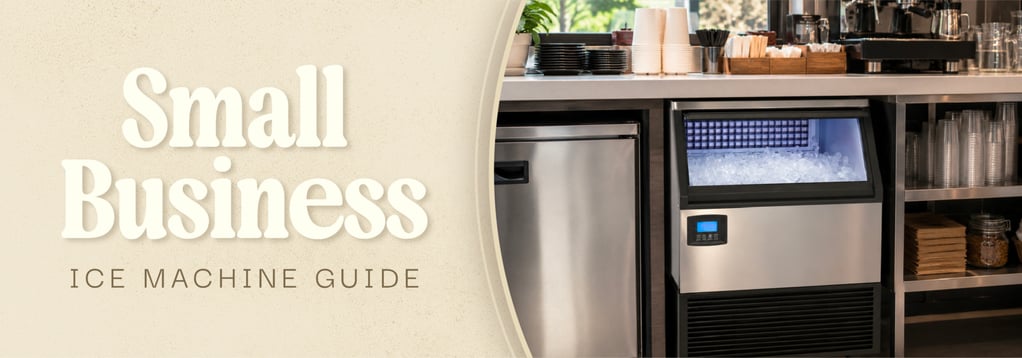
Commercial ice production ratings are measured by how many pounds of ice the machine produces within a 24-hour period under ideal operating conditions.
Daily Ice Production
| Business Type |
Estimated Daily Ice Usage |
Why Demand Varies |
| Coffee Shops |
50 to 100 lbs. |
Iced coffee, tea, cold brew, and blended beverages increase daily demand |
| Small Restaurants |
150 to 400 lbs. |
Lunch and dinner beverage service quickly increases ice consumption |
| Bars |
300 to 700+ lbs. |
Cocktails, mixed drinks, and peak evening traffic drive heavy ice usage |
| Offices |
20 to 75 lbs. |
Beverages for employees and breakroom use typically require lower production |
| Convenience Stores |
100 to 500 lbs. |
Fountain drink stations and customer traffic can increase demand |
"I think some of the biggest problems we see on our end with ice makers is choosing too small of a machine. If anything, I would err on the side of going bigger, just in case. Smaller can always be a problem." — David Hyttel, Vice President of Sales, ITV Ice Makers
Storage Capacity
Storage bins should hold enough ice to support peak service without running empty too quickly or forcing the machine to constantly refill the supply.
Ice Type
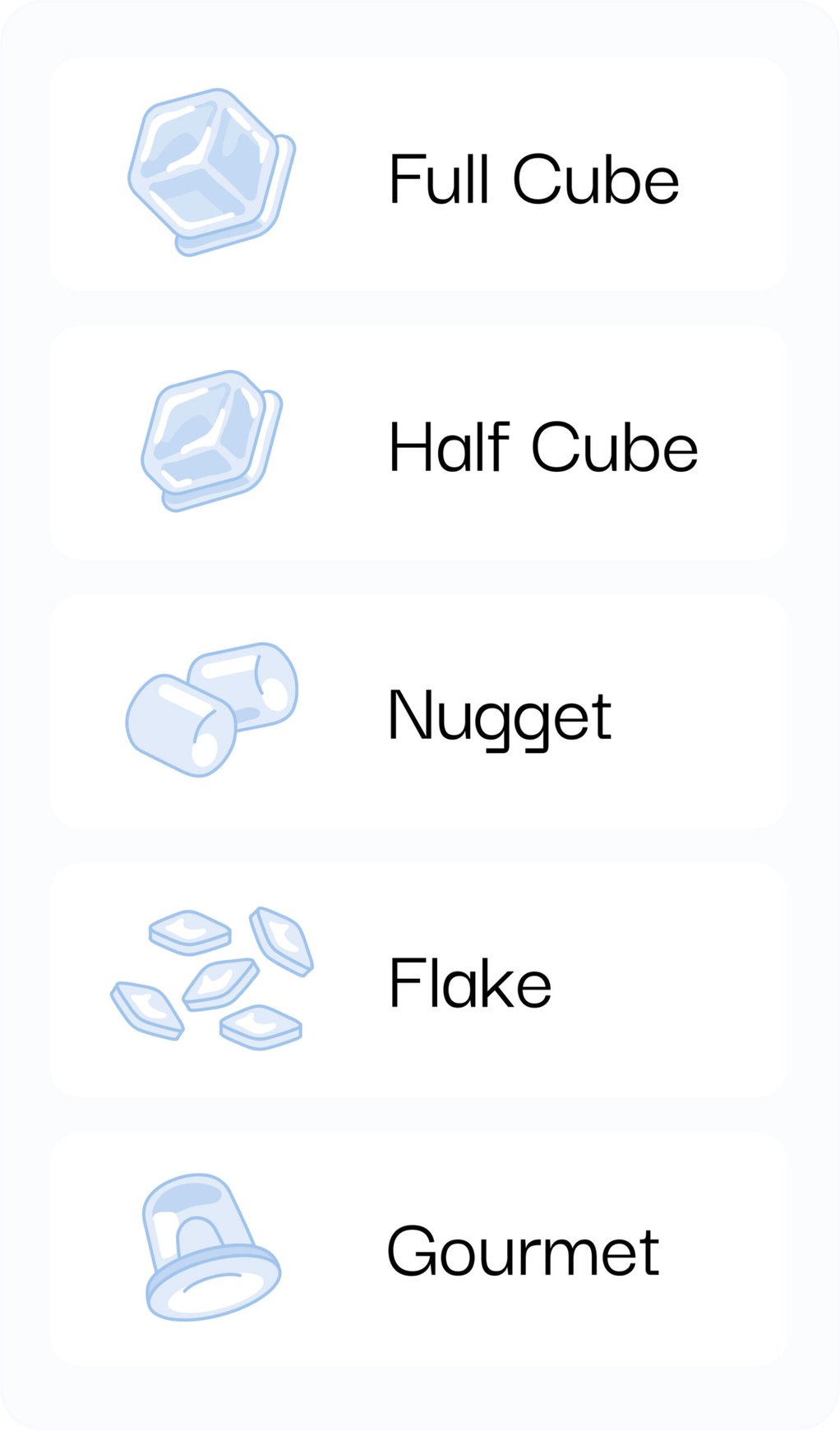
Different ice styles are designed for specific uses, affecting beverage presentation, cooling performance, and customer experience. Choosing the right ice type helps operators match ice production to their menu offerings, from blended drinks and cocktails to self-serve beverages and food displays.
- Full cube: Best for sodas, cocktails, and general beverage service because it melts more slowly
- Half-cube: Best for high-volume beverage service because it packs efficiently into cups and dispensers
- Gourmet: Best for upscale beverage presentation, cocktails, and premium service environments
- Nugget: Best for iced coffee, specialty drinks, healthcare settings, and self-service stations because it's soft and chewable
- Flake: Best for product displays, rapid cooling, and applications where ice needs to mold around items
"You can fit more ice in a half cube. A half cube will have more ice in it than the full cube. The half cube will have less fluid, more ice. A full cube will have more fluid and less ice just because it seats differently. It's a better cocktail cube where you don't get that quick melting of the ice." — David Hyttel, Vice President of Sales, ITV Ice Makers
Ventilation and Space Requirements
Leave enough space around the machine for airflow, cleaning access, and routine maintenance for consistent ice production. Pay attention to the location of the machine's air vents.
Air-Cooled vs. Water-Cooled Systems
Air-cooled ice machines are a common choice for small operations due to their straightforward installation and lower water usage. Water-cooled models may perform better in hot environments but often have higher utility costs.
Find the Best Commercial Ice Machine for Your Small Business at KaTom
Explore KaTom to find ice machines or contact our foodservice equipment specialists to choose the best fit for your operation. Selecting the best ice machine for your operation depends on production needs, ice type, space, and maintenance.
Small Business Ice Maker FAQs
What type of ice is best for small businesses?
Full cube and half cube ice are the most common options for small businesses because they work well for standard beverage service and cool drinks efficiently. Nugget ice is popular in cafes and self-service beverage stations, while gourmet ice is commonly used for upscale cocktails and specialty drink service.
How often should a small commercial ice machine be cleaned?
Most commercial ice machines should be cleaned and sanitized at least every six months, though high-volume operations or hard water conditions may require more frequent maintenance. Regular cleaning helps remove mineral buildup, bacteria, and debris that reduce ice quality and machine performance.
How long do commercial ice machines in small businesses usually last?
A properly maintained commercial ice machine can often last 10 years, depending on water quality, cleaning frequency, usage levels, and maintenance practices. Regular filter replacement, condenser cleaning, and preventative maintenance can help extend equipment lifespan and maintain consistent production.
Are air-cooled or water-cooled ice machines better for small businesses?
Air-cooled ice machines are usually the best option for small businesses because they're easier to install, more affordable, and require less water usage than water-cooled models. Water-cooled machines are typically reserved for hot environments or specialized applications where airflow is limited.