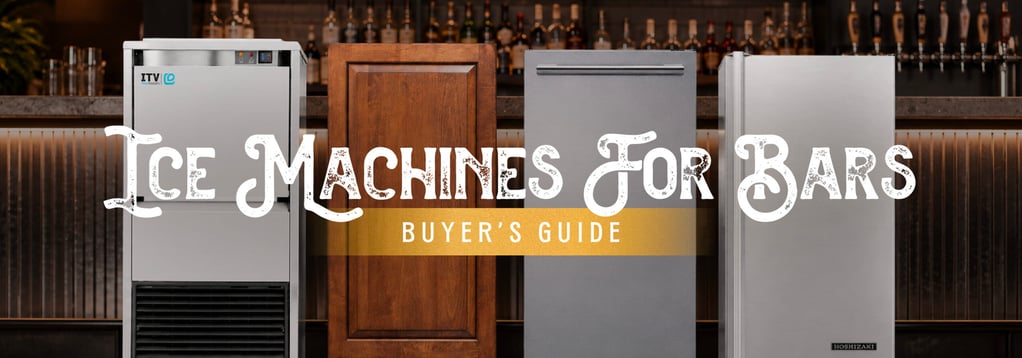
Bar Ice Machine Buyers' Guide
Choosing the right bar ice machine starts with understanding daily ice demand, available space, beverage presentation, and installation requirements. For most bars, the best ice machine is one that fits the operation's condenser, storage, ventilation, and utility needs while keeping up with production demand.
Key Takeaways
- Ice type affects drink quality, dilution, presentation, and guest experience
- Daily production should be sized around peak demand, not average sales
- Undercounter, modular, and countertop configurations each suit different bar layouts
How to Choose the Best Commercial Ice Maker for Your Bar
1. Estimate Daily Ice Demand
Bars should estimate ice demand based on beverage volume, menu offerings, peak usage periods, and secondary uses such as bottle chilling or service stations. Average daily sales can be misleading because a machine that keeps up on a slow afternoon may fall behind during happy hour, weekend service, or heavy event traffic. For a detailed sizing guide, check out KaTom's guidelines for how much ice your commercial ice maker should produce.
| Bar Type | Recommended Daily Ice Production | Recommended Model |
|---|---|---|
| Small Cocktail Bar | 100–300 lbs. |
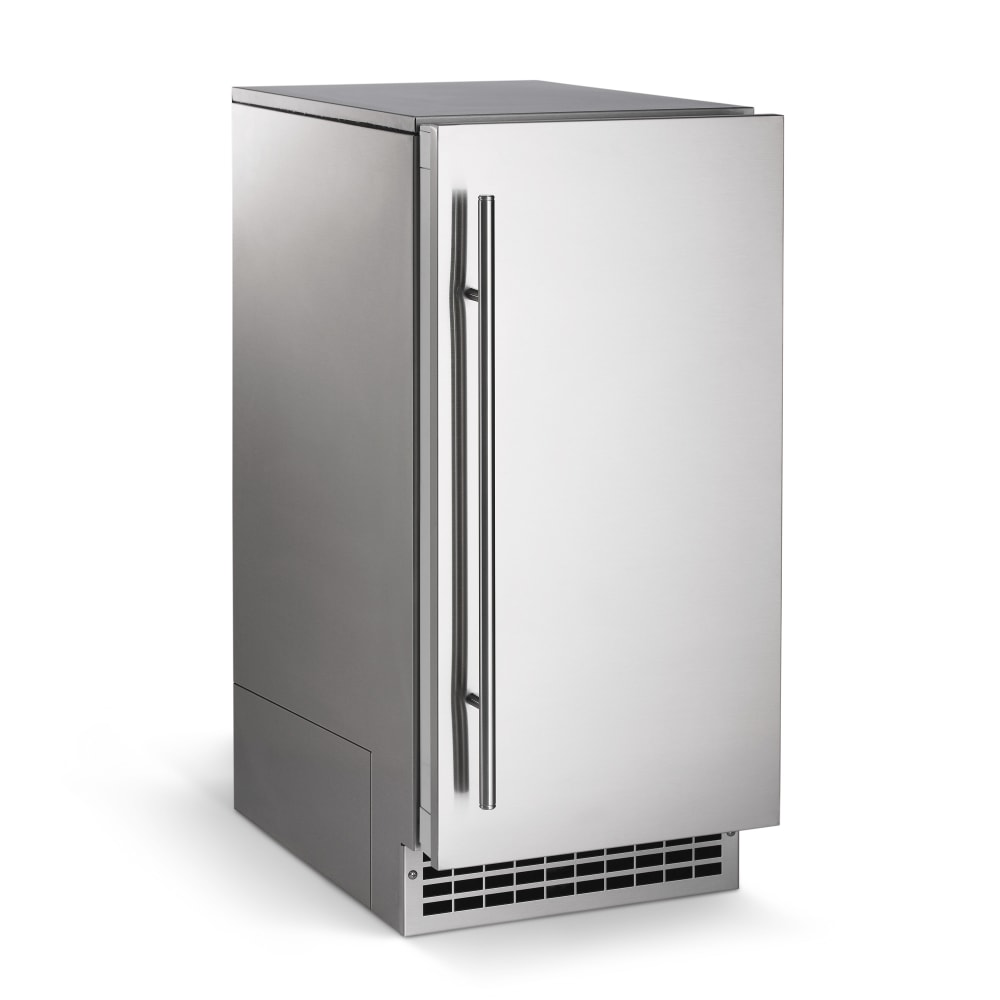
Scotsman SRNP110A-1SS |
| Neighborhood Bar or Taproom | 300–500 lbs. |
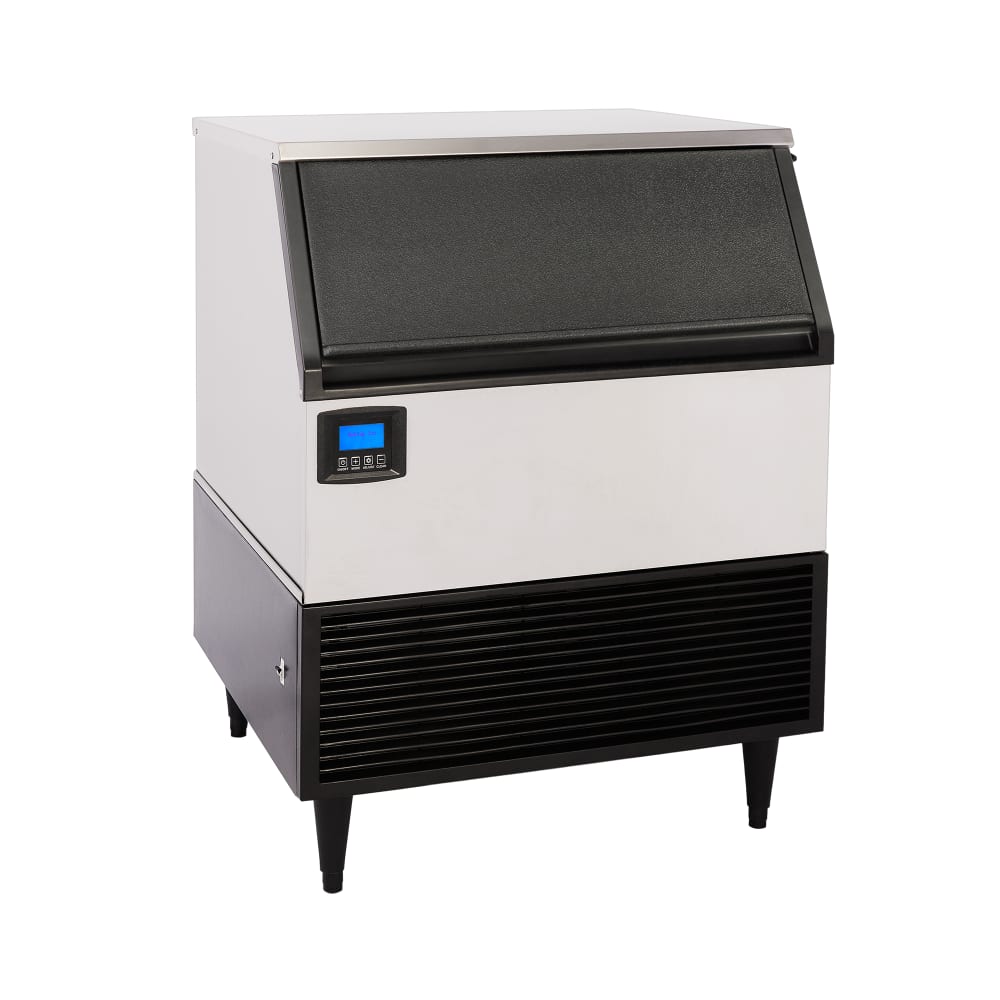
MoTak KT-UIF-320-A |
| Sports Bar | 500–1,000 lbs. |
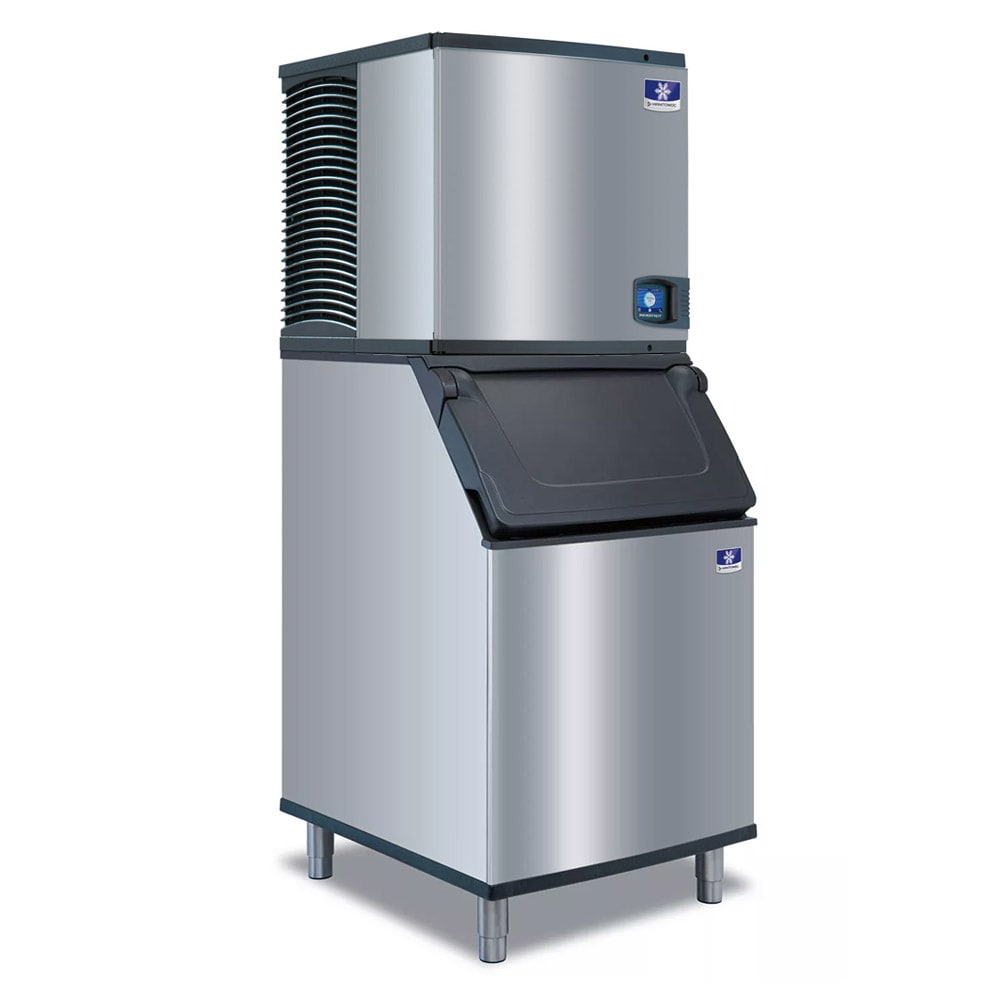
Manitowoc Ice IYT0500A/D570 |
| Hotel Bar | 500–1,200 lbs. |
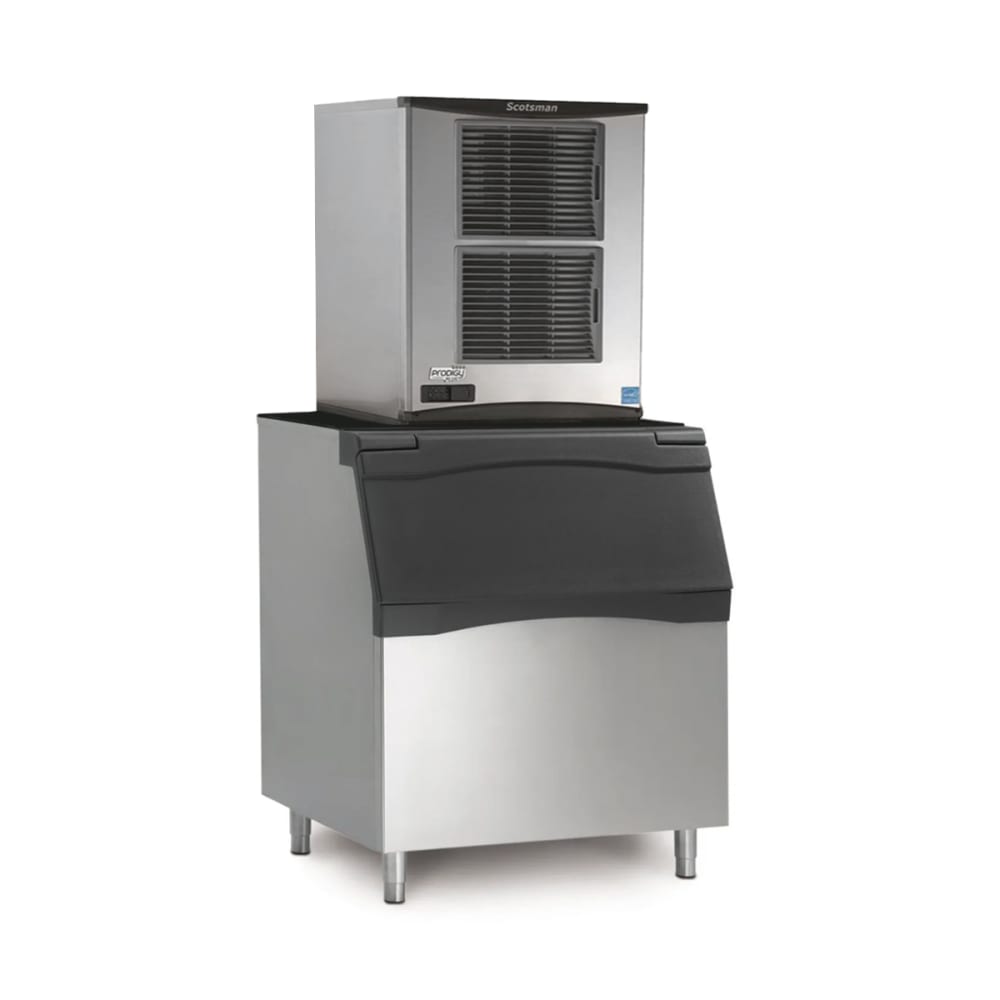
Scotsman NS0922AX-32/B842S/KBT39 |
| Nightclub or High-Volume Venue | 1,000+ lbs. |
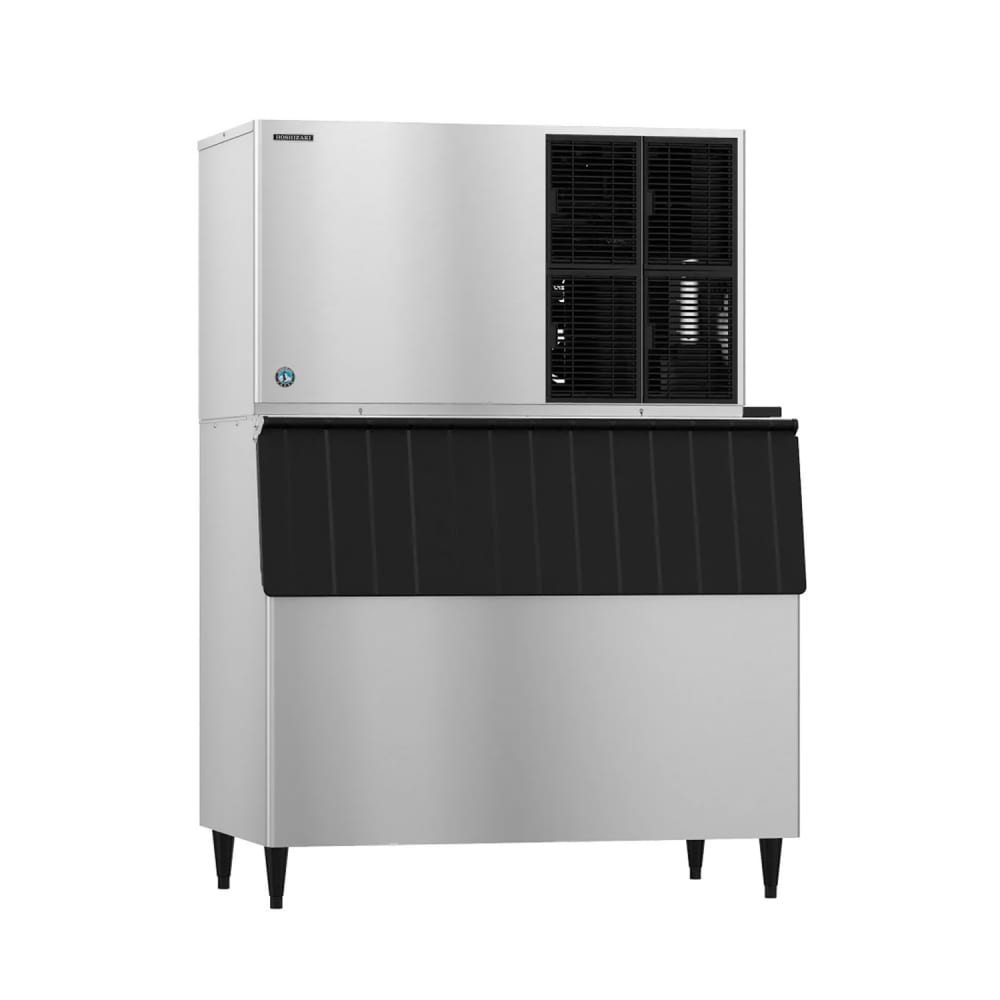
Hoshizaki KM-1301SAJ3/B-900SF/HS-2032 |
"I think some of the biggest problems we see on our end with ice makers is choosing too small of a machine. They've got to factor in how they're using that ice, how much they're using at one time, and make sure that they appropriately size it." — David Hyttel, VP of Sales for ITV Ice Makers
2. Evaluate Available Space
The right ice maker must fit the bar's layout without restricting staff movement and workflow. Undercounter machines work well in compact bars because they combine ice production and storage in one footprint, while modular ice machines suit operations that need higher production and can dedicate space to a separate storage bin.
3. Consider Utility Requirements
Before purchasing an ice machine for a bar, review electrical capacity, water supply, drainage access, ambient temperature, and ventilation. These factors affect ice production, service access, and long-term performance. Condenser type is especially important because it controls how the machine expels heat during the ice-making process. Choosing the wrong condenser style can create installation challenges or performance issues.
4. Plan for Ice Storage Capacity
Production capacity measures how much ice a machine can make in a day, while storage capacity measures how much finished ice the bin can hold at one time. A high-output machine may still fall short if the bin cannot hold enough ice to supply peak demand.
"Production gets you through the day, but the storage bin size is what actually gets you through the busy rush periods." — Scott Bingham, Director of Marketing at Follett Products LLC
5. Choose the Right Ice Type
Ice type is often the most important decision when selecting ice machines for bars, as it affects beverage presentation, dilution, texture, and customer experience. Operators should choose ice based on the drink menu and desired presentation.
"Ultimately, it comes down to the bar's preference and presentation that they want to have." — David Hyttel, VP of Sales for ITV Ice Makers
Top-Rated Bar Ice Machines
Compare bar ice machines by ice type, condenser style, daily production, and storage capacity.
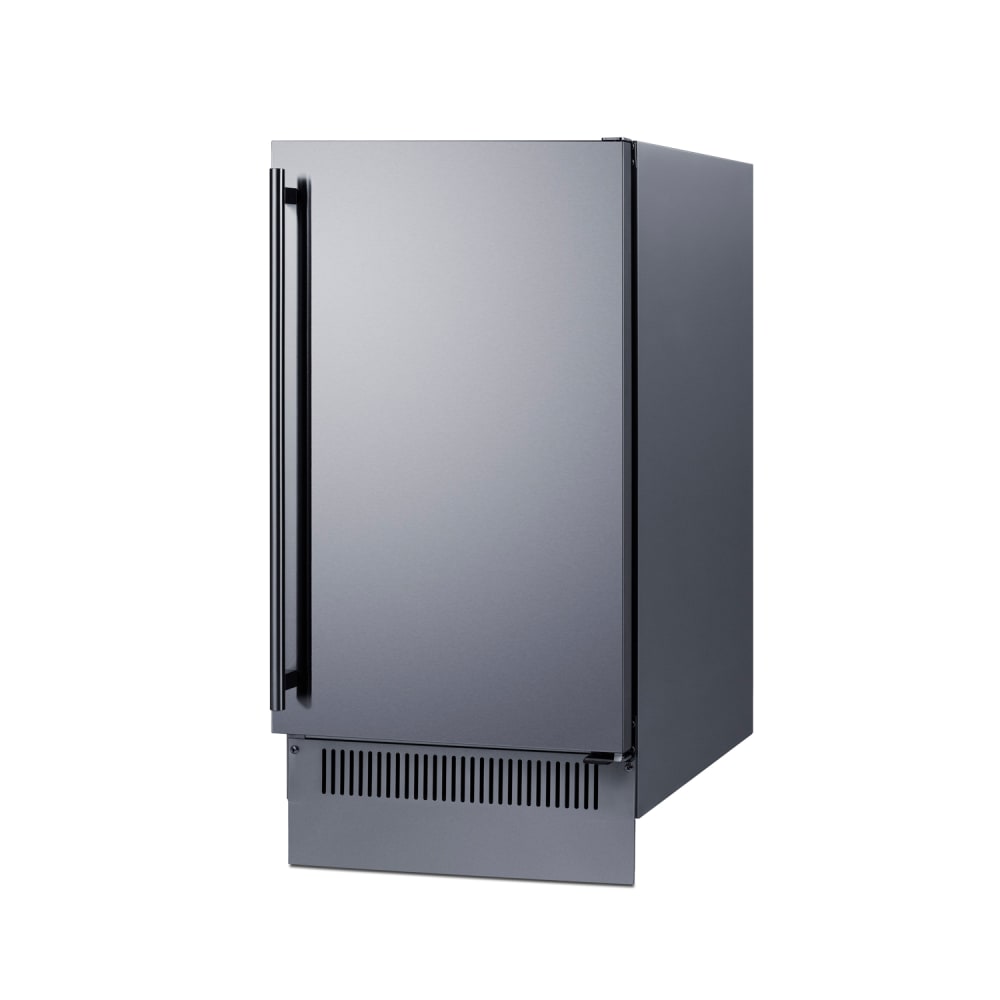
Best for poolside bars
Summit BIM182OS
Outdoor-ready full-cube undercounter ice machine with a front-breathing design, internal drain pump, and corrosion-resistant stainless steel cabinet.
- Ice Type: Full-cube
- Daily Production: 60 lbs.
- Storage Capacity: 33 lbs.
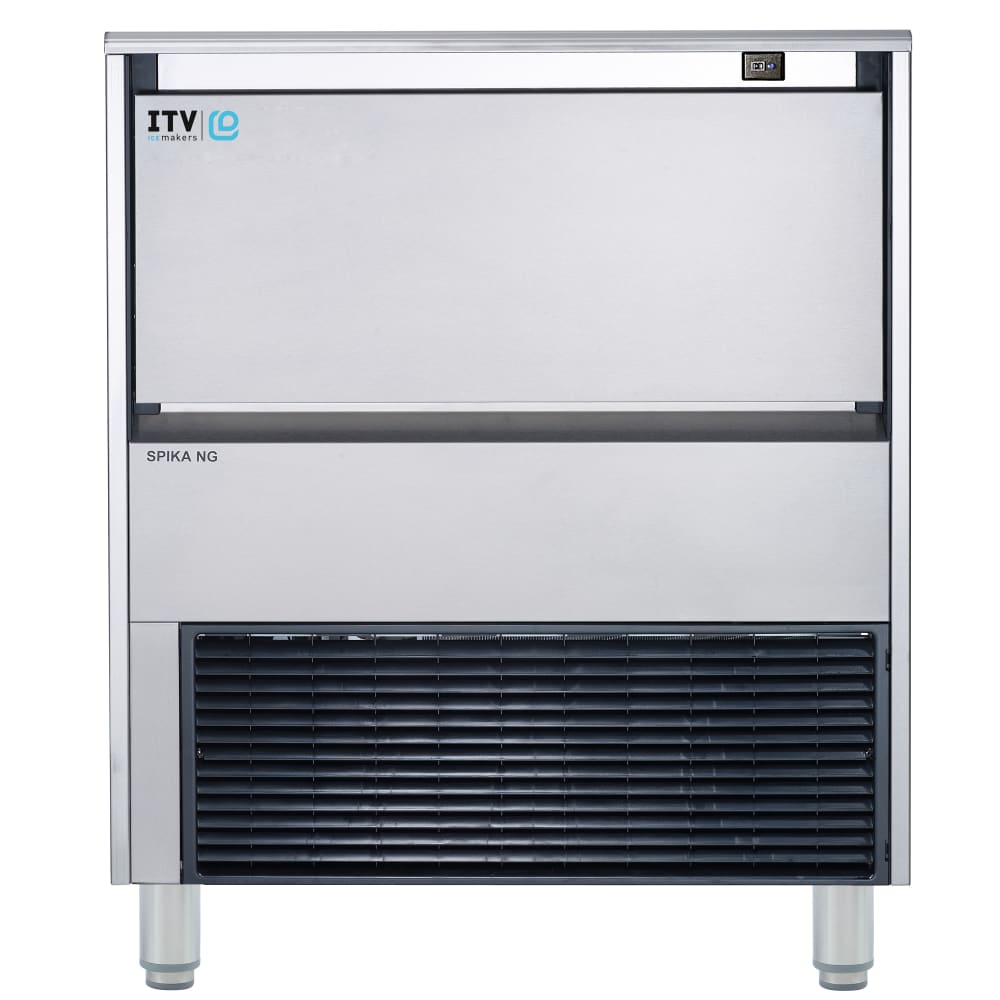
Best high-output undercounter
ITV Ice Makers NG360A1H
Spika series undercounter ice maker with half-cube production, air-cooled operation, and smart front ventilation.
- Ice Type: Half-cube
- Daily Production: 340 lbs.
- Storage Capacity: 99 lbs.
Best for cocktail bars
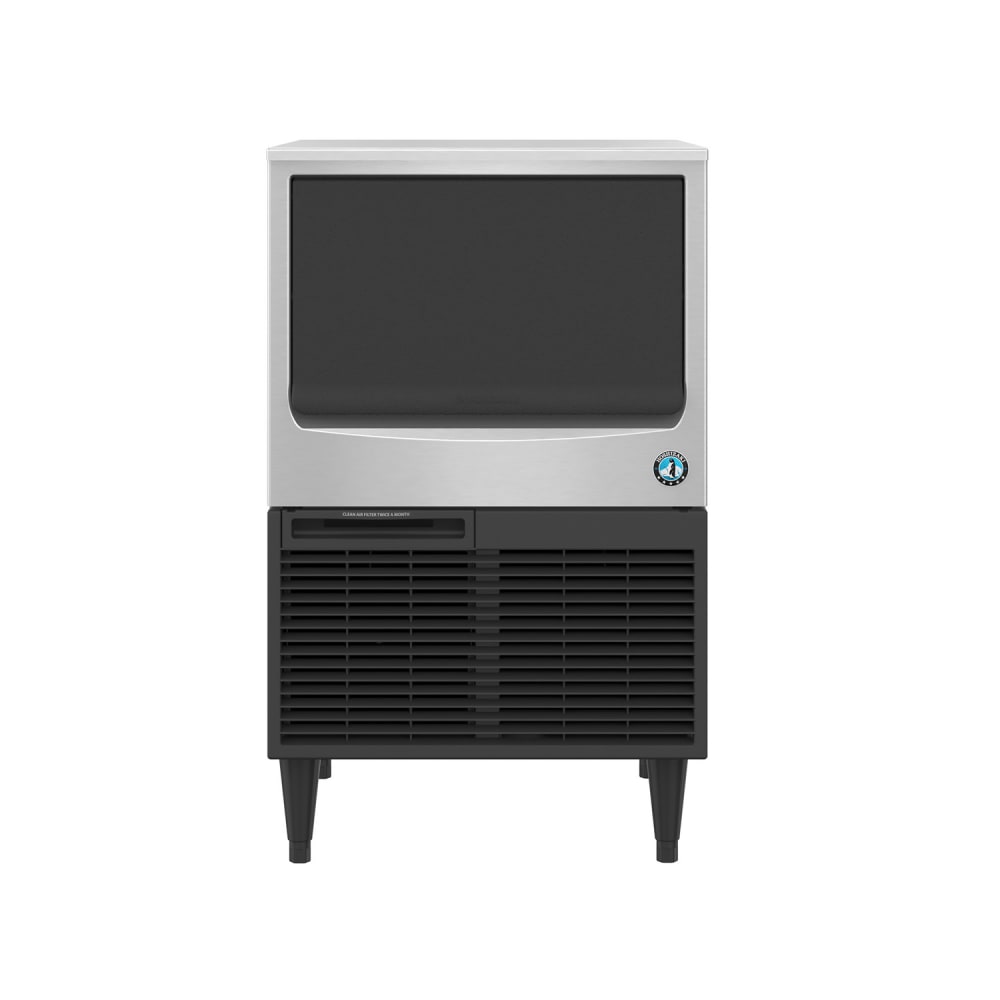
Hoshizaki KM-161BAJ
Crescent cube ice maker with EverCheck™ alert technology and ADA-compliant construction.
- Ice Type: Crescent cube
- Daily Production: 163 lbs.
- Storage Capacity: 78 lbs.
Best high-volume half-cube machine
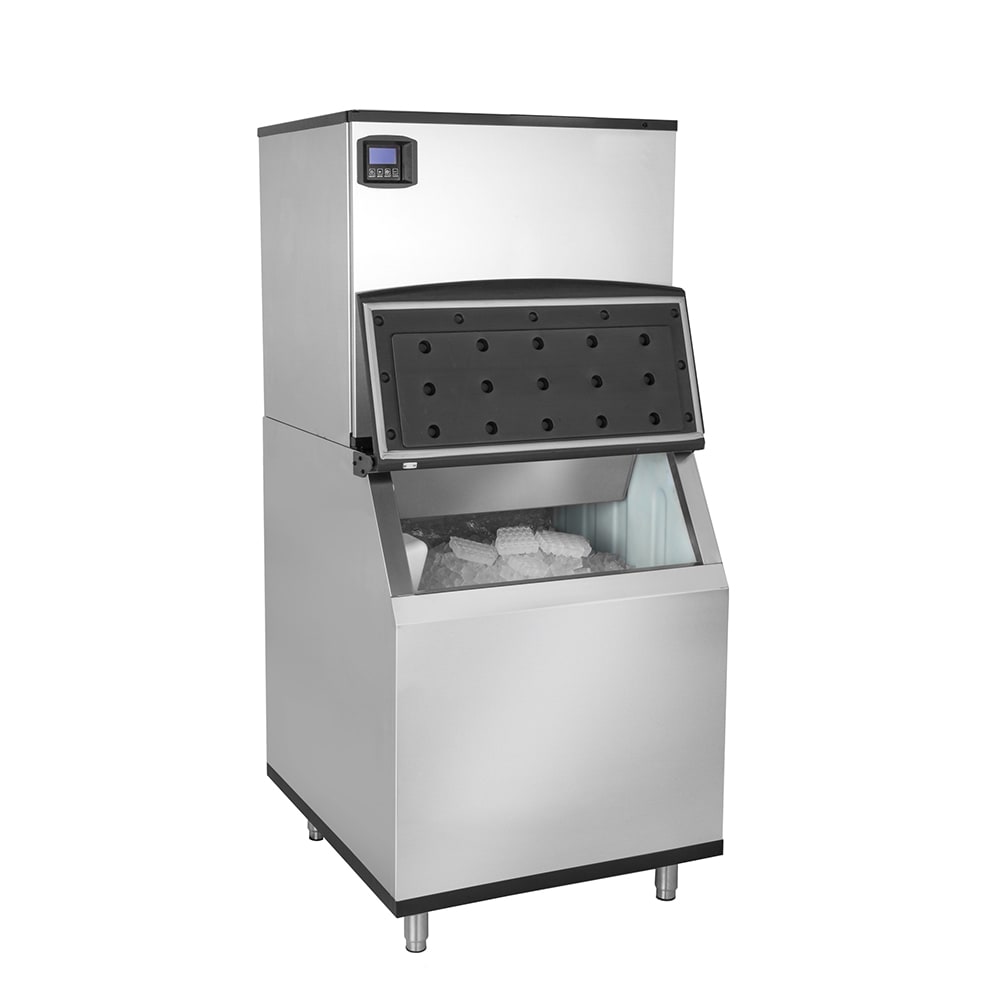
MoTak KT-MIH-500/KT-IB-470
Half-cube ice machine with an air-cooled, self-contained condenser and large storage bin for busy bar, cafe, and casual restaurant service.
- Ice Type: Half-cube
- Daily Production: 513 lbs.
- Storage Capacity: 470 lbs.
Best ultra-high-volume full-cube machine
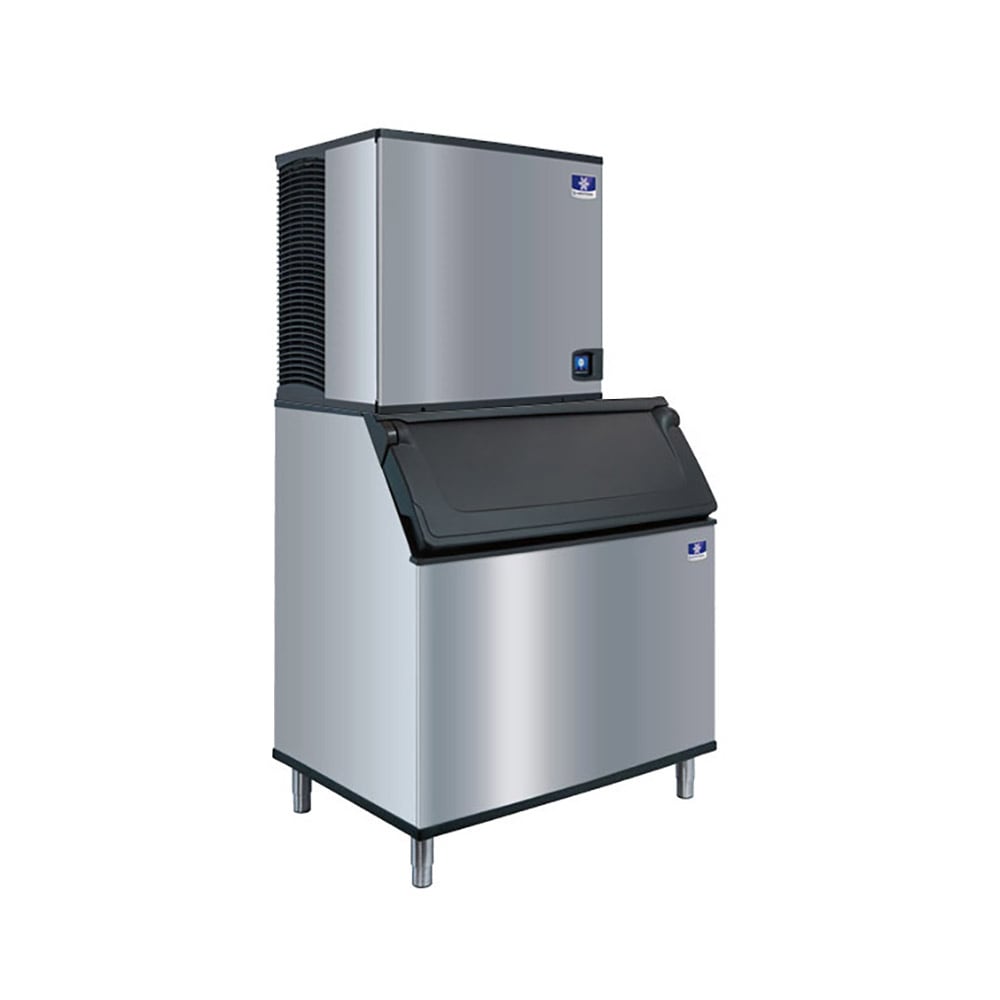
Manitowoc Ice IDT1200A/D970/K00470
Indigo NXT full-cube ice machine with air-cooled operation, programmable production, and a large-capacity storage bin.
- Ice Type: Full-cube
- Daily Production: 1,196 lbs.
- Storage Capacity: 882 lbs.
Other Factors to Consider Before Purchasing a Bar Ice Maker
Machine features can impact operating costs, maintenance requirements, and long-term performance. Before selecting a model, it's important to compare configuration types, condenser style, water filtration needs, and installation requirements.
Configuration Type: Undercounter vs. Modular
Installation space often determines which type of machine best fits a bar. Undercounter ice machines combine production and storage in one compact footprint, while modular ice machines pair with separate bins to support higher-volume operations.
"Depending on the bar situation, they would typically want an undercounter just due to space constraints." — David Hyttel, VP of Sales for ITV Ice Makers
Air-Cooled vs. Water-Cooled Condensers
Air-cooled condensers use surrounding air to remove heat from the refrigeration system and are the most common choice for bars. Water-cooled condensers use running water to remove heat and are typically reserved for specialized applications where a chilled water loop or unusual installation condition justifies the added water use. For more information on the condenser types, check out KaTom's guide on choosing the best commercial ice maker condenser.
"Water-cooled units are rare and usually only for places like hospitals or cruise ships with a chilled water loop; otherwise, air-cooled is the standard." — Scott Bingham, Director of Marketing at Follett Products LLC.
Water Filtration
Ice maker filters improve ice quality, reduce scale buildup, and help protect machine components. For bars, filtration is especially important because ice directly affects beverage appearance, flavor, and customer experience.
"The more you can invest into water treatment or water filtration is going to save that piece of equipment and headaches." — David Hyttel, VP of Sales for ITV Ice Makers.
Find the Best Bar Ice Machine at KaTom
KaTom helps operators compare bar ice machines by ice type, production capacity, storage capacity, installation requirements, condenser style, and available space. Check out KaTom's catalog to find the right ice machine for your bar.


