How to Open a Mexican Restaurant: Step-by-Step Guide, Costs, & Equipment Checklist
Nearly 11 percent of U.S. restaurants offer Mexican cuisine. 1 From sizzling fajitas and grilled meats to fresh salsa and warm tortillas, a Mexican restaurant's menu can call for a wide range of equipment. Your menu, peak volume, available space, and utilities should guide your equipment decisions, helping you choose the right configuration, capacity, and quantity for your kitchen.
Ready to open your Mexican restaurant?
A KaTom Foodservice Equipment Specialist can answer questions about product selection, sizing, utilities, and layout.
Contact UsKey Takeaways
- Define your Mexican restaurant concept, menu, target market, and service model
- Use your menu, peak service volume, available space, and utilities to guide equipment and kitchen decisions
- Build a detailed budget that accounts for equipment, renovations, inventory, staffing, and other startup costs
- Review food safety requirements, licensing, permits, and local regulations before opening
- Plan an efficient kitchen workflow for food prep, cooking, service, warewashing, and storage
- Strong planning, consistent food quality, and reliable customer service can help build a successful and sustainable Mexican restaurant
Opening a Mexican Restaurant: Planning at a Glance
Table of Contents
- Decide What Type of Mexican Restaurant to Open
- Research Your Market & Evaluate Locations
- Create a Business Plan
- Estimate Mexican Restaurant Startup Costs
- Fund Your Restaurant
- Register the Business & Secure Licenses
- Finalize the Menu & Supplier Plan
- Design the Restaurant for Efficient Workflow
- Build Your Equipment List
- Set Up Inventory, Technology, & Operating Systems
- Hire & Train Staff
- Market Your Restaurant & Prepare for Opening
Learn more about starting a Mexican restaurant
Use our checklist to organize key ideas involved in planning, equipping, and preparing your restaurant.
1. Decide What Type of Mexican Restaurant to Open

Choosing your restaurant concept is one of the first decisions to make when opening a Mexican restaurant. Whether you plan to operate a full-service restaurant, fast-casual concept, counter-service operation, or another format, your concept will influence your target customers, menu, kitchen setup, equipment needs, staffing, and operating costs. Consider the following concepts to determine which one suits your business goals and resources:
Before investing in equipment or setting up your operation, define how your Mexican restaurant will function. Consider the following questions:
- What type of Mexican restaurant will you operate, and what dining experience will you offer?
- Who is the target customer, and what menu items will appeal to them?
- What types of food and beverages will you serve, and how will they be prepared?
- How much kitchen and dining space will you need for your expected customer volume?
- What equipment, utilities, and storage will be needed to prepare and serve the menu?
- How many employees will you need during regular and peak service times?
Not sure what your concept requires?
Talk to a KaTom specialist before finalizing the supplies and equipment list.
2. Research Your Market & Evaluate Locations

Research the local Mexican restaurant market to understand your potential customers, competitors, dining preferences, and demand for Mexican cuisine. Review nearby restaurants, menu offerings, pricing, customer reviews, and traffic patterns to identify opportunities and determine how your concept can stand out.
Once you understand the market, evaluate potential locations based on their ability to accommodate your restaurant and attract customers. Consider visibility, parking, dining and kitchen space, zoning, utilities, storage, deliveries, waste management, and accessibility when comparing locations.
Evaluating a new space?
The KaTom Design + Build team can plan an efficient space and identify equipment needed for your operation.
3. Create a Business Plan

Build a business plan that outlines how you intend to operate and grow your business. Detail your restaurant concept, customer base, menu, location, staffing plan, equipment requirements, and projected expenses. Include expected revenue and ongoing costs to establish a realistic financial plan and identify potential challenges before you open.
4. Estimate Mexican Restaurant Startup Costs

Opening a Mexican restaurant requires planning for a range of startup expenses, from kitchen equipment and renovations to furniture, inventory, staffing, and licenses. Costs can vary based on your location, restaurant size, menu, and service model, so create a detailed budget that accounts for both upfront investments and the expenses required to get your restaurant ready to open. The following categories can help you identify the major expenses to include:
5. Fund Your Restaurant

Once you've estimated your startup costs, determine how you will fund your restaurant. Consider how much capital you can contribute and which financing options may be appropriate for the remaining expenses.
Funds typically come from:
- Existing capital
- Business partners
- Commercial loans
- Investors
- Equipment financing, when appropriate
6. Register the Business & Secure Licenses

Before opening your restaurant, take time to complete the necessary business and regulatory paperwork. Determine your business structure, register the business, and identify the licenses and permits needed to run a foodservice operation in your area. These requirements can vary depending on your location, menu, facility, and service model. Contact local and state authorities early in the process to verify what you'll need and give yourself enough time to complete applications, inspections, and required payments. Common legal requirements include:
- Business registration
- Federal tax identification number
- Foodservice permits
- Health department approval
- Certificate of occupancy
- Fire inspection
- Building permits
- Sign permits
- Sales tax registration
- Alcohol service requirements
7. Finalize the Menu & Supplier Plan

Create a menu that aligns with your restaurant's concept, customer base, kitchen capacity, and anticipated demand. When planning each item, account for the ingredients, prep processes, equipment, and storage space required. Work with suppliers who can consistently deliver the necessary ingredients and products at competitive, predictable prices. Aligning menu development with purchasing decisions can help manage food costs, minimize waste, and ensure key ingredients are available when needed.
Browse Cooking Equipment
KaTom offers cooking equipment for tacos, fajitas, tortillas, fried foods, and other Mexican restaurant menu items.
Shop Now8. Design the Restaurant for Efficient Workflow

A well-planned kitchen layout can help a Mexican restaurant maintain fast service while reducing unnecessary movement for staff. Arrange equipment, ingredients, prep areas, and storage according to the order in which food is prepared and served. Keep frequently used items, such as tortillas, proteins, toppings, sauces, and garnishes, within easy reach of the station where they're used. The layout should also provide an efficient path for dirty dishes to reach the dishwashing area and for clean cookware and tableware to return to service. Depending on the menu and service model, the kitchen may need dedicated areas for:
- Ingredient prep
- Tortilla preparation and warming
- Protein and entree preparation
- Cold ingredient and topping storage
- Sauce and salsa prep
- Plating and order assembly
- Hot food holding
- Dishwashing and sanitizing
- Cookware and equipment storage
- Waste disposal
- Restocking
9. Build Your Equipment List

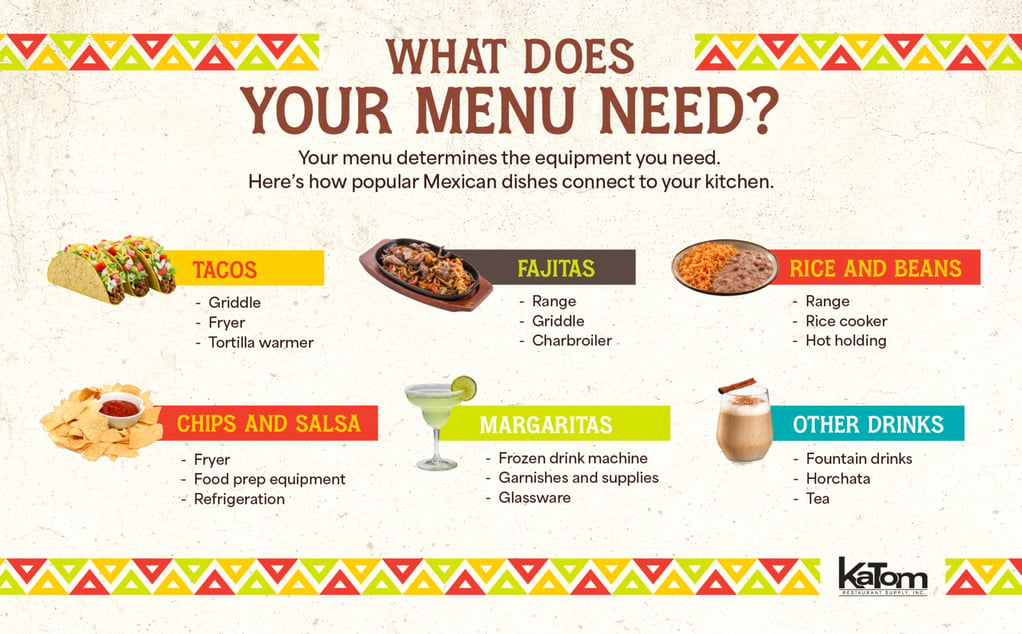
Use your menu, service format, expected guest counts, and production volume to determine the equipment your Mexican restaurant needs. Consider everything required for preparing, cooking, refrigerating, storing, holding, serving, and cleaning food throughout the operation. Your menu should guide these decisions, whether you're preparing tortillas, grilling meats, cooking rice and beans, frying items, or assembling tacos and other entrees. Before purchasing equipment, evaluate its capacity, dimensions, utility requirements, placement, and storage needs to ensure it fits your kitchen and supports an efficient workflow.
Refrigeration – Match Storage to the Menu
Choose refrigeration based on the ingredients your restaurant uses and the volume you need to keep on hand. Make sure each unit provides enough space for perishable foods while fitting efficiently within your kitchen layout. When purchasing refrigeration, consider:
- Product types being stored
- Peak inventory
- Available width and depth
- Temperature requirements
- Voltage
- Door or drawer configuration
- Compressor location
- Ventilation clearances
- Access to refrigeration during food prep and service
Cooking Equipment – Match Equipment to Your Menu
Mexican restaurants need ranges, ovens, griddles, fryers, charbroilers, and other cooking equipment depending on the menu and expected production volume. Equipment needs can vary based on the dishes being prepared, from grilling meats and vegetables to cooking rice and beans, frying chips, or preparing tortillas and sauces. Consider how each piece of equipment will fit into your kitchen workflow and whether it can handle the demands of peak service.
When purchasing cooking equipment, consider:
- Menu requirements
- Expected production volume
- Cooking capacity
- Foods being prepared
- Fuel type
- Available utilities
- Equipment footprint
- Ventilation requirements
- Cooking speed and recovery time
Food Prep Equipment – Build an Efficient Prep Area
Food prep equipment helps staff prepare ingredients efficiently before cooking and service. Depending on the menu, this may include food processors, mixers, slicers, cutting boards, prep tables, and other smallwares for handling vegetables, meats, tortillas, salsas, sauces, and toppings. Choose equipment that can handle your prep volume while keeping ingredients organized and accessible throughout the kitchen.
When choosing food prep equipment, consider:
- Menu complexity
- Ingredient volume
- Prep time
- Equipment capacity
- Available workspace
- Ease of cleaning
- Storage requirements
Hot Holding – Maintain Serving Temperatures
Hot holding equipment keeps cooked foods at appropriate serving temperatures until they're needed for orders. Operators may use holding cabinets, heated food wells, countertop warmers, or other equipment to keep foods ready during service. Choose holding equipment that fits your production volume and lets staff access frequently used foods efficiently.
When purchasing hot holding equipment, consider:
- Food volume
- Holding capacity
- Expected holding time
- Temperature requirements
- Pan and container compatibility
- Power requirements
- Available space
Serving Equipment – Support Your Service Style
Serving equipment helps staff portion, present, and serve food and beverages efficiently. Depending on the operation, this may include serving trays, baskets, plates, bowls, serving utensils, beverage dispensers, salsa containers, and other supplies. The right equipment depends on how food is served, whether the restaurant primarily offers dine-in meals, buffet service, takeout, or a combination of formats.
When choosing service equipment, consider:
- Service style
- Expected guest volume
- Menu items
- Portion sizes
- Material and durability
- Storage requirements
- Washing and sanitation needs
Beverage Equipment – Plan for Drink Demand
A Mexican restaurant's beverage program may include everything from fountain drinks and iced tea to aguas frescas, margaritas, and horchatas. The equipment needed will depend on the types of drinks offered and how they're served. Consider where beverages will be prepared, stored, and dispensed, and make sure the equipment is positioned for convenient access during service.
Before purchasing beverage equipment, consider:
- Beverage menu
- Expected volume
- Peak service periods
- Hot and cold beverage requirements
- Ice production and storage
- Water and drainage requirements
- Counter and floor space
Warewashing – Size for Peak Turnover
Restaurants can go through large quantities of plates, bowls, glasses, serving dishes, and utensils during busy service. A properly sized warewashing setup helps clean these items efficiently so they can return to service without creating bottlenecks in the kitchen. Choose equipment based on the volume of serveware and glassware your restaurant handles, as well as the space and utilities available for installation.
When purchasing warewashing equipment and supplies, consider:
- Volume of dinnerware and glassware
- Peak dishwashing volume
- Available water supply and drainage
- Available kitchen space
- Dishwasher capacity and cycle time
- Type and size of items being washed
- Local health requirements
Storage Supplies – Organize Ingredients and Equipment
Shelving, ingredient bins, food storage containers, and other storage solutions help operators keep ingredients, cookware, and supplies organized. Group frequently used items where staff can access them easily, while clearly labeled storage can make inventory counts, restocking, and daily food prep more efficient. A well-organized storage area can also help maximize available space and reduce unnecessary waste.
When purchasing storage equipment, consider:
- Dry or cold storage needs
- Inventory volume
- Container sizes
- Shelving capacity
- Stackability
- Labeling systems
- Ease of access
- Available footprint
- Food safety requirements
Where to Spend vs. Where to Save on Equipment
Equipment costs can add up quickly when opening a Mexican restaurant, so focus your budget on items that have the greatest impact on daily operations. Put more of your budget toward equipment that handles high volumes, affects food safety or consistency, or will be used during every service. For equipment with a limited role or features you're unlikely to use, a simpler option may provide the functionality you need without adding unnecessary expense.
Don’t Order Until You Know
Before purchasing equipment, confirm the following details, as applicable:
- Equipment dimensions
- Maximum capacity
- Doorway and hallway clearance
- Equipment door swing
- Required operating clearances
- Voltage, amperage, and phase
- Plug type
- Water connection
- Drain requirements
- Ventilation
- Ambient operating conditions
- Production and capacity requirements
- Installation requirements
- Local code requirements
- Service access
- Cleaning schedule
Not sure whether a unit will work in your space?
Ask a KaTom Foodservice Equipment Specialist before you order.
Contact Us10. Set Up Inventory, Technology, & Operating Systems

Put systems in place to keep your restaurant organized from opening prep through closing. Establish consistent processes for ordering ingredients, tracking inventory, scheduling staff, managing recipes and portions, processing orders, and monitoring sales. The right combination of technology and operating procedures can help your team stay prepared for busy service, reduce unnecessary waste, and keep daily tasks running consistently.
11. Hire & Train Staff

Build a team that can prepare food consistently, work safely, and keep pace during service. Employees should understand how to use kitchen and front-of-house equipment, follow established recipes and portion guidelines, and maintain proper food safety practices. Training should also prepare staff to work together efficiently during busy periods while providing attentive service to guests.
Training should cover:
- Cooking equipment operation
- Food safety and sanitation
- Personal hygiene
- Allergen awareness
- Food prep
- Ingredient preparation
- Recipe and portion consistency
- Order assembly and service
- Customer service
12. Market Your Restaurant & Prepare for Opening

Host a Soft Opening
A soft opening gives your team an opportunity to test the restaurant before the full launch. Use the trial service to identify bottlenecks, adjust recipes and portions, and see how well the kitchen and front-of-house teams work together during a busy period. Use the soft opening to confirm details such as:
- Portion size
- Food quality and temperature
- Ticket and prep times
- Kitchen workflow
- Staffing levels
- Equipment performance
- Order accuracy
- Service
- Customer experience
- Cleanup and closing procedures
- Food and labor costs
- Scheduling
- Operating procedures
Mexican Restaurant Opening Checklist
Download Checklist as PDFUse this checklist to track key planning, setup, staffing, compliance, and launch tasks.
| Task | Complete? |
|---|---|
| 1. Define a concept | |
| 2. Identify target customers | |
| 3. Research competitors and local demand | |
| 4. Develop preliminary menu | |
| 5. Estimate peak service volume | |
| 6. Create a business plan | |
| 7. Build startup and operating budgets | |
| 8. Secure funding | |
| 9. Evaluate location and utilities | |
| 10. Register the business | |
| 11. Apply for licenses and permits | |
| 12. Secure insurance | |
| 13. Finalize the menu and suppliers | |
| 14. Design the restaurant and workflow | |
| 15. Create an equipment list | |
| 16. Verify equipment specs and utilities | |
| 17. Order and install equipment | |
| 18. Hire staff | |
| 19. Set up POS and inventory systems | |
| 20. Train staff | |
| 21. Complete required inspections | |
| 22. Receive opening inventory | |
| 23. Test equipment | |
| 24. Hold a soft opening | |
| 25. Address operational bottlenecks | |
| 26. Hold a grand opening |
Frequently Asked Questions About Opening a Mexican Restaurant
How much does it cost to start a Mexican restaurant?
The cost to open a Mexican restaurant varies based on factors such as location, restaurant size, equipment needs, renovations, staffing, and menu offerings. Create a detailed startup budget that accounts for both one-time expenses and ongoing operating costs.
What specialized equipment do I need to open a Mexican restaurant?
Specialized equipment depends on your menu, but common items include tortilla warmers, tortilla presses, and rice cookers. Equipment for salsa, guacamole, and other prepared ingredients may also be useful for high-volume operations.
What equipment do I need to open a Mexican restaurant?
Common equipment includes ranges, griddles, fryers, ovens, refrigeration, food prep equipment, warewashing equipment, hot holding units, and storage supplies. Your menu and expected volume will determine which equipment is most important for your operation.
How do I create a menu for a Mexican restaurant?
Build your menu around the type of Mexican cuisine you plan to offer, your target customers, available kitchen equipment, and expected food costs. Choose dishes that can be prepared efficiently while offering a balanced selection of appetizers, entrees, sides, beverages, and desserts.
How should I choose a location for a Mexican restaurant?
Consider visibility, foot and vehicle traffic, parking, nearby businesses, demographics, competition, and the size and layout of the space. The location should also have the necessary utilities and infrastructure to accommodate your kitchen equipment.
How can I prepare for my opening day?
Complete staff training, equipment testing, food and supply ordering, menu preparation, health and safety checks, and a soft opening before the grand opening. A soft opening can help identify workflow issues and give your staff an opportunity to practice service before serving a large crowd.
References
- About 1 in 10 restaurants in the U.S. serve Mexican food. Pew Research Center. Accessed September 2026.
