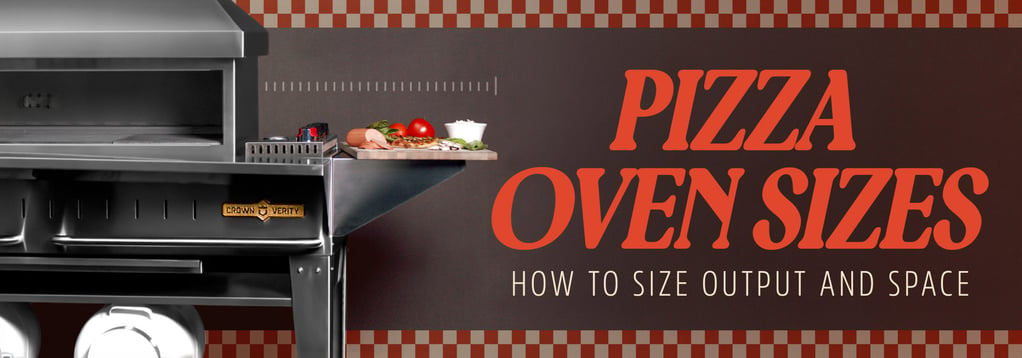
Pizza Oven Sizes
Operations looking for a commercial pizza oven should consider more than exterior dimensions. The oven must accommodate the largest pizzas on the menu, recover quickly after being opened, fit into the cooking line without disrupting staff movement, and produce enough pizzas for the kitchen to keep up during peak demand. All of these factors depend on the oven size and configuration.
Pizza Oven Size Guide
When selecting an oven, size should be chosen based on the busiest sustained period rather than total daily sales. An operation may sell 100 pizzas in a 10-hour day, but if 30 of those pizzas are sold within one hour, then an oven that can only bake 10 pizzas per hour won’t keep up with demand.
To determine the right size oven for an operation, start by reviewing point-of-sale data and answering three questions:
- How many pizzas are ordered during the busiest 15-, 30-, and 60-minute periods?
- Which pizza diameter accounts for the most sales?
- How quickly must orders move from assembly to pickup, delivery, or table service?
For example, an operation receiving orders for 18 pizzas in its busiest 15 minutes faces a projected rate of 72 pizzas per hour. Adding a 20-percent operating cushion produces a target of approximately 87 pizzas per hour. This means the operation would need one or more ovens capable of baking at least 87 pizzas per hour, even if the equipment doesn't normally operate at maximum capacity.
That operating cushion helps accommodate unusually large orders, frequent door openings, delays, and other variables that can reduce output.
It’s important to buy the right oven for the needed output. Buying an oven that can handle more pizzas than the operation needs can unnecessarily increase expense and utility requirements. Alternatively, buying an oven that is too small to keep up with demand can cause long ticket times and inconsistent baking.
"Operators should buy the oven that matches their actual output needs, not simply the largest unit they can fit or afford." — Vitangelo Recchia, Owner, Bella Napoli Pizzeria & Restaurant; Marra Forni Ambassador
How Is Size Determined?
Pizza oven size can refer to several measurements, so rather than looking only at a unit’s exterior width, it’s important to compare each of these measurements to determine the best size for an operation.
- Exterior Footprint: The exterior width and depth determine how much floor space the oven occupies.
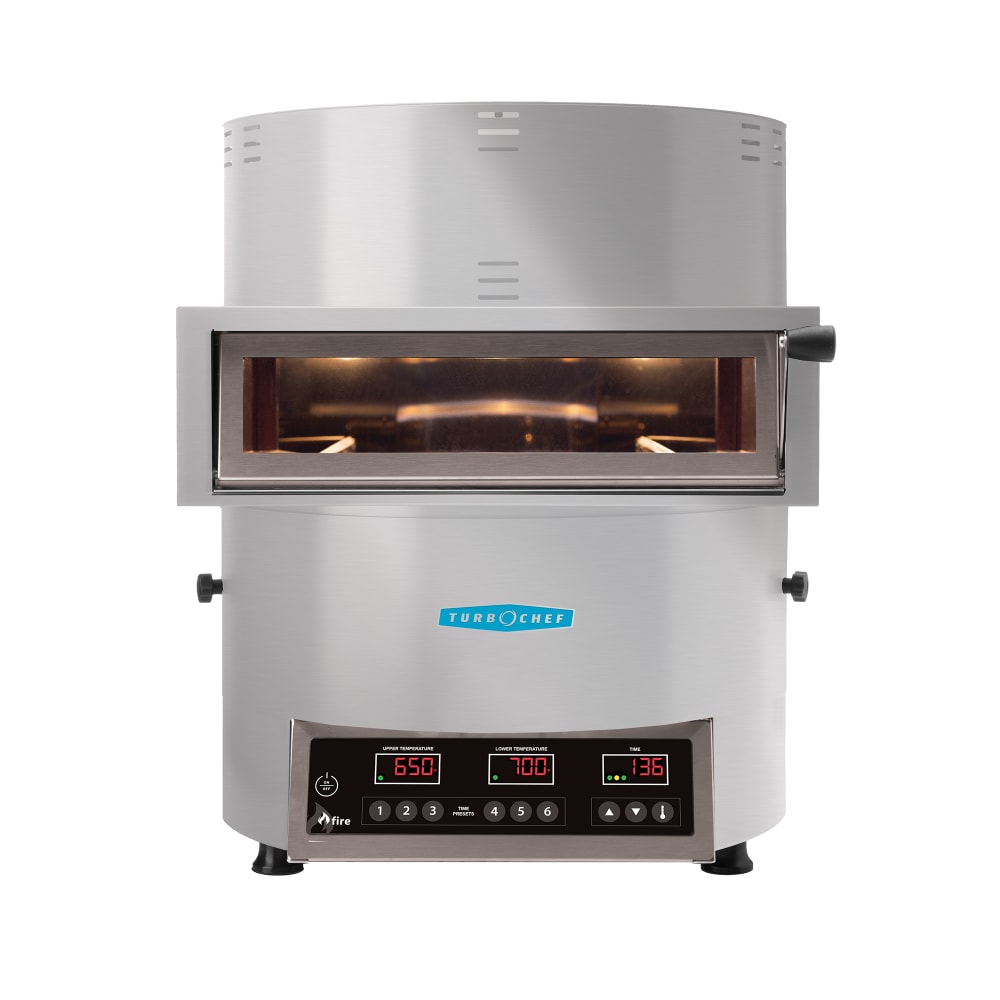
- Baking Surface or Belt Width: For a deck oven, the usable baking surface determines how many pizzas fit in one load. For conveyor ovens, belt width and heated chamber length affect how many products can enter the oven at once and how long it takes them to pass through the cooking zone.
- Deck or Chamber Height: Interior height determines the thickness of the pizzas and pans the chamber can accommodate.
How to Calculate Pizza Oven Capacity
The simplest sizing method compares peak output with the oven’s hourly production rate.
Pizzas per load × Loads per hour = Hourly Output
For instance, a deck oven that holds six pizzas with an eight-minute bake time could theoretically complete 45 pizzas per hour:
6 pizzas × 7.5 bake cycles = 45 pizzas per hour
Real service will rarely maintain perfectly timed, completely full loads for an entire hour. Staff must open the oven door to remove completed pizzas and load new ones. Heavily topped or thick-crust products also may require more time than standard pizzas.
To account for this, use an 80-percent utilization factor. Even though the oven could theoretically bake 45 pizzas per hour, approximately 36 pizzas per hour is a more realistic expectation. Don’t count on receiving the maximum number of pizzas an oven can produce in one hour.
How Stacked Ovens Increase Capacity
Stacked pizza ovens increase production without taking up extra floor space. Instead of placing a second oven beside the first and consuming more of the cooking line, the equipment adds another deck or conveyor above the original unit.
"A stacked oven setup can help operators increase output without taking up more floor space, which matters in kitchens where space is limited." — Vitangelo Recchia
The production increase depends on the model and configuration. Some conveyor and deck ovens can be stacked two or three high, while others aren't designed for stacking. Stacked ovens can be especially useful in narrow kitchens and food halls, where taking up more space in the cooking line would create an obstacle for staff.
Stacking can also provide operational flexibility. During slower periods, staff may operate only one or two oven sections, while additional oven sections can come online during peak periods to increase output.
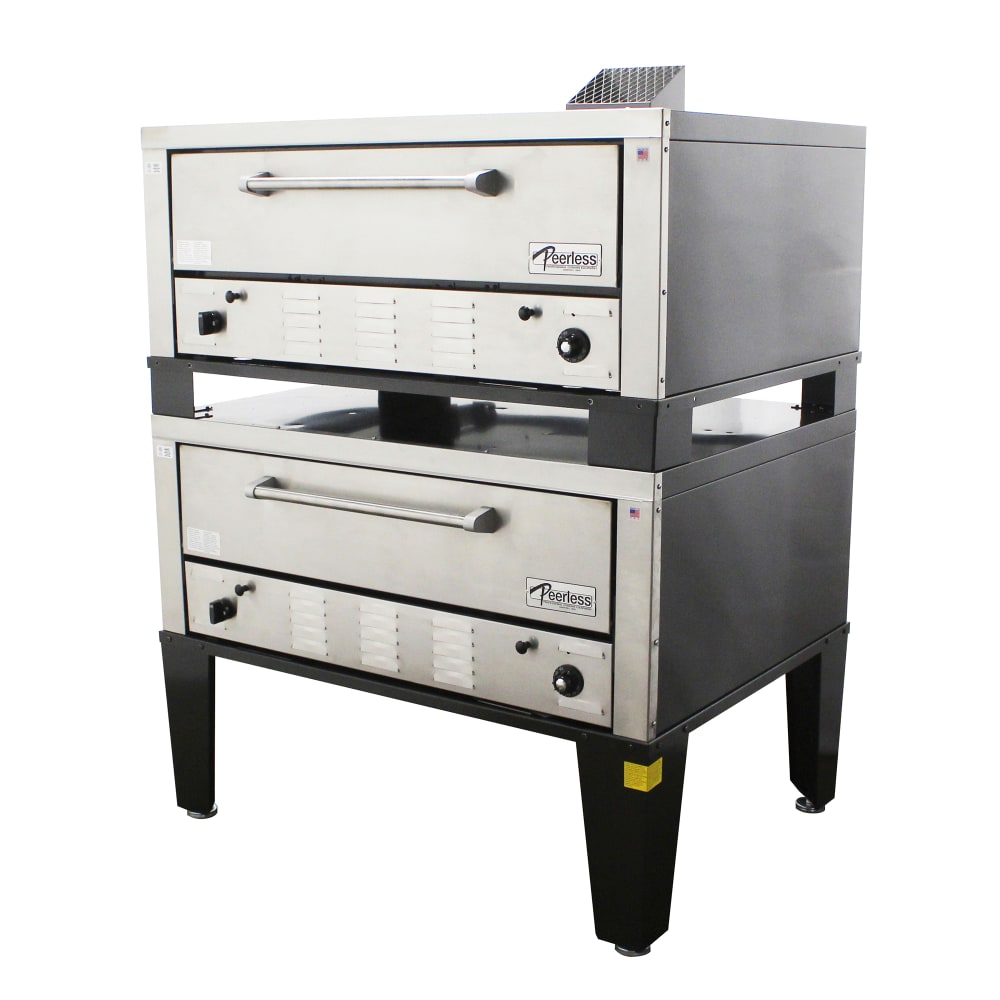
"If a triple stack can deliver the needed output, operators may not need a wider oven that consumes more of the kitchen footprint." — Vitangelo Recchia
Just as the largest oven is not the automatic choice, a triple stack is not the best choice for every busy pizzeria. The upper section must remain practical for staff to load, monitor, and clean.
Match the Oven Type to the Production Method
The required oven size also depends on how the kitchen produces pizza.
Deck Ovens
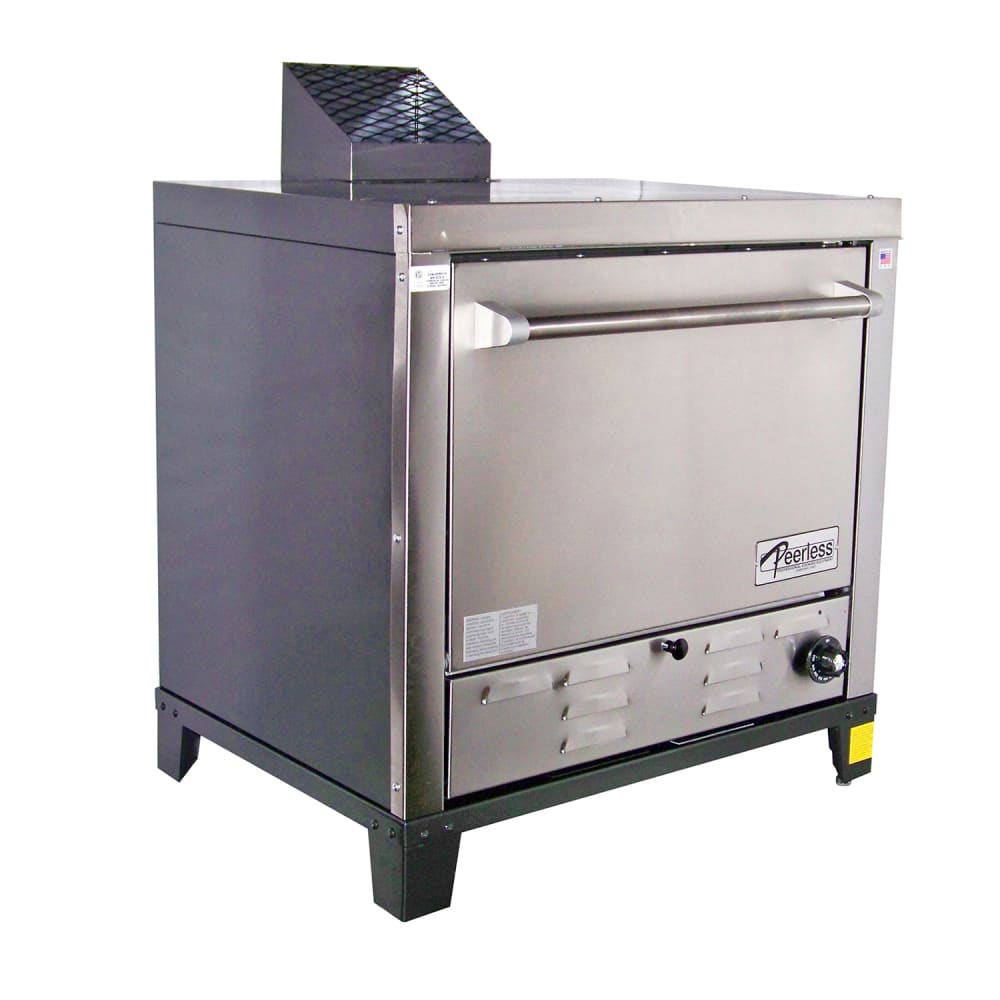
Deck ovens support direct contact between the pizza and baking surface. These ovens are sized by deck dimensions, pizzas per load, bake time, and recovery. A larger deck can hold more pizzas at once, while a stacked deck oven increases the number of available baking surfaces. Multiple sections may also help staff separate products that require different temperatures or baking conditions.
Conveyor Ovens
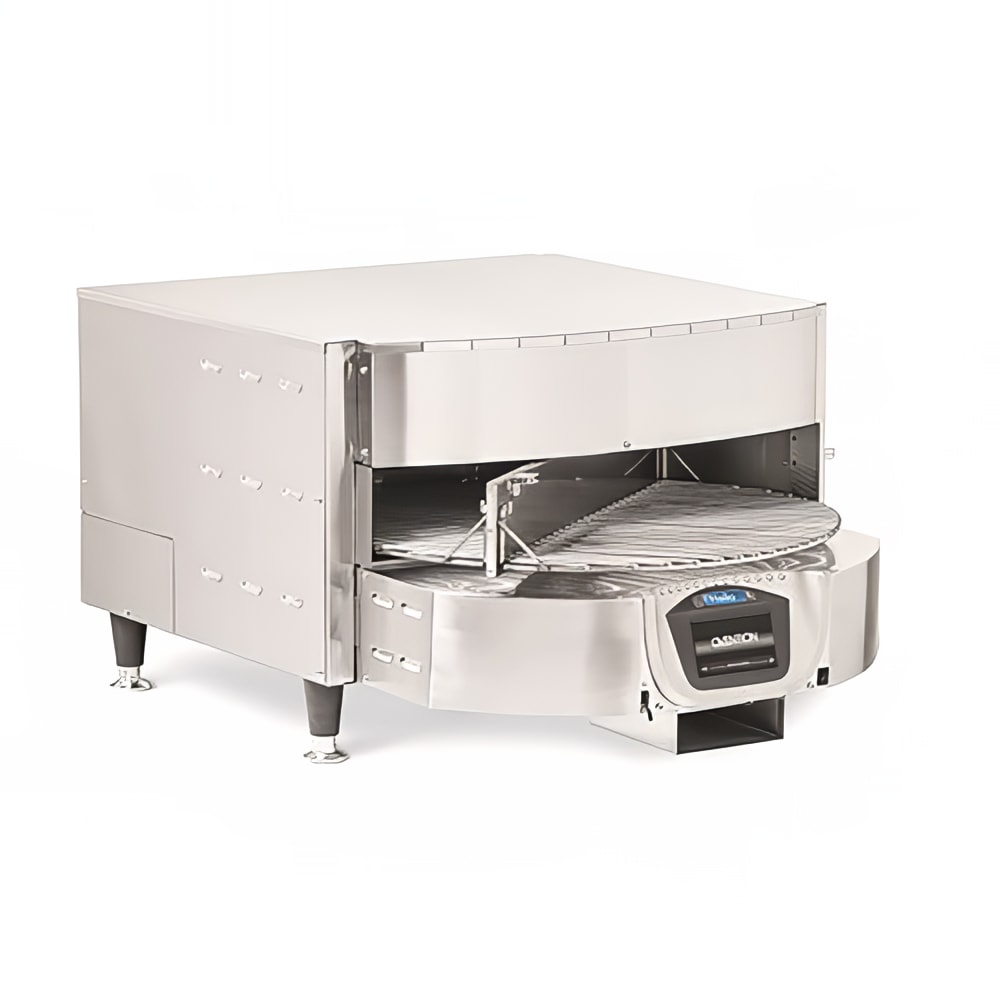
Conveyor ovens provide continuous production by moving pizzas through a heated chamber at a set speed. These units are sized by belt width, chamber length, bake time, product spacing, and stackability. Stacking conveyor ovens can increase hourly output or support separate settings for different menu items.
Because products enter and exit continuously, the kitchen needs enough landing and staging space at both ends of the conveyor to keep up with cooking times. An oven may fit the available space while still slowing production if staff cannot finish and box pizzas in quick succession.
Compact and Countertop Ovens
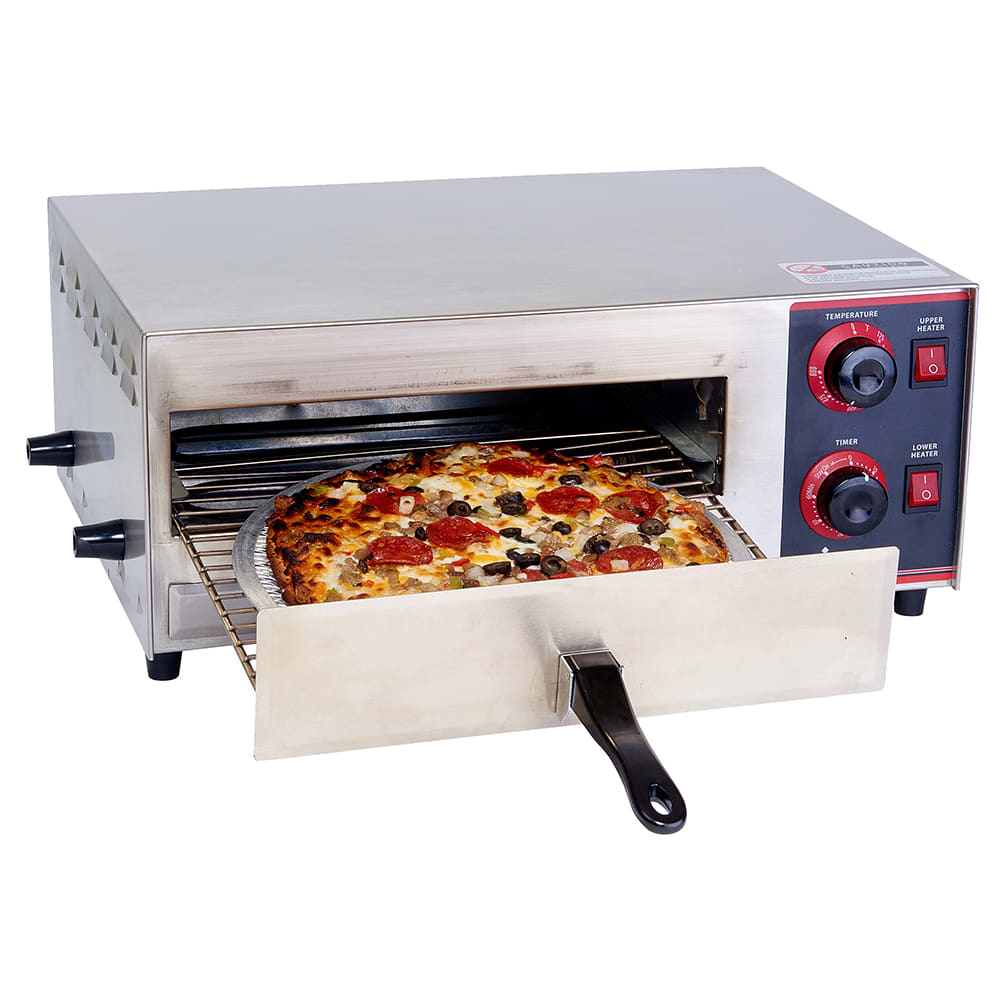
Compact ovens can suit low-volume operations, limited menus, or restricted equipment spaces. Operators should evaluate these units carefully when pizza demand arrives in concentrated bursts. A compact oven may meet the average daily demand while still failing to keep up during peak periods.
Some compact conveyor models can be stacked, providing a way to increase pizza output without upgrading to a larger model.
The Importance of Recovery
In addition to capacity, an oven’s ability to recover after staff load pizzas into the chamber affects output. Recovery describes how effectively the oven returns to and maintains its operating temperature after being opened. Poor recovery can lengthen bake times and produce inconsistent results, even when the chamber appears large enough to hold the required number of pizzas.
"Staff need to understand how the oven heats and recovers so they can work with the equipment instead of fighting against it during service." — Vitangelo Recchia
Operators evaluating deck ovens should consider how often the door will be opened and how quickly the oven returns to its set temperature after being closed. Conveyor buyers should test how the oven performs when the belt is loaded continuously. Staff should understand loading patterns, temperature settings, belt speed, deck rotation, preheating procedures, and signs that the oven is losing heat faster than it can recover.
Utilities & Installation Space
An oven that fits the floor plan may still exceed the facility’s electrical, gas, ventilation, or structural capacity. Before selecting a stack, confirm the following:
- Available gas type and supply
- Electrical connection requirements
- Exhaust hood and fire-suppression requirements
- Manufacturer-required side, rear, and overhead clearances
- Ceiling height and access to upper controls or decks
- Weight limits for the floor and approved equipment stand
- Local building, mechanical, gas, electrical, and fire codes
Some ovens are available in gas or electric models, and certain units are available in ventless configurations. A ventless oven may expand placement options, though local codes still determine installation requirements.
It’s also important to keep in mind that stacking multiple ovens increases more than cooking capacity. It also increases gas or electrical demands and the amount of heat released into the kitchen. These requirements should be considered when selecting stackable pizza ovens.
Consider Reliability & Service Access
A pizza oven often functions as the primary production platform in a pizzeria, meaning downtime can stop service.
"For a pizzeria, the oven has to be reliable. Operators need to know it will perform consistently during service and not fail when volume is highest." — Vitangelo Recchia
Compare warranty terms, local service coverage, parts availability, cleaning requirements, and access to components. A tightly installed stack that leaves no room for service can create costly installation changes later.
Maintenance procedures should also be realistic for the staff and operating schedule. Crumb trays, conveyor components, burner areas, decks, ventilation paths, and exterior surfaces require different cleaning routines. Confirm that employees can reach and remove serviceable parts safely from every level of the stack.
Shop Commercial Pizza Ovens at KaTom
KaTom offers commercial pizza ovens in a variety of sizes and configurations. Compare unit dimensions, stackability, utility requirements, and temperature ranges to find the right equipment for your operation.

