Make an Impression with Your Restaurant Furniture
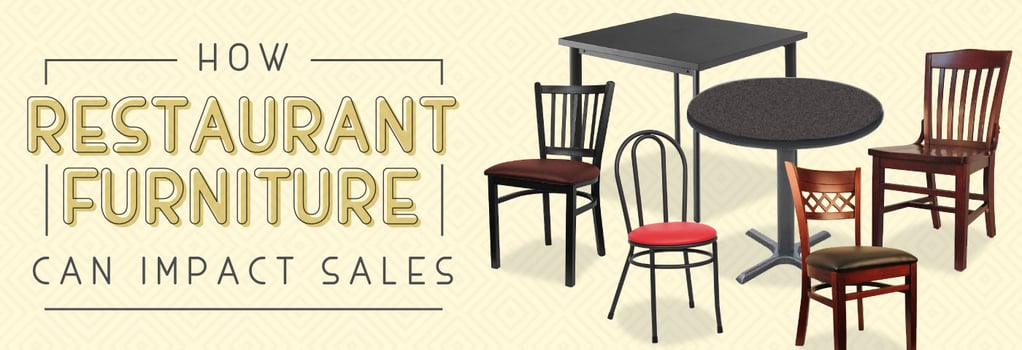
Restaurant furniture contributes to the first impression your customers make of your business, so it's vital to have a cohesive design that reflects the nature of your restaurant. Furnishings communicate to your customer what kind of food and service to expect, significantly influencing your table turnover rates, sales, and even how much you can charge for your dishes.1
Layout
Before browsing restaurant furniture, it's important to understand your dining area's layout. For family dining, or to fit more tables into small areas, compact booths may be the best way to go. Tables and chairs are the most appropriate furniture for formal dining and can be implemented in most dining room layouts. Many customers have a strong preference for one type of seating versus the other.
A thoughtfully designed dining room layout is one way you can influence customer perception of your business. A busy atmosphere can improve your turnover time, so if that's your goal, try to position each table with a good view of the entire dining room. If your intent is to upsell customers on items such as wine and dessert, consider designing your dining area to give each table privacy, so patrons are tempted to linger.2
Seating
The chair is the piece of furniture your customers will contact most and it can impact how long your customers decide to stay. A balance must be struck when it comes to restaurant chair comfort. If it's uncomfortable, the customer may choose not to return; if it's too comfortable, the customer may linger too long and occupy space meant for another paying customer.3 Focusing on either upselling or quick table turning can ease your decision between seating types.
Your restaurant's concept often can narrow the type of seating you should consider. Quick-service or family restaurants may choose from metal or plastic chairs, or wood if you aim for a more traditional style. Plastic and metal tend to discourage lingerers more than wood and are simple to wipe clean between guests; however, wood's classic style makes it more popular. It can match almost any décor while encouraging faster turnover than cushioned seats.
More formal settings tend to offer more elegant seating options, with cushioned, wooden chairs or parsons-style chairs. These are more comfortable and encourage diners to linger for wine and dessert. However, you must budget for the upholstery to be cleaned at least twice annually. When considering upholstery colors, keep in mind that light colors stain easier and may need more frequent cleanings.
Tables
Restaurant tables are sold either as a solid piece or separately as a base and table top. Wooden tables are most popular for fine dining restaurants but are more expensive and demand more upkeep than other table top types. Granite is another option that offers visual appeal while being more durable than wood.
Economical options for tables include laminate-coated particle board or melamine. Both materials are durable and easy to clean, making them perfect choices for quick-service restaurants or foodservice operations that attract families with children. These table tops offer cooler dining atmospheres than warm wood, encouraging high table turnover and possibly improving sales.
If you purchase table bases separately, ensure the base can support the weight of the table top you've chosen. Disc- and square-style bases are easy to clean around but can prevent chairs from being pushed in entirely, which means they occupy more floorspace. T-style bases allow chairs to be pushed fully underneath the table but make cleaning beneath it a little more difficult.
- Servicescapes: The Impact of Physical Surroundings on Customers and Employees Journal of Marketing. Accessed August 2023.
- Psychology and Restaurant Design: A Q&A with Cornell University's Stephani Robson restaurant development+design. Accessed December 2022.
- Are Restaurant Chairs Getting More Comfortable? bon appetit. Accessed February 2024.
