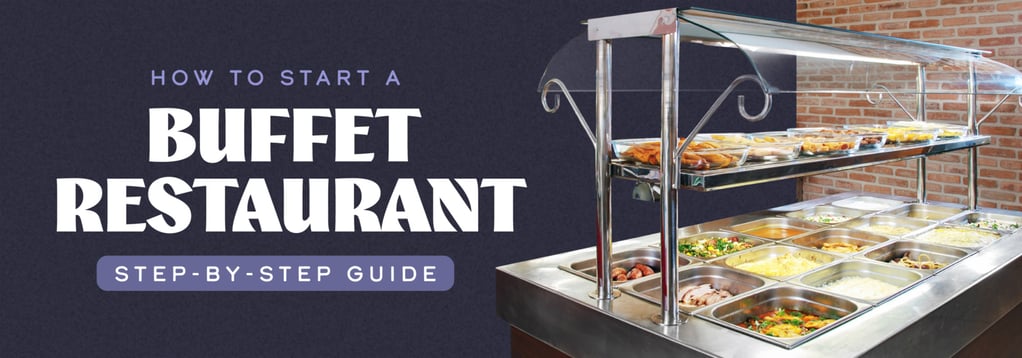
How to Start a Buffet Restaurant
Starting a buffet restaurant requires clear planning, the proper high-volume equipment, and a layout designed to maintain steady guest service and staff flow. This guide gives a concise blueprint that helps align concept, capacity, and traffic pattern before you invest.
Table of Contents
- Step 1. Build Your Buffet Business Plan
- Step 2. Find a Commercial Location
- Step 3. Secure Licensing and Permits
- Step 4. Choose Your Buffet Format
- Step 5. Choose Equipment Needed to Start Your Buffet Restaurant
- Step 6. Design an Efficient Buffet Restaurant Layout
- Step 7. Setting Up Your Buffet Food Bar Line
- Step 8. Staffing for a Buffet Restaurant
- Step 9. Food Safety Requirements
- Step 10. Market Your Buffet
- Step 11. Open Your Buffet Restaurant
Step 1. Build Your Buffet Business Plan
A thorough business plan keeps your concept focused, guides day-to-day decisions, and helps secure financing. Use it to guide your offering, market, and budget before you invest in essential supplies and equipmen t.
Business Plan Key Features
- Concept overview: Define your buffet style, menu direction, price point, and target customer
- Market research: Understand local demand, analyze competitors, and confirm community fit
- Operational structure: Outline staffing, roles, prep/holding workflow, and service hours
- Menu and sourcing: List recipes, portions sizes, supplies, and cost-efficient ingredients
- Financial projections:Map out expected revenue, food costs, equipment investments, and labor
- Milestones: Set timelines for funding, buildout, hiring, training, and soft/opening dates
Step 2. Find a Commercial Location
Location determines everything: dining room capacity, buffet line layout, back-of-house flow, utility requirements, and even permitting timelines. Look for adequate gas, electrical, water, and ventilation connections, along with strong visibility and parking. Check zoning, health permits, and liquor rules so you understand tenant improvement allowances and how long approvals will take. Measure clearances for hot and cold holding, dish return, and ADA access. Choose a space that supports steady guest traffic and quick kitchen-to-line refills.
Step 3. Secure Licensing and Permits
Buffets must obtain local approvals before construction or equipment installation begins. Health and building officials will review your floor plan, hot and cold holding equipment, ventilation, and sanitation procedures. Necessary permits vary by local jurisdiction, so make sure to secure them early to prevent buildout delays. For a deeper overview, see our restaurant licensing guide.
Key permits and approvals to file:
- Business license
- Foodservice permit
- Plan review/health approval of layout and equipment
- Building, fire, and occupancy permits
- Grease interceptor/trap approval
- Alcohol license (if serving beer, wine, or spirits)
- Sign and outdoor seating permits (if applicable)
Step 4. Choose Your Buffet Format
Your format drives guest flow, staffing, and the stations and utilities you'll need. Select the model that matches your menu and volume, then design the line, service paths, and holding equipment to fit.
- Traditional self-serve: Guests plate their own food; requires hot/cold wells, sneeze guards, wide aisles, and plate/silverware drops
- Cafeteria style: Staff serving behind the line; needs rear work counters, heat lamps, tray slides, and portion-control tools
- Hybrid: Mix of self-serve and staffed stations; calls for split utilities and queue control
- Themed: Focused menus (e.g., breakfast, seafood, regional); plan for specialty gear and decor
Step 5. Choose Equipment Needed to Start Your Buffet Restaurant
The right equipment keeps food safe, reduces labor, and speeds replenishment. As Raoul Cervantes, Consultant Services Sales Manager at Hatco, told KaTom, "There is no one-size-fits-all in buffet equipment. The right choice depends on the operation, the menu, and how the food will be served."
Hot Holding Equipment: Maintains safe temperatures on the line and during service.
Cold Holding Equipment: Keeps salads, desserts, and cold sides within HACCP ranges.
Production Equipment: Supports bulk cooking and rapid replenishment from the kitchen.
Support & Service Equipment: Improves flow, safety, and guest experience at the line.
- Plate warmers and/or dispensers
- Dishwashers
- Utility carts
- Sneeze guards
- Utensils
Ready to build your line? Shop buffet equipment to match your format, volume, and menu.
Step 6. Design an Efficient Buffet Restaurant Layout
A clear layout keeps traffic moving, maintains food safety, and speeds replenishment. "A guest experience allows guests to get to the food easily and not feel overwhelmed or congested," Cervantes said. "Creating smaller stations with separation instead of one large, congested station improves guest experience."
Key Layout Considerations
- Customer flow: Place high-traffic items where lines naturally move
- Item placement: Lead with cost-effective dishes, and position high-cost items later in the line
- Spacing: Keep ample room around each station so guests and staff can pass safely
- Lighting & ambiance: Use clean, bright lighting to improve visibility and safety
- Table arrangement: Create clear paths for guests returning to their tables
Need help designing your buffet restaurant and kitchen layout? Explore our Design + Build Services.
Step 7. Setting Up Your Buffet Food Bar Line
Arrange stations in the order guests use them to reduce crowding and keep traffic moving.
- Start with plates, silverware, and napkins at the line entrance
- Lead with salads, fruit, and other cold items
- Follow with hot entrees and sides in guarded hot wells
- Place staffed carving or action stations after the hot line
- Position condiments and toppings off the main path
- Separate desserts and beverages from the hot line
- Add a dish-return route away from the entry
Need more information on bar styles and accessories? See our Food Bars & Accessories Buyers' Guide.

Step 8. Staffing for a Buffet Restaurant
Buffets run on a small team that keeps food fresh, lines clean, and guests moving.
- Line cooks: Batch-cook entrees and sides
- Prep cooks: Handle advance production, portioning, and backup pans
- Buffet attendants: Replenish wells, monitor tempts, wipe spills, and rotate utensils
- Dishwashers: Turn plates, pans, and utensils quickly
- Cashiers/hosts: Manage check-in, guide guests, and control queue flow
Step 9. Food Safety Requirements
Buffets must maintain strict temperature and sanitation standards to keep food safe.
- Hot holding: Keep hot foods at or above 140 degrees F
- Colding holding: Keep cold foods at or below 41 degrees F
- Utensil rotation: Replace serving utensils on a schedule and whenever contamination is possible
- Sneeze guards: Position correctly to shield food at all stations
- Temperature logs: Record regular product temperature checks during service, and correct immediately if out of range
- Handwashing: Provide accessible handwash sinks with soap, towels, and signage for staff
Step 10. Market Your Buffet
Spark interest before opening with clear menus, prices, and photos, and keep it going with simple, repeatable promotions. Claim your local listings, post daily specials, and collect emails and phone numbers on day one. Use themed nights and community partnerships to reach families and groups, and ask happy guests for online reviews to fuel steady traffic.
Step 11. Open Your Buffet Restaurant
Opening week is about execution. Make sure staff are trained on batch cooking, replenishment timing, and station sanitation so the line stays full and fresh. Assign leads to monitor holding temperatures, swap utensils on a schedule, and record safety checks at set intervals. Guide guest flow with clear signs at the entry, a visible plate drop, and attendants at bottlenecks. Adjust pan sizes when needed and swap staff positions between rushes.
Cost Considerations When Starting a Buffet Restaurant
Total startup costs vary with your footprint, menu, and service model. Use the ranges below as a planning guide, then refine with vendor quotes and local contractor bids.
| Cost Category | Estimated Cost Range | What It Covers |
|---|---|---|
| Leasehold improvements | $20,000-$150,000 | Construction, plumbing, electrical work, flooring, layout changes |
| Kitchen equipment | $30,000-$200,000 | Cooking, refrigeration, prep, warewashing, ventilation |
| Buffet line equipment | $10,000-$60,000 | Hot wells, cold pans, sneeze guards, induction warmers, serving stations |
| Furniture and decor | $5,000-$50,000 | Tables, chairs, lighting, decor, guest flow design |
| Operating permits | $1,000-$10,000 | Health permits, business licenses, inspections |
| Initial inventory | $3,000-$15,000 | Food, beverages, disposables, cleaning supplies |
| Staffing and training | $5,000-$25,000 | Hiring, onboarding, uniforms, opening labor |
| POS and technology | $2,000-$15,000 | Point of sale, tablets, printers, guest Wi-Fi, software |
| Marketing | $1,000-$10,000 | Signage, website, promos, local ads |
How Buffets Make Money
Buffets maximize efficiency by producing food in larger batches, streamlining service, and pairing value items with premium choices. The buffet model focuses on steady throughput, tight food-cost control, and high-margin add-ons.
- Bulk food preparation: Cooking in large batches lowers labor per plate and reduces prep time
- Lower FOH labor: Self-service lines reduce staffing needs for taking orders and table service
- Beverage sales: Deliver strong margins and boost checks
- Smart menu engineering: Balance cost-effective staples with premium items to control overall food cost
Tips to Boost Buffet Profitability
Small changes in portion guidance, station design, and menu mix can optimize margins without hurting guest satisfaction.
- Use larger serving utensils for cost-effective dishes and smaller ones for premium items
- Add salad, soups, and bread stations to naturally regulate appetite before high-cost entrees
- Swap in smaller pans and refill more often to reduce waste and keep food fresh
- Offer appropriately sized plates to discourage overserving and excess leftovers
- Track what guests take and when, then adjust batch sizes and timing to match demand
- Place carving or action stations where staff can control portions without slowing the line
Start Your Buffet with the Right Equipment at KaTom
Set your buffet up for success with reliable hot and cold holding, production, and serving equipment from KaTom. Explore our full range of buffet and catering equipment, and for layout and concept ideas, see our guides on buffet and catering concepts.
Buffet Restaurant FAQs
Are buffets profitable?
Yes, when food costs are controlled, labor is efficient, and the menu is designed for margin. Choosing the right market is essential, while strategic line layout and high-margin beverages further strengthen revenue.
How much space do I need to open a buffet restaurant?
More than a typical restaurant, since you must seat guests and support self-service stations. Plan for clear traffic flow around hot wells, cold wells, and beverage areas, plus ample back-of-house room for prep, cooking, and storage.
How do buffets keep food at the right temperature?
Buffets use hot wells, steam tables, heat lamps, and induction for hot items and refrigerated pans or frost tops for cold. Log temperatures during service, swap shallow pans often, and correct out-of-range readings immediately.
How many staff members does a buffet need?
Buffets typically have fewer servers than full-service concepts. This smaller team should include a kitchen lead, line and prep cooks, dish and sanitation staff, and attendants to clear tables and maintain buffet stations.
How do buffet restaurants reduce waste?
Using smaller holding pans, cooking and refilling in small batches, and tracking which items run out quickly. Also, smaller plates and portion-guided serving tools help balance guest servings and cut scrap.

