Full-Cube vs. Half-Cube Ice
Foodservice operations and hospitality businesses use a variety of ice shapes for food preservation, merchandising, and beverage service. Choosing between full-cube and half-cube ice primarily comes down to how you serve drinks. Full cubes melt slower and preserve drink quality, while half cubes cool drinks faster and work better for high-volume service and blending. Use this guide to compare the styles and choose the best option for your operation.
Should You Choose Full-Cube or Half-Cube Ice?
Choose half-cube ice for:
- Fountain drinks
- Blended drinks
- Frozen cocktails
- Self-serve beverages
Choose full-cube ice for:
- Sodas
- Tea
- Water
- Cocktails
- Liquor pours
- Bagged ice
The best choice depends on how your business uses ice.
"Ultimately, it comes down to the bar's preference and presentation that they want to have." — David Hyttel, VP of Sales for ITV Ice Makers
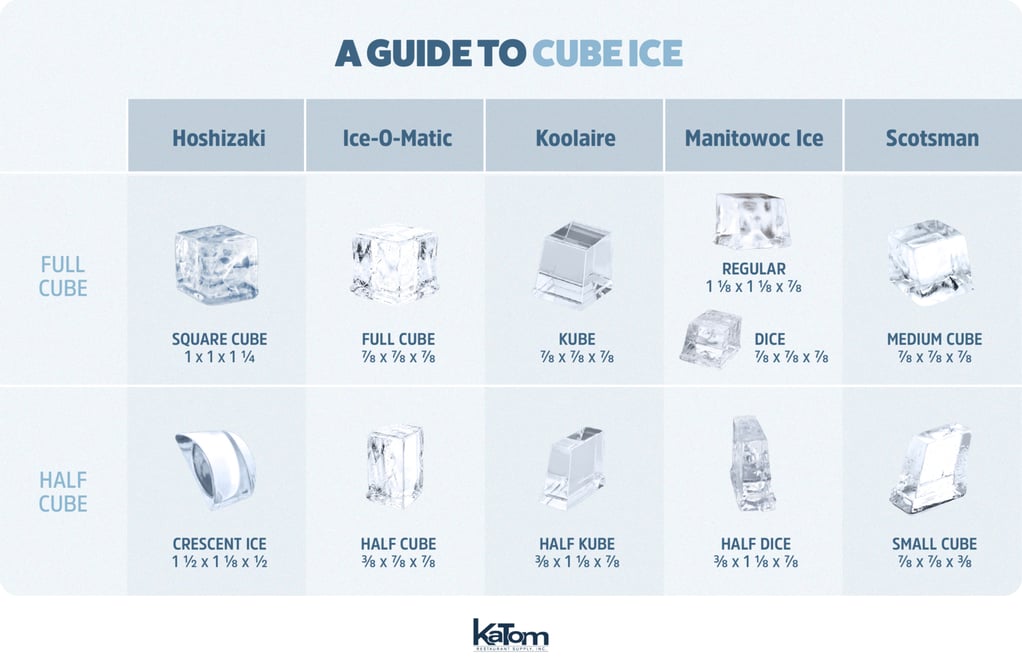
Commercial ice cube makers produce cube ice by running water over a freezing evaporator grid. The size and shape of that grid determines whether the machine produces full-cube ice, half-cube ice, crescent ice, or another cube style.
The main difference is size. Full-cube ice is larger and melts more slowly, while half-cube ice is smaller, chills faster, and is easier to dispense or blend.
What Is Half-Cube Ice Best For?
Half-cube ice, also known as half-dice ice size has the smaller dimensions of the two cube types, making it suitable for blended beverages, such as smoothies and margaritas, because it's crushed quickly and easily. If your establishment contains self-serve ice dispensers, half-cube ice machines help ensure consistent, reliable dispensing because the ice is less prone to getting stuck in dispenser chutes.
Half-cube ice also cools drinks quickly because more of the ice's mass is exposed as surface area. Since it packs more densely in glasses, it can also displace more liquid than full-cube ice, which helps control drink costs.
"The half cube will have less fluid and more ice, and you can fit more ice in a half cube" — David Hyttel, VP of sales for ITV Ice Makers
Is Crescent Ice the Same as Half-Cube Ice?
Although crescent ice has larger dimensions than most half cubes, it generally serves the same purpose as half-cube ice and features a similar liquid displacement. Hoshizaki KMedge® ice makers are especially known for this unique cube style, which is commonly used in beverage service.
What Is Full-Cube Ice Best For?
Full-cube ice is a solid choice for serving a variety of beverages, including soda, tea, and water. Its larger size means operators who serve mixed drinks or pours of liquor but don't wish to invest in a specialty ice maker can use full-cube ice to serve alcoholic drinks on the rocks. "A full cube will have more fluid and less ice just because it sits differently," Hyttel added.
Full-cube ice has the advantage of melting slowly, so it won't water down drinks as quickly as half-cube ice. This versatility can save space in small restaurants and streamline preparation for quicker service. Full-cube ice is also suited for ice bagging operations and other businesses, like convenience stores that sell bagged ice.
| Ice Type | Best For | Advantages | Considerations |
|---|---|---|---|
| Full-Cube Ice | Soda, tea, water, cocktails, liquor pours, bagged ice | Melts more slowly, works across many beverage types, holds shape longer | Doesn't blend or dispense as easily as smaller ice |
| Half-Cube Ice | Fountain drinks, blended drinks, frozen cocktails, self-serve dispensers | Cools quickly, blends easily, dispenses reliably, packs tightly in glasses | Melts faster than full-cube ice |
| Crescent Ice | General beverage service | Packs well in glasses and supports drink displacement | Shape and size vary by manufacturer |
Choosing an Ice Cube Maker Based on Ice Type
Once you've decided which type of ice cube best suits your needs, decide which type of ice cube maker fits your layout and workflow. When choosing an ice cube maker, it's important to consider how much space is available for your ice machine and if it fits your kitchen workflow.
How Much Ice Does Your Business Need?
Whether your operation uses convenient self-service dispensers or high-capacity bins, KaTom offers guidelines for sizing your commercial ice machine by production capacity, or you can consult the sizing estimates specific to cube ice below.
| Business Type | Estimated Daily Use |
| Restaurant | 11/2 lbs. per customer |
| Cocktail Lounge | 3 lbs. per customer |
| Quick-Service Restaurant | 5 oz. per 7- to 10-oz. drink 8 oz. per 12- to 16-oz. drink 12 oz. per 18- to 24-oz. drink |
| Convenience Store – Beverages | 6 oz. per 12-oz. drink 10 oz. per 20-oz. drink 16 oz. per 32-oz. drink |
| Convenience Store – Bagging | Calculate lbs. per bag x bags sold per day |
| Healthcare Facility | 1 lb. per patient |
The best way to estimate your business' ideal production capacity is to count the average amount of ice used per seat or per person each day. If you're unsure which production capacity your establishment requires, it's better to size up to prepare for busy days.
| Business Type | Recommended Ice Type | Recommended Machine Style |
|---|---|---|
| Restaurant | Full-cube or half-cube ice | Ice machine head with bin |
| Bar or cocktail lounge | Full-cube ice for slower melting, half- cube for blended drinks | Modular ice machine or undercounter ice machine |
| Fast food restaurant | Half-cube ice | Countertop dispenser or high-output modular ice machine |
| Convenience store beverages | Half-cube ice | Ice machine with beverage dispenser |
| Convenience store bagging | Full-cube ice | Ice machine head and bin |
| Cafeteria | Half-cube ice or dispenser-friendly cube ice | Countertop dispenser or modular unit |
| Office or waiting room | Half-cube or crescent ice | Countertop dispenser |
