
What Is a Commercial Range?
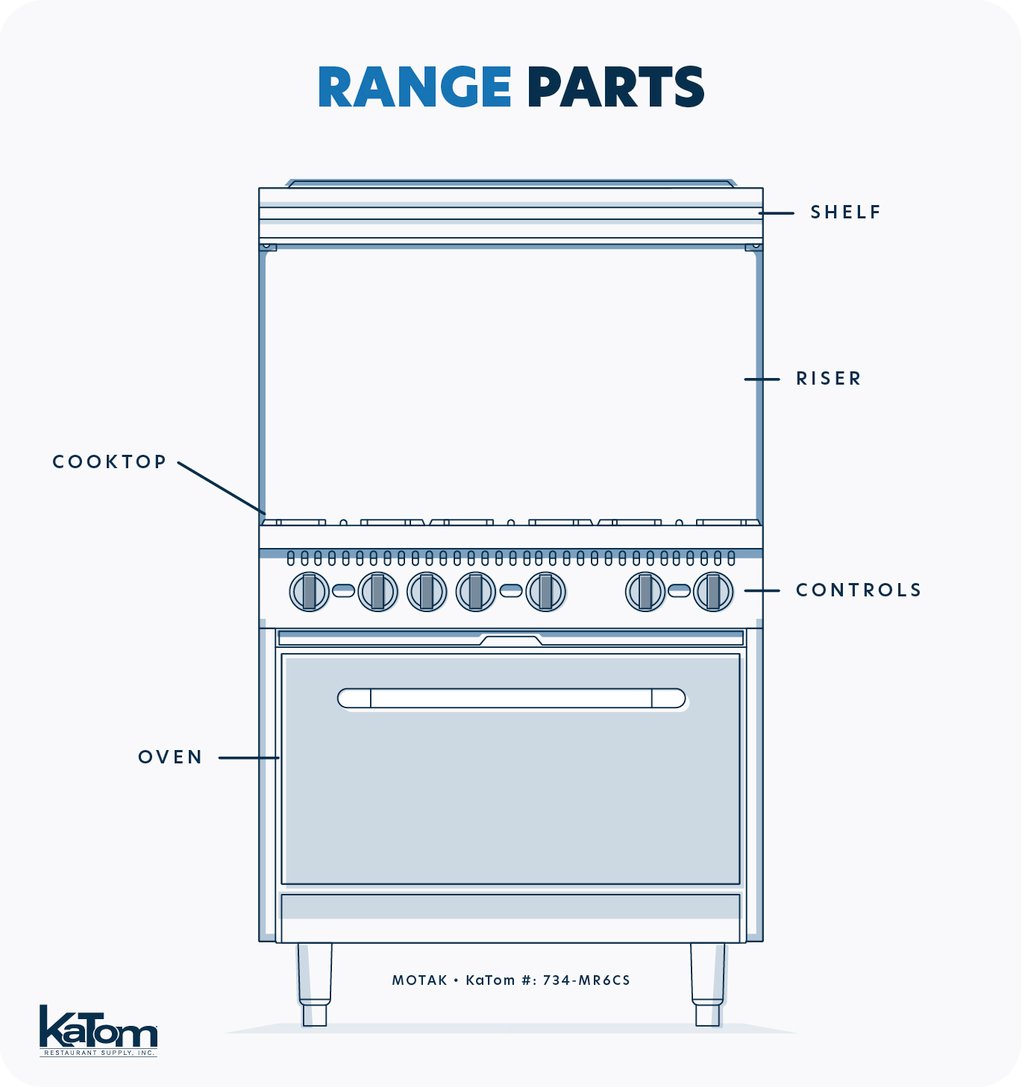
Also known as stoves, commercial ranges are powerful cooking appliances with multiple stations found in most foodservice operations. Standard stoves consist of range tops and range bases, while specialized models may feature extra cooking stations, unique cooktops, or modular designs.
Commercial Range Definitions
- Range Tops: Also known as cooktops, they accommodate pots, pans, or direct grilling
- Range Bases: Typically house an oven or storage cabinet beneath the range top
- Risers: Stainless steel backsplashes that often feature a shelf at the top; risers enhance ventilation and protect kitchen walls from grease splatters
- Cooking Add-Ons: Include broilers, salamanders, and cheese melters
- Exhaust Hoods: Ventilation systems installed above ranges to capture hot air, grease, and fumes with fans and filters
Range Top Options
A commercial range top sits at countertop height and forms the primary cooking surface. Range tops can include burners, griddles, charbroilers, or a combination of these across the wide cooktop surface.
- Burners: Heat standard cookware and typically house four to eight hobs per range
- Griddles: Offer flat steel surfaces for direct-contact cooking
- Charbroilers: Use grooved grills over open flames for searing proteins and whole vegetables with the classic grill marks customers love
- French Tops: Have central burners that provide gradient heat for cookware
- Hot tops: Provide a flat surface for evenly heating cookware
- Planchas: Feature flat tops with round central burners for direct cooking with multiple temperature zones
Range Base Options
Located beneath the range top and control dials, bases contain ovens or storage.
- Standard Ovens: Bake, roast, and broil with heat from the top and bottom
- Convection Ovens: Use fans for quick, even browning
- Space-Saver Ovens: Offer smaller footprints that still fit standard pan sizes
- Storage Cabinets: Provide open space for storing cookware and supplies
- Refrigerated Bases: Feature built-in refrigeration for convenient ingredient access
Additional Range Features
While most commercial ranges have a cooktop and base, some options include additional cooking features. Large, heavy-duty ranges often have split cooktops, which contain two separate range tops side by side.
Specialty Cooking Add-Ons
- Salamanders: Broil with intense heat in self-contained units between bases and cooktops
- Cheese Melters: Perform smaller heating tasks and can be installed on risers above range tops. These can't be used for cooking, only finishing.
Specialty Ranges
- Stock Pot Ranges: Come with large grates to support heavy pots
- Wok Ranges: Accommodate the rounded bottoms of woks
- Induction cooktops: Conserve energy by directly heating compatible cookware
FAQ: Commercial Ranges
What are common range sizes?
Range sizes have standard depths and heights, while their width can vary between 24 and 72 inches. Modular ranges come as standalone range tops or bases for building custom cooklines.
How are commercial ranges powered?
Ranges are either powered by gas or electricity. Gas models use liquid propane or natural gas, depending on your operation's utility setup and availability. Electric models use standard heating elements or induction technology.
How do I maintain a commercial range
Ranges require regular cleaning. Create a schedule for cleaning your cooktop, base, and exterior, paying close attention to burner ports, heating elements, and controls.
What is the best commercial range for my operation?
The best range depends on your menu, service volume, available space, and utility constraints. When purchasing a commercial range, consider factors such as cooking style, output, and power source.
How do I find details on my commercial range?
Look for a nameplate on your commercial range. This tag provides the manufacturer’s name and contact info, details about your range, and specifications for its operation. Commercial range nameplates are sometimes metal and usually found on the bottom of the range or inside the kick panel.
