Comparing Range Sizes
Commercial range sizes span from compact 24-inch units to massive 72-inch heavy-duty models. The most common size is a 36-inch range with six burners and a full-size oven, though larger models with more burners or specialty cooktops are available for high-volume service.
Range Size Chart
| Size | Width (in) | Burners/Ovens | Common Uses |
|---|---|---|---|
| Compact Ranges | 24" | 4 burners; 1 oven | Small kitchens, food trucks |
| Standard Ranges | 36" | 6 burners; 1 oven | Mid-size restaurants, catering |
| Large Ranges | 48" | 8 burners or griddle combo; 2 ovens | High-volume cooking |
| Extra-Large Ranges | 60" | 10 burners or custom tops; 2 ovens | Banquet service, hotels |
| Heavy-Duty Ranges | 72" | Multiple cooking zones; 2 ovens | Institutional and industrial kitchens |
| Modular Ranges | Varies | Custom cooking zones and ovens | Specialized, chef-driven kitchens |
In addition to the top selling sizes in the chart above, ranges also come in 12-inch, 18-inch, 32-inch, and 34-inch configurations to accommodate various kitchen designs. Shop KaTom to find all available range sizes.
Standard Range Sizes Explained
Compact Ranges
At 24 inches wide, compact ranges typically feature four burners and a 20-inch-wide space-saver oven. They fit in tight spaces found in food trucks, concession stands, and small cafes.
Standard Ranges
36-inch ranges typically have six burners and a 26-inch-wide standard oven, making them the most popular size for mid-sized kitchens.
Large Ranges
48-inch ranges have a much higher cooking capacity, with eight burners and two 20-inch oven spaces. These ranges excel at high-volume cooking.
Extra-Large Ranges
60-inch ranges are ideal for hotels or banquet halls that need to produce set meals in high volumes. They come with two 26-inch-wide ovens and support as many as 10 burners. These models often have additional cook tops like griddles or charbroilers on one side.
Heavy-Duty Ranges
Heavy duty ranges are 72 inches wide and often have multiple cooking zones or as many as 12 burners with two 26-inch oven cavities. These ranges are often found in institutional kitchens for bulk cooking or restaurants with large menus.
Modular Ranges
Modular ranges can be small or large, depending on each operator's needs. Various range tops can be paired with storage cavities, standard ovens, or convection ovens. Modular ranges are best for high-volume restaurants with highly specific menu needs.
Types of Range Configurations
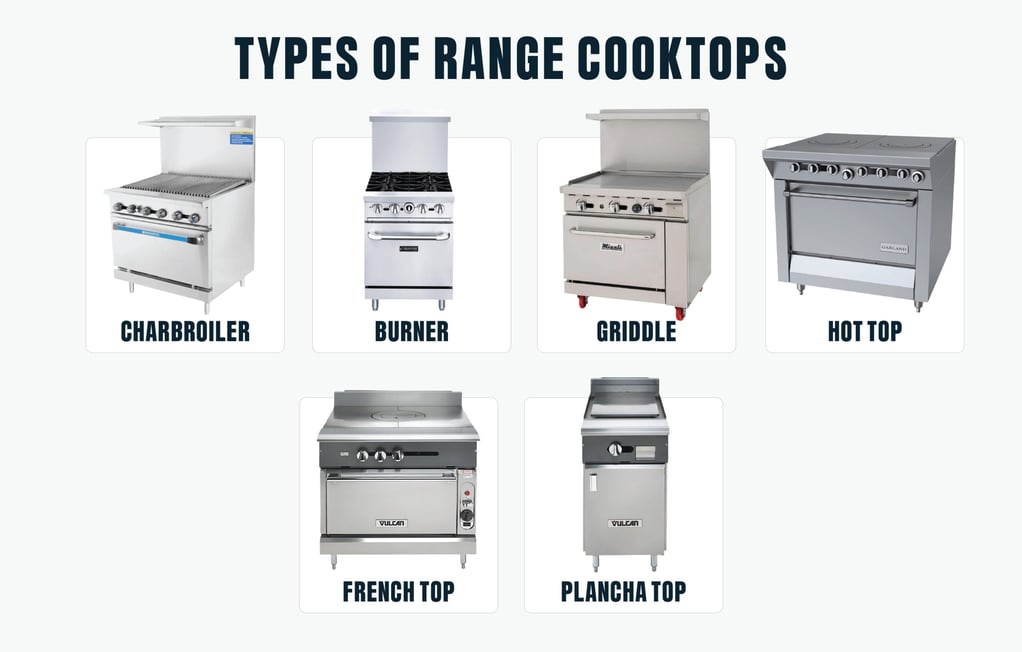
Ranges offer several cooktop options, and some models handle multiple burner and griddle combinations.
- Burners: Standard flames or elements for heating individual pots and pans
- Griddles: Smooth cooking surfaces with even heat for bulk grilling
- Charbroilers: Burners below a grill grate for smoky, charred flavors
- Hot top: Burners under a metal plate heat multiple pots and pans for complex dishes
- French Top: Centrally heated metal plate lets users arrange pans at different cooking temperatures
- Plancha Top: Large cooking surface heated with concentrated burners for high-heat grilling
Range Base Options
Most ranges have standard ovens below the cooktop, but some models include convection ovens, storage, or a mix of two different bases.
Specialty Ranges
- Stock pot ranges: Large, single burners for soup or stock pots
- Wok ranges: Single, high-BTU burner specifically shaped for holding woks
- Induction ranges: Energy-efficient magnetic heating technology
- Range accessories: Replacement grates and burners, wok rings, and shelves
How to Choose the Right Range Size
Consider the following when choosing which range size to purchase:
- Menu & Volume: Larger menus and higher order volumes need more cooking capacity
- Kitchen Space: Measure hood and counter clearances before choosing; allow room for back risers on ranges
- Utility Type: Gas and electric models have different footprints, installation requirements, and energy costs
- Future Growth: Choose a size that can handle increased demand, or a modular design that can be adjusted for added output
FAQs About Range Sizes
What's the average size of a range?
Commercial ranges are anywhere from 12 to 72 inches wide. Standard ranges are 36 inches wide
Are 30-inch stoves actually 30 inches wide?
Commercial ranges and stoves are typically unavailable in 30-inch widths; the closest sizes sold by KaTom are 24 inches and 32 inches. These include 20-inch and 26-inch ovens respectively.
What size range is best?
The best range primarily depends on your output. Generally, the more you'll need to cook, the larger your range should be. Average restaurants do fine with 36-inch models, but other operations may need a larger size. If you operate a food truck or concession stand, opt for 24-inch models. Ranges take up lots of kitchen space, so consider what other kitchen equipment you'll need before purchasing your range.
What size is a luxury range?
Luxury ranges are often 60-inch or 72-inch models, though some luxury models are standard sized. Premium ranges are mostly marked by higher BTUs per burner, 100-percent stainless steel construction, and solid welds.
Shop All Range Sizes at KaTom
KaTom offers a full selection of commercial ranges in sizes from compact 24-inch units to 72-inch heavy-duty models. Whether you need a space-saving range for a food truck or a high-capacity model for institutional cooking, you’ll find durable, high-performance options here.
Shop all commercial ranges to find the right size for your kitchen.
