Coffee Shop Equipment Startup Guide
The U.S. coffee market is valued at $24.98 billion as of 2026 and is expected to reach $31.05 billion by 2031.1 However, despite a seemingly lucrative market, most coffee shops fail within their first five years of operation. For anyone dreaming of opening their very own coffee shop in this market, careful planning is required around the location, menu, equipment, and operating costs. Operators must define the concept, create a realistic budget, secure a suitable location and required permits, select the right equipment, build the menu and service model, and outfit the space for expected peak demand.
In this article, we'll cover everything a coffee operation needs before the grand opening.
Already planning your space? Talk to a KaTom equipment specialist about brewer sizing, utility requirements, workflow, and layout.
Key Takeaways
- Your concept and menu should drive your equipment list, not the other way around
- Size brewers, grinders, espresso machines, refrigeration, and ice makers around peak demand rather than daily demand
- Evaluate electrical capacity, water connections, drainage, and equipment clearances before signing a lease or ordering major equipment
- Use a soft opening to test barista workflow, drink ticket times, ice supply, refrigeration capacity, menu, and point-of-sale (POS) flow
Coffee Shop Startup Planning at a Glance
1. Decide What Type of Coffee Shop to Open
The type of operation will determine the drink menu, service speed, counter space, utility requirements, equipment needs, and whether food will be served.
Before choosing equipment, answer the following questions:
- Who are the target customers: commuters, students, office workers?
- Will the operation serve food, and will it be made onsite or sourced from a vendor?
- Which coffee drinks and bakery items will be central to the menu?
- How much brewed coffee must be ready before a rush?
- How many baristas can work comfortably behind the counter during peak service?
- What operational features will distinguish the operation from nearby competitors?
Not sure what equipment your concept requires? Talk to a KaTom specialist before finalizing the equipment list.
2. Research Your Market and Evaluate Locations
Market research should define target customers, expected demand, nearby competitors, and appropriate price points. Location research should determine whether the space can physically support the equipment and customer traffic.
Evaluating a new space? KaTom Design + Build can help assess equipment layout and site requirements before you make major purchasing decisions.
3. Create Your Coffee Shop Business Plan
A coffee shop business plan should connect the concept, menu, equipment, staffing, and budget into one operating model. The plan should outline how your operation will handle receiving, storage, brewing, service, and cleaning. Define the menu and volume assumptions before building the equipment list so purchases reflect the operation's actual needs.
4. Estimate Coffee Shop Startup Costs
Coffee shop startup costs vary widely by location, menu, seating options, food offerings, and equipment. Instead of relying on a broad national average, build the budget by category and separate necessary opening costs from expenses that can wait.
5. Fund Your Coffee Shop
Funding should cover construction, equipment, opening inventory, licenses, staff training, and working capital. Operators should account for post-opening payroll, inventory, and repairs when allocating funds to construction and equipment. Common funding sources include:
- Owner capital
- Business partners
- Commercial loans or SBA-backed loans
- Investors
- Equipment financing or leasing, where appropriate
6. Register the Business and Secure Licenses
Coffee shop licensing depends on the business structure, location, food offerings, and local rules. Operators should plan for business registration, tax registration, and foodservice approvals before opening. Common requirements may include:
- Business registration
- Federal tax identification number
- Sales tax registration
- Foodservice permits
- Health department approval
- Certificate of occupancy
- Fire inspection
- Building permits
- Sign permits
- Alcohol licensing if serving cream liqueurs
- Mobile vending permits if operating a cart, truck, or kiosk
- Food manager certification
Requirements vary by jurisdiction. Confirm current rules, fees, application requirements, inspections, and food-safety procedures directly with the appropriate federal, state, and local agencies and qualified professionals.
7. Finalize the Menu and Supplier Plan
A cafe built around drip coffee and pastries needs different equipment than a high-volume espresso bar. Determine the menu first, then select equipment that supports it.
8. Design the Layout for Efficient Workflow
The coffee shop's layout should support service speed, drink consistency, cleaning, and restocking. A basic espresso station workflow may look like this:
- 1 Ordering
- 2 Grinding and Brewing
- 3 Milk Steaming
- 4 Flavoring
- 5 Serving
- 6 Cleaning and Restocking
Need help turning your menu and service model into a workable layout? Explore KaTom Design + Build.
9. Build the Coffee Shop Equipment List
Coffee Brewers — Select Based on Peak Demand
A coffee brewer must be able to keep up with peak demand and support the operation's workflow. Before making a purchase, operators should determine:
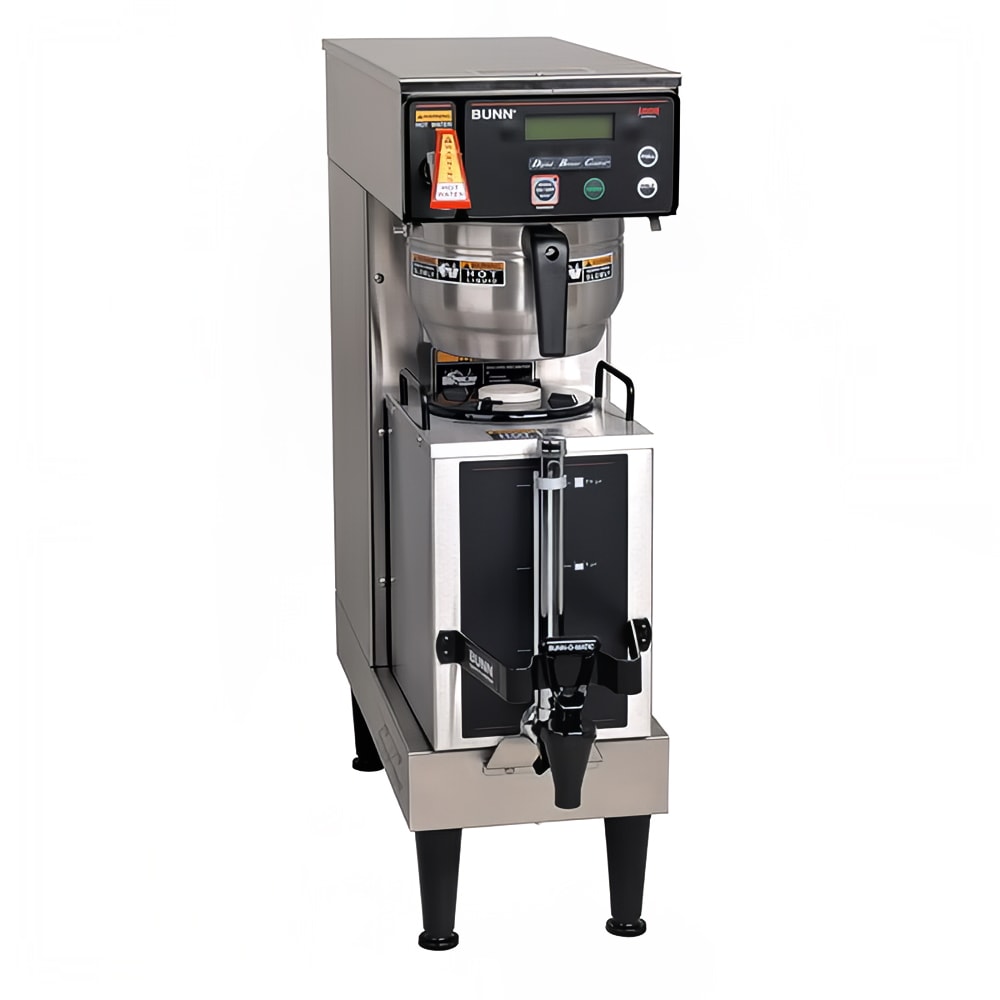
- Peak hourly volume
- Available counter space
- Capacity per server
- Expected hold time
- Cleaning process
- Voltage
- Whether coffee will be brewed into glass decanters, thermal airpots, or large satellites
For additional guidance on selecting a coffee brewer, check out KaTom's commercial coffee maker buyers' guide.
Espresso Machines — Serve Specialty Espresso Drinks
An espresso machine should match drink volume, barista skill, available utilities, and the desired level of control over preparation. Semi-automatic espresso machines rely more heavily on barista technique, while automatic machines handle more of the process and can simplify training. Key espresso machine decisions include:
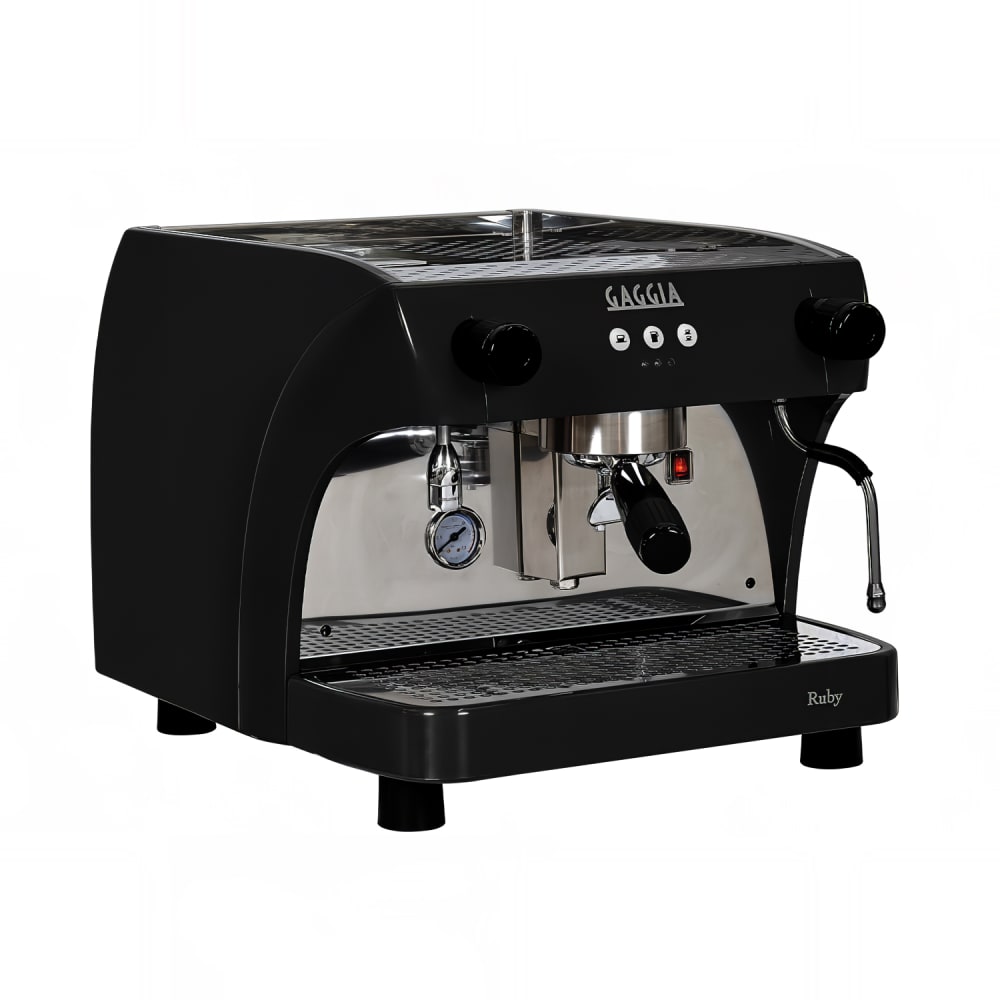
- Automation: Semi-automatic machines require more manual control, while automatic and super-automatic machines automate more steps of espresso preparation
- Boiler Capacity: Steam capacity must be able to keep up with lattes, cappuccinos, and other milk-based espresso drinks
- Water Connections: Plumbed espresso machines require planning for water connections, filtration, and drainage
- Electrical Connections: Confirm voltage, phase, amperage, and plug requirements before ordering
Coffee Grinders — Match the Grinder to the Menu
A coffee grinder should match the brewing method and the number of drinks staff must prepare during the busiest hour. Espresso service needs a grinder that produces a consistent fine grind, while batch-brewed coffee needs a grinder that can handle larger batches without slowing the line. To determine grinder needs, consider the following:
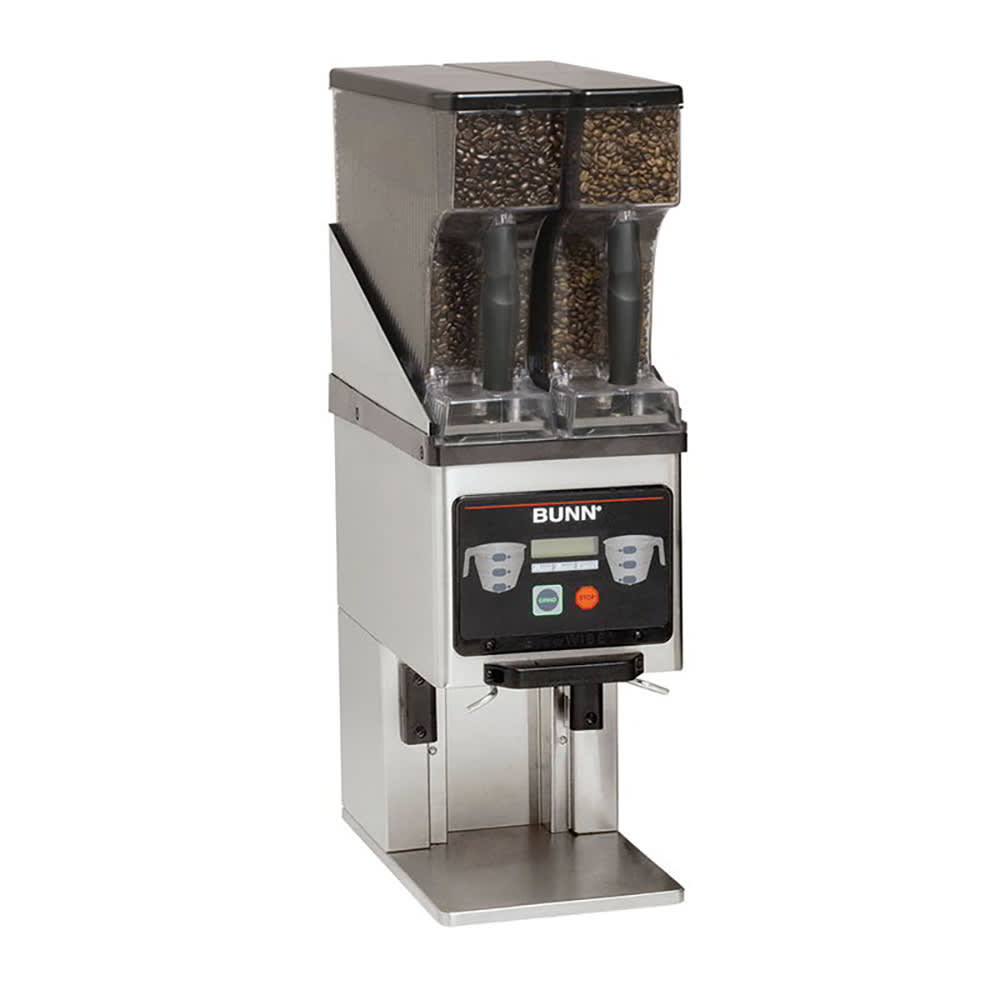
- Will drip coffee, cold brew, or retail beans need a separate grinder?
- How many pounds of coffee will be ground during the busiest period?
- Will staff need programmable dosing or manual control?
- How much counter space is available beside the brewer or espresso machine?
- How will staff clean the grinder and access the hopper?
A cafe with a focused menu may need fewer grinders. A specialty shop offering espresso, decaf espresso, batch brew, retail beans, and cold brew may need multiple grinders to reduce production delays and flavor carryover between coffees.
Cold Brew Equipment — Determine the Need for Nitrogen
Cold brew requires advance preparation, refrigerated storage, and dispensing equipment that differs from standard iced coffee service. Operators should size the system around the batch schedule, expected daily demand, available refrigerated storage, and whether the menu includes standard cold brew, nitro cold brew, or both. Use this planning method:
Expected cold brew servings per day × Serving size + Reserve volume for peak periods = Target prepared volume
Before buying cold brew equipment, determine:
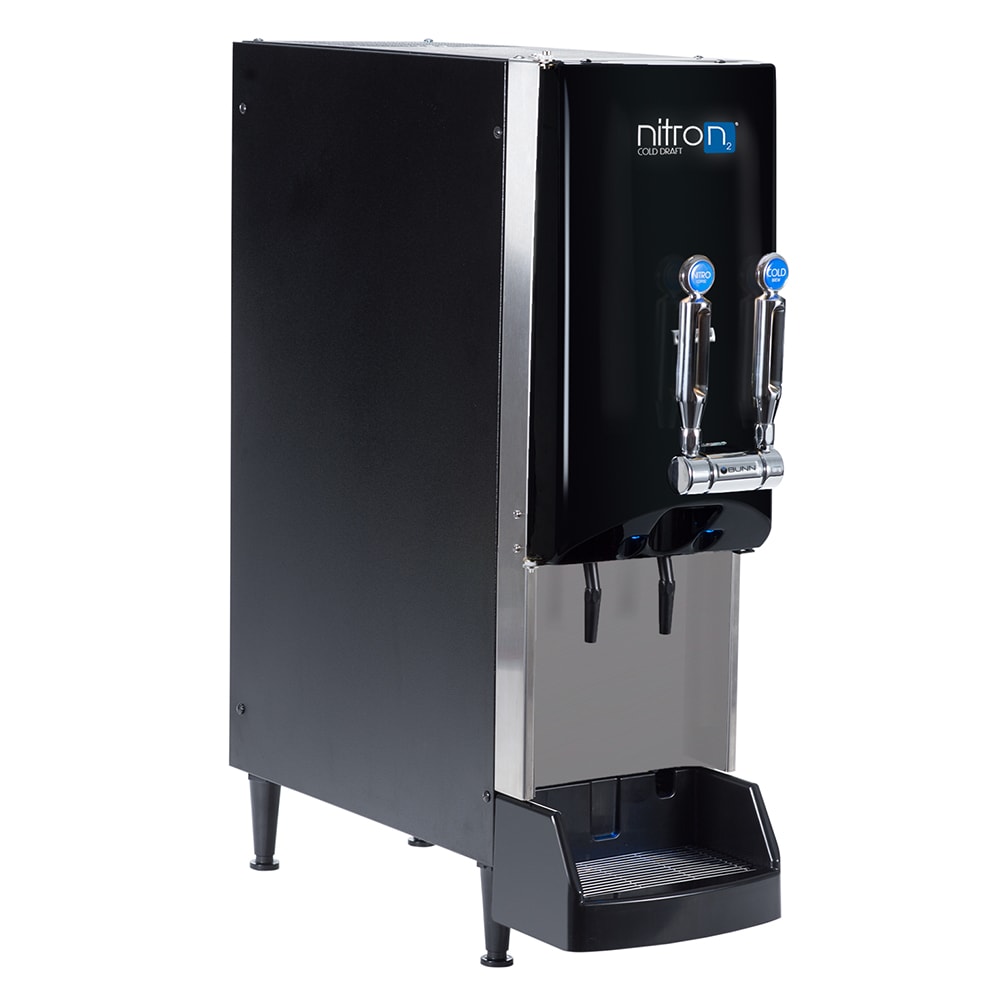
- Whether the shop will serve standard cold brew, nitro cold brew, or both
- Refrigerated holding space for finished cold brew
- Dispenser type, including countertop, kegerator-style, or draft service
- Nitrogen equipment for nitro cold brew
- Cleaning procedures for brewers, containers, lines, taps, and dispensers
Refrigeration — Hold Ingredients and Cold Brew
Choose refrigeration based on what is being stored, how much is needed during peak periods, how often deliveries arrive, and where staff need access. A coffee shop that only serves drinks may rely heavily on undercounter refrigeration for milk and milk alternatives, while a cafe with sandwiches, pastries, packaged items, or bottled beverages may need reach-in refrigeration, prep refrigeration, or refrigerated display cases. Evaluate:
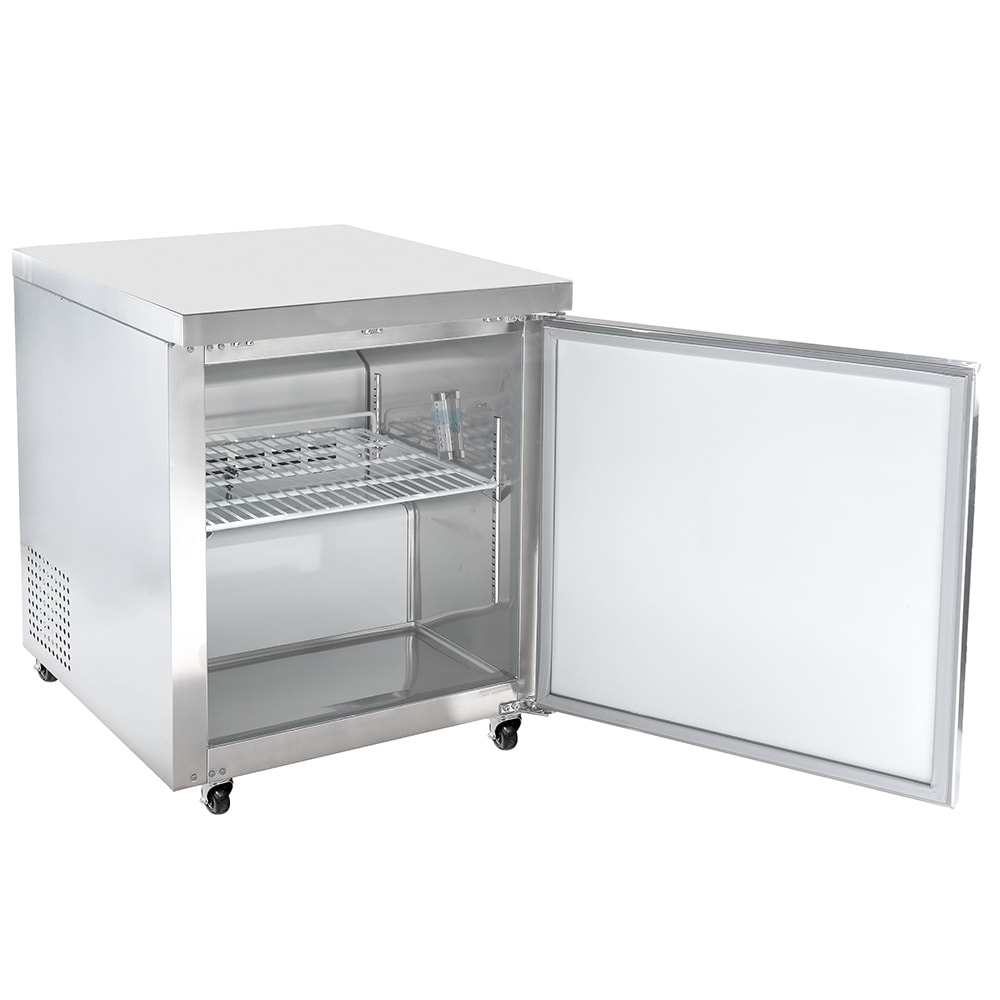
- Milk, cream, milk alternatives, cold brew, syrups, food, and bottled beverages
- Peak inventory and reserve stock
- Door vs. drawer configuration
- Voltage
- Front-of-house vs. back-of-house access
Where to Spend vs. Where to Save on Coffee Shop Equipment
A higher price does not automatically mean a better fit. Prioritize spending where equipment capacity, consistency, durability, and service access directly affect production or uptime, and save where added features don't support the menu, volume, or workflow.
Don't Order Until You Know
Before ordering coffee shop equipment, confirm the specifications that determine whether a unit can be delivered, installed, operated, cleaned, and serviced in the space. Know the following before buying:
- Equipment dimensions
- Doorway clearance
- Voltage, phase, and amperage
- Water connections and drain requirements
- Production or capacity requirements
- Compatible servers, airpots, satellites, filters, and accessories
- Required operating clearances
- Service access
- Ventilation requirements, if applicable
Not sure whether a unit will work in the space? Ask a KaTom equipment specialist before ordering.
10. Set up Inventory, Technology, and Operating Systems
Coffee shops need consistent inventory control because frequently used items turn quickly. Determine target inventory (PAR) levels for beans, milk, pastries, cups, lids, sleeves, syrups, napkins, and cleaning supplies before opening.
11. Hire and Train Staff
Staffing needs should reflect the equipment, menu, service volume, and layout. A high-volume espresso operation, for instance, requires staff members who understand drink sequencing, grinder adjustment, espresso preparation, milk steaming, and equipment cleaning procedures. Common roles include:
- Baristas
- Counter staff
- Drive-thru staff
- Managers
- Kitchen staff, if applicable
- Bakery staff, if applicable
Training should cover:
- Espresso machine startup and shutdown
- Grinder calibration and cleaning
- Coffee holding and rotation
- Allergen awareness for milk and milk alternatives
- Ice handling
- POS and mobile-order procedures
- Dining, self-service, and restroom cleaning, as applicable
- Restocking lids and straws
- Refilling napkins and paper towels
- Keeping the kitchen, lobby, and bathrooms clean
12. Market the Coffee Shop and Prepare for Opening
Before opening, marketing should help customers find the shop and provide accurate information about:
- Website with accurate contact, hours, menu, location, and parking information
- Google Business Profile and other local business listings
- Social media profiles
- Menu and location photography
- Local partnerships and community outreach
- Opening-date promotion
- Email and SMS marketing, where appropriate
Host a Soft Opening
A soft opening gives operators a chance to test the coffee shop under controlled demand and identify bottlenecks before the grand opening. Test:
- Barista workflow
- Drink ticket times
- Ice supply
- Brewer and espresso production capacity
- Blender station setup, if applicable
- Equipment performance
- POS and payment flow
- Refrigeration capacity
Coffee Shop Opening Checklist
Use this checklist to track key planning, equipment, staffing, inspection, and opening tasks before launching a coffee shop.
| Task | Complete? |
|---|---|
| Choose a coffee shop concept | |
| Research competitors and local demand | |
| Decide whether food will be served | |
| Develop preliminary menu | |
| Determine startup and operating costs and secure funding | |
| Evaluate location and utilities | |
| Confirm refrigeration, ice, and water needs | |
| Register business | |
| Obtain licenses and permits | |
| Secure insurance | |
| Finalize menu and suppliers | |
| Design coffee bar and workflow | |
| Create coffee supplies and equipment list | |
| Verify equipment specs and utilities | |
| Order and install equipment | |
| Set up POS and inventory systems | |
| Order cups, lids, straws, and cup holders for to-go service | |
| Hire and train staff | |
| Complete required inspections | |
| Hold soft opening | |
| Address operational bottlenecks | |
| Host grand opening |
Ready to Build Your Coffee Shop Equipment List?
KaTom can help operators compare commercial coffee brewers, espresso machines, grinders, hot water dispensers, cold brew equipment, ice machines, refrigeration, display equipment, and smallwares based on menu, space, utilities, and expected service volume. Choose an equipment package that supports the way the shop receives, stores, prepares, and serves coffee during peak periods.
Frequently Asked Questions About Opening a Coffee Shop
How much does it cost to open a coffee shop?
The cost to open a coffee shop varies by concept, location, menu, and equipment needs. Determine the cost of property, permits and licensing, furniture, refrigeration, cooking equipment, smallwares, opening inventory, staff training, and marketing to estimate startup costs and post-opening capital needs.
What licenses do you need to open a coffee shop?
Requirements vary by location and business structure, but coffee shop owners may need business registration, a federal tax ID, sales tax registration, foodservice permits, health department approval, a certificate of occupancy, and applicable fire, building, sign, and local business approvals. Operations serving alcohol, such as cream liqueurs, also need applicable licensing.
What equipment do you need to open a coffee shop?
Common coffee shop equipment includes commercial coffee brewers, grinders, cold brew and nitro cold brew equipment, water filtration, refrigeration, hot water dispensers, sinks, POS equipment, smallwares, and storage equipment. Espresso machines, ice makers, and other equipment depend on the menu and service model.
How do you choose the right coffee brewer for a coffee shop?
Choose a coffee brewer by peak hourly volume, available counter space, water connection, and service format. Decanter brewers, airpot brewers, satellite brewers, urns, pourover brewers, automatic brewers, and bean-to-cup machines each support different workflows.
References
- U.S. Coffee Market Size & Share Analysis – Growth Trends and Forecasts (2026-2031). Mordor Intelligence. Accessed August 2026.
