
Food Truck Equipment on a Budget: What Actually Holds Up?
Outfitting a food truck with the right equipment calls for thorough planning. Each unit must balance size, weight, capacity, and durability. While some supplies require large investments, many budget brands provide reliable equipment for simple tasks.
Finding the Best Food Truck Equipment
Food truck appliances must meet specific criteria for lasting performance, so when equipping a food truck, prioritize units that:
- Fulfill the concept menu
- Fit the kitchen footprint
- Withstand vibration and movement during transit
- Support fast production
- Meet local code requirements
Because food trucks often operate with unique menus, they rarely use cookie-cutter layouts. Even when purchasing a used food truck, operators likely need to outfit the vehicle with the right supplies for their concept.
Budget vs. Premium: How Much to Invest in Equipment
When outfitting your food truck, contact local equipment service companies to find out what brands they work on and if they service equipment in food trucks. Choosing brands serviced by your local providers will save a lot of time and money in the long run.
Essential appliances and complex tools are typically worth a higher investment:
- Primary Refrigeration: Chef bases and large undercounter units should maintain steady cold storage
- Large Cooking Equipment: Ranges, ovens, and specialty appliances need maximum output and reliability
- Ventilation and Fire Suppression: Cooking units require constant airflow for health and safety
Consider your food truck's menu when considering Mid-grade or budget options:
- Ice Machines: Invest more for drink-focused operations; less for casual drink menus or low-volume service
- Fryers: Higher investment for fried-menu concepts; less for more auxiliary use
- Smallwares: Invest more for high-volume production; budget models can suffice for startups, small trucks, or food carts
Food truck owners can reduce startup costs by purchasing budget-friendly options for simpler equipment:
- Sinks and Tanks: Straightforward operation and construction
- Secondary Refrigeration: Smaller undercounter units and prep tables
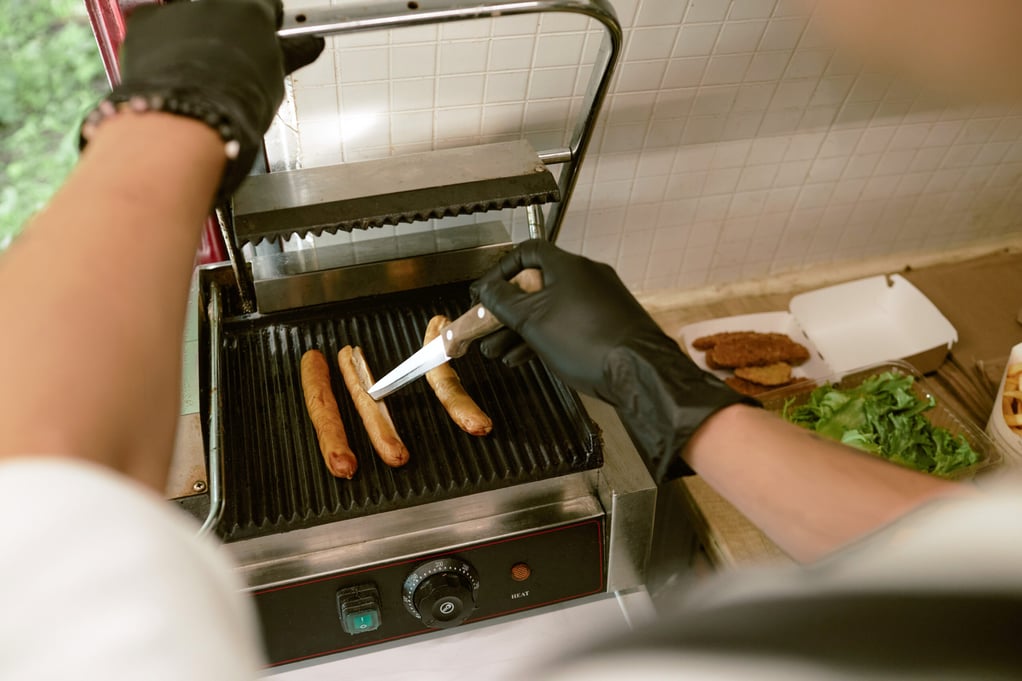
- Auxiliary Cooking Equipment: Toasters, microwaves, and other models handling lower volumes
- Griddles and Charbroilers: Simple to operate and easy to repair
- Outdoor Furniture: Enable semi-permanent setups
- Work Tables: Customize basic stainless steel designs to fit footprint
Maximizing Space with Small Supplies
Purchasing the right equipment is more than simply finding the right price; each piece must fit the truck or trailer space. Pay attention to equipment dimensions, door swing, and drawer clearance. Most food truck layouts rely on dedicated zones for storage, prep, cooking, serving, and cleaning. Efficient flow between zones is vital; for example, avoid placing a cleaning sink between prep and cooking.
Things to Look for in Budget Equipment
Not all budget equipment is suited for a food truck and may cost more in the long run, so before making a purchase, make sure the unit can handle the environment. Look for equipment that is:
- Stable: Heavy appliances and units that can be secured to floors or countertops
- Durable: Stainless steel exteriors and fully enclosed mechanisms
- Reliable: Quick operation and simple controls help keep speed up
- Serviceable: Easy access for cleaning and repair
Best Budget Equipment for Food Trucks
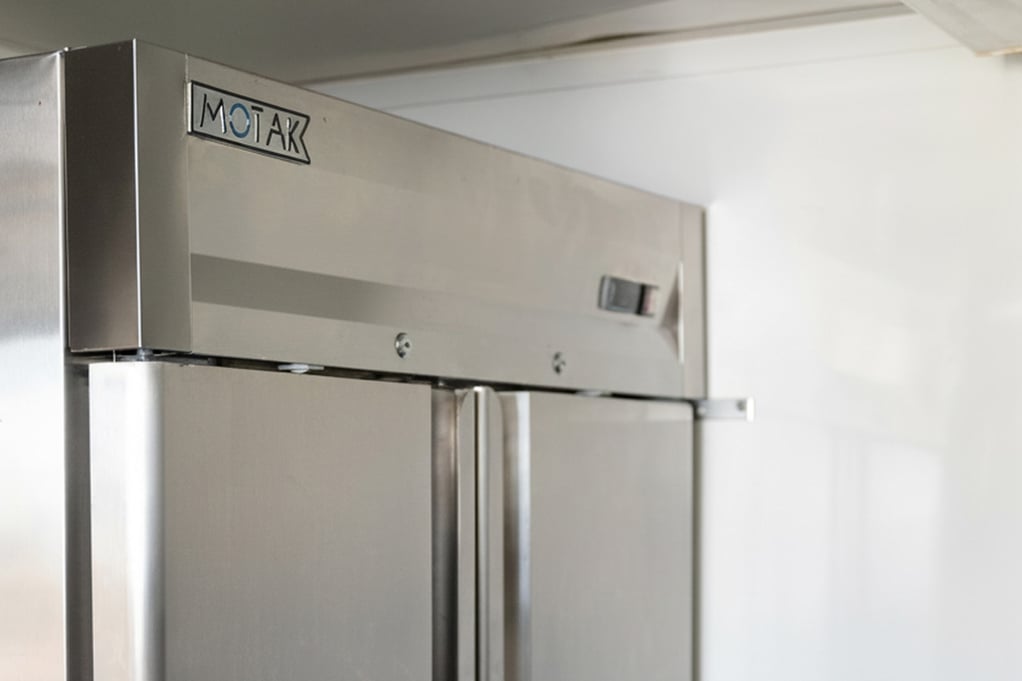
MoTak equipment offers a practical solution for budget food truck equipment. Each unit comes with simple controls and designs, and countertop and undercounter appliances feature compact footprints. Most cooking and cold storage appliances feature stainless steel exteriors and secure feet.
With commercial-grade performance at a fraction of the price of premium brands, MoTak provides a great choice for food truck operators looking to build mobile kitchens while controlling costs.
Shop MoTak for:
Budget Food Truck Equipment FAQ
Can residential equipment be used in a food truck?
Although food trucks are smaller operations than traditional commercial kitchens, it's best to avoid using residential equipment. Commercial equipment is meant for consistent, daily usage and high-volume cooking, while residential equipment is more likely to break down under heavy demand.
What equipment usually fails first in a food truck?
Equipment failure is often tied to maintenance or improper use. Refrigerators and freezers, however, often face rough usage in food trucks and may require more frequent repairs, making it a high priority for investment.
What size should food truck equipment be?
Equipment sizing depends on the truck or trailer size, hood capacity, and expected output. Most cooking equipment will be between 24 and 36 inches wide, while undercounter appliances are often between 27 and 60 inches wide. Standard countertop-height equipment will be sufficient for most operators.
Can I purchase used equipment for my food truck?
Yes. Used equipment can be a viable option for food trucks but be sure to thoroughly inspect each piece of equipment for functionality and safety before purchasing it. Ask what it was used for and how old it is. If purchasing used equipment, it's best to look for trusted brands.
