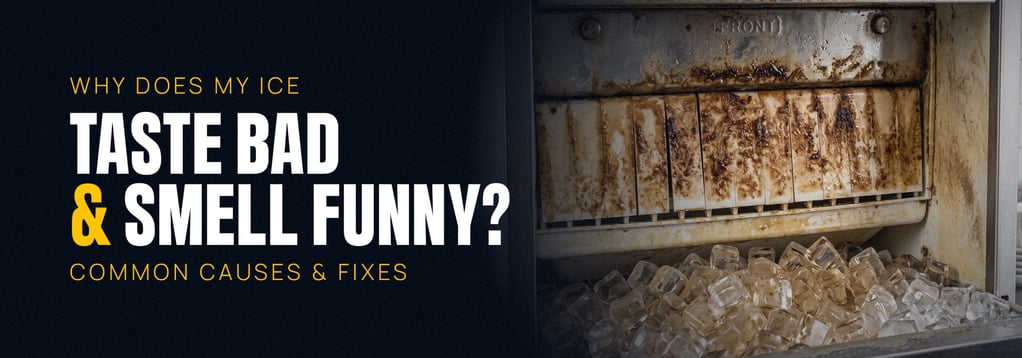
Why Does My Ice Taste Bad & Smell Funny?
If your ice tastes and smells bad, dirty water, mold, old filters, clogged drains, or nearby kitchen odors are usually to blame. These problems can leave your ice with a metallic, chemical, or musty flavor. Fixing the issue quickly is the best way to keep your drinks tasting great, pass health inspections, and maintain customer satisfaction.
Key Takeaways
- Foul-smelling and tasting ice is commonly driven by poor incoming water quality, biological growth, unwashed bins, or neglected maintenance.
- Pinpointing the exact type of smell (e.g. musty, sulfur, chlorine) can help identify the root cause.
- Because taste and smell are linked, odor issues often cause bad-tasting beverages.
- Deep cleaning, sanitizing, and replacing old filters resolves most of these problems.
- Routine preventative maintenance prevents airborne or waterborne odors from returning.
5 Common Reasons Ice Tastes Bad or Smells Funny
Bad ice can come from minerals in inlet water, problems with the filter, bin, or drain system, or the surrounding kitchen environment. Identifying the odor type can help identify the problem.
1. The Water Supply Has an Off Taste or Odor
Common Smell: Chemical, Metallic, Sulfur, Swampy, or Earthy
Chemical or metallic smells often occur if the water supply entering the machine contains high levels of dissolved minerals or organic matter that freezes directly into the cubes. Foul, swampy odors will inevitably develop without a proper filtration system to block these compounds from reaching the ice.
2. Mold, Mildew, and Slime Buildup
Common Smell: Musty, Earthy, Stale, or Sour
Musty or earthy smells indicate that the dark, damp interior of the ice machine has become a breeding ground for mold, mildew, and airborne yeasts. Stale, fungal odors are released into the ice as these microbial growths spread across the drop zone and ice bin.
3. The Ice Machine Filter Is Old, Clogged, or Missing
Common Smell: Chlorine, Stagnant, Stale, or Dirty Water
Stagnant or heavy chlorine smells emerge when a water filter reaches its capacity and can no longer purify the incoming water. Rotten or sewage-like odors can even result if an unchanged filter becomes a breeding ground for bacteria, directly injecting impurities into the ice-making process.
"Water quality does make a difference. Water filters are expensive, but they save your ice machine." — Dewayne Lane, Big D's Heating and Air
4. Absorption of Surrounding Odors
Common Smell: Garlic, Onion, Grease, Chemical, Sour, or Storage-Room Odors
Ice is highly porous and absorbs airborne odors from its surrounding environment, so garlic, onion, or other ambient food smells can easily transfer into the machine. If the commercial ice maker is located near a prep area or storage closet, sour or pungent chemical odors will permeate the cubes every time the bin door is opened.
5. The Ice Machine Needs to Be Cleaned and Sanitized
Common Smell: Chalky, Dirty, Grimy, Stale, or Moldy
Chalky or dirty water smells develop over time as limescale and biofilm naturally accumulate on the evaporator plates and internal water lines of the ice maker. If the machine isn't regularly deep-cleaned and sanitized to remove this buildup, grimy, stale odors will constantly contaminate the water as it freezes.
Is Smelly Ice Bad for You?
Bad-smelling ice cubes may indicate mold, bacteria, drain gas, chemical contamination, or dirty machine components. Even when ice looks clear, odors can signal that the water, bin, filter, or internal surfaces need immediate attention. If ice tastes or smells bad, contains debris, or has contacted a dirty bin or scoop, it should be discarded and the machine should be inspected, cleaned, and sanitized.
How to Fix Smelly & Bad-Tasting Ice
Many ice odor problems can be narrowed down with a few basic troubleshooting steps. Always follow the equipment manufacturer’s cleaning, sanitizing, and safety instructions, and call a qualified service provider when the source is unclear or the odor persists after cleaning.
1. Empty and Discard Existing Ice
Discard all ice in the bin before troubleshooting. Old ice may retain odors even after the original problem has been corrected, and keeping it in the bin can recontaminate clean surfaces. After emptying the bin, inspect the liner, corners, scoop holder, door gasket, and drain area for slime, stains, residue, or standing water. Do not resume service until the bin and machine have been cleaned and the source of the odor has been resolved.
2. Clean and Sanitize the Machine
Cleaning an ice machine requires removing scale from the water system and sanitizing food-contact areas that can harbor slime, mold, and bacteria. Follow the manufacturer’s procedure for removing ice, entering the cleaning cycle, adding approved cleaner, flushing the system, sanitizing parts, and restarting production.
"Cleaning is actually a two-step process: descale with a food-grade acid, then sanitize using a separate solution." — Damon Holst, Scotsman Ice Machines
3. Replace Water Filters
Old, clogged, undersized, or missing water filters can leave chlorine, minerals, sediment, and organic compounds in the water supply. Replacing the filter can improve taste and odor while helping protect internal machine components from scale buildup. Use the filter type recommended for the machine and the local water conditions.
4. Inspect the Water Supply
Municipal water treatment, well water conditions, seasonal water changes, old pipes, and filtration performance can all affect the taste of ice. If an ice machine is producing ice that tastes off, disconnect the water line before inspecting the machine. If the taste is present in multiple machines throughout the building, then water testing or an alternative filtration setup may be needed.
5. Clean the Drain System
Drain issues can create musty or rotten odors around the ice machine. Floor drains, bin drains, and nearby plumbing can harbor slime, mold, and gas, especially when they’re dirty or improperly vented. Clean the floor drain, inspect the air gap, confirm the drain line is not clogged, and call a plumber or service provider if smells continue.
How to Prevent Bad-Tasting & Smelling Ice in Commercial Ice Makers
A consistent maintenance routine can help protect ice quality, machine performance, and food safety.
- Follow manufacturer-recommended cleaning schedules
- Replace water filters regularly
- Clean and sanitize storage bins
- Monitor water quality and filtration performance
- Address mold, slime, and buildup immediately
- Keep surrounding areas clean and free of contaminants
When to Call for Professional Service
If an ice maker stinks after discarding the ice, cleaning and sanitizing the machine, replacing filters, and checking the drain, the problem may involve hidden contamination, plumbing issues, failing components, or an undersized filtration system. A qualified service provider can inspect internal parts, water flow, drainage, and machine operation.
"If you've cleaned the machine and it's still not working, or you're unsure how to proceed, that's when to call a service provider." — Damon Holst, Scotsman Ice Machines
Call for professional service if the machine produces discolored ice or has issues with recurring slime, odors, slow drainage, or leaking water.
Maintain Better Ice Quality with Proper Cleaning and Filtration at KaTom
Clean-tasting ice depends on the right equipment, effective filtration, consistent cleaning, and preventative maintenance. KaTom offers commercial ice makers, replacement filters, and ice maker accessories that support cleaner, more reliable ice production. Compare ice machines, water filters, bins, scoops, and cleaning supplies to build a setup that fits your water conditions and service needs.
FAQs About Ice Tasting Bad and Smelling Funny
Why does my ice taste like chlorine?
Ice may taste like chlorine if the incoming water contains noticeable chlorine or if the water filter is old, undersized, or missing. Replacing the filter and confirming the correct filtration setup can help reduce chlorine taste and odor.
Why does my ice smell like rotten eggs?
A rotten egg smell may point to sulfur compounds, bacteria in plumbing, well water issues, or drain odors near the ice machine. Stop using the ice until the source is identified.
Can a dirty ice machine make ice taste bad?
Yes. Scale, slime, mold, yeast, and other buildup inside an ice machine can affect the smell and taste of ice. Commercial ice machines should be cleaned and sanitized at least every six months and according to the manufacturer’s instructions.
Can ice absorb odors?
Yes. Ice can absorb odors from the bin, surrounding air, food storage, dirty scoops, or nearby chemicals. Keep the bin closed, clean the storage area regularly, and never store food or beverage containers in the ice bin.
How often should I replace my ice machine water filter?
Replacement frequency depends on the filter type, water quality, and ice production volume. Follow the manufacturer’s rated capacity and replacement schedule. High-volume operations may need to replace filters more often.
Should I throw away bad-tasting ice?
Yes. If ice tastes or smells unusual, contains debris, or may be contaminated, discard it and inspect the water supply, filter, machine, bin, and drain before serving more ice.


