A Guide to Commercial Coffee Makers
Coffee Brewing Basics
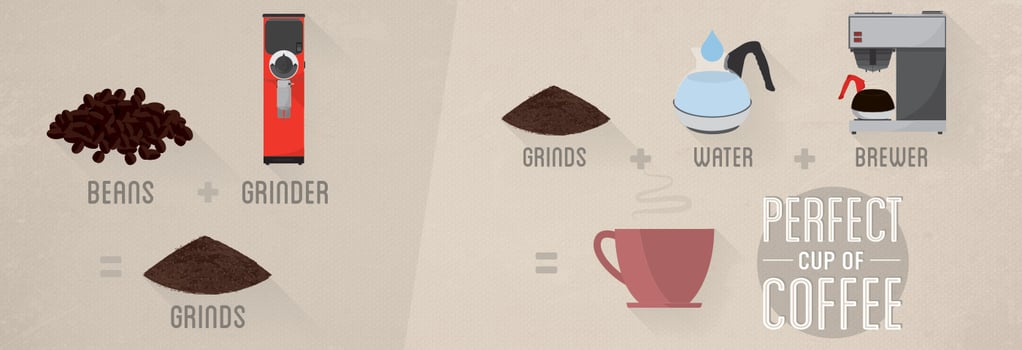
To brew an ideal, rich, steamy cup of coffee, you'll first need to know the basic elements of brewing. There are several major factors that affect the flavor and extraction of your coffee: water, temperature, time, turbulence, filtration, and cleanliness. This section will outline each of these elements and explain how to perfect each of them.
Water
Pure, filtered water produces the best taste and aroma for your coffee in every brew. Clean water is key to brewing because water composes more than 98% of the coffee in your cup. When the water in coffee has a high mineral deposit content, it can negatively affect the taste of your coffee. To ensure you offer the most pleasing cup of coffee possible, the water used in brewing should not exceed 100 parts per million (ppm) dissolved minerals; however, water below 300 ppm produces an acceptable cup of coffee. To achieve that goal, you should inspect your commercial coffee maker frequently and make sure it is free from contamination and odors.
If you find the tap water in your area is too high in mineral content, you may want to install a water filter on the line serving the commercial coffee maker or purchase a system that has a filter built in. Bottled water can be used as a substitute, but it is important not to use softened or distilled water because these can negatively impact both the water's interaction with the coffee grounds and the flavor of the end product.
The Grounds
It makes sense that water and grounds – the two major components of coffee – should be the top two factors in making a great cup. Obviously, the quality of the grounds has a major impact on the quality of the drink. There are a few things you can do to ensure your customers get the best possible product.
First, you want grounds that have been roasted as recently as possible, meaning they're fresher. Most commercial coffee is stamped with a date to indicate its age. One way to protect the quality of the grounds is to buy no more coffee than your commercial kitchen will use within a week or two, ensuring you won't shelve coffee for too long.
Second, get freshly ground beans or, better yet, get your own commercial coffee grinder or a commercial coffee maker that will do that and the brewing in one unit. From the moment the bean is cracked, it releases flavor and aroma, so freshly cracked grounds make more flavorful coffee.
Third and finally, ensure you use the right grind texture for your commercial coffee maker. Believe it or not, different consistencies will provide different flavors and qualities of coffee. It may take some experimentation for you to get just the right grind.
Temperature
Water temperature will affect the flavor and extraction of each cup of coffee you drink. The ideal water temperature range is 195 to 205 degrees Fahrenheit, or 92 to 96 degrees Celsius. If your commercial coffee maker heats water outside that range, your coffee may lack the flavor customers look for. Additionally, water above that range can over-steep the coffee grounds, producing a bitter cup of joe that doesn't taste right.
Time
Depending on the brew time for each pot of coffee and the time the water directly contacts the coffee grounds, the flavor can be enhanced or reduced. The ideal brewing time for most drip-style commercial coffee makers is 5 minutes. If the coffee grounds are in direct contact with the water or are brewed for an excessive amount of time, the flavor and aroma of the java will dramatically decrease, causing the cup to become "watered down." In contrast, if the coffee grounds do not contact the water for long enough, the coffee will have a strong flavor and aroma that might prove overpowering to some people.
Turbulence
When water passes over and through the coffee grains, turbulence is created which causes the particles to separate. When that happens, uniform water flow goes around the grains, enabling ideal extraction. Proper extraction results in a tasty, aromatic cup of coffee each time. Commercial coffee makers are designed to create the proper level of turbulence in the filter basket.
Filtration
The type of filter used in a commercial coffee maker affects each cup of coffee produced. Paper filters will provide the best tasting, clearest cup of coffee available. Bunn paper filters are excellent choices because they are porous enough to allow coffee grains to flow freely during extraction. The filters are also made from oxygen process paper that is strong enough to prevent collapsing, yet gentle enough to strain particles without taking away the flavor.
Cleanliness
While it may seem like running nearly boiling water through your commercial coffee maker every day would be enough to keep it clean, that's simply not the case; failing to maintain the unit properly can ruin the taste of the product. You should clean your commercial coffee maker daily by running hot water through it and then drying it thoroughly. Any remaining coffee grinds or remnants of the oils produced by the beans can ruin subsequent brews. Be sure to check the entire system – the grind basket, the spray head, the funnel to the water reservoir, and even the decanter – to ensure cleanliness. The spray head or funnel, water reservoir, coffee decanter, and the serving area around the brewer should be checked and cleaned daily.
Be in the Know About Holding and Serving
Once you have brewed the perfect cup of coffee, you will want to enjoy it while the flavor and aromatic qualities are at their peak. For customers to relish your joe, you must know how long and at what temperature the coffee should be held, and at what temperature it should be served. The ideal holding temperature for serving coffee is between 175 and 185 degrees Fahrenheit. Even at these temperatures, a pot of coffee should not be held for more than 20 minutes in an open top container or 30 minutes in a closed top container. After this time, coffee begins tasting burnt.
The Science of Brewing Perfect Coffee
In order to create an impeccable cup of coffee, you need to understand the essential elements of controlling the brewing process. The basic elements of brewing are wetting, extraction, and hydrolysis.
Wetting
Coffee grounds absorb hot water from the spray head and then release gasses from the coffee. In order to achieve consistent extraction, the entire bed of coffee grounds must be wet during the first 10 percent of the brew cycle.
Extraction
During the beginning of the brewing process, the water-soluble materials dissolve and move out of the grounds and into the water. The best flavors are extracted during the first few minutes of brewing.
Hydrolysis
Hydrolysis is a chemical reaction or process in which a chemical compound is broken down by the reaction with water. In relation to coffee, the materials created during the extraction process break down further into water soluble proteins and sugars.
Match the Grind to the Time
The brewing time or water contact time can be determined by the size of the coffee grind and bed depth. The larger the coffee grounds, the longer the brew time should be. In turn, if you brew finely ground coffee, you should have a short water contact time. The recommended brewing contact times are shown on the chart below.
Brewer Cycle Timing
Depending on the specific brewer purchased, you can experiment with coarser or finer grind cycles to obtain the perfect cup of coffee. Each brewer has a delivery cycle that's slightly different from the rest, so your manual will provide recommended times for each type of coffee.
Bed Depth
Another factor in brewing an exemplary cup of coffee is the bed depth in the brewing basket. The ideal depth is 1 to 2 inches. If your coffee bed varies from these recommended depths, your coffee can be negatively affected, depending on whether the depth is too low or too high. If the bed is less than 1 inch, the water may move through the coffee too quickly, causing under extraction, which produces a less intense flavor and aroma. If the coffee bed is a greater depth than 2 inches, the water will flow slowly through the coffee grounds and over extract, causing an overly strong or bitter taste.
Brewing Control
The flavor of the newly brewed coffee is determined by the amount of coffee being extracted and the amount of coffee solubles. The chart below shows the relationship between three factors: brewing ratio, strength, and extraction. On the above chart, brewing ratio is defined as the relationship between the amount of ground coffee used per half gallon of water and extraction. This is shown by the diagonal red lines. Strength/solubles concentration is the percentage of coffee flavoring material compared to the amount of water in the finished cup. The ideal range for this percentage is 1.15% to 1.35%, which is measured by the Brew Strength Meter, also known as the Hydrometer. At the bottom, the extraction/solubles yield is the ideal percentage of coffee material removed. This should generally be between 18% and 22% of the solubles in the coffee. The deep yellow box in the center of the chart shows the optimum balance field. This yellow box shows the perfect balance between strength and extraction that should be used in order to create the perfect cup of coffee.
What Do All of These Coffee Terms Mean?
The following terms are often used to describe cups of coffee or brewing experiences. Please refer to these definitions to more thoroughly understand the process described above.
- Soluble Materials: Compounds that dissolve in water.
- Non-soluble Materials: Compounds that do not dissolve in water.
- Volatiles: Soluble materials that evaporate easily.
- Non-volatiles: Soluble materials that do not evaporate, but stay in the solution.
- Aroma: The soluble volatile materials (gases) that evaporate, creating the coffee's unique scent.
- Taste: The soluble, non-volatile materials (liquids) that are responsible for the flavor.
- Body: The non-soluble, non-volatile materials (solids) that determine the texture of the coffee.
