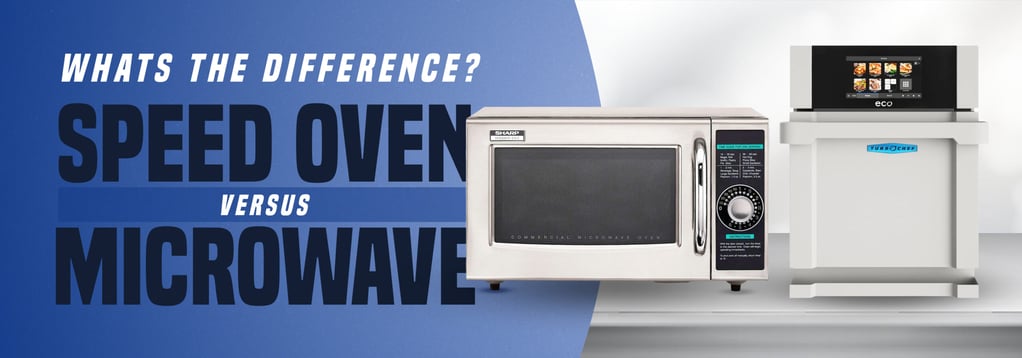
Speed Oven vs. Microwave: Which Is Better?
Microwaves are among the most popular residential kitchen appliances and have even gained traction in commercial settings where commercial microwaves are used to warm up precooked meals in seconds. High-speed ovens pair microwave technology with additional cooking methods, such as convection and impingement. These versatile appliances can retherm, toast, and bake a wider range of products.
Key Takeaways
- Speed ovens combine multiple heating methods for fast cooking and browning
- Microwaves heat food quickly but cannot brown
- Speed ovens support higher throughput and broader menus
- Microwaves are more affordable and fit basic reheating needs
What Is a Speed Oven?
High-speed ovens are a step up from traditional microwave ovens. Most countertop speed ovens pair microwave heating with convection, impingement, and sometimes infrared technology for an ideal mix of speed and product quality. Best for reheating, toasting, or cooking portions for immediate service, these are common in quick-service restaurants (QSRs), bars, and cafes.
Do traditional restaurants use speed ovens? Yes. High-speed ovens are common in cafes, QSRs, sandwich chains, convenience stores, and any operation needing fast, consistent finishing.
Pros
- Produces crisp textures
- Reduces cook times for full menu items
- Handles sandwiches, pizza, pastries, and more
- Compact countertop design
Cons
- Higher cost
- Uses more energy and counter space
- Several units require venting
- Some employee training required
What Is a Commercial Microwave?
Microwaves emit electromagnetic waves to make water, fat, and sugar molecules vibrate within food, heating the entire product as a result. Commercial models boast fast cooking speeds but lack the intense heat required for browning or crisping product.
Pros
- Fast, simple operation
- Lowest equipment cost
- Smaller footprint
- Energy efficient
Cons
- Can't brown or crisp product
- Limited to reheating and basic cooking
- Prone to uneven heating
- Less cooking customization


Speed Oven vs. Microwave Comparison: Similarities and Key Differences
| Feature | Speed Oven | Microwave |
|---|---|---|
| Heat Method | Microwave, convection, and impingement; infrared heat in some models | Microwave heating only |
| Cooking Results | Browns, crisps, toasts, bakes | Reheats and steams but doesn't brown |
| Menu Range | Sandwiches, pizza, pastries, breakfast items | Soups, sides, sauces, precooked meals |
| Speed | Fast for full items and made-to-order cooking | Fastest for liquids and portion reheating |
| Footprint | Compact, counter friendly | Smallest footprint |
| Cooking Cavity | Ranges from 0.5 cu. ft. to multi-tier, full-size ovens | Ranges from 0.7 cu. ft. to more than 2 cu. ft. |
| Cost | Higher investment | Lower investment |
| Control display | Programmable touchscreen, may include Wi-Fi capabilities | Simple dial or push-button design |
Like speed ovens, convection microwaves combine microwave and convection cooking. Speed ovens, however, enhance browning effects with additional methods like impingement and infrared.
Is a Speed Oven Better Than a Microwave?
Although speed ovens have more cooking options than microwaves, they don't fully replace microwaves in all commercial settings. Microwaves are more affordable, and their simple operation makes quick heating easier with minimal employee oversight. They excel at tasks like melting butter, warming sauces, and cooking soups.
A Microwave Might Be Better If You:
- Only need fast reheating for soups, sauces, or precooked meals
- Operate a breakroom, low-volume snack area, or staff kitchen
- Serve few made-to-order items
- Desire simpler setup, maintenance, and operation
- Have a tight equipment budget
- Have limited counter space
A Speed Oven Might Be Better If You:
- Serve toasted sandwiches or paninis
- Offer baked or crisped items like pastries or flatbreads
- Need consistent browning or finishing
- Run a coffee shop, cafe, or QSR with made-to-order food
- Want shorter ticket times without sacrificing food texture
- Need one unit for heating, toasting, and finishing items
Power and Performance Comparison
Speed ovens typically require more voltage and draw more watts than microwaves. Microwaves heat liquids and certain foods faster, but speed ovens reach higher cooking temperatures, rapidly cook products, and add a crisp texture.
- Microwave Power
- Typical Voltage: 120
- Typical Watts: 1,000-3,000
- Speed Oven Power
- Typical Voltage: 208/240
- Typical Watts: 5,000+
Cost Considerations of Speed Ovens and Microwaves
Speed ovens typically cost significantly more than microwave ovens yet come with more opportunities for menu expansion and higher ROI. Microwaves have simple controls that require little staff training, but once set up with the proper presets, speed ovens operate just as easily.
Speed Ovens vs. Microwave Oven Care and Maintenance
High-speed ovens often include their own cleaning solutions and require more frequent upkeep. They generally feature smart technology that alerts operators when service is due and provides detailed cleaning instructions. Both microwaves and speed ovens should be cleaned with non-abrasive and non-caustic cleaners.
Appliance Cleaning Schedule
| Frequency | High-Speed Oven Cleaning | Microwave Cleaning |
|---|---|---|
| Daily | When cool, wipe down interior, exterior, and racks | Wipe down interior and exterior |
| Weekly | Wash air filters | Wash filters and splash covers |
| As needed | Replace filter | Replace filter or interior light |
Shop Speed Ovens and Microwaves at KaTom
KaTom offers leading commercial microwave and high-speed oven brands at competitive prices. Whether you're looking for a compact microwave for reheating small dishes or a high-speed oven for toasting and baking meals, explore speed ovens and microwaves suited for fast throughput.
