Top Restaurant Design Trends of 2026
Operating a successful restaurant in 2026 requires more than attentive service and quality food; current restaurant design trends focus on efficient, memorable, and adaptable spaces. Modern operations also rely on innovative technology to enhance efficiency and customer experience.
Key Takeaways
- Developing technologies, operational needs, and shifting consumer preferences drive 2026 trends in restaurant design
- Key trends include sustainable design, technology integration, local character, and flexible layouts
- Focus on unique branding to leverage trends in new or established operations
Why Restaurant Design Trends Matter
Foodservice trends reflect customer values beyond the usual quality, consistency, and service expectations. Anticipating industry changes and guest needs attracts new visitors, improves operational efficiency, and supports long-term success by establishing a curated experience and strong market presence.
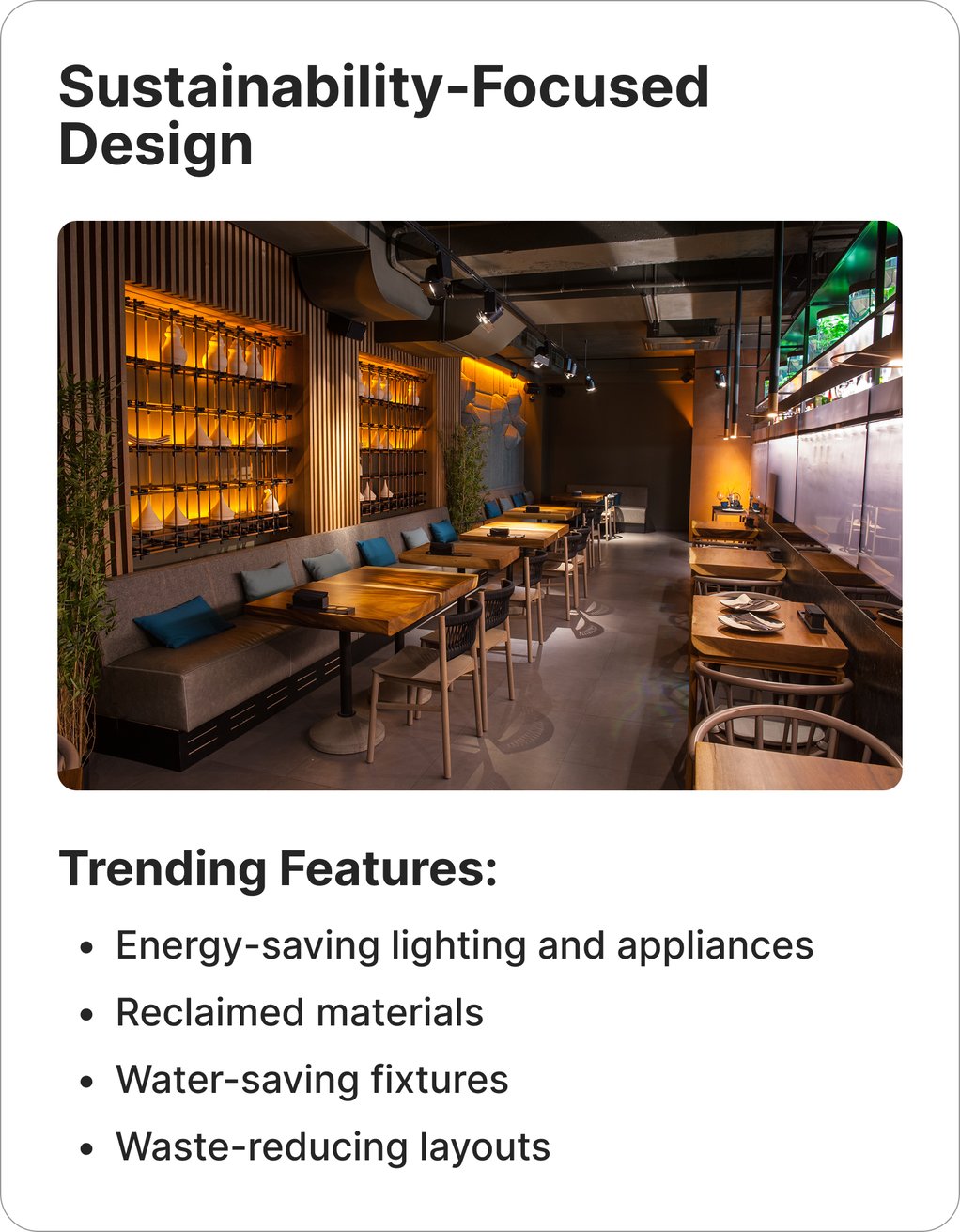
1. Sustainability-Focused Design
Many modern restaurants prioritize minimizing food, energy, and trash waste by implementing strategic designs, purchasing sustainable supplies, and outfitting kitchens with energy-efficient equipment. Operations use recycled materials for panel walls, facades, or floors, while LED lighting and water-saving faucets reduce utility usage. Organized disposal systems for trash, recycling, and composting further reduce overall facility waste.
Design Tips:
- Acquire discarded materials from local builders or fabricators
- Design efficient layouts for waste sorting, recycling, and composting
- Maximize natural lighting and supplement with low-energy LED lighting in kitchens
2. Technology Is Built Into the Dining Experience
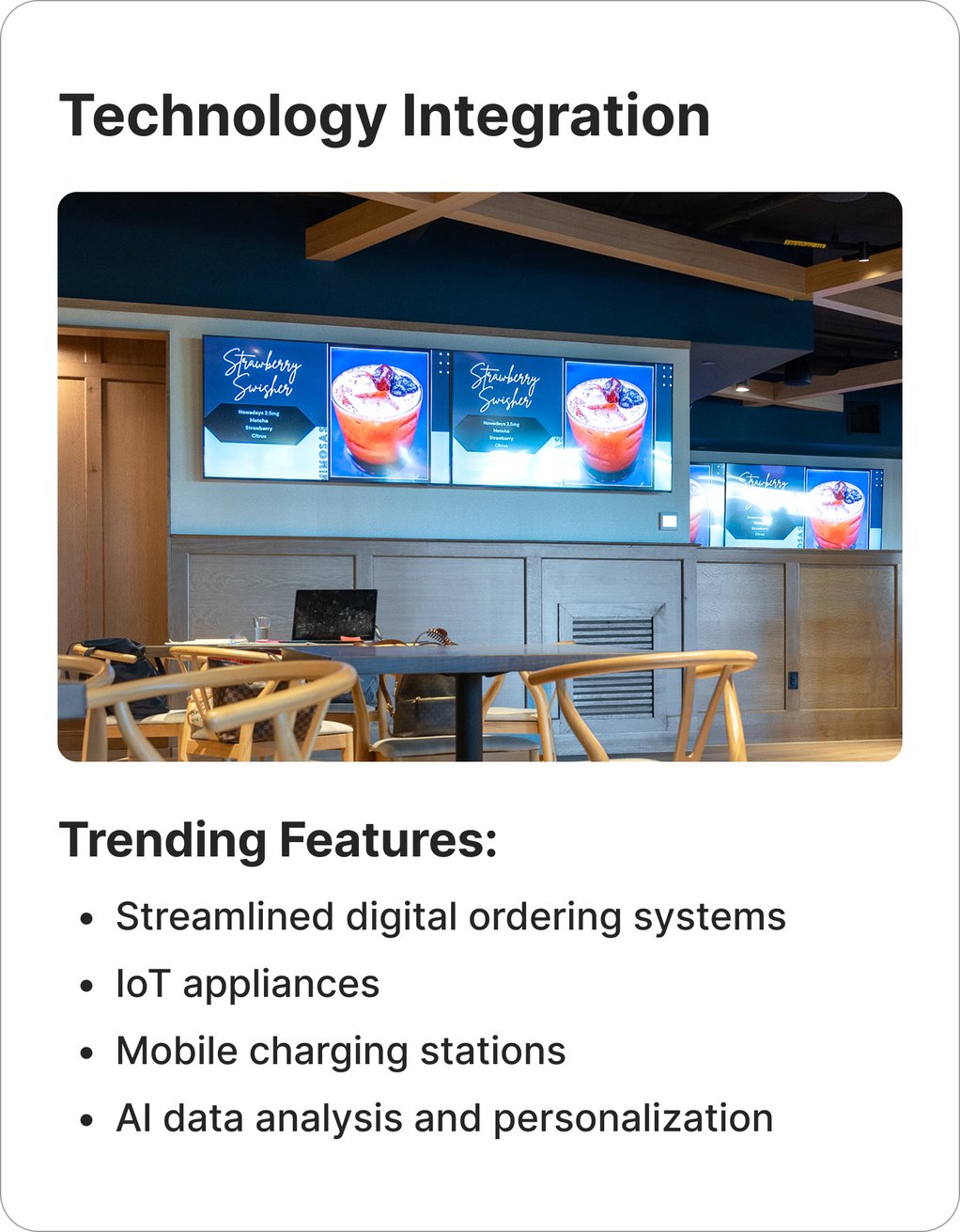
Digital technology continues to develop in modern restaurants. Tools like self-service kiosks and digital menu boards can automatically update product availability and menu changes while strategically promoting specific items. IoT kitchen appliances enable remote control, diagnosis, and data collection. Many new trends in restaurants emphasize AI-based tools, which provide advanced data evaluation on information like order lead times, sales performance, and customer satisfaction and retention. Although less common, charging stations provide a draw for device-friendly cafes.
Design Tips:
- Install self-order kiosks, QR code menus, or mobile payment systems
- Design kitchen spaces to accommodate smart equipment
- Utilize AI-driven tools to track and improve service efficiency
3. Social-Media-Worthy Design Still Matters
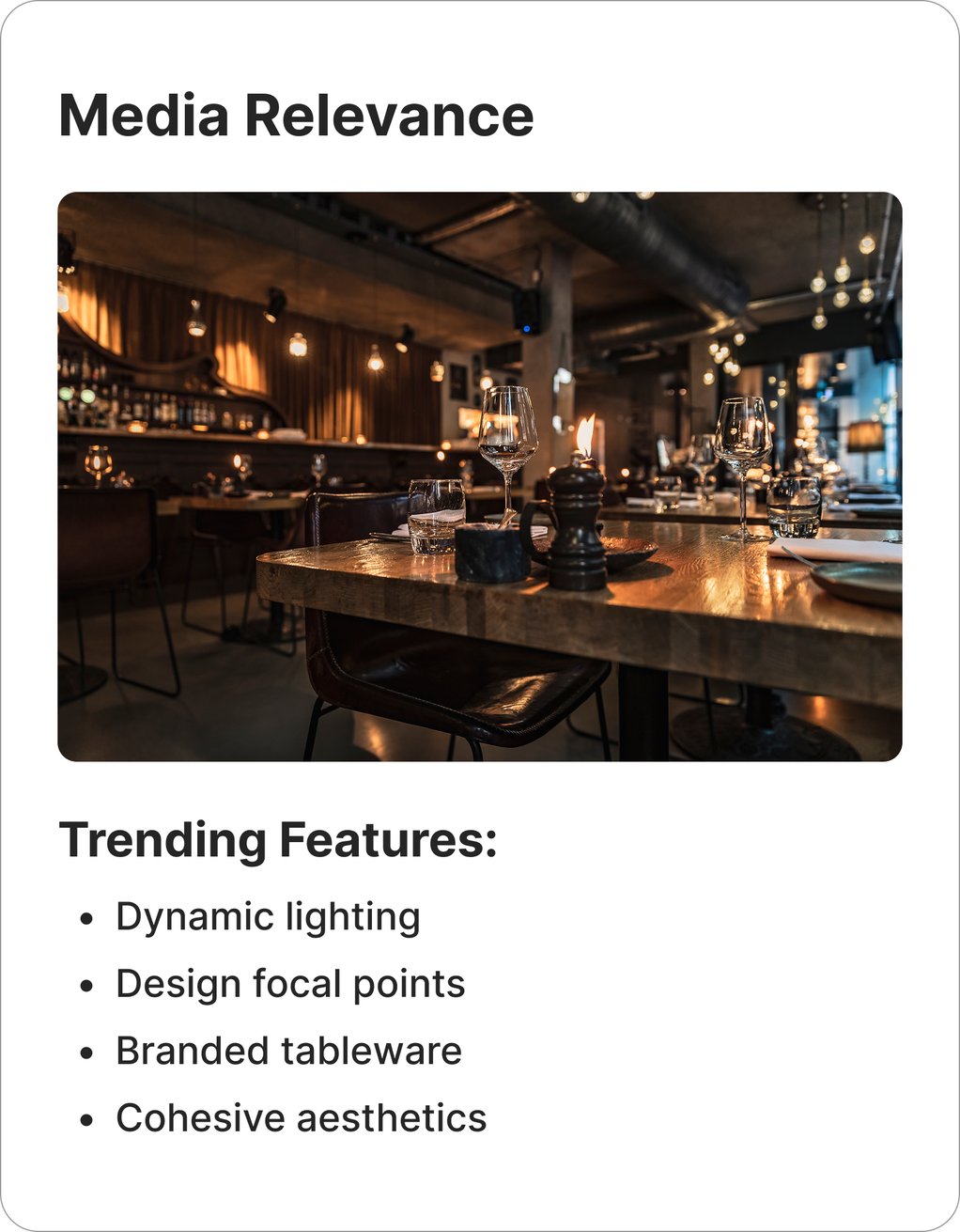
Creating visually memorable experiences remains an important design factor in 2026 as guests continue to appreciate and share stand-out themes on social media. Current design trends often feature layered lighting, strong focal points, and distinctive finishes that create in-person and online appeal. Unique furniture and tableware also draw attention to signature service and meal presentation.
Design Tips:
- Use layered lighting, such as pendants, sconces, and accent lights, to create depth and dimension; warm lighting improves product presentation
- Add focal points like murals, textured walls, unique ceilings, or artistic backdrops
- Extend lighting and design themes throughout secondary spaces like hallways, patios, and restrooms
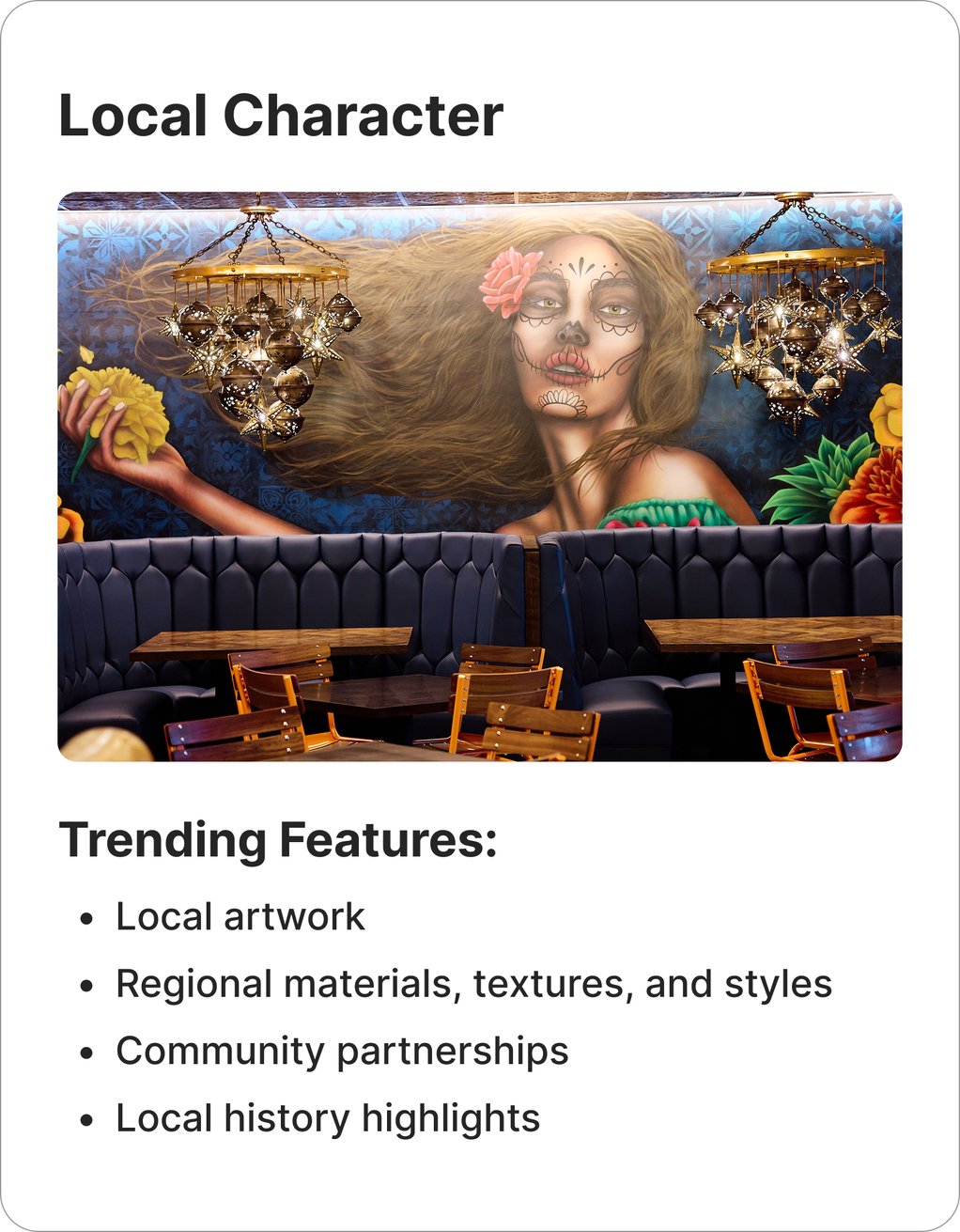
4. Local Character Is Shaping Restaurant Interiors
Restaurant decor trends increasingly draw on local art, materials, and history to root their restaurants in the community. Incorporating local textures, regional influences, and cultural details creates a more authentic environment. Operations can also partner with other local businesses to promote community discounts or programs.
If using local decor, be sure to emphasize a specific theme to avoid visual clutter. The 70/30 design rule can help, with 70 percent of a room focused on a dominant element, style, or color and 30 percent used for accents.
Design Tips:
- Feature artwork, signage, or decor created by local artists and artisans
- Employ regional materials, finishes, or articles that reflect the environment
- Incorporate subtle references to local history, architecture, and culture while maintaining a coherent design theme
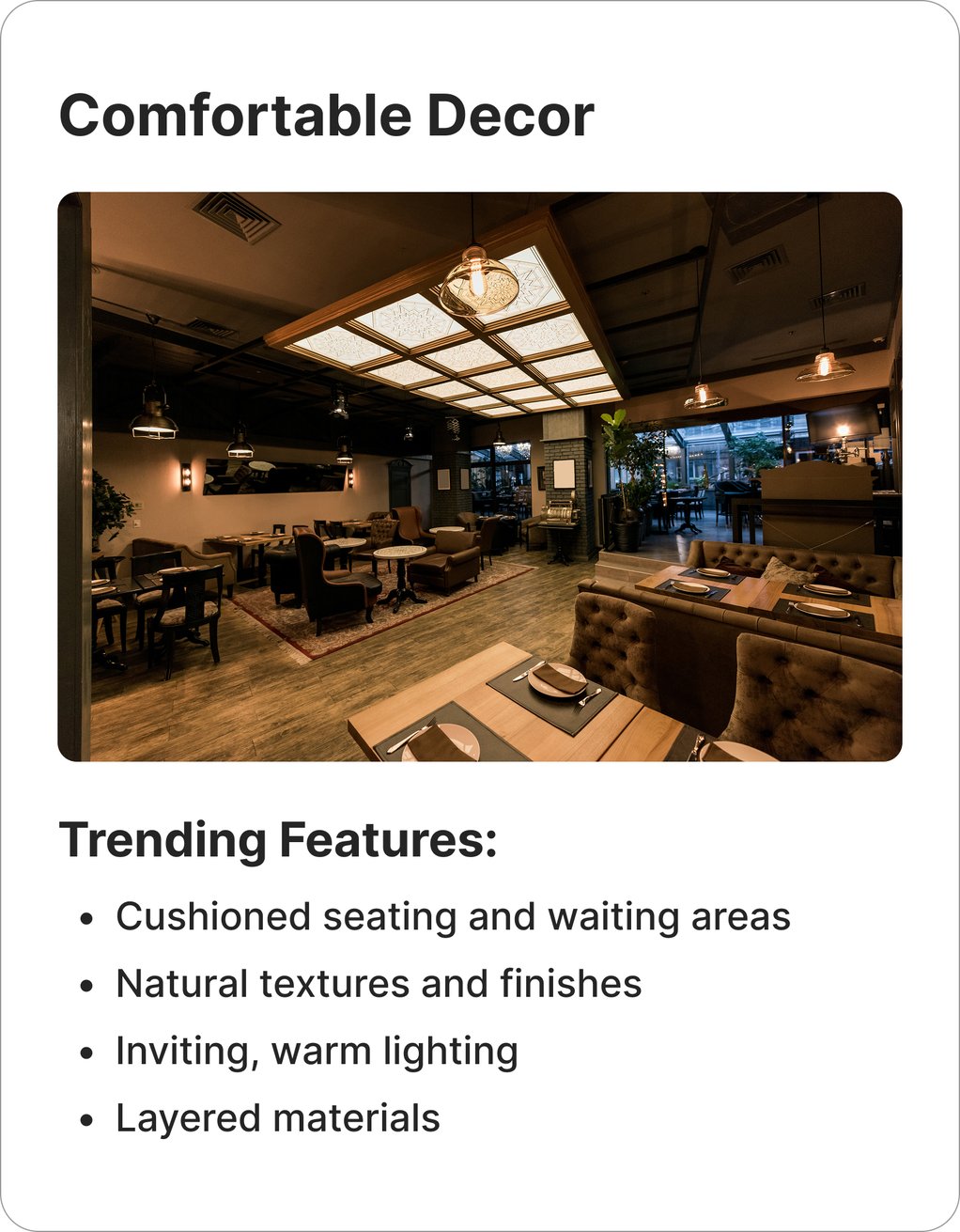
5. Comfort-Driven Decor Is Replacing Overly Minimal Spaces
Modern restaurants are moving away from simple, polished designs and toward dynamic, inviting spaces. Many operators prioritize comfortable seating, natural finishes, and warm colors to create relaxing environments. Layered textures, fabrics, shapes, and patterns make spaces stand out while maintaining a lived-in feel.
Design Tips:
- Use upholstered seating, banquettes, and lounge-style waiting areas to create a comfortable atmosphere
- Incorporate wood tones and natural textures to soften the space
- Choose warm, ambient lighting rather than harsh, bright bulbs
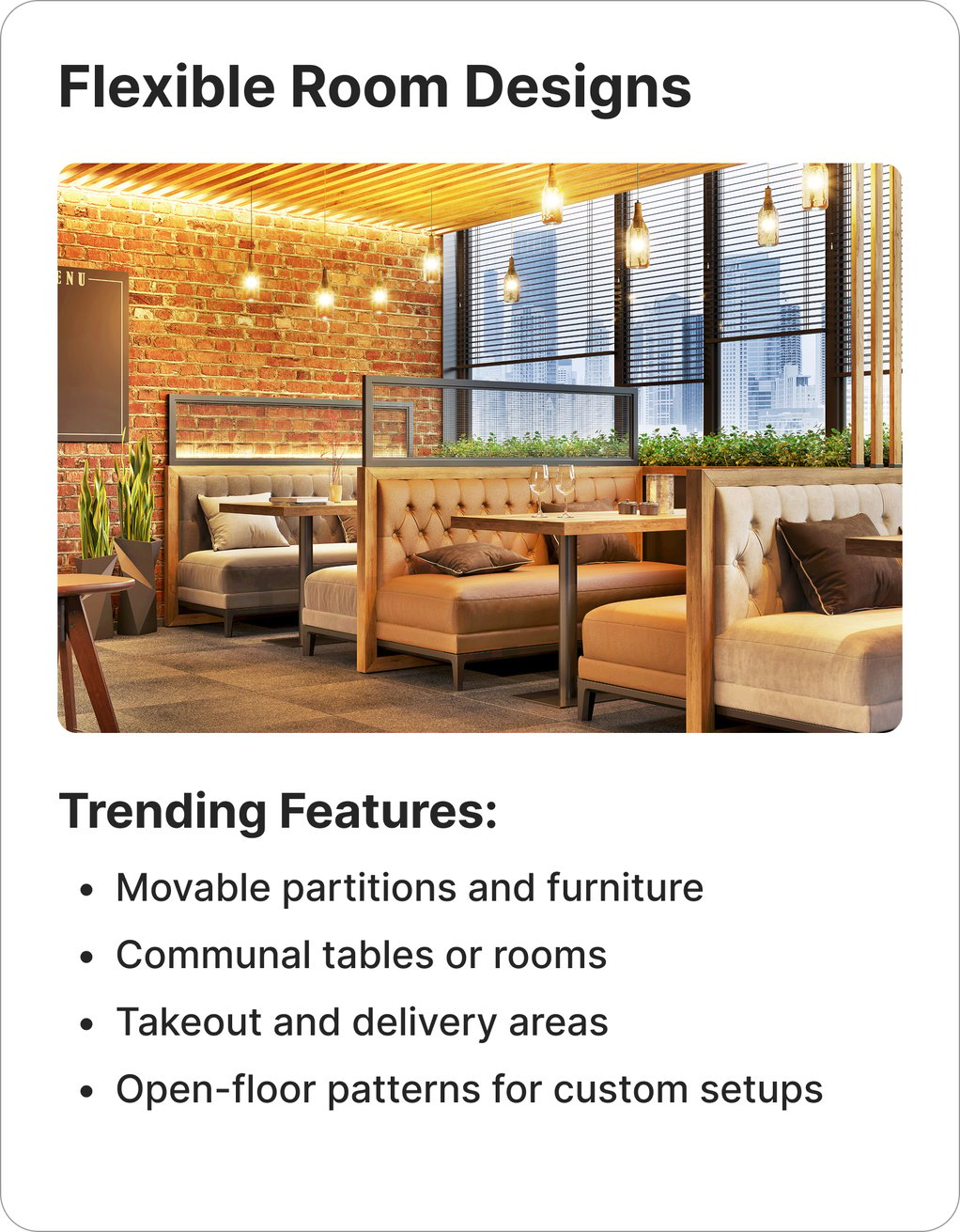
6. Flexible Layouts Are Supporting Multiple Revenue Streams
Restaurants are becoming popular for large group gatherings and social events while also supporting dine-in, takeout, and delivery service. Many operations create adaptable dining areas that can accommodate varying party sizes or be cleared for live bands, company parties, or other events, and may also integrate staging areas for takeout and delivery pickup during peak hours. As a result, operators tend to prefer open rooms with few permanent fixtures for customizable layouts.
Design Tips:
- Use movable partitions or furniture to reconfigure seating
- Incorporate communal tables that accommodate both large groups and smaller parties
- Create flexible pick-up areas and install nearby holding equipment to maintain quality
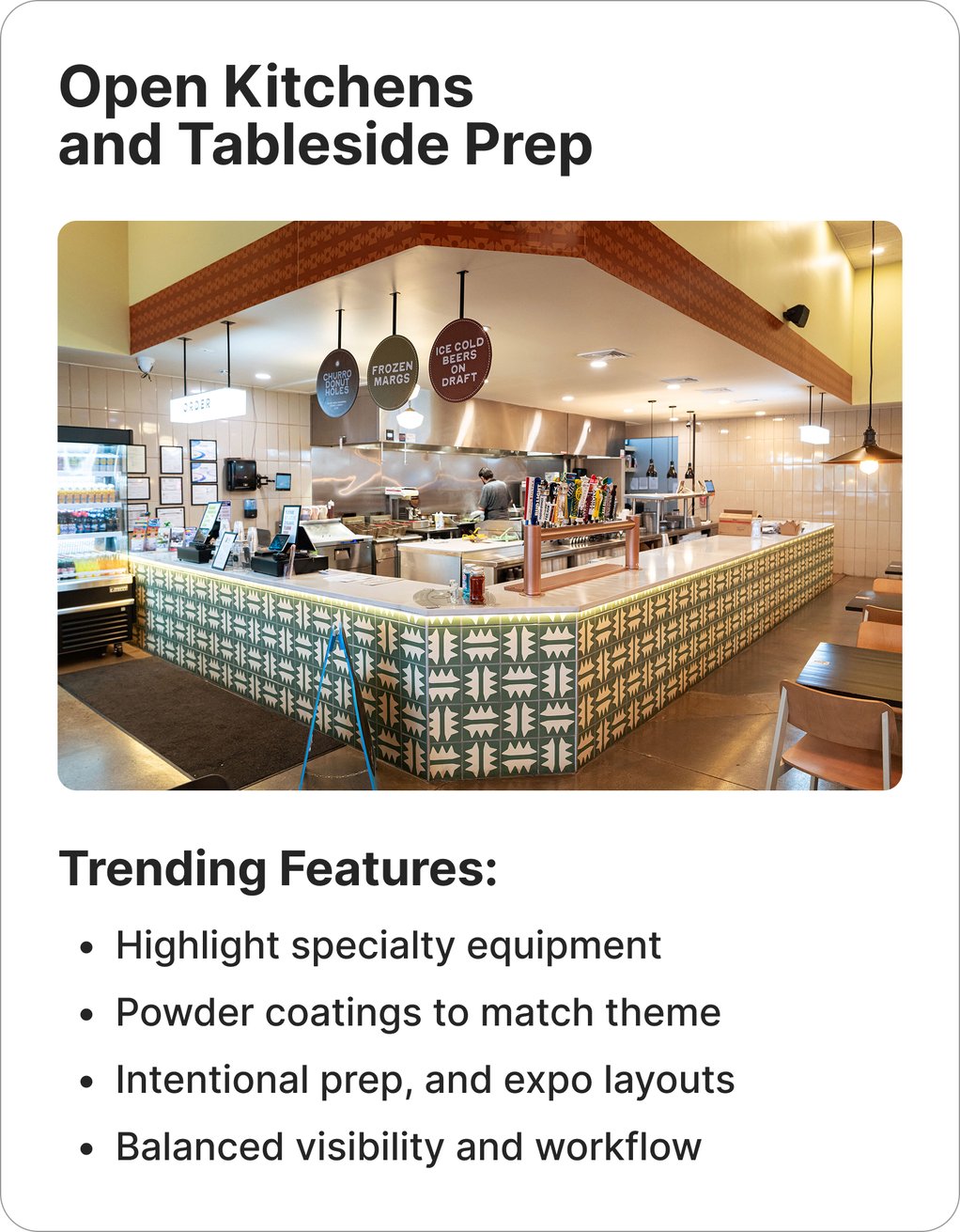
7. Open Kitchens and Visible Craft Are Staying Relevant
Open kitchens and tableside cooking experiences continue to attract customers, drawing them into the food-prep process. These layouts also build authenticity, letting guests see how their meal is made. Some restaurants add a twist by showcasing impressive cooking demonstrations in front of customers, which require careful attention to seating and equipment placement.
Design Tips:
- Highlight specialty equipment such as pizza ovens, slicers, or grill stations
- Design prep and expo areas with organized, visible workflows
- Plan tableside prep as a performance to delight customers
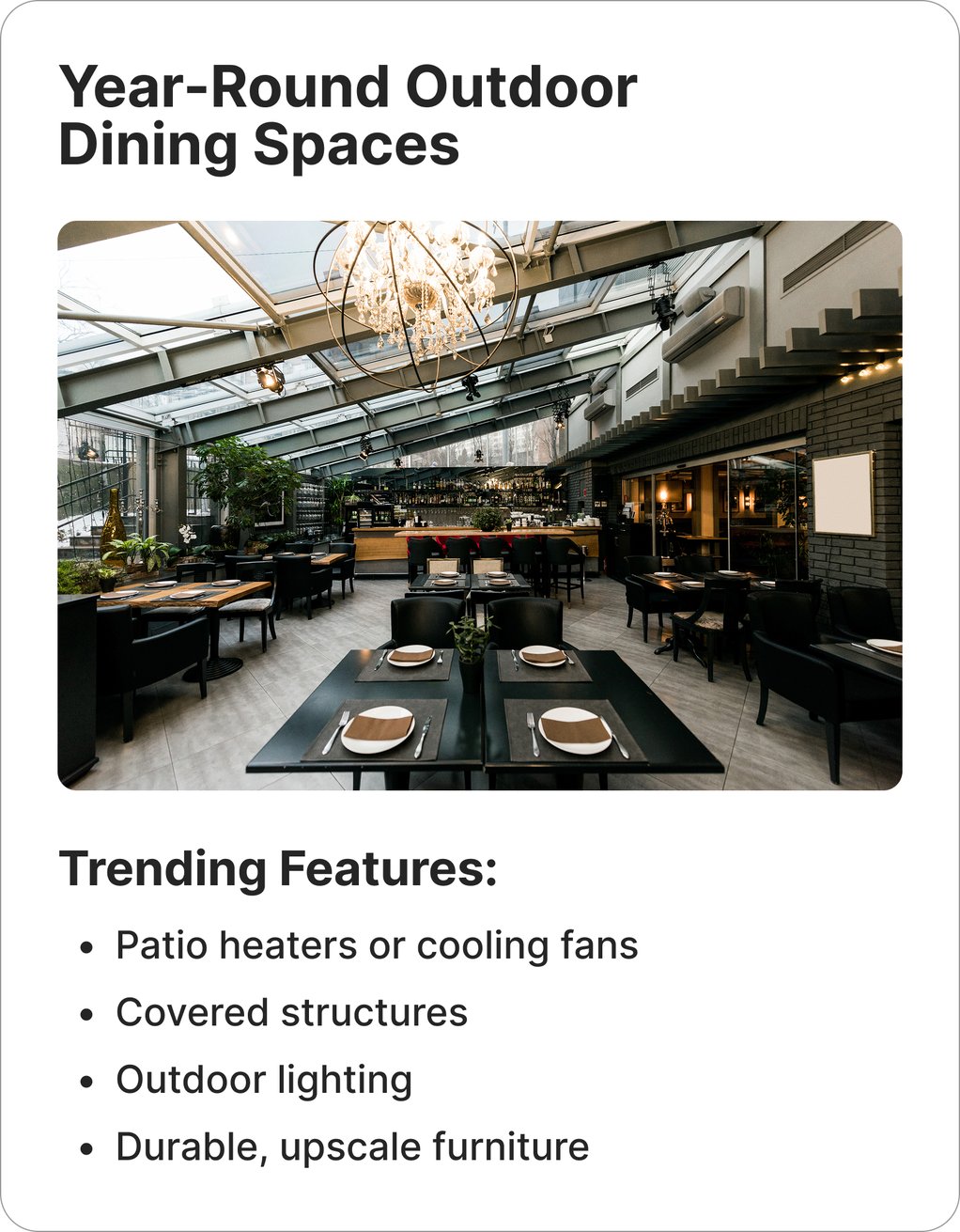
8. Year-Round Outdoor Dining Spaces
Outdoor dining remains popular in restaurants of all sizes and styles. Recently, many operators have equipped patios with tents, fans, and heating lamps for year-round dining, using durable and elegant outdoor furniture to expand seating capacity. These areas also provide flexibility for alternate designs, including themed spaces such as beer gardens.
Design Tips:
- Use retractable awnings or covered structures with weather protection
- Add outdoor lighting for a comfortable evening atmosphere
- Decorate with plant and water features to create a natural ambiance
What Is Driving Restaurant Trends in 2026?
Current restaurant trends are influenced by developing customer preferences, technology advancements, and operation needs.
- Social media platforms favor unique restaurant content
- Emerging AI tools improve operation and service
- Regulations and operating costs impact efficiency requirements
- Labor shortages drive the need for innovation
- Sustainability concerns affect design and material sourcing
Partner With KaTom on Smarter Restaurant Design
Creating a standout restaurant design starts with finding restaurant equipment that matches your layout. KaTom has helped outfit numerous successful restaurants, and our Design + Build team is ready to add yours to the list. Create a kitchen that matches your vision and incorporates current design trends with KaTom's help.
