Rack Oven Installation Checklist
Rack ovens support high-volume, consistent baking by rotating roll-in racks inside a heated chamber. When ordering a rack oven or scheduling delivery, confirm that the site can accommodate the oven, its utility connections, and daily workflow. Proper installation planning protects the equipment, helps technicians complete the setup, and reduces costly alterations down the road.
"Ceiling height, utilities, water, gas, electric, and flooring should all be reviewed before installing an oven or proofer."
— Kristina Powell, Business Development Manager at Baxter Mfg.
Key Installation Tips
- Always confirm manufacturer installation requirements in the spec sheet or product manual.
- Some manufacturers require installation to be performed by an authorized service agent to validate their warranty.
- Review ventilation requirements based on local codes and what you plan to bake.
- Determine whether you need accessories such as bases, floor extenders, or water meters.
Rack Oven Installation Overview
Preparing the Installation Site
Confirm the Unit Clearance
Rack ovens are large pieces of equipment and require additional space for ventilation, heat safety, and rolling racks. Before installing a unit, measure the complete travel path from the receiving door to the final location, including doorways, turns, ramps, and ceiling obstructions. At the installation point, account for the oven's listed dimensions, required top clearance, ventilation connection, fire-suppression components, and any overhead water or electrical lines.
"Operators should plan for service access, not just installation space, because technicians need enough room to reach key components."
— Kristina Powell, Business Development Manager at Baxter Mfg.
During daily operations, staff need to roll racks in and out of rack ovens, move sheet pans without congestion, and access nearby proofing, cooling, and packaging areas. Leave unobstructed space in front of the oven for loading and unloading, plus any manufacturer-required side and rear clearances for technicians to inspect controls, heating components, motors, and utility connections. Consult the manufacturer specification sheet for exact clearance requirements.
Build the Required Ventilation
Determine if the oven must be installed under a Type 1 or Type 2 hood. This will depend on factors such as whether you plan to bake grease-producing products and applicable local codes and ventilation requirements. Some rotating rack ovens come with hoods featuring single-point connections that attach to vents. Typically, the customer is responsible for providing the ductwork and vent fans that attach to these hoods.
When purchasing a rack oven, confirm the hood and fire suppression requirements and whether it includes a hood system. If the unit has a hood, review the manufacturer's specifications for connection size, pressure drop, and fan requirements.
Outfit the Appropriate Utilities
Utility planning begins with reviewing the oven's specification sheet and includes verifying the required connections with qualified technicians. Depending on the model, installation may require:
- A dedicated natural gas or propane connection
- One or more dedicated high-voltage electrical circuits
- A potable cold-water supply for steam injection
- Water filtration or treatment to reduce mineral buildup in steam components
- A floor drain for condensation and cleaning
Before the oven arrives, verify voltage, phase, amperage, gas type, gas pressure, water connections, and drain location and size. Check local permitting requirements, then confirm that each utility works properly during installation.
"Operators should check breakers, power supply, gas, and utilities first because some issues are caused by something simple being turned off."
— Kristina Powell, Business Development Manager at Baxter Mfg.

Prepare a Suitable Floor
A fully loaded rack oven and roll-in rack place substantial weight on the floor. Some double-rack ovens can weigh more than 4,000 pounds. The installation surface should be level, capable of supporting the equipment, and made of a durable, noncombustible material that meets the manufacturer's flooring requirements and applicable codes. Uneven flooring can affect door alignment, rack movement, drainage, and baking consistency. Certain models require a thick floor substrate to support base anchors.
Position floor drains to handle cleaning water and condensation without creating a hazard for carts. Avoid placing ovens on damaged concrete, cracked tile, or surfaces that can trap water. If the bakery uses floor mats, select mats that won't interfere with rack movement or oven access.
Installation Needs by Rack Oven Type
Gas Rotating Rack Ovens
Gas rack ovens are often a strong fit for bakeries with existing gas infrastructure and production demands that benefit from rapid recovery between loads. Most gas rack ovens use natural gas, though some units are fitted for propane.
Before installation, confirm that the fuel type matches the oven's rating. Natural gas and propane aren't interchangeable without approved adaptations. A qualified installer should verify gas supply capacity, pressure, shutoff placement, regulator requirements, combustion air, venting, and any required hood or fire-protection components. Operators should also ensure service access around gas controls, burners, and blowers.
Electric Rotating Rack Ovens
Electric rotating rack ovens use high-voltage electrical components to power heating elements, rack rotation, programmable controls, and steam-injection systems. They can be a practical choice for locations without gas service or operations seeking precise digital control and even temperatures.
Confirm the building has the correct voltage, phase, amperage, disconnect, and circuitry before delivery. Electrical requirements vary by model, so don't rely on a nearby outlet or a previous oven's connections. Some units require two separate circuits to power the heating elements and controller. Electric models also need proper clearance, ventilation, and service access.
Single- and Double-Rack Capacity Ovens
Single-rack ovens suit operations with limited production space, while double-rack models help larger bakeries increase output by holding two full racks at once. Oven capacity also impacts footprint, utility demand, ventilation planning, floor load, and traffic flow.
Single-rack ovens need room for one loaded rack to approach, enter, exit, and travel to cooling or staging areas, but double-rack ovens need a larger work area. Confirm that aisles, doors, floors, utility lines, and ventilation systems can support the larger unit and its higher production pace. The bakery should also have enough racks, cooling stations, and sheet pans to prevent bottlenecks downstream.
Mini Rack Ovens
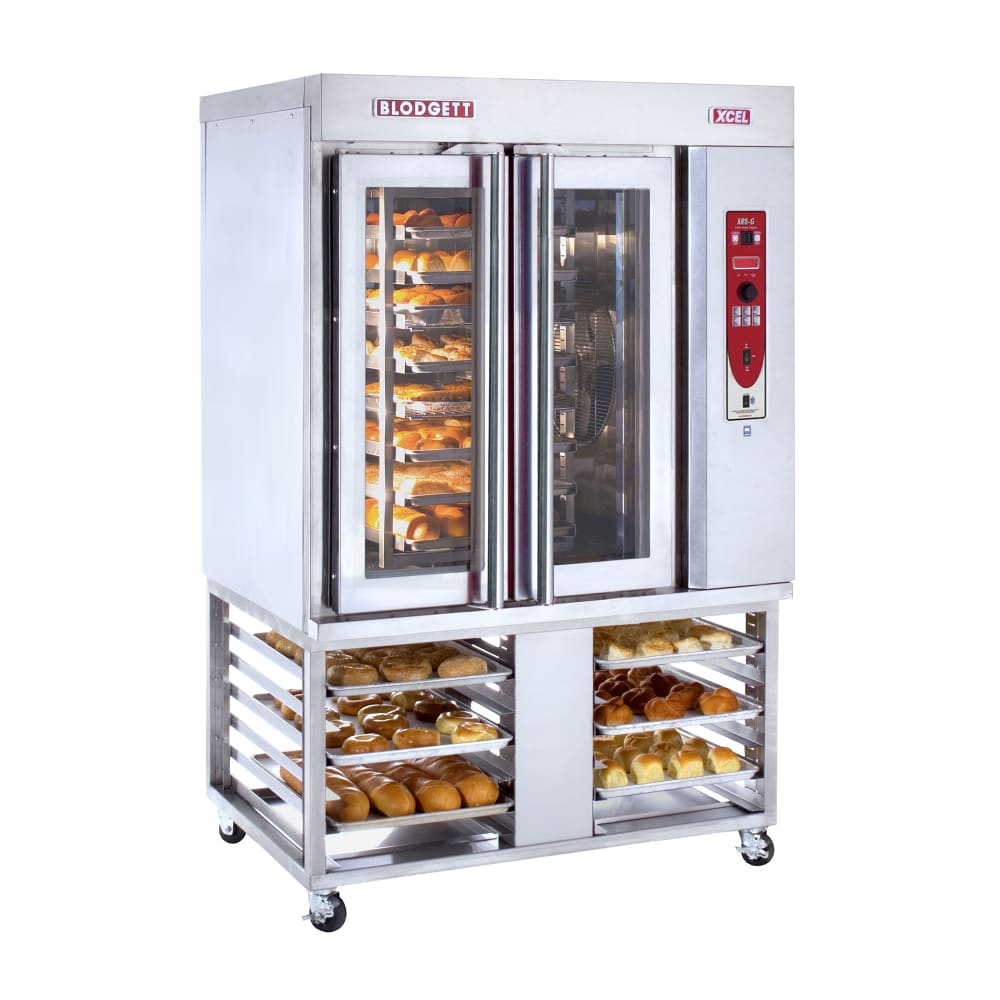
Mini rack ovens provide many of the benefits of full-size rack ovens in a smaller footprint. These ovens typically use fixed interior pan slides and sit on dedicated bases. These bases often offer additional rack storage for cooling or staging products.
Operators may need to purchase a separate base that's compatible with the oven. The oven should be installed on a level and durable floor with the manufacturer-specified side, rear, and top clearances for ventilation and service access. Depending on the model, installation may require dedicated electrical service, gas connections, a cold-water supply and filtration, and a ventilation hood.
Before purchasing, confirm the oven's pan capacity, pan dimensions, base height, door swing, and utility connections. Operators should also verify that staff can safely load and remove hot pans at the installed working height.
Final Preinstallation Checklist
Before scheduling delivery, confirm:
- The building delivery path and installation area support the oven's dimensions and weight
- Ceiling height and clearances meet the manufacturer's requirements and workflow needs
- Specified service areas are accessible
- Gas or electrical service matches the selected model
- Water, filtration, and drainage needs are addressed
- Code-compliant ventilation and fire suppression systems are properly installed
- Flooring is level, noncombustible, cleanable, rated for the equipment load, and meets manufacturer requirements and applicable codes
- Roll-in racks, proofers, sheet pans, and cooling areas support the planned production flow
- Required permits and professional installation arrangements are in place
- Any needed oven accessories are ordered from the manufacturer
- Confirm whether the manufacturer requires an approved installer to maintain warranty coverage
This guide is for planning purposes. Always follow the oven's installation manual and applicable local building, mechanical, electrical, plumbing, fire, and health codes.
Shop Rack Ovens at KaTom
A well-planned rack oven installation helps operators protect their investment and keep their baking production on track. Explore commercial rack ovens at KaTom from manufacturers such as Baxter, Blodgett, and Doyon for reliable bakery production.
