Misen vs. Wüsthof
Misen and Wüsthof are kitchen tool brands offering durable, reliable knives for both residential and commercial settings. While Misen focuses on corrosion resistance and comfortable designs, Wüsthof is known for durability, versatile designs, and precision manufacturing.
Misen vs. Wüsthof: Comparison Snapshot
About Misen
Founded in Brooklyn, N.Y., by Omar Rada, Misen launched its first chef's knife through a Kickstarter campaign that began in 2015 and raised more than $1 million. Misen is pronounced "mee-zen" and comes from the French term mise en place, highlighting the company's emphasis on practical prep tools and cookware designed to meet everyday kitchen needs. Misen primarily manufactures products in China, sourcing some equipment from India and the United States.
Key Knife Features:
- AICHI ACUTO440 steel provides exceptional corrosion resistance
- Ergonomic handles promote comfort and control
- Superior edge retention
About Wüsthof
Johann Abraham Wüsthof founded a scissors factory in Solingen, Germany, in 1814. By 1881, Robert Wüsthof brought his family's products to the United States, helping establish the company as a globally recognized manufacturer of premium cutlery. Still under seventh-generation family ownership, Wüsthof continues to produce professional kitchen knives in the City of Blades, maintaining its tradition for quality materials, mechanical precision, and craftsmanship.
Key Knife Features:
- Knives made of durable, high-carbon German steel
- Heavy-duty forged and full-tang construction
- PEtec ensures sharpness and sharpening performance
Key Differences Explained
Blade Material and Function
Misen knives are primarily made of Japanese ACUTO440 steel, replacing the AUS-10 steel used in earlier models. The change improved corrosion resistance while maintaining strong hardness and toughness. A high carbon content increases hardness but makes the metal susceptible to discoloration when exposed to salt or acid for prolonged periods. Misen's flagship chef's knife features a shallow belly, which makes it useful for rock chopping or push cuts, though it's not built to excel in either cutting style. All Misen knives also feature sloped bolsters, which help create an ergonomic grip.
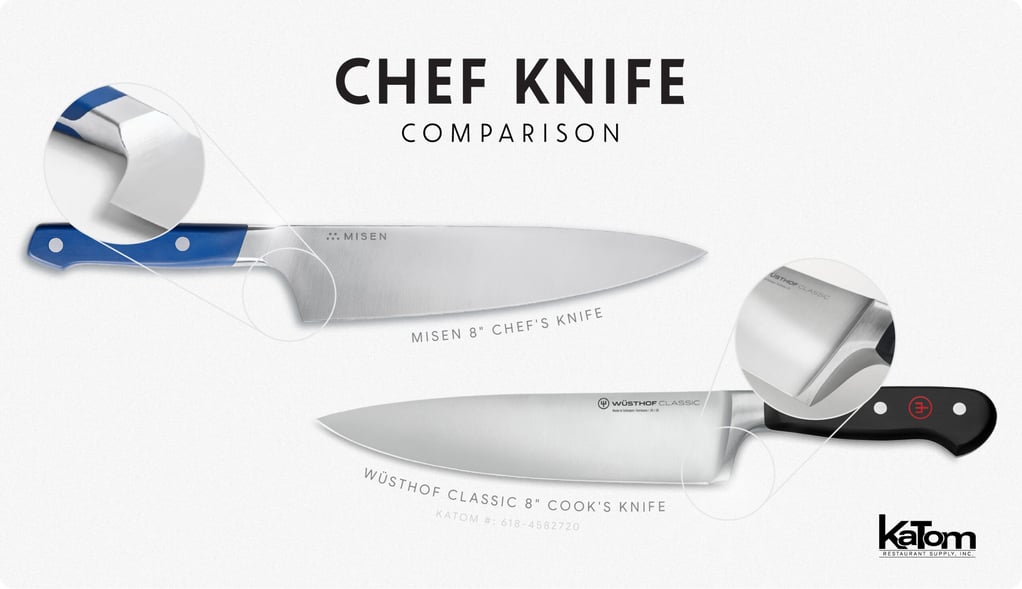
Wüsthof's blades are made with X50CrMoV15 German steel, providing a balance of toughness, edge retention, and easy maintenance for high-volume use. Softer than the Japanese steel used by Misen, Wüsthof steel is easier to sharpen and resists edge chipping. Wüsthof knives feature advanced engineering and strict quality control guidelines, including laser-guided Precision Edge Technology (PEtec) sharpening and hand finishing. Wüsthof's Classic chef knife features a traditional Western profile with a more rounded belly designed for rock chopping. Full bolsters hinder complete sharpening along the base, but Classic Ikon models have half bolsters.
Handle Design and Performance
Misen knives are designed with POM handles, providing a comfortable and nonslip grip. The long, thin handles feature two rivets and come in standard black or bright colors. The forward-angled handle complements the sloped bolster, creating a comfortable and efficient feel.
Wüsthof knives come with more handle varieties, offering 11 distinct styles, such as Amici and Ikon wooden handles or the fiberglass-reinforced Performer series. This variety helps users choose the handle style that best matches their preferences and cutting techniques. Wüsthof Classic and Classic Ikon knives are also made with POM handles, featuring a signature three-rivet design and trident logo on some models. They typically offer thicker, shorter handles with greater weight.
Knife Maintenance
Both Wüsthof and Misen have high levels of chromium, which makes the steel corrosion resistant. They should still be handled with care, however, to prevent injury and preserve sharpness. Hand wash knives after each use, dry them with a towel, and store them in a safe location. Don't wash them in the dishwasher, as it may dull the blade or damage other items. Since Wüsthof knives use softer steel, they may require more frequent honing but are generally easier to sharpen.
Price and Value
Misen offers mid-range knives at affordable prices, featuring strong corrosion resistance, edge retention, and everyday performance. Wüsthof offers premium knives designed for long service life and demanding prep environments. Both brands offer limited lifetime warranties on their knives.
Which Brand Is Better for You?
While much of the decision comes down to user preference, each brand offers distinct benefits. Misen is known for its versatile blades and quality steel, performing well for most low- to medium-volume prep tasks. Wüsthof knives are suited to a wide variety of prep tasks and offer more design and blade options, including German- and Japanese-style blades made with softer, tougher German steel. These knives are ideal for high-volume settings and users prioritizing durability.
| Scenario | Best Choice | Why? |
|---|---|---|
| Residential Kitchen Tasks | Either | Both brands offer exceptional style, performance, and materials |
| Basic Foodservice Tasks | Misen | Lower cost and easy handling |
| High-Volume Commercial Applications | Wüsthof | High durability and precise German construction |
Shop Wüsthof at KaTom
KaTom offers Wüsthof knives at competitive prices, including Classic, Gourmet, and Classic Ikon series for a balance of style and performance. Shop Wüsthof's cutlery at KaTom for everything from home cooking prep to high-volume kitchen tasks.
