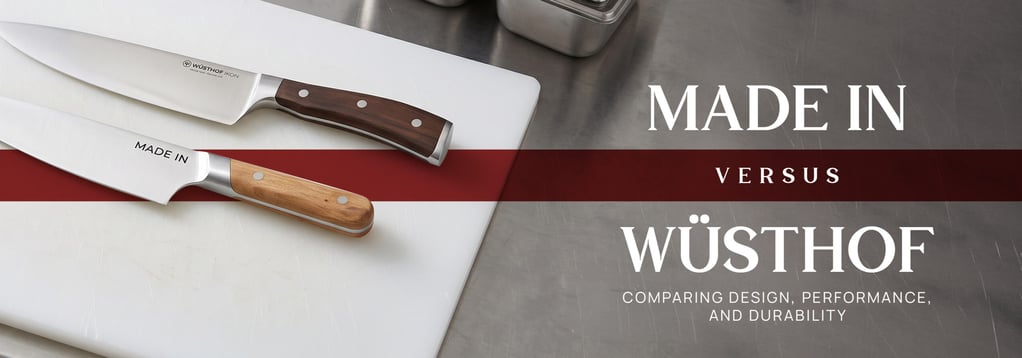
Made In vs. Wüsthof
Made In and Wüsthof are respected cutlery brands in commercial and residential kitchens, producing reliable knives with premium materials. Made In partners with international knife makers and offers a diverse line of kitchen smallwares, while Wüsthof offers cutlery known for its advanced machining and durable construction.
While Made In offers a smaller line of performance-driven knives, Wüsthof is known for its wide range of reliable cutlery, from chef's knives to shears.
About Made In
Made In was founded in 2017 by Jake Kalick and Chip Malt and is based in Austin, Tx. The brand capitalizes on its extensive international network, partnering with leading manufacturers around the world to create premium consumer cookware and kitchen tools.
Key Strengths:
- Knives made in Seki City, Japan and Thiers, France
- Asymmetrical Bevel Technology™ enhances blade performance
- X50CrMoV15 NITRO+ and VG-10 steel
- 58+ HRC hardness
About Wüsthof
With more than 200 years of experience, Wüsthof is one of Europe's most recognized knife manufacturers, and is based in Solingen, Germany, known as The City of Blades. Wüsthof is known for its commitment to precise manufacturing practices and consistent results.
Key Strengths:
- Knives made in Solingen, Germany
- More than 10 unique knife series
- X50CrMoV15 steel with Precision Edge Technology (PEtec)
- 58 HRC hardness
Key Differences Explained
Design and Product Selection
Made In offers traditional Japanese and European knife styles using different types of steel. The brand's French-made knives feature German X50CrMoV15 steel and standard paring, bread, chef's, and specialty knives. Olive wood or black ABS handles provide a comfortable grip on full-tang constructions with sloped bolsters. Made In's Japanese knives feature Damascus cladding and VG-10 steel, offering gyuto, nakiri, and santoku blades with POM handles.
Most Wüsthof forged knives use German X50CrMoV15 steel and are available in a mix of Asian and Western blade silhouettes. Wüsthof's Classic cook's knife is designed to excel at rock chopping, with a wide, rounded belly, a full bolster, and a contoured POM handle. Among Wüsthof's premium series are Performer, which offers a diamond-like carbon finish and nonslip handles, and Amici 1814, with a decorative etched blade and olive wood handle.
Performance and Function
Made In's French knives are treated with nitrogen to add strength and durability, while the proprietary Asymmetrical Bevel Technology (ABT) blades are sharpened to 14 degrees on one side and polished to 4 degrees on the other side. This creates an 18-degree cutting angle for greater control than knives with standard bevels.
Wüsthof designs its blades to meet strict quality standards and they're built for versatile performance. Wüsthof's forged knives are made with PEtec, an advanced sharpening process that uses laser-guided blade edging to produce blades that are 20 percent sharper. Their blades feature thicker bevels sharpened to 14 or 10 degrees per side and are designed for long-lasting edge retention.
Knife Maintenance and Durability
Made In and Wüsthof both recommend washing and drying knives by hand. Avoid washing them in the dishwasher to retain sharpness. Made In's steel registers at 58 HRC or above, offering a good balance of durability and hardness. Its Japanese VG-10 blades have a higher carbon content for extra strength. Wood handles should be promptly hand dried and oiled occasionally; in most cases, ABT knives require standard sharpening on the 14-degree side and a light sharpening on the opposite side.
Wüsthof blades are precisely hardened to 58 HRC. They're designed to resist chipping during prolonged use on dense materials and are easy to sharpen. POM handles provide long-lasting use and resist damage from water and chemicals.
Price and Value
Made In and Wüsthof are both high-end knife brands and occupy similar price points, offering the performance expected in professional kitchens. Made In primarily targets home cooks while also offering products suitable for professional kitchens. Wüsthof offers a wide range of designs with consistent and durable German construction, including several premium designs with a higher price point.
Which Brand Is Right for Your Operation?
Shop Wüsthof at KaTom
KaTom offers the Classic, Classic Ikon, and Gourmet series from Wüsthof at competitive prices. Browse a wide selection of Wüsthof chef's knives, santokus, paring knives, and more.
