How Long Do Commercial Ice Makers Last?
Many commercial brands design ice machines for long-term reliability when properly maintained, including Scotsman, Follett, Manitowoc, Hoshizaki, and Ice-O-Matic.
Key Takeaways
- Most commercial ice machines last 7 to 10 years
- Poor water quality shortens machine lifespan
- Regular cleaning prevents scale and mold buildup
- Proper ventilation reduces compressor strain
- Preventive maintenance extends equipment life
How to Extend the Lifespan of Your Ice Maker
Proper care can significantly extend the lifespan of your commercial ice machine. To maximize longevity, operators should do the following:- Clean and sanitize every three to six months
- Replace filters every six months (or more often if in hard water areas)
- Ensure proper ventilation and follow manufacturer's clearance guidelines
- Schedule annual preventive maintenance with a professional
- Inspect and clean condenser coils to prevent overheating
- Address minor issues promptly to avoid costly breakdowns
"If you're getting 10-plus years of good ice production, you've maintained your machine well." — Damon Holst, Senior Manager of Parts and Service at Scotsman
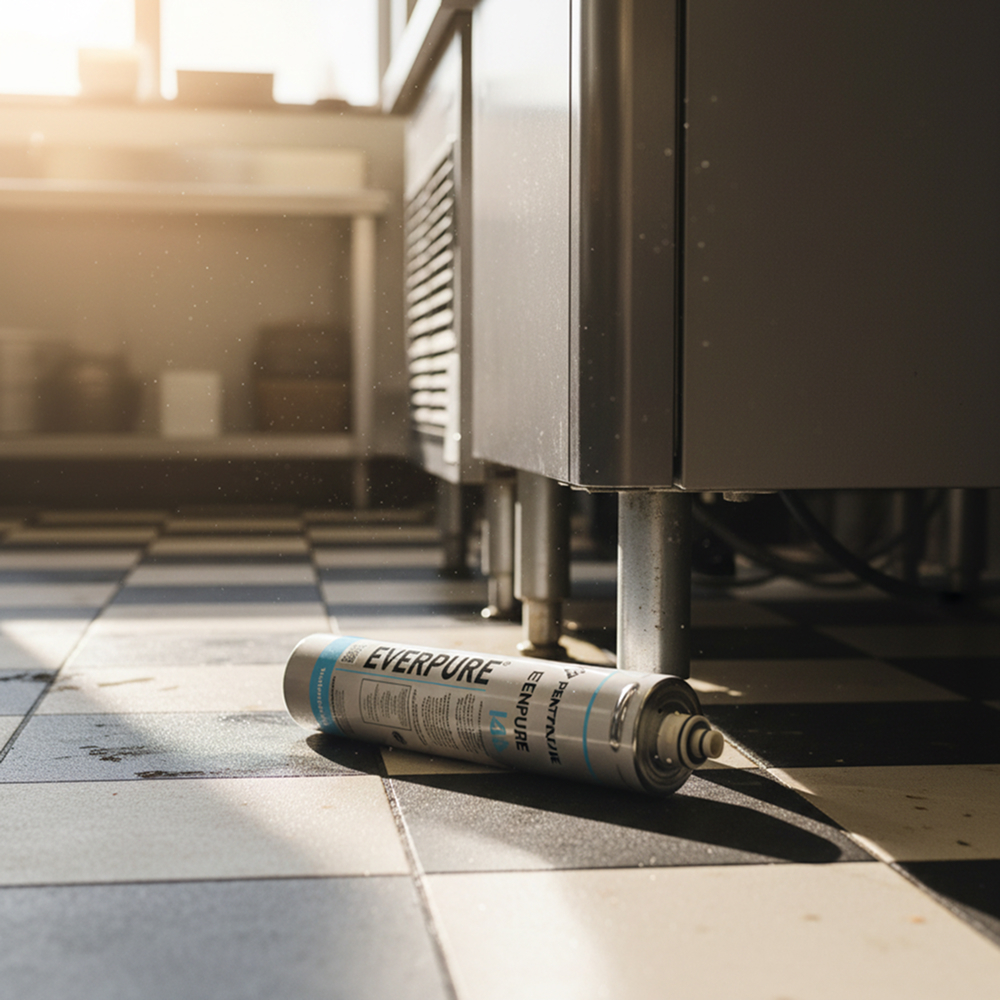
Use a Water Filter
Hard water contains minerals like calcium and magnesium that build in your ice machine and become scale as water flows around it. This buildup causes parts to stick, inhibiting operation and potentially damaging the machine. Because water hardness levels vary by region, it's essential to install a filter for your ice maker that specifically removes particles found in your local water supply.
"Water filters are essential. Minerals like calcium and iron, or even airborne particles, can clog components. Using a filter reduces buildup and ensures better water quality for ice production." — Dewayne Lane, Owner of Big D's Heating and Air
Install the Ice Machine Correctly
An ice machine's minimum required clearance is usually 6 inches on each side and 8 inches on top. Without proper ventilation in air-cooled machines, hot air builds up in the machine, forcing it to work harder and potentially wearing down the refrigeration system.
"Improper installation can cause leaks over time. A loose nut or improper torque on fittings might not show problems immediately, but six months later, you could have significant issues," Lane said.
Follett Technical Solutions Specialist Dan Glimn adds, "If you put it in a hot closet or block the air intake with other equipment, the ice production will drop significantly."
Maintenance on Your Ice Maker
Holst highlights that "maintaining ice machines is the most critical part of ownership in terms of longevity." Ice machines need regular cleaning to remove scale, mold, and slime. The frequency between each cleaning cycle depends on your kitchen environment, water quality, and usage, but "once every six months is a fair timeline on when you should maintain the machine," advises Jeff Biel, Vice President of Marketing and Development at Scotsman. This usually includes running a descaling and disinfecting cycle. Glimn emphasizes that, "neglecting the six-month cleaning cycle is like never changing the oil in your car. Eventually, the scale buildup creates enough friction that the motor simply burns out." Operators should also take out and thoroughly clean any removable trays and panels.
Signs You Need to Replace Your Ice Maker
- Low production
- Unusual noises
- Frequent repairs
- Leaks
- Poor ice quality
Should You Repair or Replace Your Ice Maker?
The decision to repair or replace your ice maker depends on several factors. The 50 percent rule dictates that you replace the unit if the repair cost exceeds 50 percent of the price of new one, especially if the unit is 7 to 10 years old. A newer machine is likely to have significant usage left and may be under warranty, so repairing it would be the better option. Older, non-ENERGY STAR equipment costs more to operate than new, more efficient units. Ordering and shipping replacement parts is time-consuming and can lead to costly downtime.
FAQs Ice Maker Lifespan
How long do countertop ice makers last?
Commercial countertop ice makers generally use the same mechanisms as standalone units, so expect a lifetime of 7 to 10 years. As with other models, proper ventilation, water filters, regular cleaning, and maintenance are key to maximizing their lifespan.
What is the life expectancy of a Hoshizaki ice machine?
Because of their stainless steel evaporators, Hoshizaki ice machines can last between 10 to 30 years with proper cleaning and maintenance.
What is the life expectancy of a Manitowoc ice machine?
Manitowoc ice machines last between 7 to 10 years with proper maintenance, but they can last up to 15 years with high-quality water filtration.
Can an ice machine last longer than 10 years?
Yes, a well-maintained ice machine can last more than 10 years. Longevity depends on routine, professional cleaning, water filtration, and well-ventilated installation.
How often should you replace an ice machine?
Generally, commercial ice machines should be replaced every 7 to 10 years. Machines can last longer if properly cared for.
How much does a commercial ice machine cost?
Typically, ice machines cost between $1,000 and $4,500 depending on production capacity, storage capacity, ice type, and brand.
Shop Commercial Ice Makers at KaTom
From modular machines with bins to countertop ice makers, KaTom sells long-lasting ice machines for every kind of operation. Our experienced customer care team helps operators choose models that fit their space, support their connections, and meet their needs.

