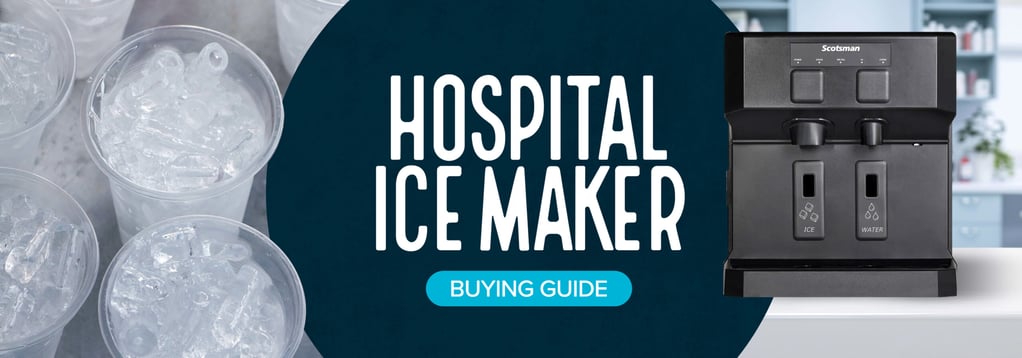
Best Hospital Ice Machines: 9 Key Buying Factors
Selecting the right ice machine for a hospital or healthcare facility is critical for supporting patient comfort, maintaining strict hygiene standards, and ensuring smooth day-to-day operations. From patient hydration and dietary needs to clinical use and sanitation, ice plays a crucial role across multiple departments. This guide outlines the nine most important factors to consider when choosing a hospital ice maker.
1. Types of Hospital Ice
Hospitals rely on different types of ice to support patient care, clinical procedures, and day-to-day operations. Cube, flake, and nugget ice each serve distinct roles because of their different textures, melt rates, and handling needs. Choosing the right type for your facility starts with an understanding of how each one functions in a healthcare setting.
Cube Ice
Cube ice is a dense, solid form of ice produced in uniform square or rectangular shapes. It's commonly used in clinical settings where slow melting and minimal dilution are important.
- Texture: Solid with sharp edges
- Melt Speed: Slow melting, retains shape over time
- Ideal Applications: Cold compresses, utility use, specimen cooling; less common for patient consumption
Flake Ice
Flake ice consists of soft, thin shards that pack easily and conform to various surfaces. Its easy-to-chew design and flexible form make it ideal for therapeutic applications, specimen transport, or food presentation. Healthcare environments may also use flake ice for patient hydration, as it does not present a choking hazard.
- Texture: Soft and moldable
- Melt Speed: Fast melting, supports quick surface cooling
- Ideal Applications: Therapeutic use, specimen storage, patient hydration, and food presentation
Nugget Ice
Nugget ice, also known as pellet or Sonic ice, is made of compressed flakes that form soft, porous nuggets. It's extremely popular in healthcare settings for its chewable texture and hydration benefits.
- Texture: Soft and chewable
- Melt Speed: Moderate; absorbs drink flavors while keeping its shape longer than flake ice
- Ideal Applications: Patient hydration and meal service
Explore nugget ice machines | Learn more about making hospital-style ice chips at home
2. Types of Hospital Ice Machines
Hospital ice machines come in undercounter, countertop, and freestanding configurations, each suited for different space and volume needs. Countertop and undercounter models are compact, making them ideal for nurse stations or patient rooms, while freestanding units are better for high-traffic areas like dietary departments and cafeterias.
"Look for serviceability when buying an ice maker. If you can't get replacement parts, you'll end up spending more in the long run. Pay attention to warranties and ensure the unit is supported by the manufacturer or retailer." — Dewayne Lane, owner of Big D's Heating and Air
Undercounter Ice Makers
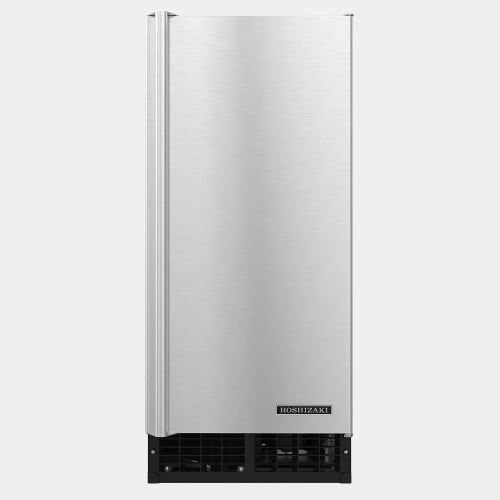
Undercounter ice machines are compact, self-contained units that fit beneath standard countertops. Commonly used in nurse stations, staff lounges, and other small areas, they offer a space-saving solution for light to moderate ice needs.
- Ideal Placement: Nurse stations, outpatient clinics, and staff breakrooms
- Typical Volume Capacity: 50-300 lbs. per day depending on model
- Ideal Uses: Small-scale patient and staff hydration
Countertop Ice Makers
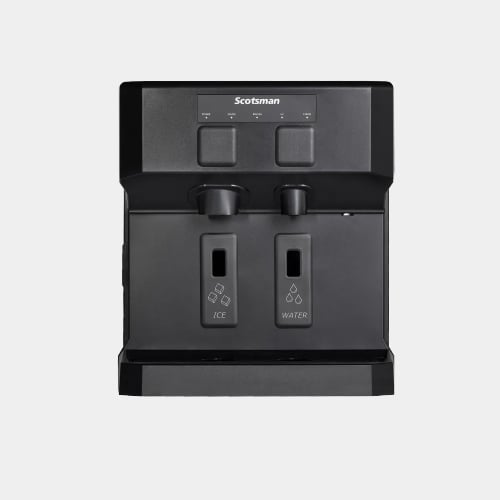
Countertop ice makers are compact, user-friendly machines that sit on work surfaces and often include built-in dispensers for touch-free operation. These ice makers work well in high-accessibility areas where space is limited and hygiene is prioritized.
- Ideal Placement: Patient rooms, waiting areas, and nurse stations
- Typical Volume Capacity: 100-400 lbs. of ice per day
- Ideal Uses: Patient hydration and quick self-service
Freestanding Ice Makers
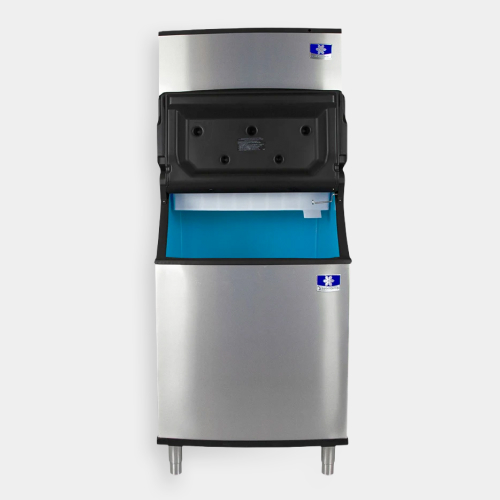
Freestanding ice makers are high-capacity machines combining an ice maker head with a storage bin. These machines are best suited for departments that require continuous, bulk access to ice throughout the day.
- Ideal Placement: Dietary departments, surgery centers, and central utility rooms
- Typical Volume Capacity: 300-2,000 lbs. of ice per day
- Ideal Uses: Large-scale foodservice, procedural cooling, and central ice supply for hospital departments
3. Space & Installation Considerations
When installing an ice machine in a hospital setting, proper planning is essential. Consider the available space, the unit's footprint, required clearance for ventilation, access to drains, and appropriate electrical connections. Professional installation is highly recommended to avoid long-term maintenance issues and ensure optimal performance.
"Improper installation can cause leaks over time. A loose nut or improper torque on fittings might not show problems immediately, but six months later, you could have significant issues." — Dewayne Lane
4. Hospital Ice Machine Maximum Production
To determine the right production capacity, estimate your facility's daily ice usage per patient, staff needs, and any clinical or dietary applications. A high-traffic hospital may require multiple machines or a model capable of producing several hundred pounds of ice every day. Use this ice production guide to help calculate demand based on your operation's size and service needs.
5. Bin System & Capacity
In healthcare settings, bin capacity plays a crucial role in ensuring a consistent ice supply for patient care and clinical operations. Choosing the right bin size helps prevent shortages and reduces the frequency of manual refills, saving time and labor.
- Small bins (under 150 lbs.): Serve areas with occasional ice use like nurse stations or outpatient clinics
- Mid-sized bins (150-300 lbs.): Meet steady but moderate ice demand, such as dietary services
- Large bins (over 300 lbs.): Support facilities with high patient turnover or continuous ice needs
6. Cooling System: Air-Cooled vs. Water-Cooled
Ice machines use either air-cooled or water-cooled systems to regulate internal temperatures during ice production. Air-cooled models are more energy efficient and easier to install but require sufficient ventilation and cooler ambient conditions. Water-cooled units operate quietly and consistently in hot or confined environments but may increase water usage . To determine which option best fits your layout, look over our cooling system guide.
Air-Cooled Ice Machines
Air-cooled ice machines use fans to expel heat into the surrounding environment, making them ideal for spaces with good airflow and moderate ambient temperatures. These condenser systems are the most common type for healthcare settings.
- More energy efficient than water-cooled alternatives
- Lower water usage and utility costs
- Simple to install and maintain
- Works well in ventilated areas with moderate climate control
Water-Cooled Ice Machines
Water-cooled ice machines use a water line to remove heat from the condenser, which enables the unit to perform consistently even in high-temperature or poorly ventilated spaces. Follett Director of Marketing Scott Bingham explains, "water-cooled units are rare and usually only for places like hospitals or cruise ships with a chilled water loop; otherwise, air cooled is the standard."
Because these machines rely on water rather than ambient air to cool the condenser, they typically come with higher utility costs. For that reason, most foodservice operations use air-cooled machines a facility already has a chilled water loop available.
- Performs reliably in hot or enclosed spaces
- Operates quietly with minimal fan noise
- Less affected by ambient air temperatures
- Ideal for spaces without sufficient ventilation
7. Water Treatment Systems: Filter vs. Scale Elimination
Clean water is essential in hospital ice machines to protect patient health and maintain equipment efficiency. Hospitals primarily rely on filtrations systems to ensure ice is clean and free from contaminants that could pose a risk to patients. These systems remove sediment, chlorine, and contaminants that can impact the taste, odor, and safety of the ice. On the other hand, scale prevention systems are designed to inhibit mineral buildup within the machine, preventing damage to internal components. While each system targets different concerns, both play a critical role in maintaining hygienic conditions. In areas with hard water, some facilities may use both systems for comprehensive protection.
8. Maintenance & Sanitation
Proper maintenance and sanitation are essential for keeping hospital ice machines safe, efficient, and compliant with healthcare standards. To prevent microbial contamination, operators should perform regular cleanings. Preventative maintenance is also encouraged as it supports long-term performance and reduces the risk of malfunctions. Facilities should follow manufacturer-recommended service frequency to maintain safety and reliability.
"Regular maintenance is key. An ice machine is like a car; if you don't maintain it, it won't last long. You must follow the service intervals provided by the manufacturer." — Dewayne Lane
9. Hospital Ice Machine Certifications
Certifications help ensure hospital ice machines meet standards for safety, accessibility, and energy efficiency. Understanding these labels can guide informed purchasing decisions for healthcare establishments.
- NSF Certified: Meets required health standards for food and beverage safety, ensuring clean ice
- ADA Compliant: Designed for accessible operation by users with disabilities, supporting inclusive designs
- ENERGY STAR® Certified: Recognized for energy efficiency, helping reduce utility costs and protect the environment
Explore the Best Hospital Ice Makers at KaTom
As a trusted supplier of high-performance hospital ice machines, KaTom offers a wide selection of models designed for patient care, dietary needs, and clinical applications. With expert support and dependable customer service, KaTom helps healthcare facilities find the right ice solution.


