
Choosing the Best Convection Oven: A Buyer's Guide
Commercial convection ovens often form the backbone of a kitchen's cook line, so it's important to choose the right option for your venue's needs. Oven size, capacity, fuel type, and many other components work together to determine which piece of equipment best suits an application. It's important to choose a model that elevates and streamlines the food production process, so staff can carry out duties elsewhere.
Here, we'll cover several important factors you need to think about when buying a commercial convection oven, along with brief explanations of each option to help further inform your decision.
Determine a Heat Source
Many types of commercial cooking equipment can be powered by either gas or electricity, leaving it to restaurant owners to figure out which fuel type is appropriate for their kitchen. Convection ovens are no exception to the rule, as they may be powered by LP gas, natural gas, or electricity. Choosing the wrong option can make it impossible to use the equipment you've acquired, so it's important to evaluate the utilities at your venue before selecting an oven. Read on to learn about the differences between these models and how to choose the one that's right for you. "Gas burners are around 35- to 45-percent efficient, electric about 65 to 75 percent, and induction reaches roughly 95 percent, which is by far the most efficient option," Southbend Vice President of Sales and Marketing Bryant Woolcock told KaTom.
Electric convection ovens are typically simple to install and require a connection ranging from 110 to 480 volts to operate. Before you buy any oven, check the electrical sockets in your kitchen to determine which voltage(s) are compatible. If you must hire an electrician to modify or add a new connection for the model you choose, you'll need to factor the additional cost into your budget when buying a commercial convection oven.
Most electric options can be simply plugged in and turned on, with no additional connections needed. Depending on its size and voltage, an electric oven can be relocated to any area with a suitable outlet by simply unplugging the unit, moving it, and plugging it back in.
Gas Convection Ovens operate with combustible fuel and heat up more efficiently than electric options. Depending on the cost of utilities in your area, a gas oven may lower your bills, as long as your building already has gas lines installed. However, installing new gas lines in a building that doesn't have them can be very costly, so it's usually not worth changing the utilities in your restaurant just to try and save on fuel costs.
Some gas models can be powered with an LP gas tank, making them suitable for mobile cooking needs. Because gas convection ovens require either LP or natural gas, you should check your kitchen's utilities carefully to ensure you choose the right model. Some models come with a conversion kit so they can use either fuel type.
Check your building's utilities to determine a compatible fuel type. Gas ovens heat efficiently and require an LP or natural gas line to operate, while electric ovens are compatible with most kitchens and easy to install.
Choose Size & Capacity
You may be thinking size and capacity are pretty similar, but each factors into the buying process a little differently. When referring to convection ovens, size generally indicates the interior dimensions of the oven and is measured by the size of pans it can accommodate. Capacity refers to how much food the oven can cook at a time and is measured by the number of pans the oven can hold - typically expressed as pans per deck.
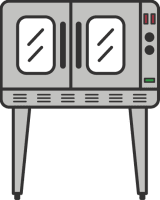
Full-size convection ovens are built to hold full-size sheet pans measuring 26 by 18 inches. If you have the space and need to produce a high volume of product, a full-size oven is right for you. Another consideration is the size of the food you're cooking. If you bake large cakes, roast large cuts of meat, or prepare any other product requiring a lot of cooking room, a full-size model will accommodate those needs.
SHOP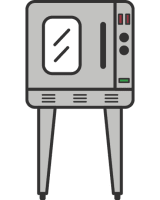
Half-size convection ovens are designed to fit compact spaces and can hold half-size sheet pans measuring 18 by 13 inches. Half-size convection ovens are a great choice for producing a low-to medium volume of food, keeping up with seasonal menu changes, and fulfilling steady demand. If you're short on space but need to make lots of food, choosing a half-size convection oven with two decks can increase the oven's output without increasing the footprint.
SHOPPans Per Deck
Half-size convection ovens typically hold anywhere from 3 to 5 pans per deck, so they fall in the lower range of capacity. Several full-size models also hold 3 to 5 pans per deck, but the pans are full size, meaning their dimensions and amount of food they can produce is a bit higher. Whether full- or half-size, ovens in this range have a good capacity for making food for a few to a few hundred people each day and are commonly used in restaurants, bar and grills, coffee shops, and cafes.
Full-size ovens come in a couple more capacity options to support heftier cooking needs. Full-size models holding 6 to 8 pans per deck have roomy oven cavities capable of holding sizable products and producing medium to high volumes of cooked food each day. These models often feature two or more decks and are a great fit in grocery stores, cafeterias, care homes, and other establishments serving a large quantity of food daily.
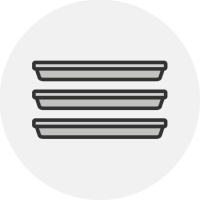





Oven size is determined by whether the internal cavity can accommodate full- or half-size pans, while pans per deck refers to the number of pans it can hold at once. Think about the type and amount of food you make and choose a model that matches those needs.
Select Number of Ovens
One way to save space while still producing a high volume of food is to buy a convection oven with more than one deck - also known as a cooking chamber or oven. Ovens with multiple decks not only hold more food than single-deck ovens, but they can also cook food at different temperatures in each chamber, allowing operators to finish two or more recipes at once. Wondering if you need more than one deck? Check the tips below to help you decide.
Single-deck Convection Ovens are simple to operate, cost less than multi-deck ovens, and take up less vertical space in the kitchen. These models have one cooking chamber with one set of temperature controls, which may be digital or analog, depending on the model. Because they have fewer components, they're simpler to maintain than multi-chamber models.
If you cook a lot of food at the same temperature and/or don't need high-volume production capability, a single-deck oven can meet your needs without bulking up your budget.
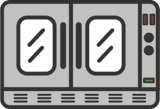
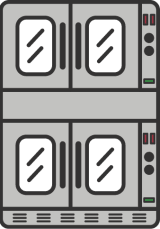
Double-deck convection ovens provide twice as much cooking space in the same footprint as their single-deck counterparts. Double-deck models have dual cooking chambers, so they have more parts requiring maintenance and cost more than a single-deck option.
Many chefs are willing to pay the extra price because of two advantages: Double-deck models can produce twice the product volume, and they can cook two recipes at different temperatures simultaneously. If you need to make a high volume of product, make a variety of recipes in the oven, or simply need two decks to keep up with spikes in demand, this option is best for you.
Triple-deck convection ovens offer similar benefits and drawbacks as double-deck options. With three independent cooking chambers, these models provide maximum output and cooking flexibility while also using floor space efficiently due to their stacked construction. Because they include three cooking chambers, triple-deck models use more materials and unique components than single- or double-deck options, and their price reflects that.
This oven style can cook three times as much food daily as a single-deck model, which is perfect for high-volume operators and chefs who need to prepare multiple dishes simultaneously. High-volume institutions like cruise ships, mess halls, and campus cafeterias can benefit from a triple-deck oven's high output and compact footprint.
If you're making food for a large crowd, supplying a bakery, or producing meals on an institutional scale, a triple-deck oven can make that process easier.
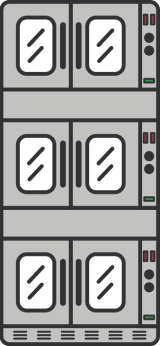
Convection ovens may have single, double, or triple decks. Single-deck ovens are affordable and simple to operate, while double- and triple-deck options cost more but can produce a higher volume and greater variety of food each day.
Decide on Doors
The type of doors that come on your convection oven can significantly impact your cooking process. Each option has its own purpose in the kitchen and its own drawbacks.

Independent doors can be opened independently of one another as the name suggests, reducing the amount of heat lost each time a door is opened. To open both doors, you'll need to use two hands or open one after the other, which can be a drawback in fast-paced kitchens. If you frequently open the oven to baste foods, check food temperatures, add or remove pans, or perform other tasks during cooking, however, independent doors will help keep heat contained and reduce temperature fluctuations.
SHOP
Dependent doors open and close together, meaning they can be operated with one hand. This is helpful when staff need to add or remove large trays of food from the unit. On the other hand, you must open both doors to peek inside and check food, so more heat is lost and the oven has to work harder to keep up. If you often load large pans into the oven, prefer one-handed operation, or rarely open the oven's door during cooking, dependent doors will help streamline workflows and ease multitasking.
SHOPConvection ovens with dependent doors can be operated with one hand, making them easy to load and unload. Independent doors open separately, which helps conserve heat and shorten recovery during basting, checking food temperatures, and other tasks.
Choose a Base
There are a few different types of convection oven bases; the type you need depends on where the oven is installed and how often it's moved. No matter what setup you choose, using a base is important to ensure your equipment is level, stable, and supported away from surfaces that could melt or scorch. Below, we'll compare a few base options to help you decide.

Convection ovens mounted on casters are easy to move around for cleaning, maintenance, or other purposes and usually have locks on one or more casters to hold the unit in place. Most ovens with casters rest on the ground, as it's not a good idea to place heavy equipment with casters on top of a counter or worktable.
SHOP
Oven legs come in a few lengths, depending on the model. Short legs are best for ovens on countertops and worktables, while longer legs are installed on freestanding models to raise them off the floor to a comfortable working height. Some legs include casters to facilitate movement, while others have feet for stability.
SHOP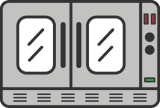
Some models have no base. Ovens without a base can be matched with legs, casters, or an equipment stand of the operator's choosing, or they can be installed in a stacked configuration with other convection ovens.
SHOP
Stands are also commonly used as oven bases. Most convection oven stands are built with shelves or racks that are perfect for storing extra pans and supplies beneath the unit. As with legs, some equipment stands have casters for ease of movement and other have feet for stability.
SHOPConvection ovens may come with casters, legs, stands, or no base at all. Short legs without casters are best for countertop installation, while long legs and equipment stands, with or without casters, are best for floor placement.
Consider Special Features
Additional features are available on some models that can be very useful for certain recipes and applications. Special features allow an oven to switch between cooking and holding modes, hold sheet pans in any configuration, provide a temperature probe for precise monitoring, and/or be programmed to remember recipes. Special features can also increase the oven's cost, so make sure you're only paying for features you'll actually use. "We add technology only when it truly makes sense," Woolcock said. "When it creates value for both the operator and the owner; not just to add a gadget."

Cook & Hold capable models function as both an oven and a hot holding space. Programmable options automatically switch from cooking to holding at the end of a cycle, enabling cooks to multi-task more efficiently without the worry of overcooking food.
SHOP
Probe models have a removable temperature probe that enables cooks to precisely monitor the temperature of food as it cooks. If the oven also has cook-and-hold capabilities, a core probe can help users determine the best time to switch cycles.
SHOP
Programmable units have controls capable of more complex functions than other options. Chefs can enter preset recipes into the oven and save them for quick reuse. Storing pre-programmed recipes on the oven saves time, boosts product uniformity, and simplifies training for new users.
SHOP
Deep Depth ovens are also called bakery-depth ovens because they're often used in bakeries, where uniform heat distribution is vital. These ovens have an enlarged cooking chamber that can hold full-size sheet pans in staggered front-to-back and side-to-side orientations, ensuring uniform heat and airflow across all pans.
SHOPSpecial features streamline work and improve product quality, but they can also increase an oven's cost. Think about how the oven is primarily used to determine which features, if any, can improve your workflow.
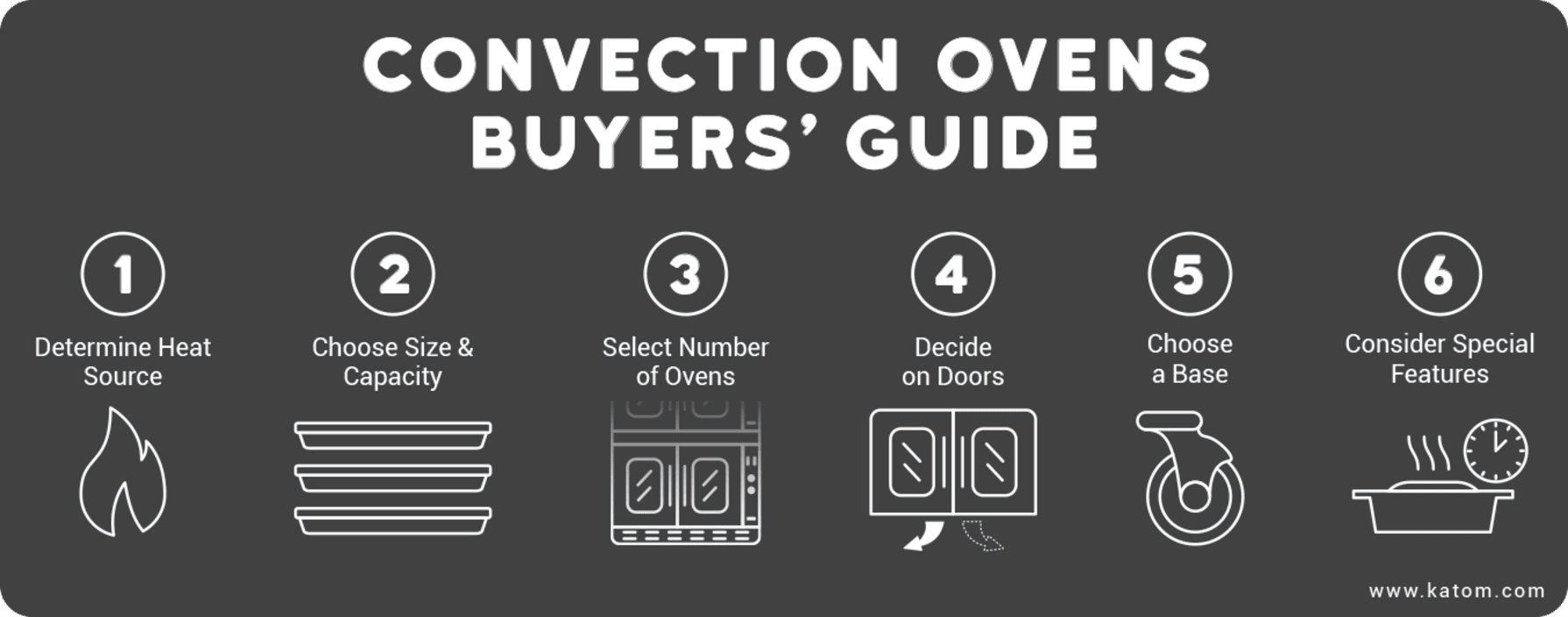
- Determine the heat source that fits your building. Gas ovens heat efficiently and can be installed wherever a gas line or propane tank is available. Electric ovens are easy to set up and relocate and don't require separate fuel and power sources to operate.
- Choose the oven size and capacity you need. The oven's size determines what size pans it can hold, while its capacity, also known as pans per deck, determines the number of pans it can accommodate.
- Select a number of ovens, also known as decks. A single-deck oven is the most affordable and simplest to operate, while double- and triple-deck options provide higher output and can simultaneously cook two or three recipes at varied temperatures.
- Decide what style of doors you prefer. Independent doors can be opened one at a time, reducing heat loss when basting meats and checking food temperatures. Dependent doors open and close together, meaning both doors can be operated with one hand for easy loading and unloading.
- Choose a base for your oven, if any. Bases with casters facilitate movement, while legs without casters are more stable; stand bases often include space for storage beneath the oven.
- Consider the potential benefit of special features. Commercial convection ovens may be able to switch between cooking and holding modes, be programmed to remember recipes, include a probe for precise temperature measurement, or have a deep-depth cavity that can hold pans in any orientation.

