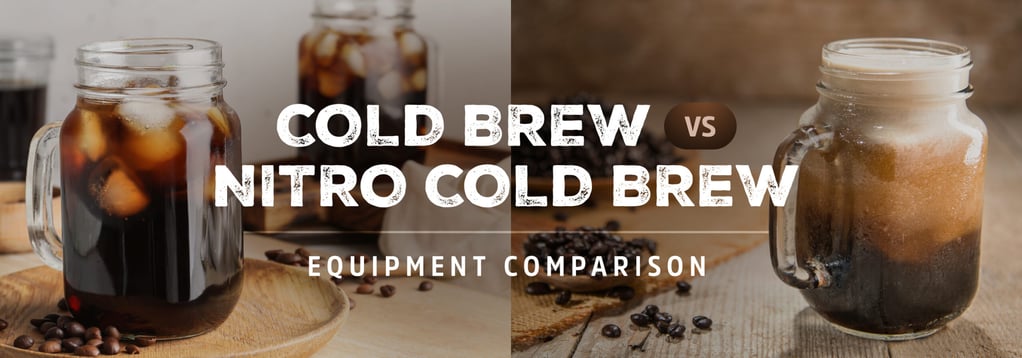
Cold Brew vs. Nitro Cold Brew Equipment
Cold brew coffee has moved from a specialty coffee shop menu item to a core part of beverage programs across cafes, bakeries, and convenience stores. This shift has increased demand for equipment that can produce cold brew and nitro cold brew coffee. A standard cold brew system focuses on brewing, chilling, holding, and dispensing cold coffee, while a nitro cold brew system adds nitrogen infusion and tap components that create a foamy head and fuller body. Operators must determine the right setup based on the desired brewing method, storage requirements, and intended customer experience.
The Market Trend Toward Cold Brew Coffee
The demand for cold coffee has been on the rise in recent years, with young coffee drinkers preferring it over hot coffee. Allegra World Coffee Portal's Project Cafe USA 2024 found that 79 percent of coffee consumers under 35 purchase an iced coffee at least once a week, showing a clear market shift among younger generations toward chilled coffee drinks.1
Among cold coffee types, cold brew has seen a particularly high level of growth. According to the National Coffee Association's 2023 NCDT report, cold brew coffee has seen a 300-percent increase in popularity since 2016.2
"Cold brew is not slowing down. It has become a lasting part of the commercial beverage landscape." — Mark Tilson, Regional Sales Manager, FETCO
For more information on the difference between iced coffee and cold brew, check out KaTom's article on cold coffee types.
Cold Brew vs. Nitro Cold Brew: Comparison Snapshot
What Equipment Is Needed for Cold Brew?
1. Brewing
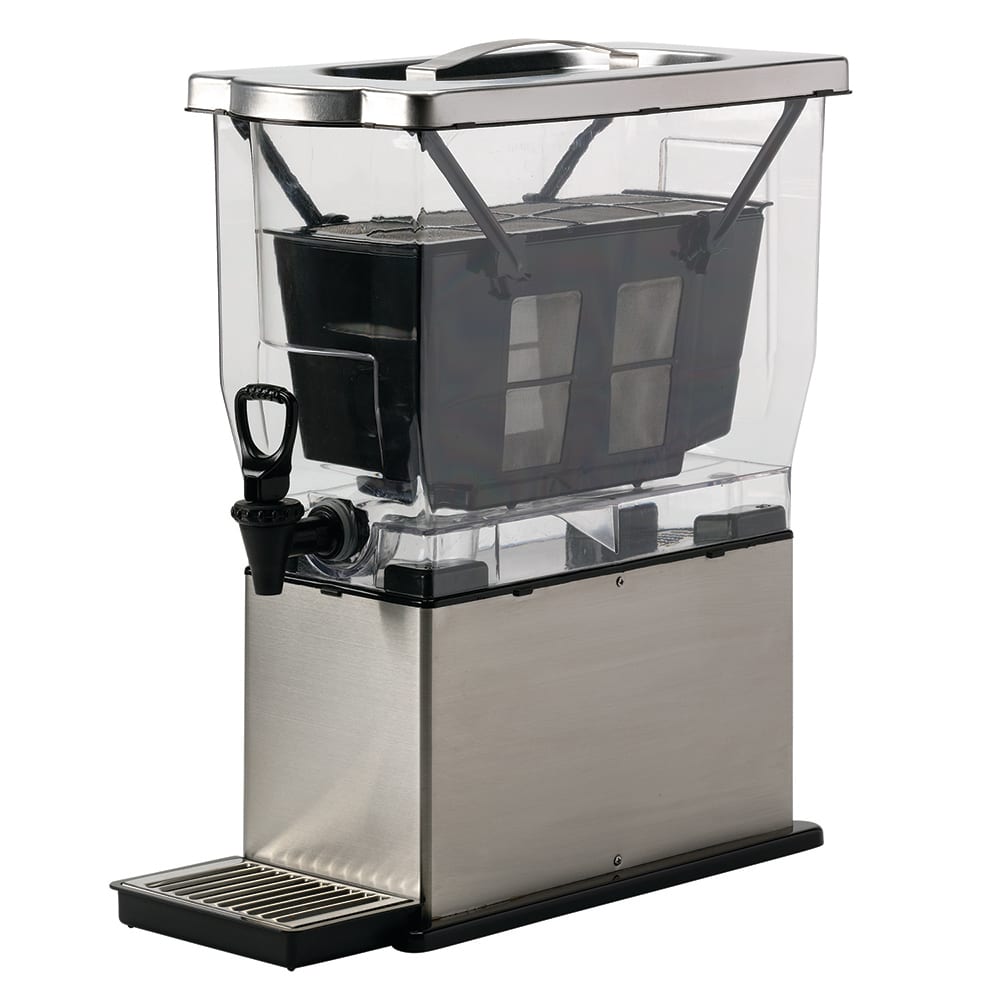
The first step in preparing cold brew coffee is grinding the coffee and steeping it in cold water for 12 to 24 hours. This process produces smooth, low-acidity coffee concentrate and can be done with a dedicated brewer, steeping vessel, or cold brew kit. The two main methods are immersion, where coarsely ground coffee combines with cold water in a container and is left to steep, and cold drip, where cold water slowly drips through a bed of coffee grounds. Because the brewing process takes several hours, production must be planned around expected demand and available storage.
2. Filtration
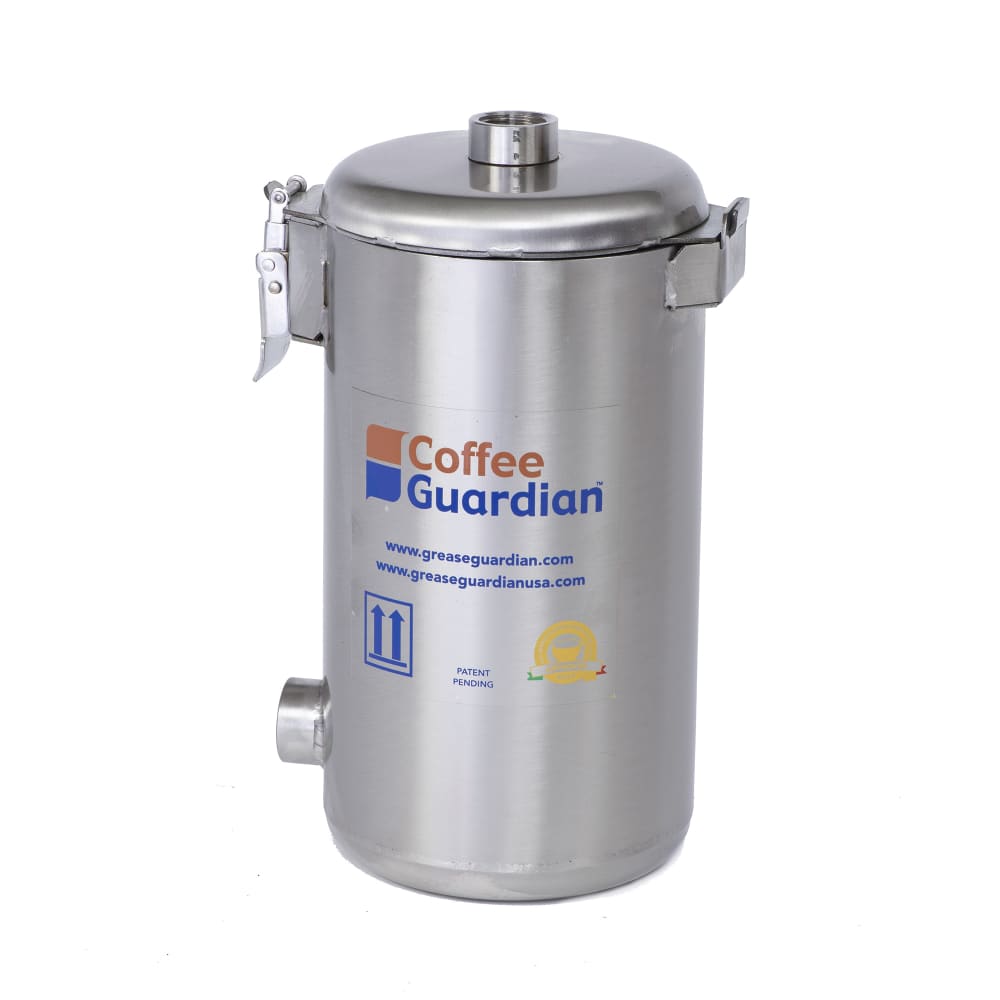
After steeping, coffee grounds are removed before the beverage is moved into storage or dispensing equipment. Filters, brew bags, and transfer containers help keep sediment out of the final drink.
3. Storage
Cold brew must stay chilled after production, otherwise it can lose its flavor or potentially spoil. Coffee can be stored in pitchers, food-safe containers, refrigerated dispensers, or kegs held inside a kegerator or undercounter refrigerator. A draft cold brew program may also store cold brew coffee in a back-of-house cooler and run beverage lines to the serving area.
4. Dispensing
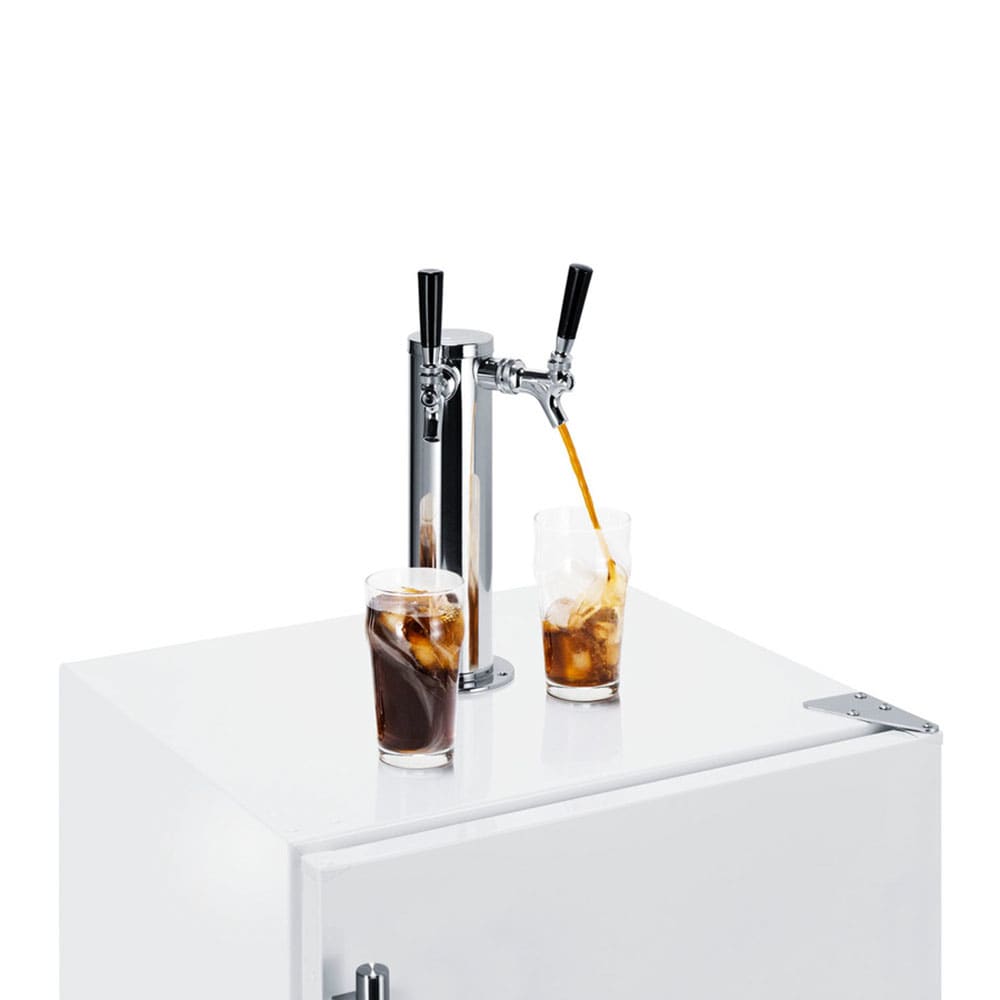
Cold brew can be served from a standard dispenser, draft faucet, or tap. It's important to pair all cold brew dispensers with the appropriate tower assembly and taps, with flat cold brew using a standard tap style.
What Equipment Is Needed for Nitro Cold Brew?
1. Cold Brew Base
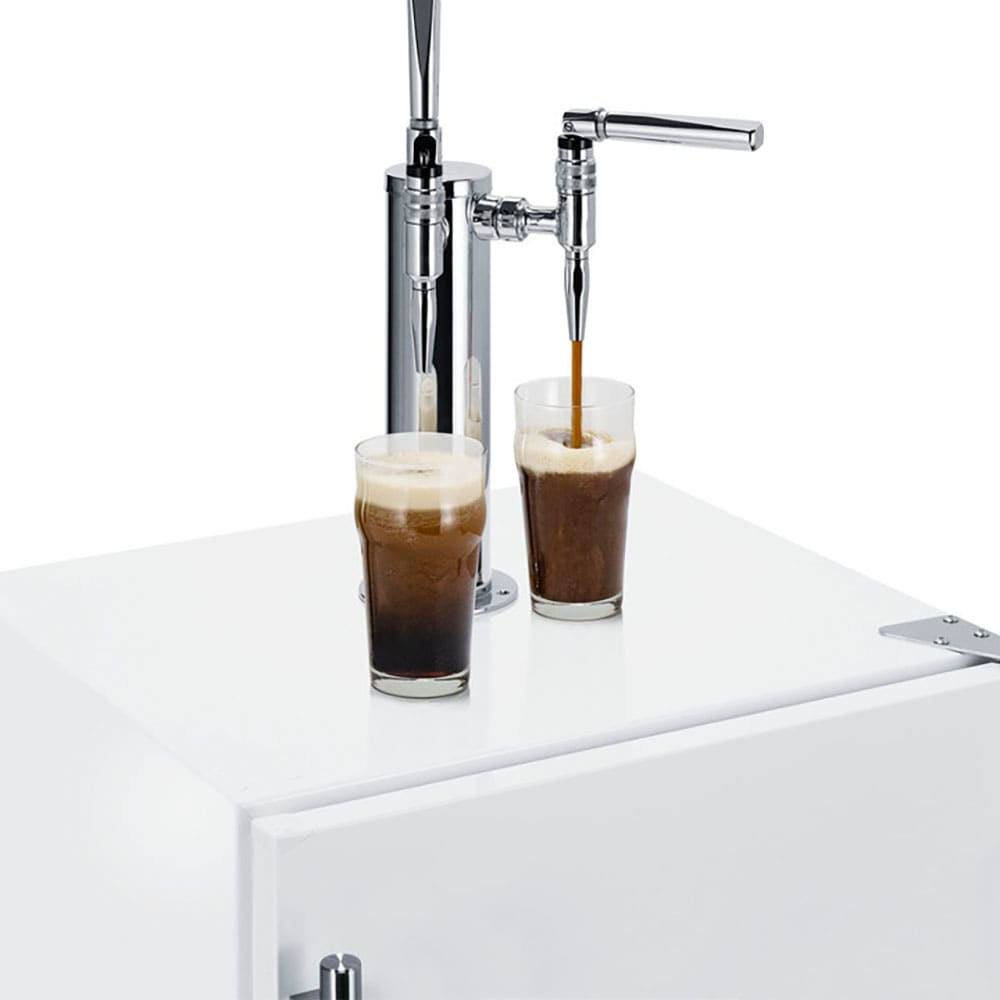
Nitro cold brew equipment starts with cold brew coffee, then adds the components needed to chill, pressurize, infuse, and dispense the beverage. Operators can use premade cold brew or connect a concentrate-fed system to supply the dispenser. Concentrate-fed systems may suit higher-volume operations because concentrate takes up less storage space than premade beverages.
"Nitro cold brew is one of the strongest trends in specialty coffee and continues to create opportunities for operators." — Mark Tilson
2. Storage

Nitro cold brew must remain cold during storage. Traditional systems often use refrigerated kegerators or undercounter cabinets, while some tabletop systems pull cold brew from a separate container and chill it as it travels to the tap. Operators should evaluate capacity, recovery time, ventilation clearance, ambient temperature limits, and electrical requirements when selecting storage equipment.
3. Nitrogen Infusion
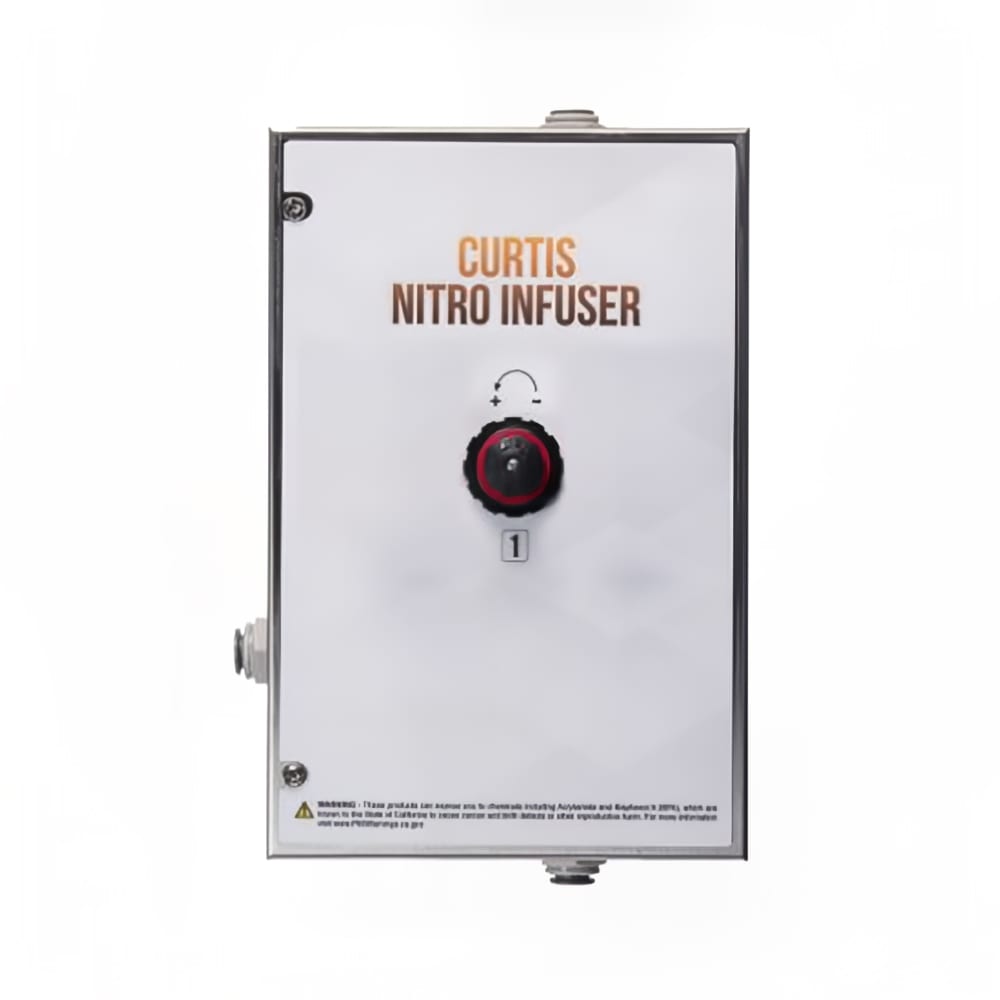
Nitro equipment is designed to introduce nitrogen into the cold brew to create smooth, creamy coffee. Traditional systems may use a compressed nitrogen cylinder or a nitrogen generator. Cylinders require secure storage, pressure monitoring, and periodic replacement, while generators draw from the surrounding air and separate nitrogen for the system.
Some compact machines handle nitrogen differently by infusing the beverage on demand. This setup can reduce the need for a separate tank and simplify installation for operators that want nitro service without a full draft system.
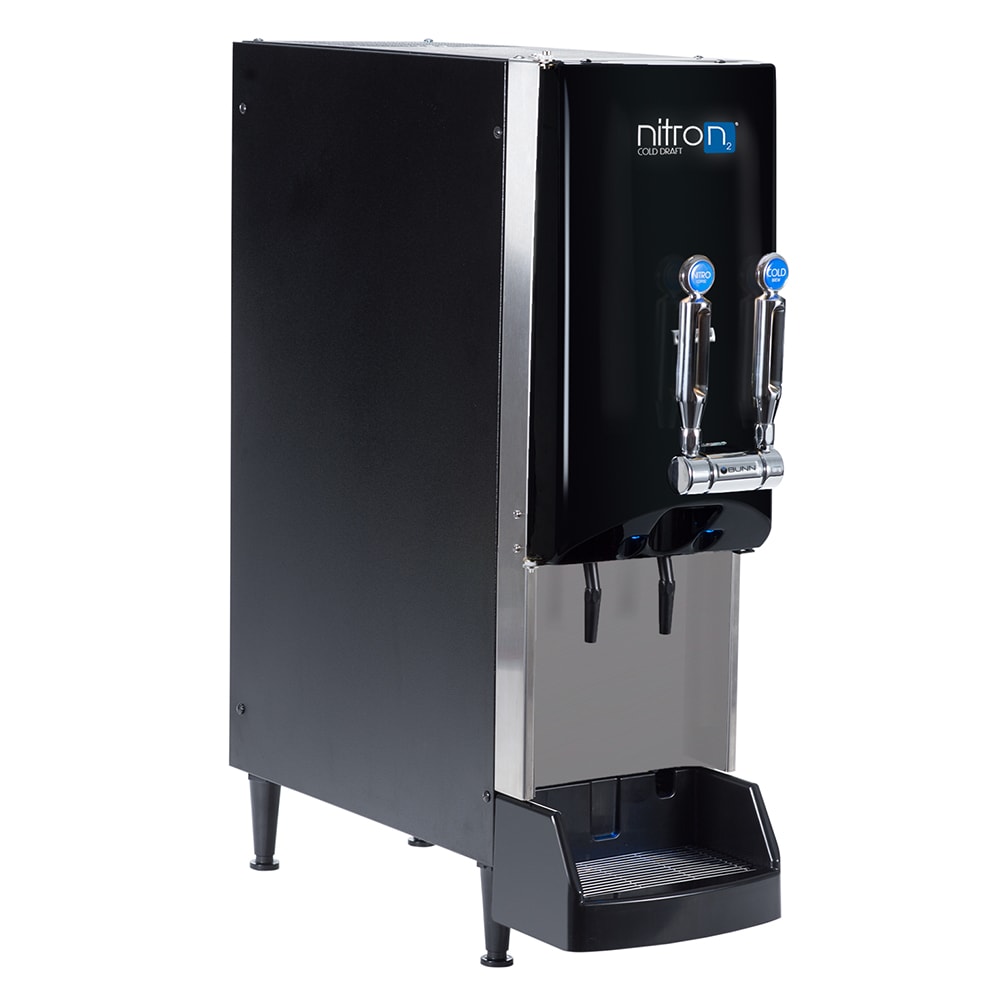
"A tabletop nitro dispenser can chill ready-to-drink cold brew on demand and dispense either nitro or standard cold brew." — Mark Tilson
4. Dispensing
A nitro cold brew system uses pressure, beverage lines, gas lines, fittings, couplers, an infusion module, a tap tower, and a stout faucet or specialized nozzle to control the pour. The beverage-line diameter, length, and material can affect flow rate, flavor, and cleaning requirements, while fittings and couplers must match the keg, reservoir, and pressure needs of the system. The faucet is one of the most visible differences between cold brew and nitro cold brew equipment. Flat cold brew uses a standard tap, while nitro cold brew uses a stout-style tap or nitro nozzle that helps release dissolved nitrogen during the pour.
For more information, KaTom's must-have nitro cold brew equipment guide provides a comprehensive list of everything an operation needs for a nitro cold brew coffee program.
Key Differences
System Components
Cold brew equipment uses fewer components because it doesn't need to infuse gas into the beverage. A basic system may include a brewer, filter, storage container, refrigerated dispenser, and standard tap. A draft cold brew setup may add a keg, beverage line, tower, and faucet for faster counter service.
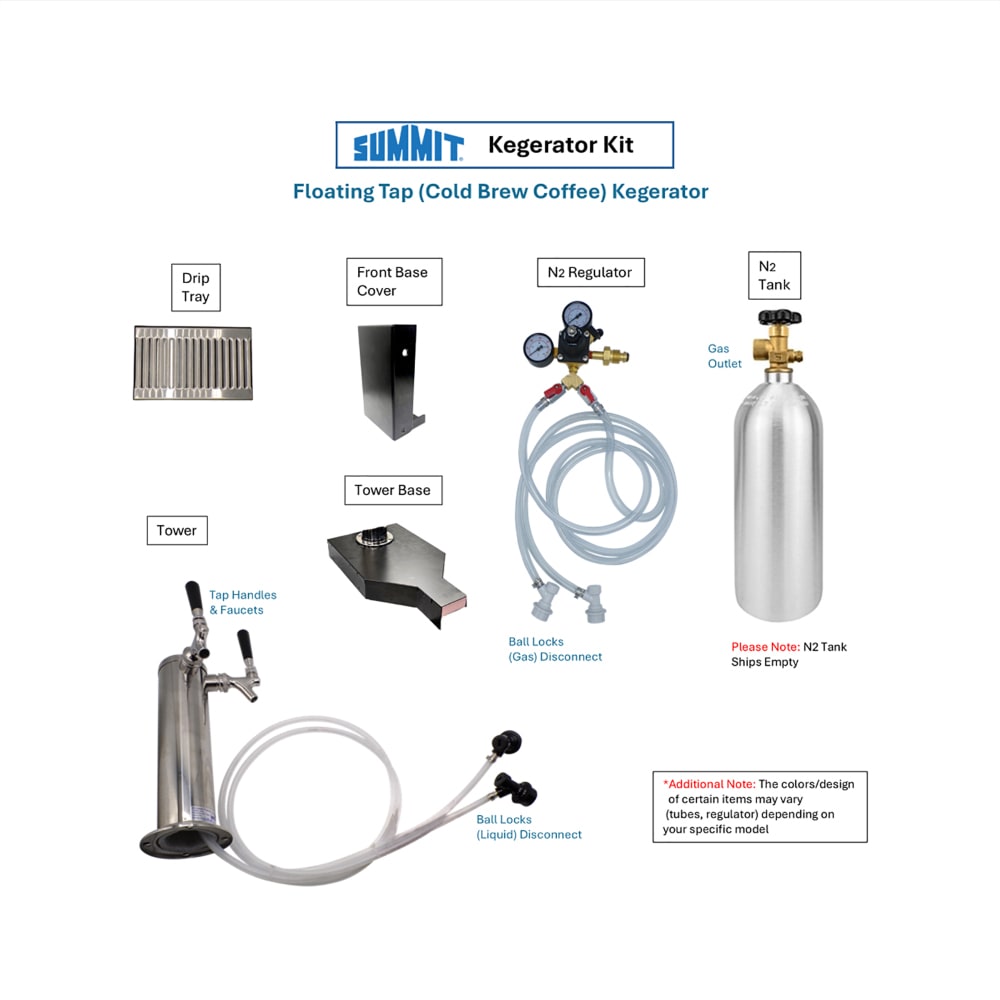
Nitro cold brew equipment adds gas-related components such as a nitrogen cylinder or generator, regulator, gas lines, infusion parts, and a stout faucet or nitro nozzle. Traditional nitro systems may also require cylinder storage and staff procedures for monitoring pressure.
Dispensing Methods
After cold brew coffee has been prepared, it's stored until service. It's often served in bottles, jugs, or in cups from standard coffee dispensers. This method works well for serving cold brew over ice, with milk, in blended drinks, or as a base for flavored coffee beverages.
Nitro cold brew is dispensed through a pressurized tap system, similar to draft beer. As the coffee passes through the stout faucet or specialized nozzle, the pressure change releases small nitrogen bubbles that create the cascade and creamy head. The system must balance pressure and line resistance to avoid excessive foam, sputtering, or slow service.
Maintenance and Cleaning
Brewers, strainers, containers, faucets, and beverage lines should be cleaned according to the manufacturer's instructions and the operation's food safety procedures. Because cold brew is batch prepared and held for service, operators also need clear labeling, rotation, and cold holding practices.
Nitro cold brew maintenance adds pressure and gas systems. Staff may need to check nitrogen levels, monitor regulators, secure cylinders, clean stout faucets or nitro nozzles, and maintain infusion components according to manufacturer guidance.
Installation
Cold brew equipment can be flexible because brewing, holding, and dispensing can happen in different areas of the operation. A small cafe may use a batch brewer and countertop dispenser, while a larger operation may dedicate undercounter refrigeration or a kegerator to cold brew service.
Nitro systems often require more planning. A traditional keg-and-tank system needs space for the refrigerated keg, nitrogen cylinder, regulator, lines, and tap tower. A self-contained nitro kegerator stores more of the system in one cabinet, while a tabletop unit may suit operations that want a compact system without a separate nitrogen tank.
Menu Flexibility
Cold brew equipment supports cold brew coffee and cold brew concentrate, while nitro equipment can broaden the beverage program further. Systems that dispense both nitro and standard cold brew can expand menu options to include teas, dirty sodas, and espresso martinis.
"Nitro technology is expanding beyond cold brew into tea, dirty sodas, espresso martinis, energy drinks, and other specialty beverages." — Mark Tilson
Shop Cold Brew Equipment at KaTom
KaTom offers a variety of cold brew equipment, including brewers, dispensers, and nitro coffee machines in multiple capacities and configurations. Compare product capacity, beverage inputs, utility requirements, tap configurations, and installation needs to find the right equipment for your operation.
References
- The Cold Coffee Boom: Today's Trends Foodservice Equipment & Supplies. Accessed August 2026.
- Report: Cold brew coffee popularity spikes 300% SupplySide Food & Beverage Journal. Accessed August 2026.
