Why Is My Ice Maker Making Dirty Ice?
Dirty ice usually indicates something is interfering with the ice-making process. Contaminants can enter through the water supply, build up inside the machine, or develop over time due to inadequate cleaning or filtration. In commercial environments, this issue is especially important to address. Ice is a consumable product, so cleanliness directly impacts food quality and safety.
"Ice is food; it needs to be cleaned and maintained similarly for health and safety." — Damon Holst, Senior Manager, Parts and Service, Scotsman
Key Takeaways
- Dirty ice is usually caused by poor water quality, scale, slime, or filter problems
- Black specks, white flakes, odors, or bad taste indicate different root causes
- Old or missing water filters are a common reason ice looks or tastes dirty
- Regular cleaning, sanitizing, and proper filtration prevent contamination
- If dirty ice returns after cleaning, the issue may be inside the water line or machine components
What Dirty Ice Usually Means
- Cloudy or milky-looking ice
- Black, white, or brown specks
- Earthy, metallic, or musty tastes
- Bad odor
- Soft, misshapen, or slushy cubes
- Visible debris in the bin
Dirty Ice vs. Cloudy Ice
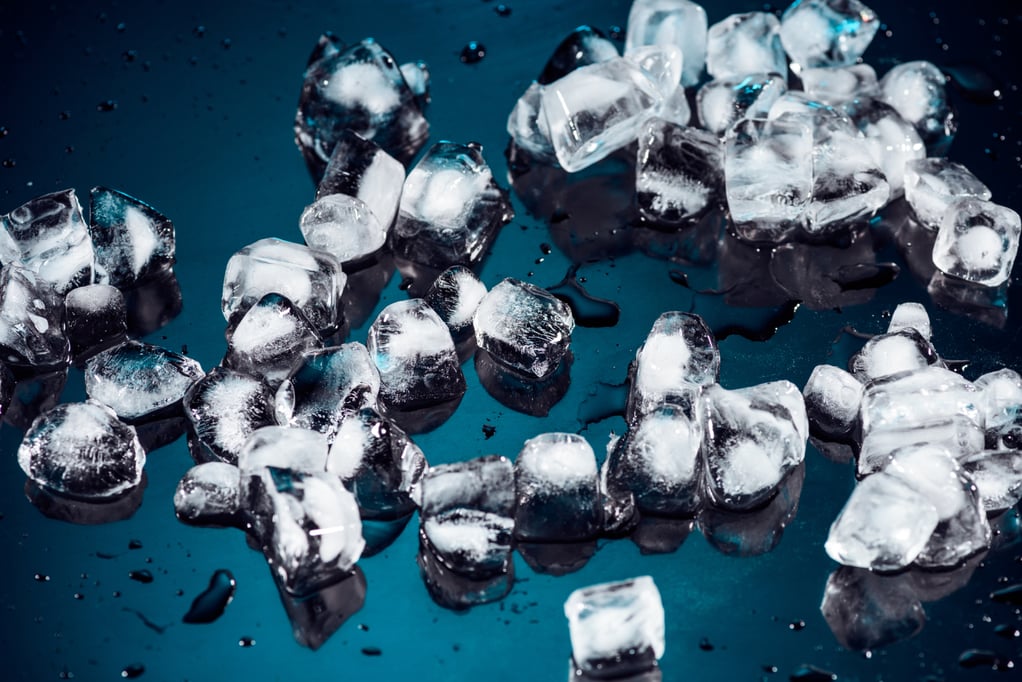
Cloudy ice and dirty ice are often mistaken for one another, but they typically have different causes. Cloudy ice is usually the result of dissolved minerals or trapped air in the water, creating a white or opaque appearance but not necessarily indicating contamination. Dirty ice, however, often includes visible debris, discoloration, odors, or a bad taste. These symptoms are typically caused by contaminants entering the system, such as scale buildup, biofilm, or failing filters.
Common Reasons Your Ice Maker Is Making Dirty Ice
Poor Water Quality
Water impurities such as sediment, chlorine, and minerals degrade ice quality, causing cloudy, opaque, or discolored appearances and giving metallic, bitter, or chemical tastes. Sediment like dirt, rust, and sand may enter the ice machine and become trapped. Minerals in the water concentrate in the center of cubes as water freezes. Air bubbles and minerals together make ice less dense and opaque. These changes not only affect appearance but can also impact taste and ice quality.
"Water quality is critical. Minerals from unfiltered water can cause scale buildup, affecting ice quality and machine performance." — Will York, Product Manager, Manitowoc
Worn, Missing, or Expired Water Filter
Even with a clean water supply, a worn or old filter can allow contaminants to enter the ice machine. Filters remove particles, reduce chlorine, and limit scale buildup clogged or expired, they lose effectiveness. Systems with missing or malfunctioning filters enable water contaminants to bypass the system, carbon particles to appear in ice, or bacteria to develop within the filter itself. Regular replacement of filters is essential.
"Water filters are essential. Minerals like calcium and iron, or even airborne particles, can clog components. Using a filter reduces buildup and ensures better quality for ice production." — Dewayne Lane, Owner of Big D's Heating and Air, Morristown, Tenn.
Scale Buildup Inside the Machine
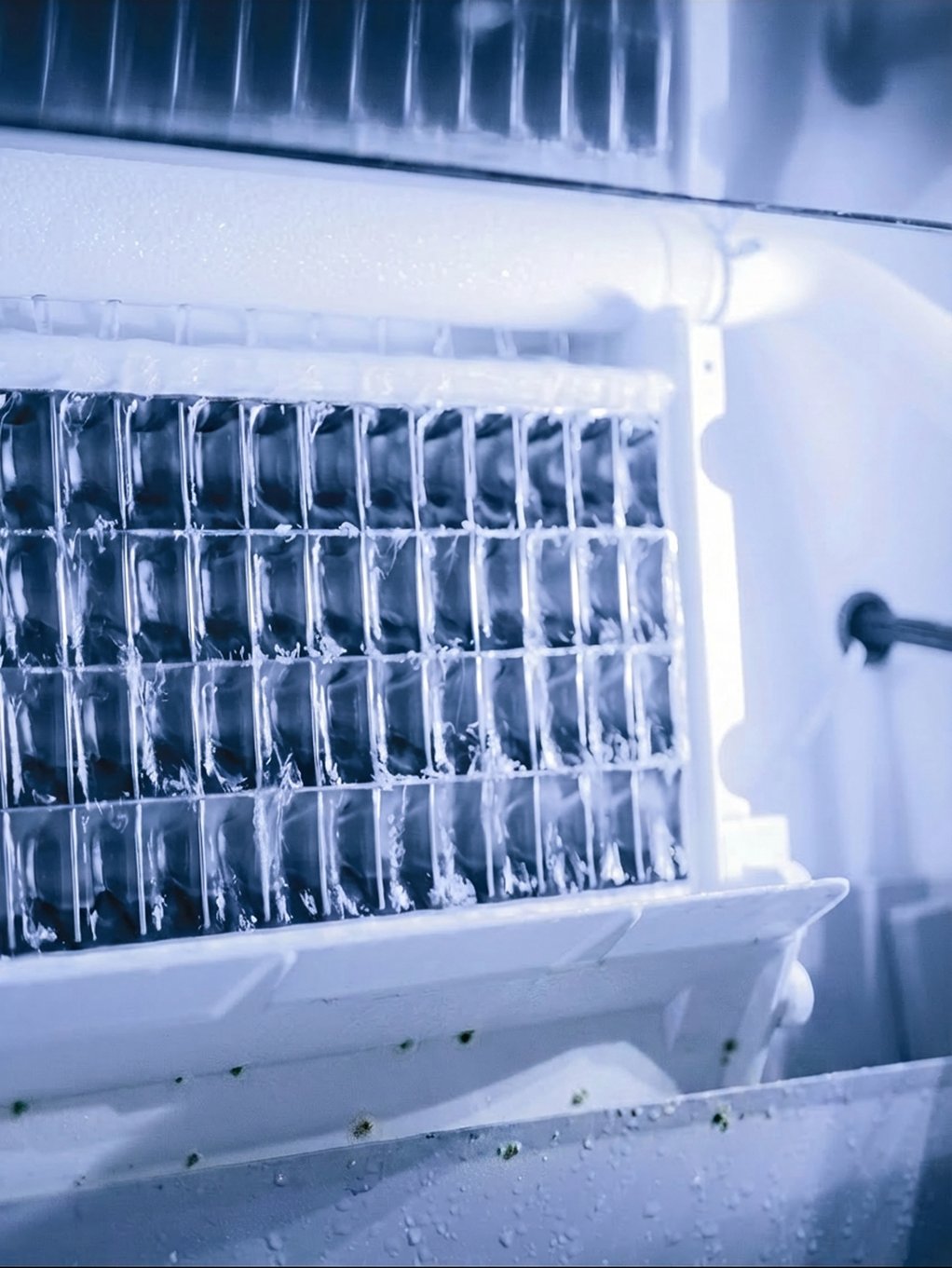
Hard water deposits, or limescale, form when water with high levels of calcium and magnesium leaves mineral buildup inside the ice machine. This chalky residue accumulates on components like evaporator plates and water lines, reducing efficiency and disrupting ice production. As ice forms and releases, pieces of scale can break loose and appear as white flakes in the ice or bin. Routine cleaning and proper filtration prevent buildup and keep the machine operating efficiently.
"Minerals in the water can separate and cause scale buildup, which affects ice quality and the machine's performance." — Jake Kimmel and Steve Wright, Hoshizaki Experts
Mold, Slime, or Bacteria
Biofilm is a slimy layer of bacteria and other microorganisms that sticks to surfaces in moist environments, like the inside of an ice machine. It can cause bad odors, odd tastes and health concerns. Mold differs from biofilm, as it is a type of fuzzy fungus, while biofilm is jelly-like. Mold prefers moist environments but requires air to survive. Biofilm thrives under water and in high-moisture environments. Regular cleaning and sanitation is essential to prevent biofilm and mold growth.
Dirty Ice Bin or Poor Ice Handling
Ice machines and bins provide a dark, moist environment where mold and biofilm can easily develop. Improper handling, such as leaving the scoop inside the bin or using hands, cups, or other containers instead of a scoop, can increase the risk of contamination.
Contaminated Water Line
A contaminated water line becomes a breeding ground for microorganisms and mineral impurities. Over time, this accumulation traps bacteria that cause bad odor and taste. Older pipes degrade over time, resulting in particles being released into the water. Sediment can also enter through cracked pipes, bringing debris into the water supply.
Airborne Contaminants
Grease, yeast, and other debris can enter machines through air intake vents and settle on wet surfaces. Bakeries or pizzerias shouldn't place ice makers where large amounts of yeast can enter the air. Yeast feeds on organic material and thrives in damp, dark environments like ice makers.
| Issue | Likely Cause | Recommended Solution |
|---|---|---|
| White flakes in the ice | Scale buildup breaking loose from internal components | Descale the machine and evaluate whether water treatment is needed |
| Black specks in ice | Filter issues, mold, or deteriorating internal parts | Replace the water filter, clean and sanitize the machine, and monitor for recurring contamination |
| Brown or dark debris in ice | Sediment in the water supply, dirty water lines, or internal contamination | Check the incoming water supply, inspect the line, and thoroughly clean the unit |
| Ice smells bad | Biofilm, mold, dirty bin, contaminated water, or stale filter media | Clean and sanitize the machine and bin, then replace the filter if overdue |
| Ice tastes earthy, metallic, or dirty | Poor source water, expired filter, or contaminated water line | Check filtration, flush the line, and inspect for recurring water quality issues |
| Ice is soft, misshapen, or slushy with visible debris | Internal buildup, poor water flow, or contamination affecting production | Clean the unit, inspect filtration, and water flow |
| Ice looks clean, but bin is dirty | Contamination is happening during storage or handling | Empty and sanitize the bin, clean the scoop, and review handling practices |