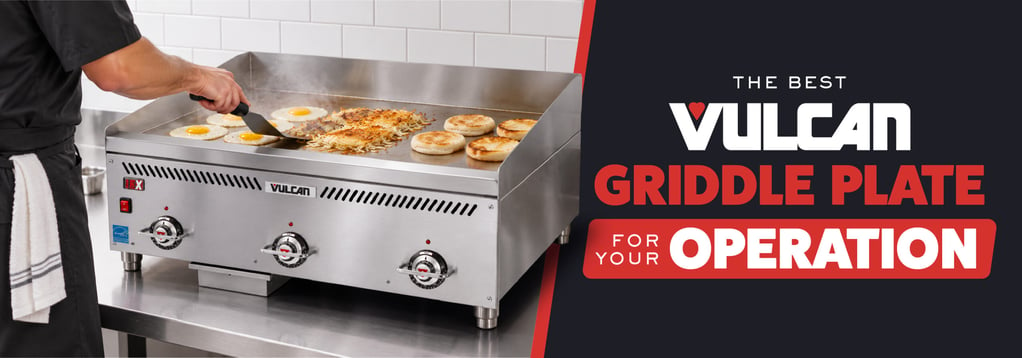
Vulcan Griddle Plates: What Are My Options?
Vulcan manufactures industry-leading commercial griddles in both gas and electric configurations to suit various utility needs. Vulcan offers three griddle plate types, each designed to support different cooking, cleaning, and production priorities:
- Steel: Durable, economical plate option for varied menus
- Rapid Recovery™ Composite: A fast-heating material designed to support consistent temperatures and high-volume production
- Chrome: A polished cooking surface that reduces radiant heat, food sticking, and flavor transfer
Select Vulcan griddles feature IRX™ infrared burner technology to reduce gas consumption, and some models are ENERGY STAR® certified for lower energy use.
Types of Vulcan Griddle Plates
The right Vulcan griddle plate depends on production volume, cleaning procedures, and the kitchen's available space and utility setup. Steel is Vulcan's traditional option, Rapid Recovery composite transfers heat quickly and evenly, and chrome produces less radiant heat while reducing food sticking.
Steel Griddle Plates
Steel is the standard griddle plate material and Vulcan's most economical option. Its durability and versatility make it practical for kitchens that prepare many types of food throughout the day. Key characteristics include:
- Produces the most radiant heat of Vulcan's three plate types
- Available in a broad range of sizes and configurations
- Requires seasoning after cleaning to maintain the cooking surface
- Grooved surfaces are available on select configurations
A steel Vulcan griddle is a practical choice when durability, configuration flexibility, and initial equipment cost take priority over reducing radiant heat or simplifying cleanup.
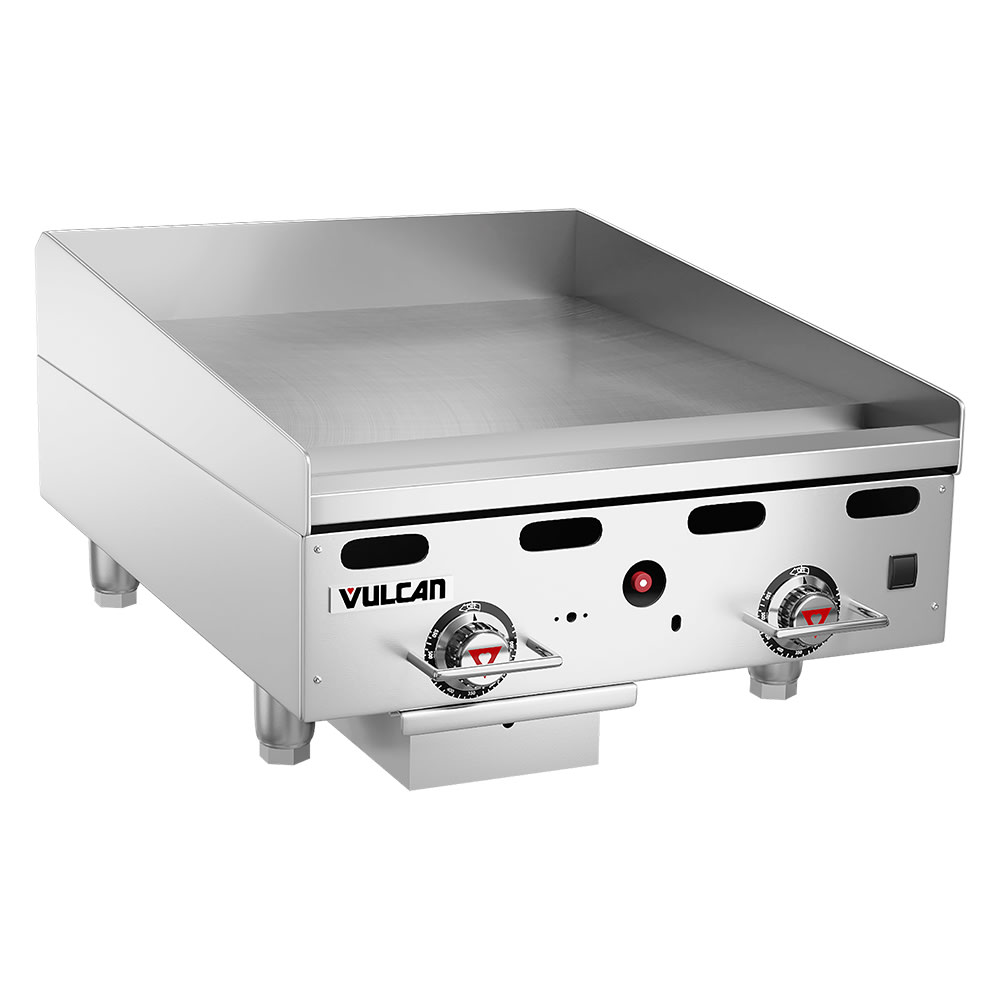
Vulcan MSA24
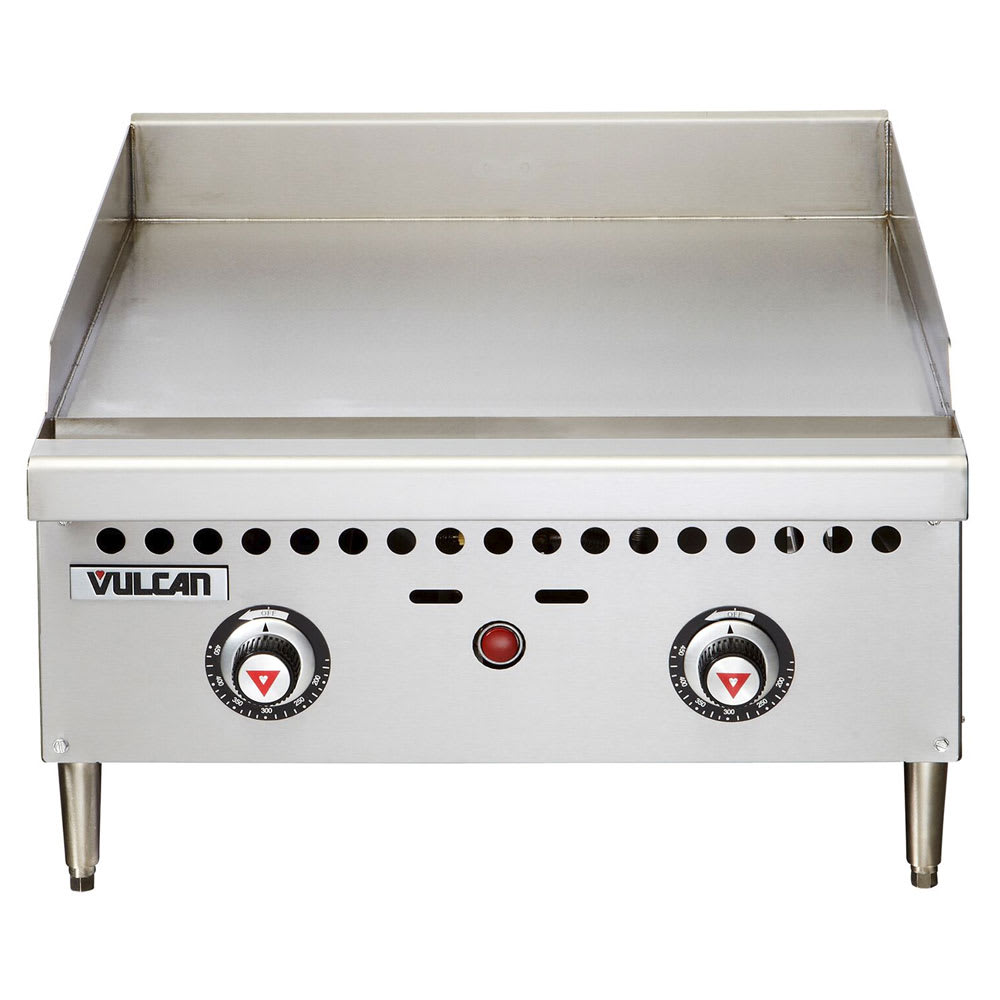
Vulcan VCRG24-T
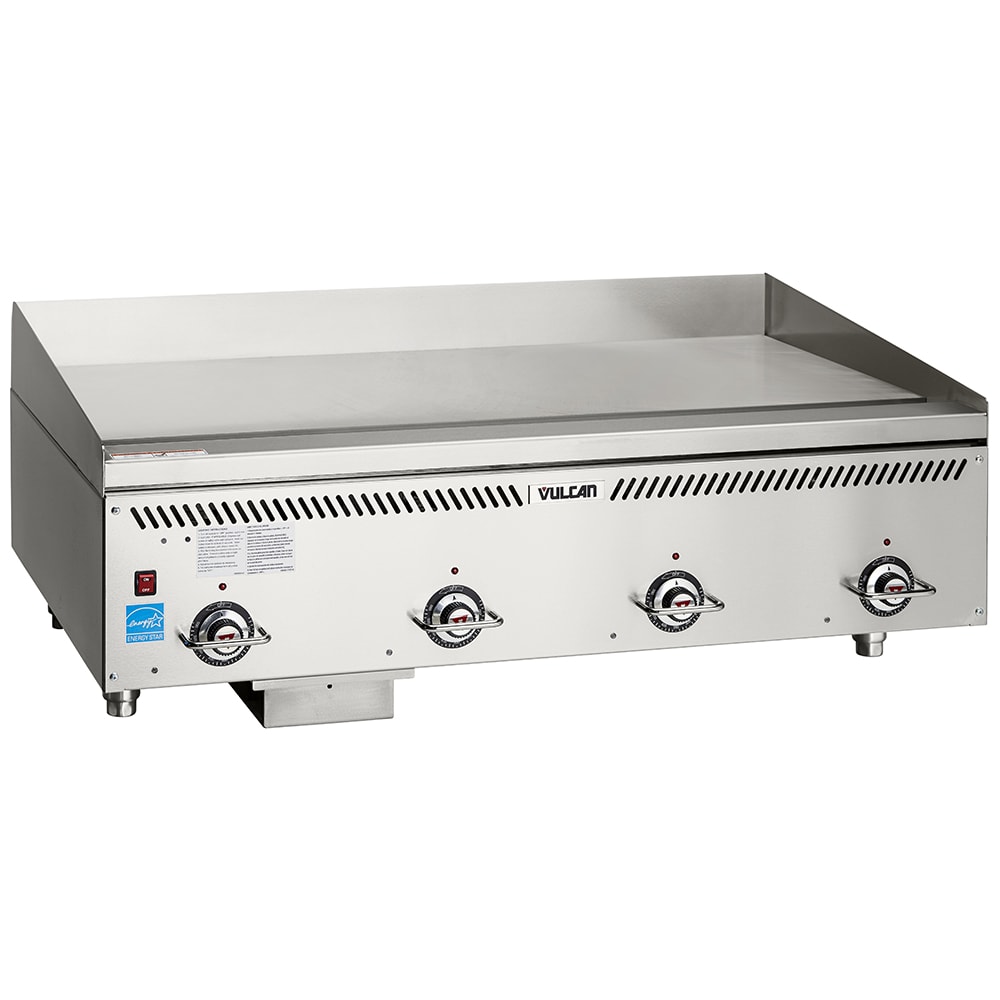
Vulcan VCCG48-IS
Rapid Recovery Composite Griddle Plates
Vulcan's exclusive Rapid Recovery plate combines an aluminum core with a stainless steel exterior. The aluminum core transfers heat five times faster than a traditional steel plate, helping the cooking surface recover quicker and maintain more even temperatures across the griddle. Additional characteristics include:
- Emits less radiant heat than a traditional steel plate
- Cools faster than steel after shutdown
- Requires mild detergent and a nonabrasive cleaning pad instead of a griddle brick
Rapid Recovery composite is particularly useful for high-volume operations that repeatedly load the griddle. Faster heat transfer helps the surface return to the set temperature between batches.
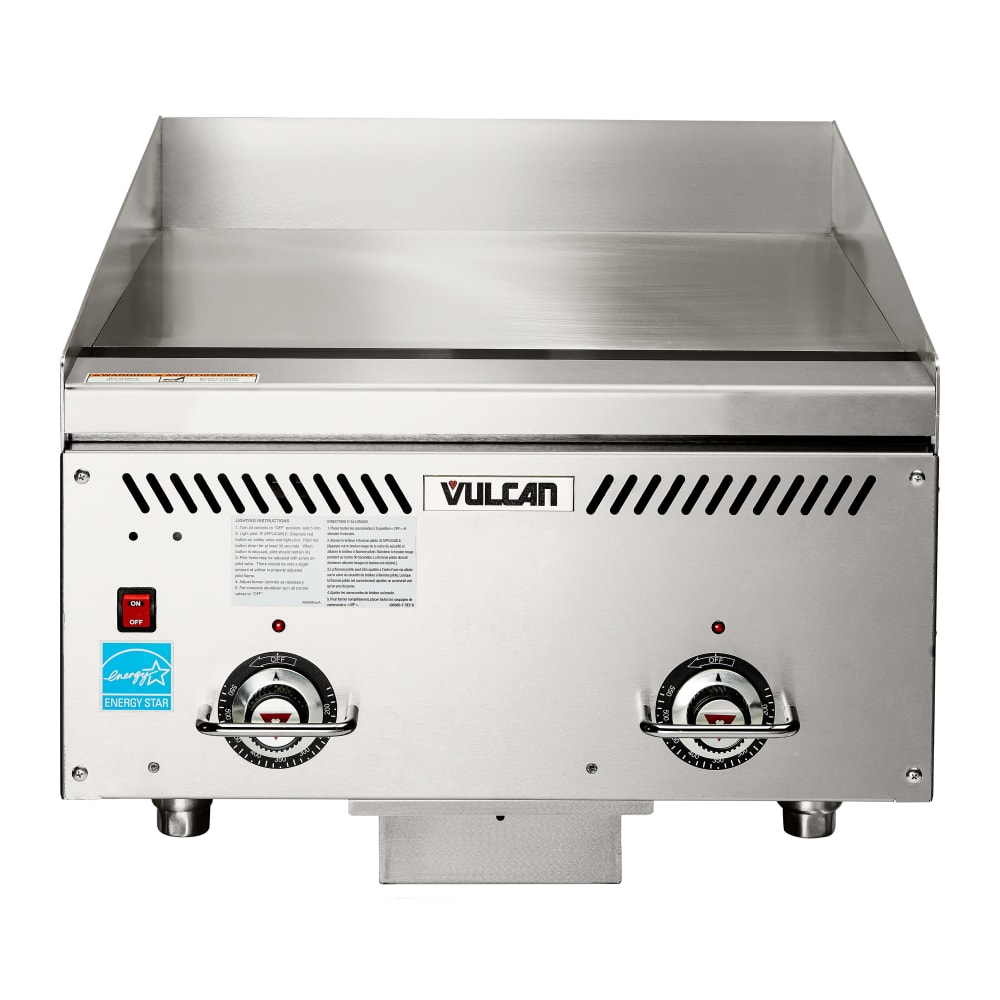
Vulcan VCCG24-AC
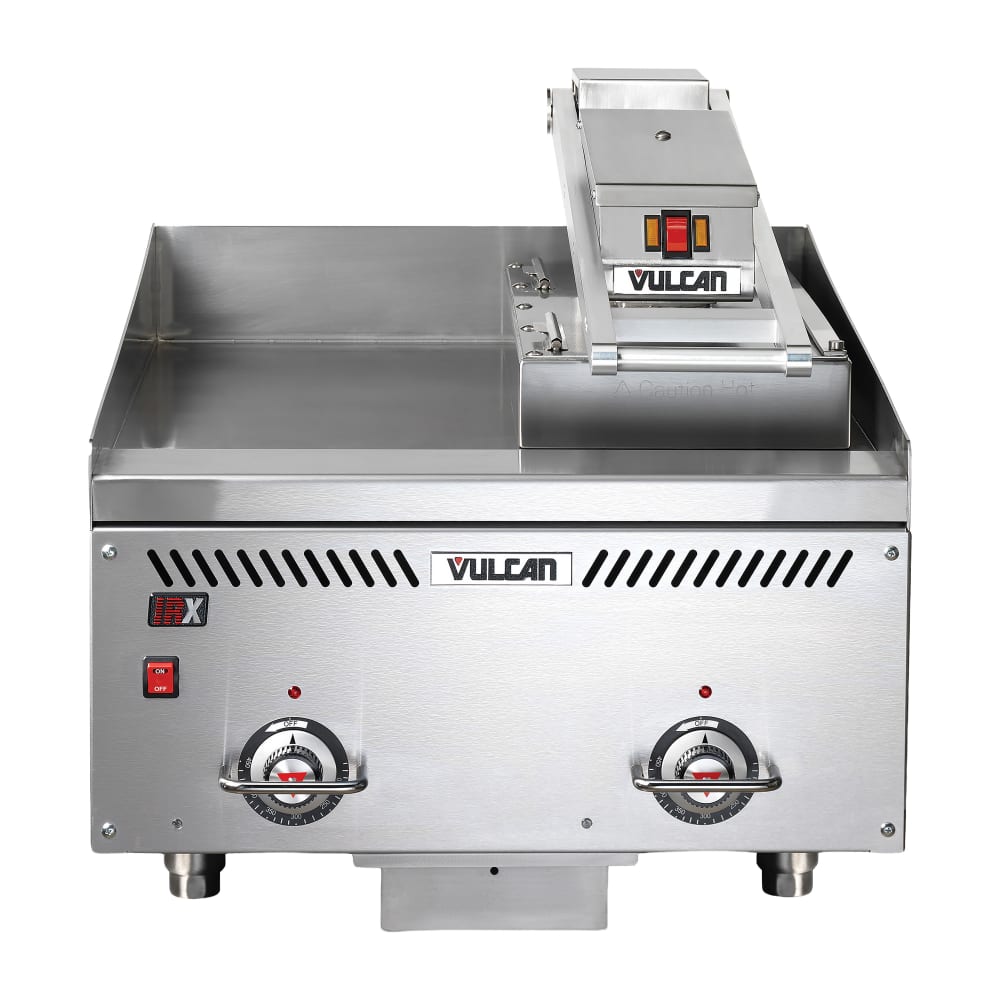
Vulcan VMCS-101
Chrome Griddle Plates
Chrome is Vulcan's higher-end griddle plate option. Its polished surface reduces sticking and flavor transfer while producing less radiant heat than steel or Rapid Recovery composite plates. Key characteristics include:
- Reduces food sticking and flavor transfer
- Polished surface reduces radiant heat emitted into the kitchen and saves energy
- Resists corrosion from acidic foods
- Requires chrome-specific cleaning tools and procedures
A chrome plate works well for breakfast-focused menus, kitchens cooking delicate products (such as fish), and operations where reducing heat radiated into the kitchen is a priority.
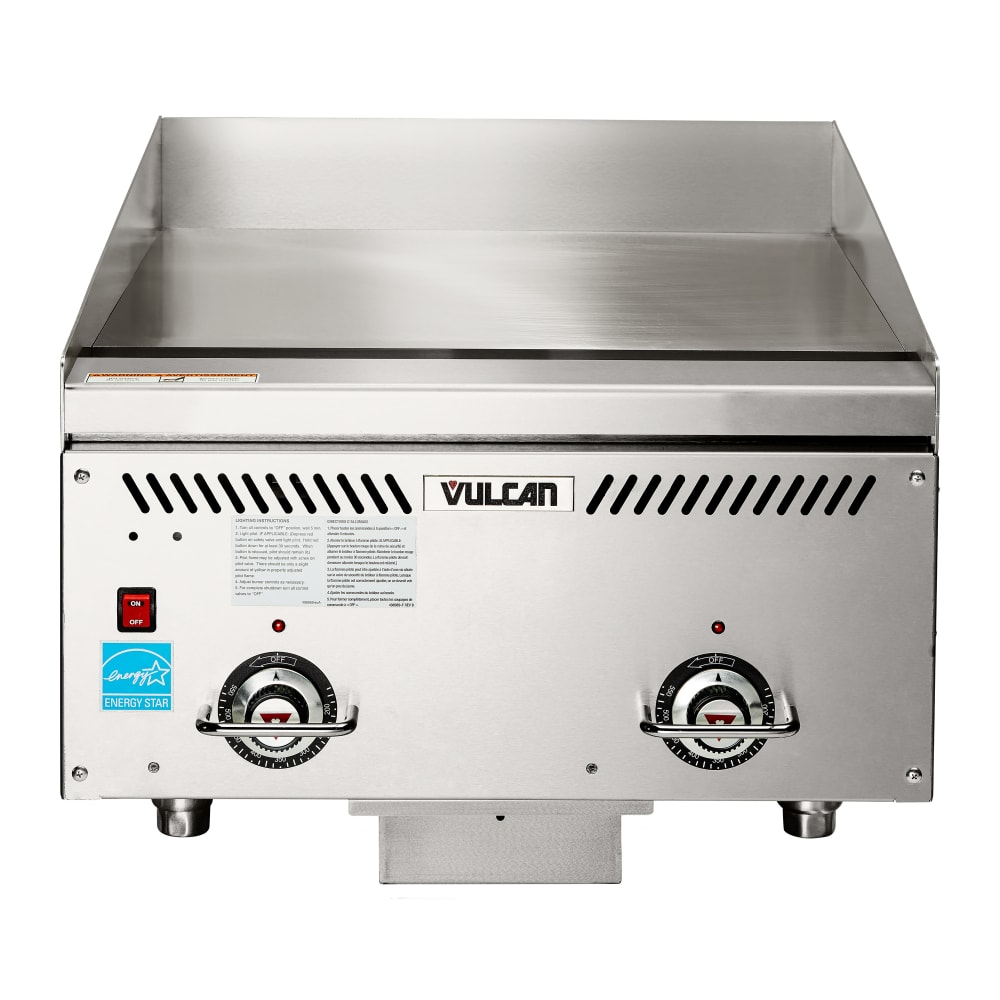
Vulcan VCCG24-AR
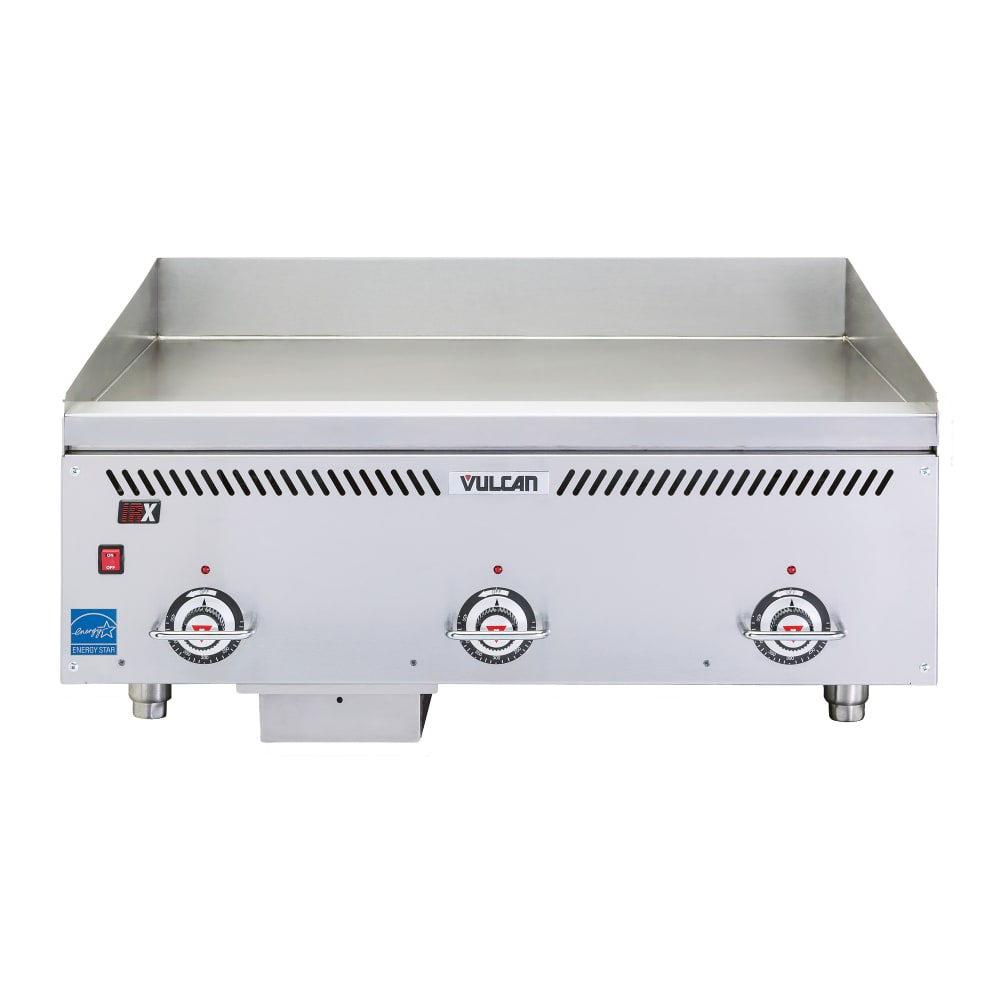
Vulcan VCCG36-AR
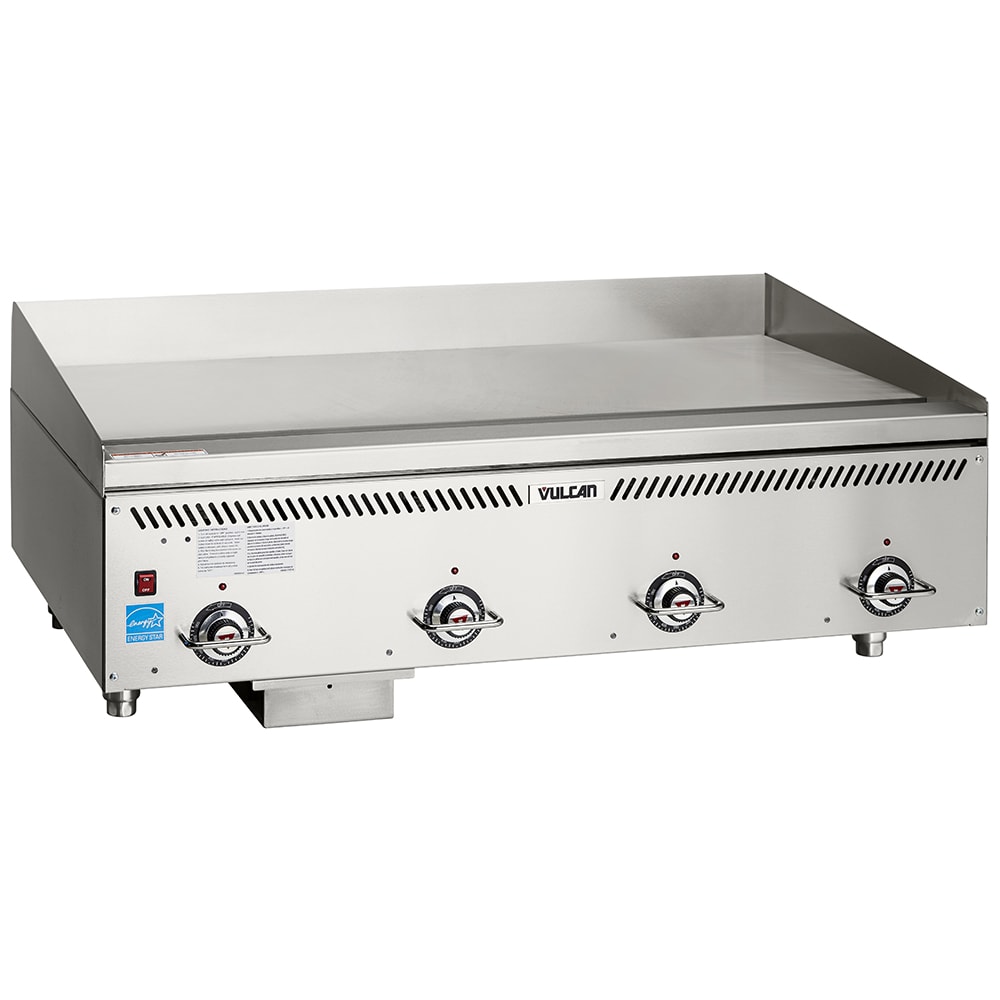
Vulcan VCCG48-AR
Cleaning Vulcan Griddle Plates
Cleaning procedures vary substantially based on plate material. Always match cleaning products and tools to the plate's material.
Cleaning Steel Griddle Plates
Steel griddle plates can tolerate more aggressive cleaning than other materials. Use a griddle screen, pad, or griddle brick along with a manufacturer-approved detergent. Clean and dry the surface before applying a light coat of cooking oil to reseason it.
Cleaning Rapid Recovery Composite Griddle Plates
Rapid Recovery composite plates require a mild soapy detergent and a nonabrasive pad. Vulcan advises against using a griddle brick on the composite surface, and staff should use care with spatulas and scrapers because the top surface can be scored or dented.
Cleaning Chrome Griddle Plates
Chrome plates require nonabrasive, chrome-safe cleaning methods. Use a scraper, blade, and palmetto brush for plate maintenance, but avoid griddle bricks and other abrasive cleaning tools, which can scratch or dull the polished surface.
For additional information, see KaTom's guide on how to clean a commercial flat top griddle.
Which Vulcan Griddle Plate Is Best for My Operation?
- Steel is a practical choice for operations cooking a wide variety of items throughout the day.
- Rapid Recovery Composite is suited to high-volume operations cooking repeated batches.
- Chrome suits operations cooking delicate foods on lower heat settings.
Shop Vulcan Griddles at KaTom
Vulcan's steel, Rapid Recovery composite, and chrome plates give foodservice operators different ways to balance cooking performance, maintenance requirements, and equipment cost. Compare KaTom's current selection of Vulcan griddles by size, fuel type, controls, and plate configuration to find the model that best suits your operation.
Frequently Asked Questions for Vulcan Griddle Plates
Do Vulcan griddle plate types have different temperature ranges?
Vulcan's temperature controls can reach 550 degrees Fahrenheit for steel and chrome plates and 450 degrees Fahrenheit for Rapid Recovery composite plates.
How much energy can a chrome griddle plate save?
Vulcan claims chrome griddle plates can offer up to 20 percent energy savings since they produce the lowest radiant heat of the three plate types.
How thick are Vulcan griddle plates?
Plate thickness varies by Vulcan griddle configuration. Available options generally include both 1-inch and 3/4-inch griddle plates, so operators should verify the exact thickness for the specific configuration they're considering.
Does Vulcan offer a grooved Rapid Recovery griddle plate?
No. Vulcan states that grooved options aren't available with the Rapid Recovery composite plate; grooved surfaces are only available on select steel griddle plates.
Can a Rapid Recovery composite griddle plate be damaged by a spatula or scraper?
Yes. Vulcan notes that the composite plate's top surface can be scored or dented by careless use of a spatula or scraper, so operators should use care when scraping or cleaning the surface.
