The Steps of Service for Fine Dining
The tradition of fine dining service has evolved from its origins in 19th-century France to the modern service styles found in today's formal restaurants. While not all fine dining restaurants use the exact same serving etiquette, they all focus on professional, attentive, and seamless service.
This article summarizes the key elements of fine dining etiquette, how to train servers for fine dining, and the most common service styles used in high-end restaurants today.
Fine Dining Server Etiquette
Greeting Guests
When meeting guests at their table, maintain a professional yet warm poise. In most cases, they'll already be seated. Introduce yourself and maintain eye contact as you welcome them. Know what you plan to say, but don't stick to a script. Guests can usually tell when you're repeating yourself or being inauthentic. Be present with your guests and treat them as if they were the only people in the room. Maintain professionalism throughout the meal and avoid excessive informal conversation or joking. You're there to serve your guests, not to socialize.
Appetizers and Drinks
Many restaurants start their guests' meals by offering appetizers and drinks. Some will bring out bread and butter to every table. When taking drink orders, make suggestions based on house specialties. Even if you're not a sommelier, you should be well acquainted with the wine list. Ensure you serve appetizers and drinks within several minutes and always serve drinks using a serving tray.
Taking Orders
Most modern fine dining restaurants offer chef-curated menus or multi-course tasting menus, while some provide seasonal menus. Explain the dining style to first-time guests. Groups visiting fine dining restaurants often identify the member (or host) who organized the outing. When taking orders, it's customary to begin with the host's guests, starting with ladies before moving to gentlemen and ending with the host. Use the same serving order throughout the meal service. You'll also want to have a few recommendations on hand, and make sure to ask about food allergies.
Serving Guests
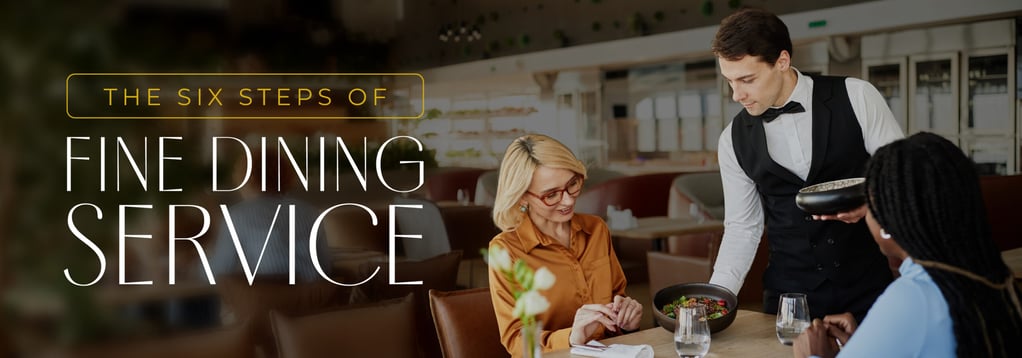
Meal service rules vary by service style. In general, servers prepare the proper dishes and utensils, carry out loaded plates, large serving dishes, or carts, and serve guests one at a time. When serving, use the open-hand service method, serving plates from the arm closest to the guest. For example, if you serve from the left of the guest (as in traditional American service), use your right hand to serve their plate. This method looks more professional and avoids crossing your arm in front of your body to reach the guest. Return within a few minutes to check on guest satisfaction.
Clearing Tables
When all guests have finished their meals, discreetly remove plates one at a time with the same open-hand method. Guests often put their utensils side-by-side on their plate vertically or horizontally to communicate they're finished. Arrange utensils on the plates so they won't slide off. It's common to hold two plates in one hand and one in the other while clearing tables, but don't stack them in front of your guests. Some waiters will use a device called a crumber to collect any crumbs from the table. Ask about drink refills, extra drinks, and desserts after clearing tables.
Closing the Night
Once the customers are done with the final course, present the check, but provide some breathing room between finishing the meal and giving the check. Try to pick up on cues, including looking up or slight waves, to determine if the host is ready to receive the check. After everyone has stood up, retrieve any coats for them and offer a personal goodbye.
Fine Dining Service Styles
There are several different styles of fine dining service, many of them stem from French haute cuisine. This type of dining grew out of the 17th and 18th century traditions of serving royalty. Haute cuisine often uses Gueridon service, where skilled servers bring a cart of nearly finished meals out to guests and prepares the meals and final garnishes in front of them before serving each plate.
Some modern fine dining restaurants still use Gueridon carts, but many have shifted to other forms. The following service styles are common in fine dining restaurants:
- American Service: Traditional, pre-plated service where wait staff serve from the left and clear from the right
- Russian Service: Plated service that focuses on bringing out one plate at a time for multiple courses
- Silver/English Service: Platter-to-plate service, where either the host or server portions food from a large, shared platter
Fine Dining Service tips
How do servers hold multiple plates?
The overhand method enables servers to hold three plates by placing two on one arm and holding a third in the free hand. Perform it by holding one plate in your hand and rest the other between your wrist and forearm. In the underhand method, hold one plate between your thumb and forefinger, one just underneath the first between the bottom of your forefinger and the rest of your fingers, and the third on your wrist and forearm as in the overhand method; then, pick up a fourth plate with your free hand.
How should food be delivered to a table?
Fine dining restaurants use different food service styles. In general, practice open-hand service, using wide movements that come around the customer with the hand closest to them so as not to cross your body.
How do servers pour wine at a restaurant?
When serving wine, carefully open the bottle at the table with the label facing the host, and give them a small pour to taste and smell before serving. Pour each glass set on the right side of the customer by holding the back of the bottle and pouring carefully, then wiping the neck with a napkin. Start with the guests and end with the host. If you are serving an old bottle of wine, it will likely have sediment in it. Pour it into a wine decanter to let it breathe and keep the sediment in the bottle.
