How to Choose a Hobart Meat Slicer
Hobart commercial slicers are available in medium-duty Centerline EDGE models and heavy-duty HS models for foodservice operations with different slicing demands. Choosing the right slicer starts with considering how often you'll use it, what you'll slice, whether you need manual or automatic operation, and which blade size fits your workflow.
Hobart Meat Slicer Series
| Slicer Line | Duty Level | Operation | Blade Size | Best For | Top Models |
|---|---|---|---|---|---|
| Centerline by Hobart EDGE | Medium-duty | Manual or automatic | 10 in., 12 in., 13 in., or 14 in. | Moderate slicing | EDGE10, EDGE12, EDGE13, EDGE13A, EDGE14 |
| Hobart HS Series | Heavy-duty | Manual or automatic | 13 in. | High-volume slicing | HS6/HS6N, HS7/HS7N, HS8/HS8N, HS9/HS9N |
Hobart Medium-Duty Slicer Models
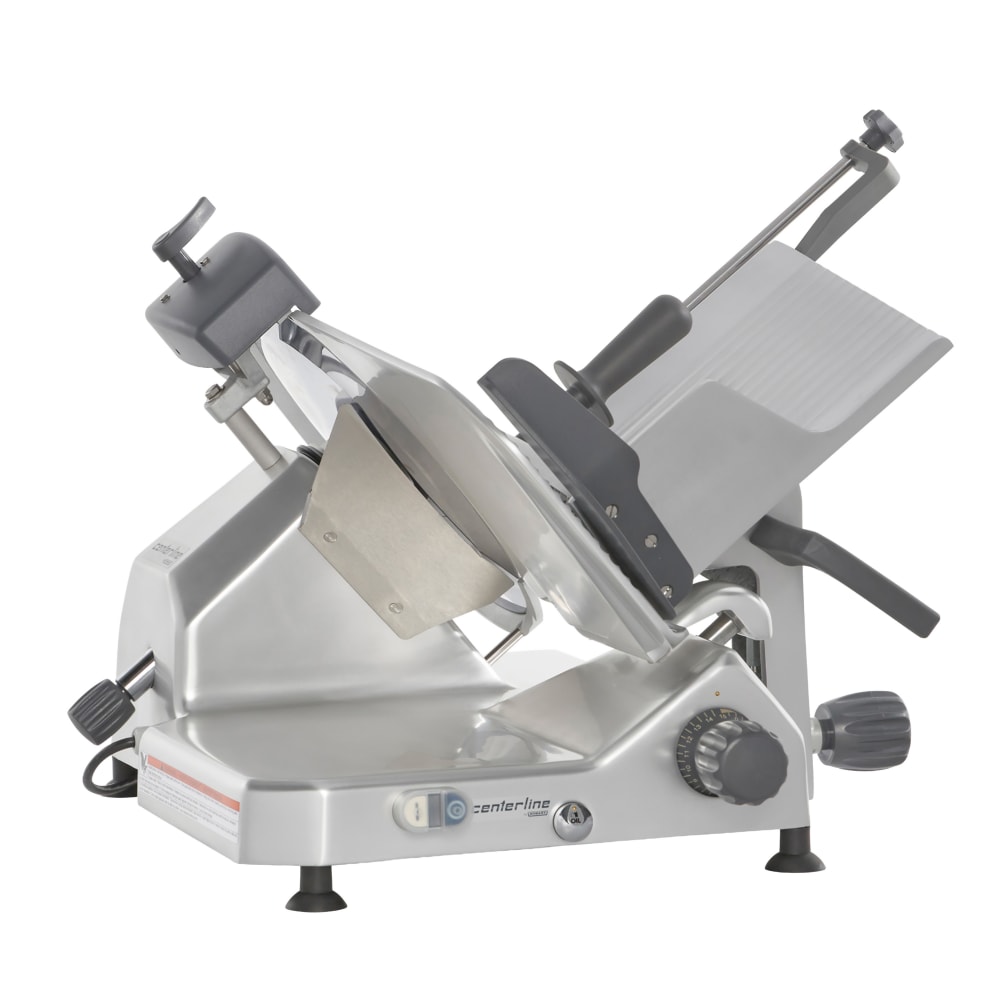
The Centerline by Hobart EDGE Series offers medium-duty slicers with blade diameters ranging from 10 to 14 inches. All five models can slice up to 9/16-inch-thick cuts and are designed for meat, cheese, and vegetables.
Centerline by Hobart EDGE Slicers


The EDGE Series uses anodized aluminum bases and removable carriages intended to simplify cleaning. These models also include top-mounted, removable sharpeners to maintain cutting efficiency.
Hobart EDGE10
The EDGE10 combines a 10-inch blade with a compact countertop design. Its rating of two hours or less per day makes it a practical starting point for smaller operations that slice only during limited prep or service periods.

Hobart EDGE12
The EDGE12 steps up to a 12-inch blade and a two-to-four-hour daily-use range. Its carriage accommodates products as wide as 10 inches, the second-largest listed product-width capacity in the EDGE lineup.

Hobart EDGE13
The EDGE13 provides a 13-inch blade for operators who need more blade clearance than smaller EDGE models provide. Because the carriage remains operator-controlled, it's well suited to kitchens that prefer manual adjustment of slicing pace and pressure.

Hobart EDGE13A
The EDGE13A is the only automatic model in the EDGE Series. It suits operations where a medium-duty slicer is sufficient but repetitive manual labor during slicing would slow production or place an unnecessary burden on staff.

Hobart EDGE14
The EDGE14 has the largest blade and product width capacity in the EDGE series—a 14-inch blade and 11-inch capacity. This capacity suits larger cuts in medium-duty environments.
Hobart Heavy-Duty Slicer Models
The Hobart HS Series provides heavy-duty choices for operations that slice frequently throughout the day. Every standard HS slicer uses a 13-inch CleanCut™ knife, which is adjustable to cut slices of any thickness up to 1 inch. They are designed for cutting meat, cheese, and vegetables. HS models feature either manual or automatic operation, burnished or anodized construction, and removable or non-removable knife configurations.
"Zero knife exposure helps protect provides operators assurance that the knife is not exposed when cleaning or operation," Samantha Hanson, Senior Sales Development Manager for Hobart Food Machines, told KaTom. "Gauge plate interlocks prevent by preventing the gauge plate from opening, exposing to expose the knife when the carriage is not installed.”
Hobart HS Series Slicers
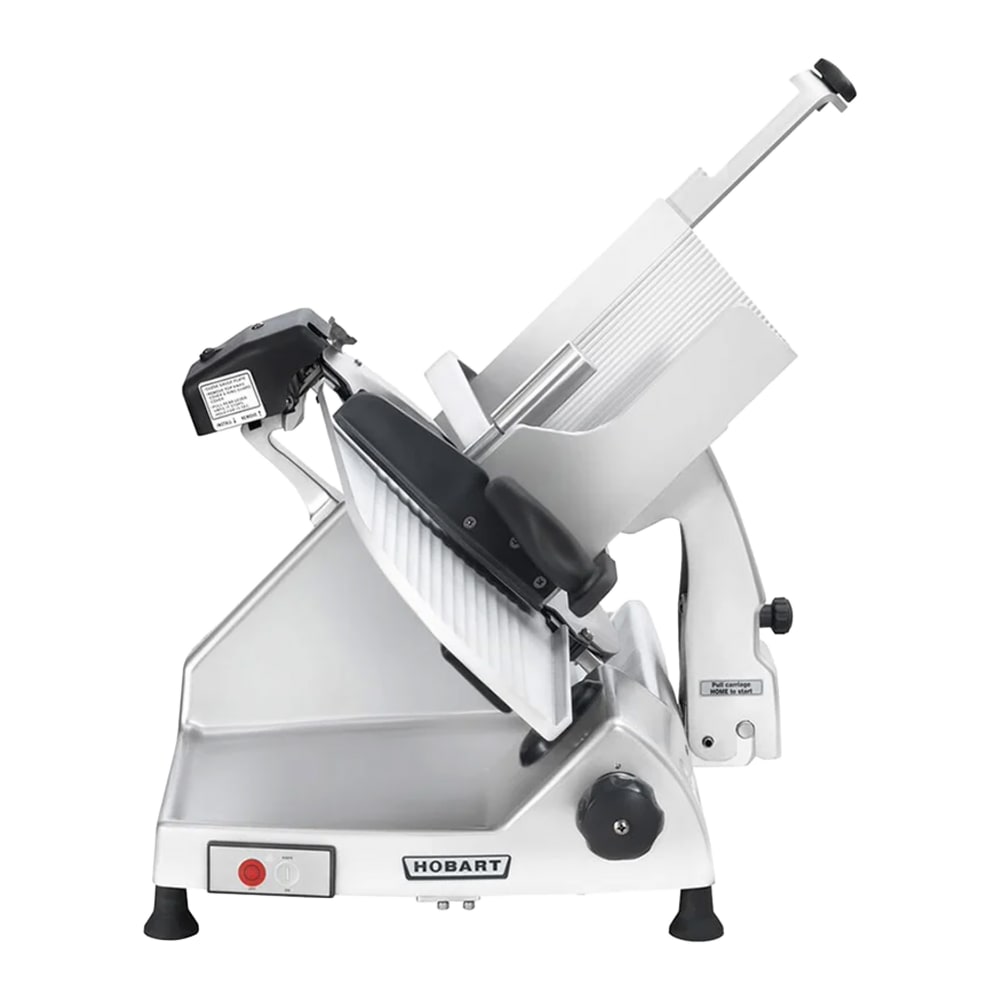
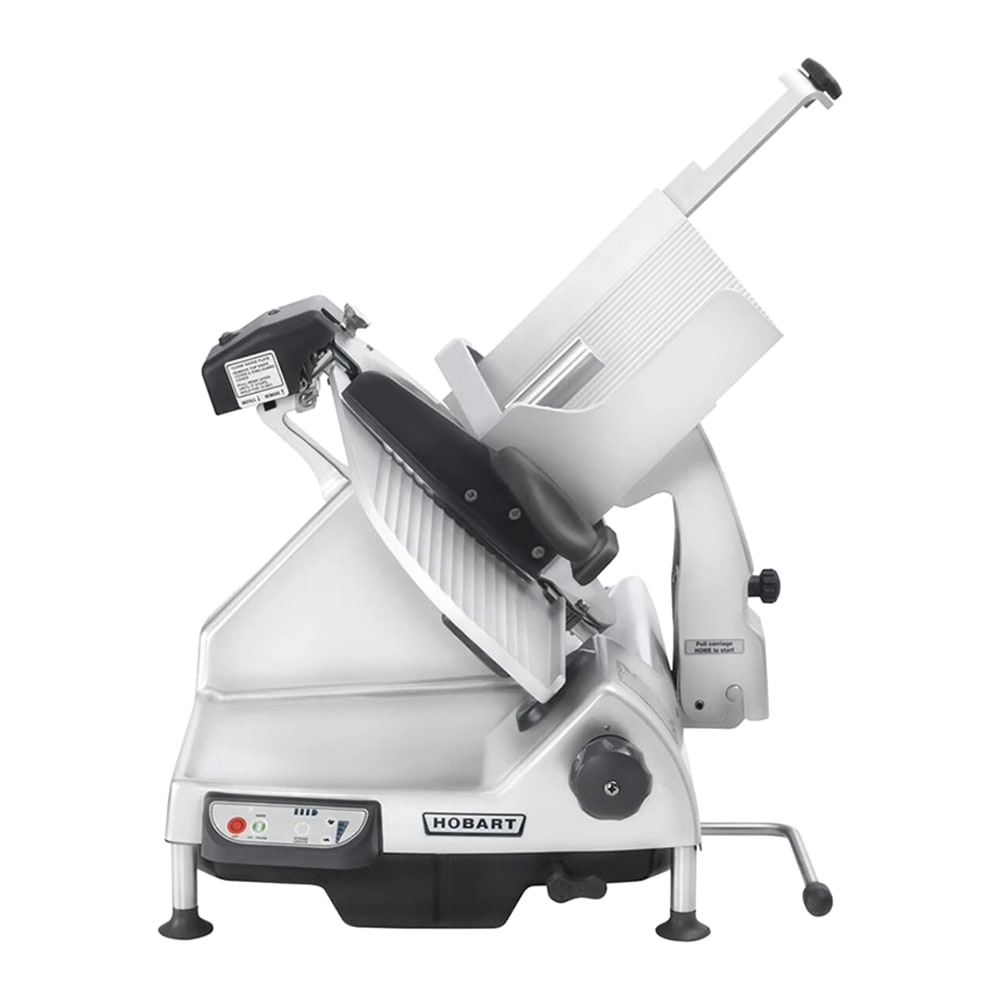
Hobart HS6 and HS6N
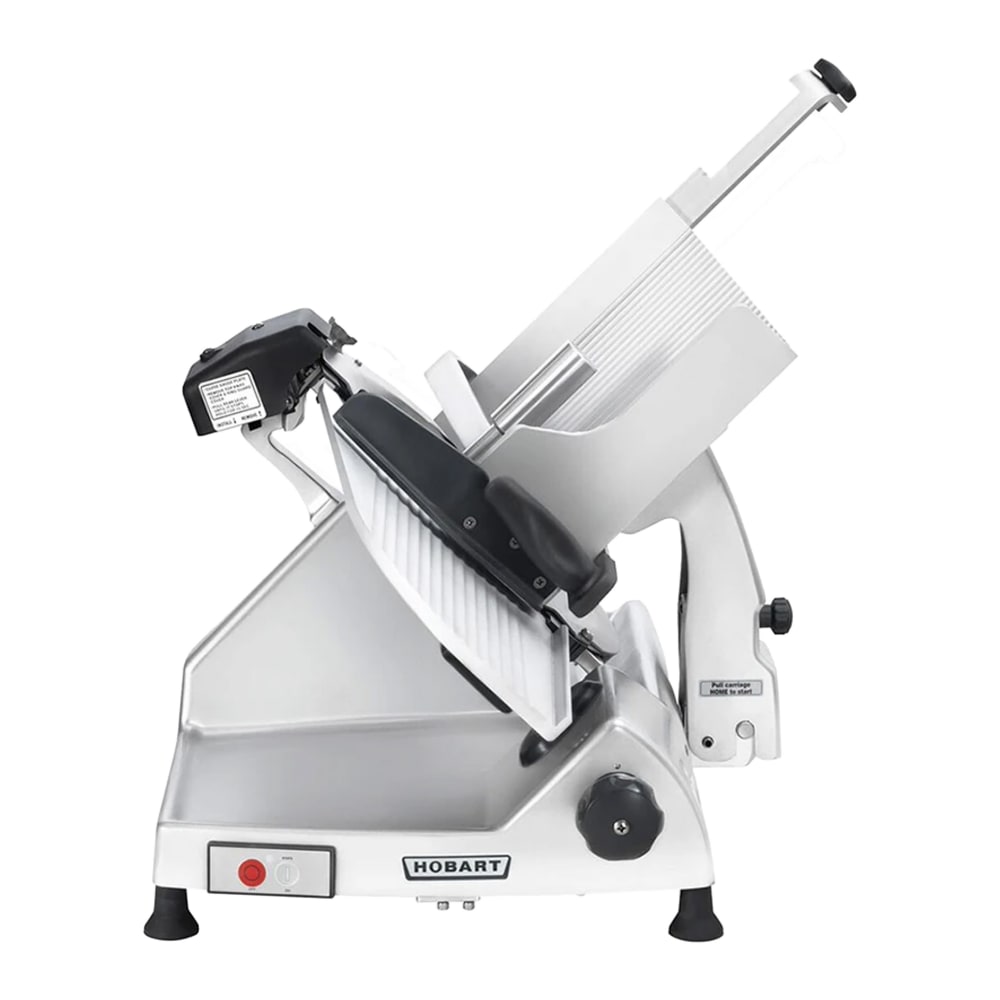
The HS6 and HS6N are manual heavy-duty slicers with burnished aluminum bases and 13-inch knives. The HS6 has a removable knife, which can help with cleaning. The HS6N uses a non-removable knife, which takes away the need for removal and reinstallation.
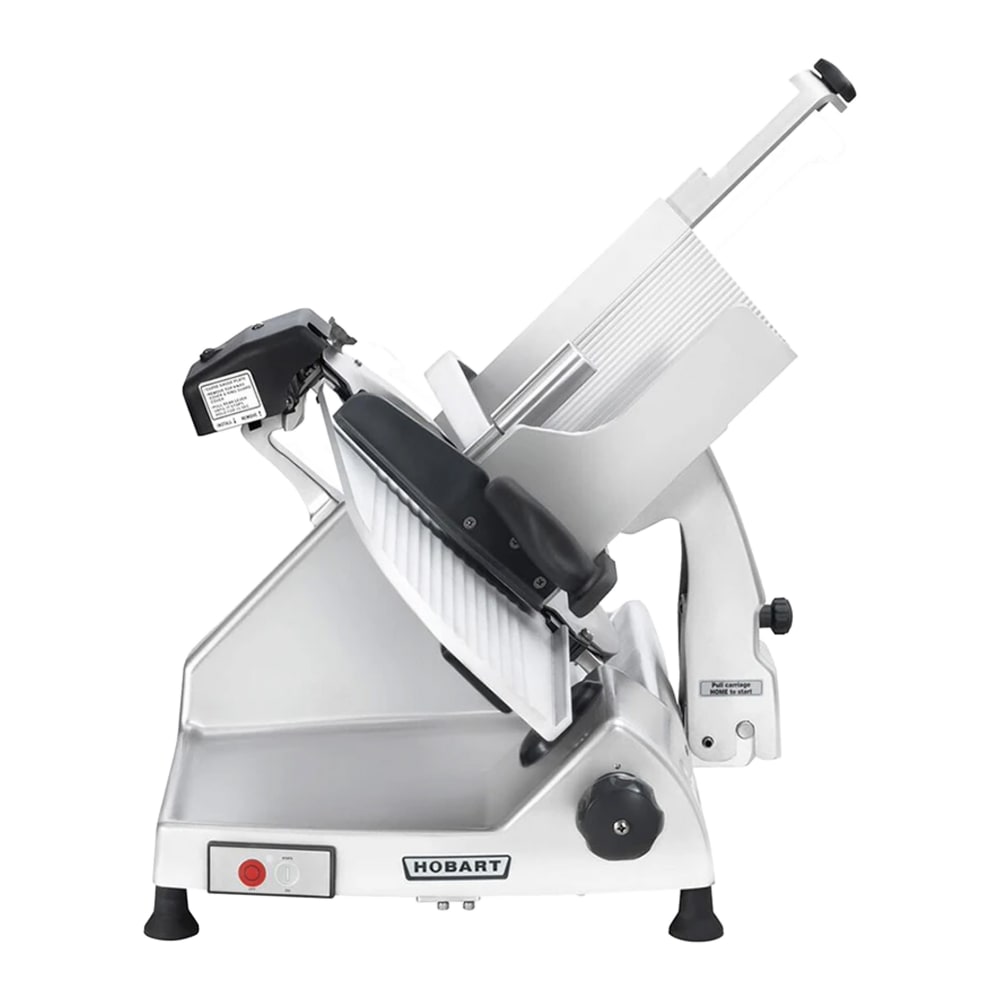
Hobart HS7 and HS7N
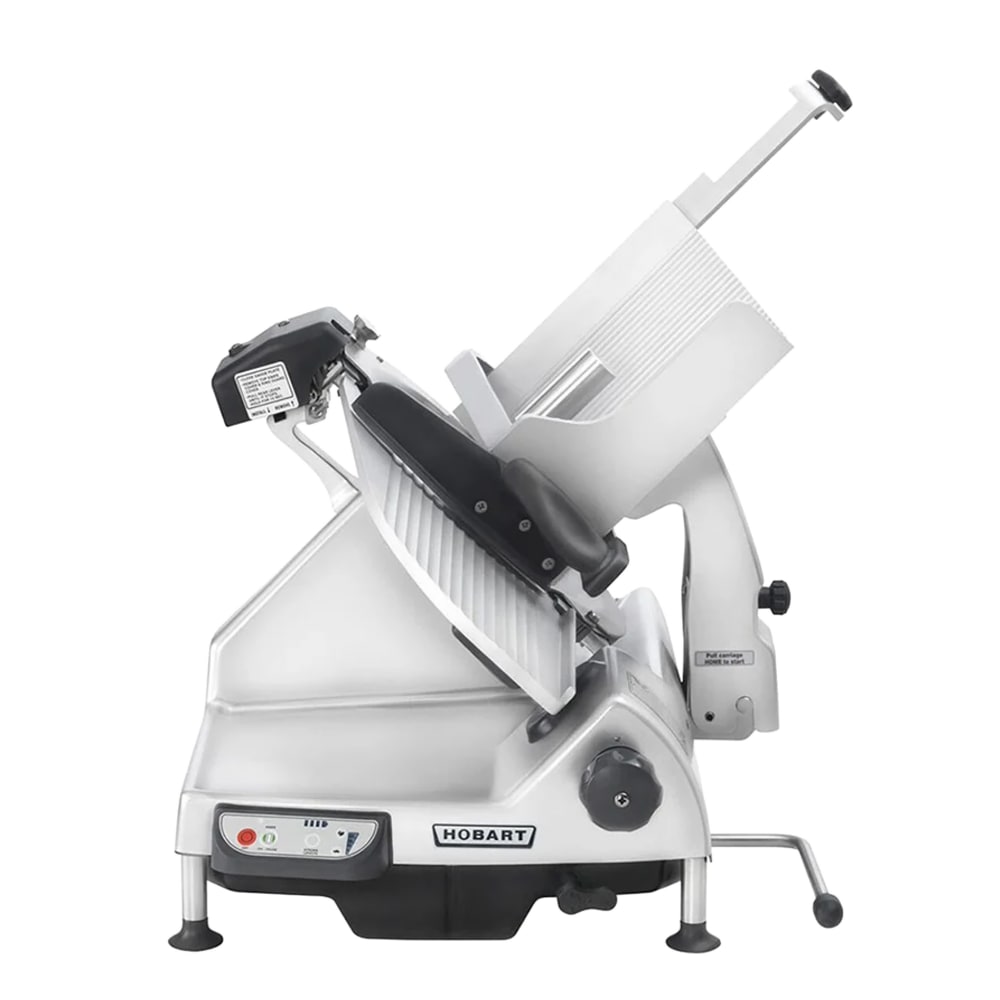
The HS7 and HS7N add automatic operation, four carriage speeds, and three stroke lengths. The HS7 has a removable knife, and the HS7N has a non-removable knife. Automation makes either model worth considering when employees repeatedly slice the same products in larger batches.
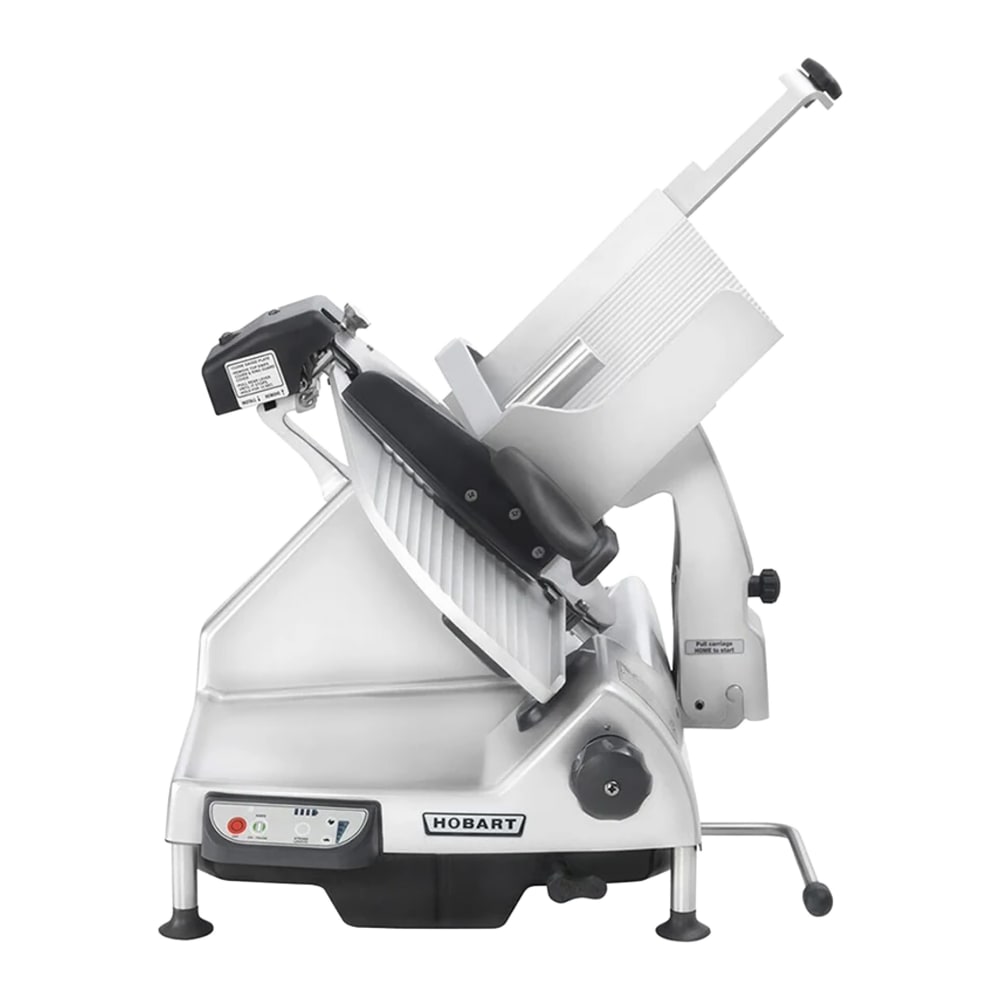
Hobart HS8 and HS8N
The HS8 and HS8N are manual models with anodized aluminum construction and six interlocks. As with the other HS pairs, the standard HS8 has a removable knife, while the HS8N has a non-removable knife. These models fit operations seeking manual control that need more safety-related operating features than the HS6 provides.
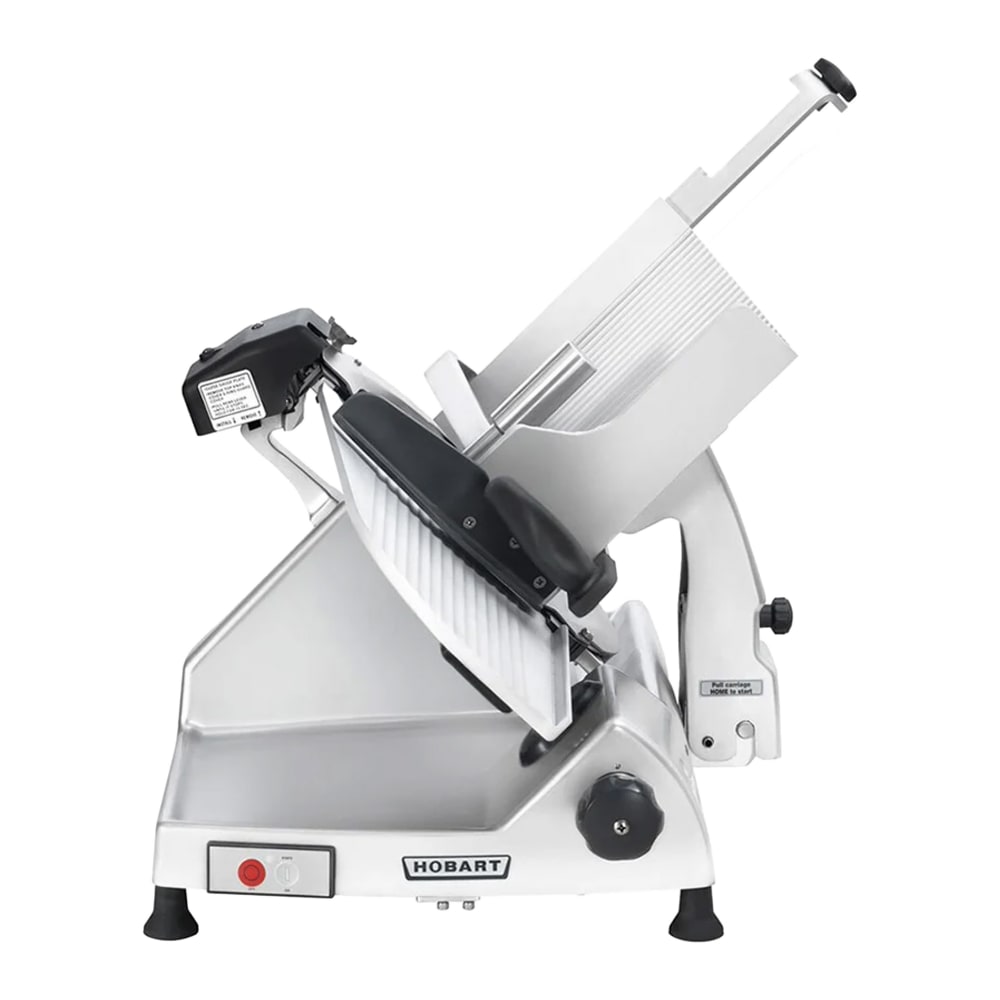
Hobart HS9 and HS9N
The automatic HS9 and HS9N combine four carriage speeds and three stroke lengths for repetitive, high-volume slicing. Both models offer anodized construction and six interlocks. Choose the HS9 for a removable knife or the HS9N for a non-removable knife.
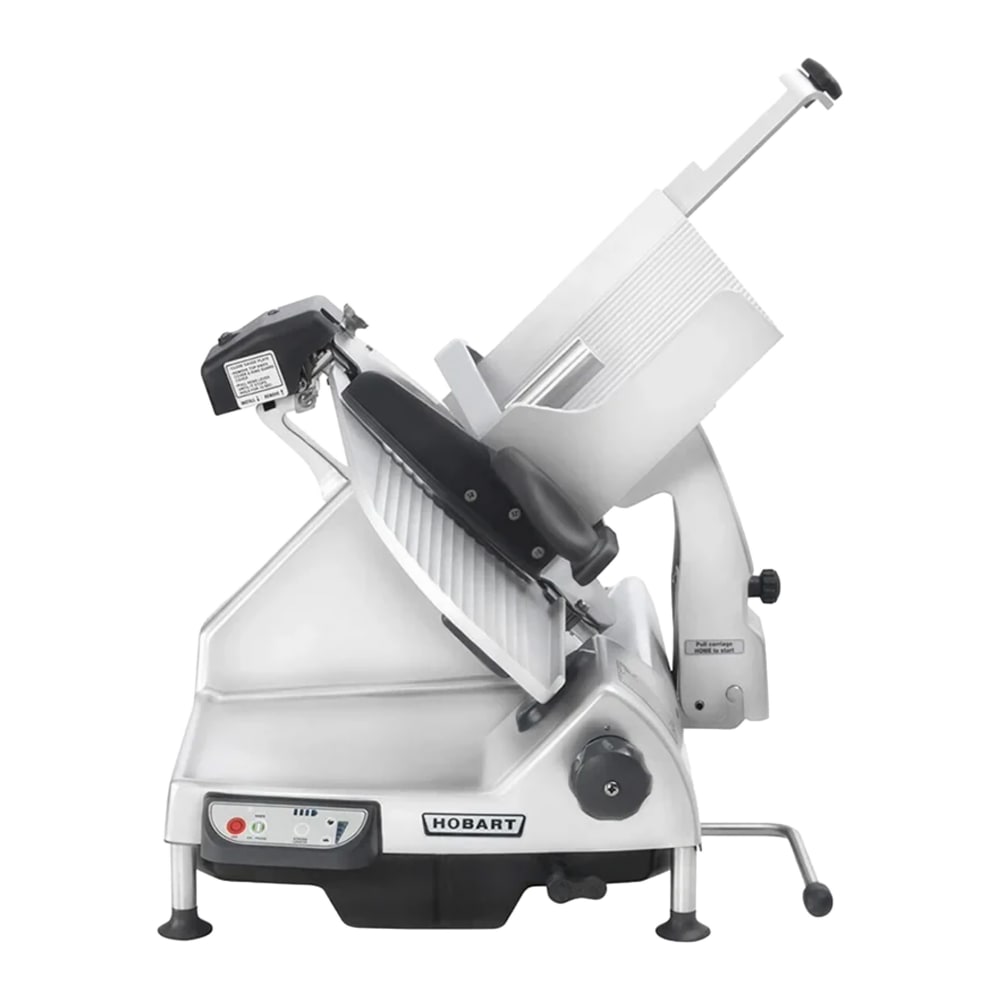
Medium-Duty vs. Heavy-Duty Hobart Slicers
An undersized slicer may become a bottleneck during peak prep, while a machine with substantially more capacity than the operation needs may cost more or take up more counter space than necessary.
Manual vs. Automatic Hobart Slicers
A manual slicer requires the operator to move the product carriage, pushing the product toward the blade for each slice. An automatic slicer powers that movement. This difference affects cost, labor, production pace, and operator control.
Manual Hobart Slicers
Manual models give the operator direct control over carriage speed and the pressure applied to the product. They can be a good fit for variable orders, smaller batches, intermittent prep, and operations where staff frequently switch between various products.
Automatic Hobart Slicers
Automatic models move the carriage through a powered slicing cycle. This can improve workflow in operations where repetitive slicing occupies a substantial portion of the workday. Automatic operation does not eliminate the need for employee training, as staff must still load and unload products, select appropriate settings, monitor the machine, and follow the manufacturer's operating, cleaning, and shutdown procedures. However, automatic operation removes the manual work that comes with operating the machine by hand, which can improve employee safety.
Which Hobart Slicer Should I Choose?
For an operation that does not slice continuously throughout the day, begin by comparing the Centerline EDGE models. For frequent production in a busy deli or institutional kitchen, move to the HS Series.
When repetitive slicing is a major part of production, compare automatic choices such as the EDGE13A, HS7, and HS9. Operations that portion products by weight may also benefit from Hobart's integrated-scale models, such as the HS6-1PS and HS7-1PS.
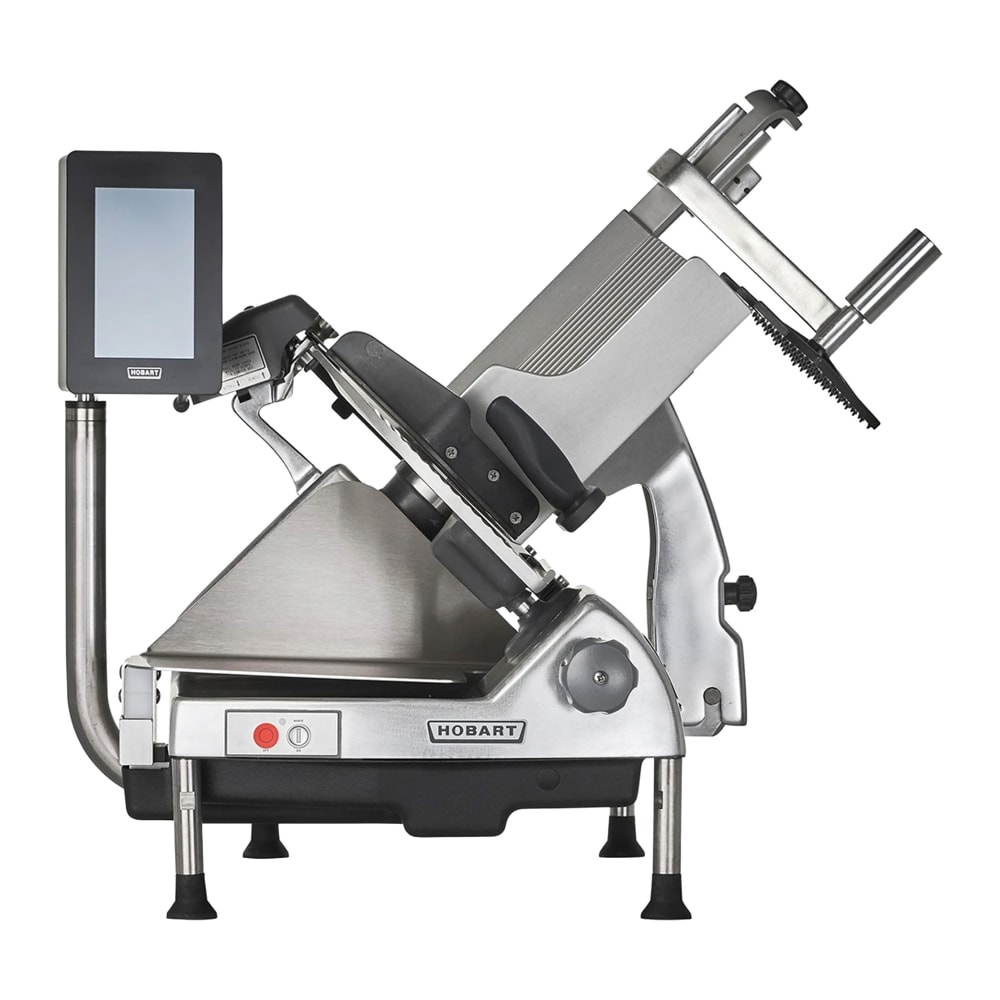
What Hobart Slicer Blade Size Do I Need?
Blade size affects the dimensions of food a slicer can accommodate. Centerline knives range from 10 to 14 inches in diameter, while all standard HS Series slicers use a 13-inch knife. The EDGE series produces slices as thick as 9/16 of an inch, while HS Series slicers can produce slices as thick as 1 inch. Operators processing larger products should determine each model's cutting capacity rather than assuming a larger knife accommodates every product.
For more information about sizing and selecting commercial slicers, read KaTom's commercial slicers buyer's guide.
Additional Considerations
Once duty level and operation type have been narrowed down, compare the details that affect installation, sanitation, daily workflow, and operator practices, including:
- What You'll Be Slicing: Consider the types of products you'll prepare, including meat, cheese, and vegetables. Product type and size can help determine the blade size, cutting capacity, and slicer configuration that best fits your operation.
- Slice Thickness: Compare each model's slice-thickness range with the cuts your operation produces. A wider adjustment range can be useful when the menu calls for different slice thicknesses.
- Counter Space and Footprint: Measure the available workspace before choosing a slicer and account for the room needed to load, operate, clean, and maintain the machine.
- Safety Features: Review model-specific features such as interlocks, guards, and shutoff functions. These systems can affect both operator protection and which Hobart model is the right fit for your kitchen.
"Commercial slicer safety depends on interlocks and features that prevent the machine from operating unless the proper components are in place." — Samantha Hanson, Senior Sales Development Manager for Hobart Food Machines
- Cleaning and Maintenance: Consider how easily food-contact areas and the knife assembly can be accessed for sanitation and routine maintenance. Removable components and cleaning access can streamline day-to-day upkeep.
"A well-cleaned slicer supports both longer machine life and stronger food safety practices." — Samantha Hanson
Shop Hobart Slicers at KaTom
When choosing a slicer, consider how often you use it and what products you prepare, including meat, cheese, and vegetables. Then, compare blade size, cutting capacity, duty level, and manual or automatic operation to find a model that fits your workload. Shop Centerline by Hobart and Hobart HS Series slicers at KaTom to find the right fit for your operation.
Frequently Asked Questions About Hobart Slicers
What is the difference between the Hobart HS7 and HS9?
Both are automatic, heavy-duty slicers with 13-inch knives. The HS9 uses anodized aluminum construction and has six interlocks, while the HS7 uses burnished aluminum construction and has two interlocks.
What does the "N" mean on a Hobart HS slicer?
The "N" identifies a model with a non-removable knife. For example, the HS7 has a removable knife, while the HS7N has a non-removable knife.
Which Hobart meat slicers include a scale?
The HS6-1PS and HS7-1PS include integrated portion scales. The HS6-1PS is manual, while the HS7-1PS is automatic.
Can Hobart meat slicers cut cheese?
Yes. Hobart identifies its Centerline and HS slicers for slicing meat, cheese, and vegetables. The appropriate model depends on the amount of slicing required and the size of the product.
Which Hobart slicer is best for all-day slicing?
The Hobart HS Series is the brand's heavy-duty line designed for slicing four or more hours per day. The series includes manual HS6 and HS8 models and automatic HS7 and HS9 models.
Which Hobart slicers are automatic?
EDGE13A, HS7, HS7N, HS9, and HS9N are automatic Hobart slicers. Hobart also offers the automatic HS7-1PS portion-scale slicer.
Are Hobart slicer knives removable?
Some are. Standard HS6, HS7, HS8, and HS9 configurations are available with removable knives, while models ending in N use a non-removable knife.
What is the largest Centerline by Hobart slicer?
The EDGE14 has the largest knife in the Centerline lineup at 14 inches and the largest listed cutting capacity in the family.

