Holiday Flavors & Where They Come From
Every year, the transition from October 31st to the holiday season on November 1st seems sudden. It might take us a few weeks to finish eating our Halloween candy, but we're ready to trade our ghosts and skeletons for pumpkins and reindeer, daydream about our upcoming Thanksgiving feast, and start shopping for the perfect presents – maybe a little too ready, if you ask those who oppose the Christmas creep. Whether you give the fourth Thursday of November your undivided attention or skip straight to December 25th, the last two months of the year are marked by holiday flavors that, as we get older, become linked to nostalgia and tradition.
The History of Holiday Flavors
Though we might know that Thanksgiving means pies and turkey while Christmas calls for eggnog and whimsically decorated gingerbread houses, or think that cinnamon and peppermint feel a little out of place the rest of the year, most of us aren't familiar with the history of the flavors that have become an intrinsic part of our holiday celebrations. Before you roll up your sleeves and start your seasonal cooking, enjoy this quick trip into the past – don't worry, we'll keep it short and sweet.
Candy Canes
Although these iconic red-and-white hooks are as likely to be munched on during the Christmas season as they are to be used as decorations on trees or in DIY crafts, the origin of the shape and color of modern-day candy canes1 probably isn't a religious one. It's generally accepted that candy sticks came about in Germany during the 17th century, but the legend that a choirmaster shaped them to resemble a shepherd's staff can be eschewed for a more practical explanation: They, like us, wanted to hang the candy as decoration.
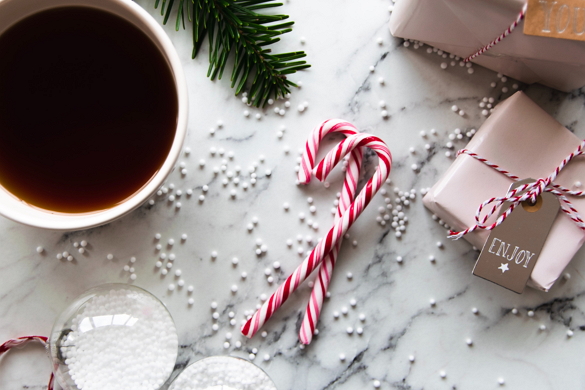
Candy canes were all white when they made their way to America in the late 1800s, but the peppermint flavor and red stripes we're familiar with soon became the norm. Impossible-to-prove theories, folklore, and urban legends aside, we do know their modern production has one religious connection – the Keller Machine2, a device invented to automate the candy cane bending process, was created by a Catholic priest.
Cinnamon
Some of our favorite seasonal treats get their distinctive taste and aromas from cinnamon, including Snickerdoodle cookies, baked apples, and hot cider (we also can't forget those homemade ornaments that are as easy as they are fun for kids to make, though they probably shouldn't eat them). Cinnamon's ancient history3 can be traced back to the Egyptians, but it made its way to Europe in time to become a hot commodity during the Middle Ages.
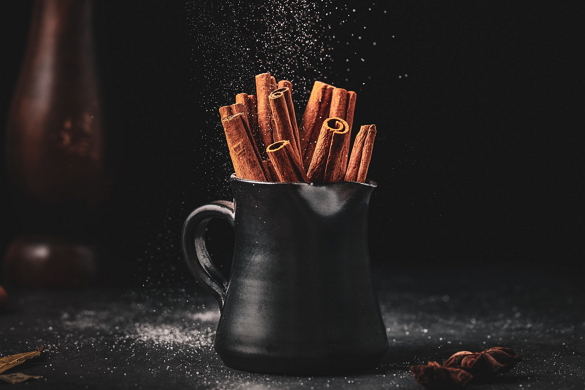
After a lot of exploration, a few wars, and England's continued colonization of other countries, the spice became more widely available and less expensive around 200 years ago. As of 2017, cinnamon was produced4 primarily in China, Indonesia, Sri Lanka, and Vietnam. Cinnamon is most likely included in any "holiday spice" blend you buy, along with clove, ginger, and nutmeg. Of course, it's also used in plenty of non-holiday recipes, and no one says you can't enjoy it year-round, but there's something extra-special about encountering this flavor during the holidays.
Cranberry Sauce
Despite being voted America's least favorite Thanksgiving food5, cranberry sauce will probably keep showing up for the holidays, whether it's made from scratch or plopped out of a can. Though their tart taste isn't for everyone, cranberries – even jellied – are one of the more authentic holiday flavors included in your holiday feast.

According to the Cape Cod Cranberry Growers Association6, wild cranberries (known as sasumuneash to the Native Americans who harvested the fruit for food and medicine) were cultivated in the early 1800s by Captain Henry Hall, although cranberry sauce7 wasn’t canned until 1912. You can thank – or blame – a man named Marcus L. Urann and the Ocean Spray company for this canned dish's popularity.
Eggnog
This oft-spirited drink has an off-putting name – and those who refuse to drink it are justified in thinking that eggs aren't the most appetizing of the holiday flavors in this list. However, most eggnog recipes8 call for a tasty combination of heavy cream, milk, nutmeg, and sugar alongside egg yolks. Store-bought varieties may include thickening agents, preservatives, and other ingredients, but they rarely come with alcohol.

Though its exact etymology is hard to pin down, eggnog9 – or something like it – has been around for centuries. It's been popular in the United States since colonists-turned-revolutionaries brought the recipe over from England, and even caused a riot at West Point10 in 1826 (after it was mixed with several gallons of brandy, rum, and whiskey, that is). If you decide to spice up your eggnog this year, we recommend drinking responsibly and avoiding any riots.
Gingerbread
From boxed versions cobbled together in home kitchens to massive displays painstakingly constructed for hotels and restaurants, gingerbread houses have become symbolic of the holiday season – the Omni Grove Park Inn (Asheville, N.C.) even hosts a National Gingerbread House Competition in November, with entries going on display through the end of the year. Gingerbread is also enjoyed in the form of round cookies and highly decorated gingerbread men, which is more in line with its history.11
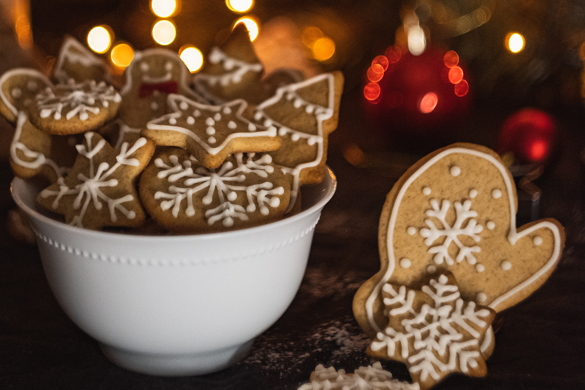
As with many foods that have become a tradition in the U.S., gingerbread got its start in Europe: Queen Elizabeth I is often credited with having her cooks create the first gingerbread men, but gingerbread recipes existed in France and Germany before the 16th century. These countries enjoyed fairings and lebkuchen, simpler precursors to the gingerbread we love today. (Confusingly, "gingerbread" may be used as a translation of the French food pain d'epices, which doesn't actually contain ginger, depending on which recipe you use.)
Pumpkin Pie
Pumpkin spice lattes may be all the rage (even though they may not contain pumpkin12), but pumpkin pie has been a staple of the Thanksgiving season for centuries. Pumpkins were native to the Americas, but had been introduced in Europe – and dubbed "pumpion" in England – by the time colonists began to settle in the northeast; they were also one of the foods Native Americans shared with colonists when they struggled to adapt to their new continent. Recipes for pumpkin pie13 made appearances in British cookbooks in the 17th century – but the humble orange gourd later fell out of favor across the pond when it became a symbol of American Independence.
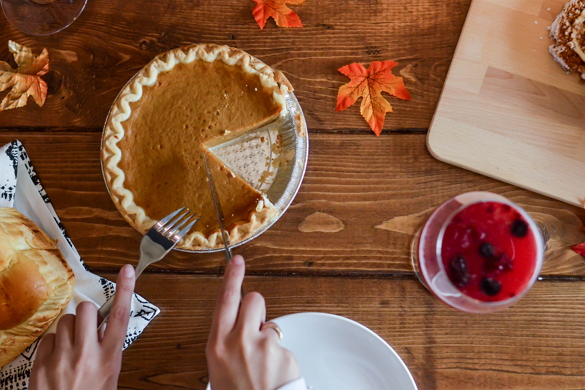
Pumpkin pie recipes14 that more closely resemble the dessert we enjoy today began appearing in the late 18th century, and by the mid-1800s, pumpkin pie was already enjoying its status as a pillar of Thanksgiving feasts. The spices included in pumpkin pie – usually cinnamon, cloves, ginger, nutmeg, and sometimes allspice – are often sold together as "pumpkin pie spice," which you can, of course, use to make pumpkin spice lattes at home.
Roasted Chestnuts
Nat King Cole first crooned about "chestnuts roasting on an open fire" in the 1940s, when roasted chestnuts,15 which had been a Christmastime treat for centuries, were in high demand and readily available from street vendors in New York City. Ironically, the song debuted around the same time American chestnut trees were ultimately devastated by a decades-long blight. The chestnuts Americans buy today are imported, and the radical change in availability might explain why they became less and less common in our homes.

Although "The Christmas Song" assumes you have an open fire that you want to spend time roasting chestnuts over in the first place, it's far more practical these days to roast chestnuts in your oven.16 Most people liken the taste of chestnuts to that of a potato, so if that doesn't sound appetizing, you may want to leave this holiday flavor in the past.
Resources
- Who Invented Candy Canes? History. Accessed May 2021.
- The history of candy canes. CBS News. Accessed May 2021.
- Cinnamon. McCormick Science Institute. Accessed May 2021.
- FAO Stats. Food and Agriculture Organization of the United Nations. Accessed May 2021.
- What is America's least favorite Thanksgiving food? Today. Accessed May 2021.
- Where Tradition Meets Innovation. Massachusetts Cranberries. Accessed May 2021.
- A Brief History of Cranberries. Smithsonian Mag. Accessed May 2021.
- What Is Eggnog Made Out Of, Anyway? HuffPost. Accessed May 2021.
- A Brief History of Eggnog. TIME. Accessed May 2021.
- When Eggnog Sparked a Riot at West Point. History. Accessed May 2021.
- The (Not Always) Sweet Holiday History of Gingerbread. Martha Stewart. Accessed May 2021.
- Just What Is In Pumpkin Spice Flavor? (Hint: Not Pumpkin). NPR. Accessed May 2021.
- The Humble History of Pumpkin Pie. How Stuff Works. Accessed May 2021.
- A Brief History of Pumpkin Pie in America. Library of Congress. Accessed May 2021.
- Why don't we roast chestnuts for the holidays anymore?. USA Today. Accessed May 2021.
- How to Roast Chestnuts the Right Way. Epicurious. Accessed May 2021.
