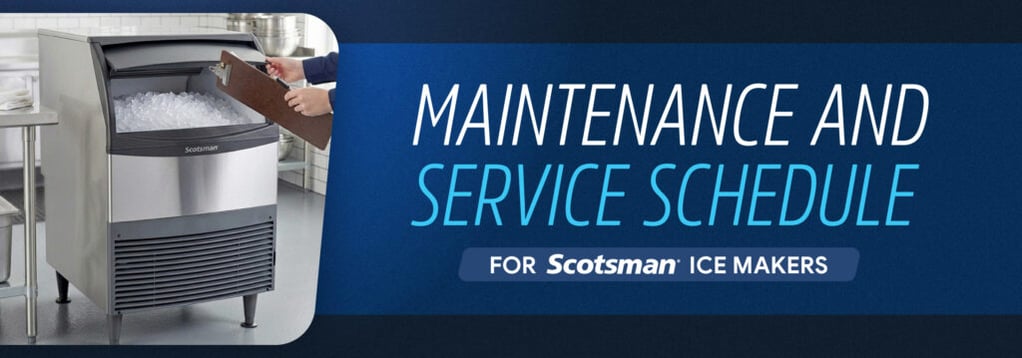
Scotsman Ice Machine Maintenance
Scotsman ice machines require regular maintenance to support consistent performance, ice quality, and production. This involves following a regular cleaning and service schedule while performing preventative maintenance to ensure each component is working properly.
Scotsman Ice Machine Maintenance Tips
- Regularly inspect the bin, evaporator, filters, and water lines for signs of wear or needed maintenance
- Keep a checklist near your machine for daily, weekly, and monthly cleaning reminders
- Always use approved cleaners, personal protective equipment, and non-abrasive cloths when cleaning your machine
- Seek professional service for advanced maintenance tasks involving electrical components, refrigerant systems, or water line replacement
Scotsman Maintenance Schedule
The following table outlines maintenance guidelines applicable to most Scotsman ice machines:
| Recommended Frequency | Maintenance Tasks |
|---|---|
| Daily |
|
| Weekly |
|
| Monthly |
|
| Biannually |
|
| Annually |
|
Basic Cleaning Steps
Scotsman machines require specific cleaning steps depending on their design and internal components. Refer to your user manual or our Scotsman cleaning guide for more information on standard cleaning procedures. Follow these basic steps during biannual cleaning:
- Power off the unit
- Remove ice from the bin
- Disconnect the water tube and drain any remaining water from the reservoir
- Fill the reservoir with Scotsman-approved cleaner
- Run the cleaning cycle once with descaling solution and again with sanitizer according to the user manual
- Remove and soak ice-contact components in descaling solution followed by sanitizing solution
- Rinse all parts thoroughly and reassemble the machine
- Reset the machine, run a test cycle, and discard the first batch of ice produced
How to Clean Specialty Scotsman Units
Scotsman ice dispensers, nugget machines, and other specialty models may include additional cleaning steps, such as wiping dispensing bins and inspecting augers. Follow the directions in the user manual, as cleaning procedures vary by model.
Basic Troubleshooting Steps
If your machine develops an issue, consult your guide or contact technical support for diagnosis. Some common issues may be resolved with small adjustments or standard cleaning. Follow these basic steps before requesting help:
- Not Making Ice: Check for power and water flow and inspect the compressor for operation
- Displaying an Error Code: Identify the error code or light for further diagnosis
- Making Strange Noises: Locate the source of the noise, which may come from rattling tubes, fan blades, or the compressor
- Leaking Water: Find the source of the leak and determine whether the machine needs new parts, cleaning, or adjustment
Requesting Professional Service
We recommend calling a Scotsman-approved service technician for electrical component replacement, recurring fault codes, persistent internal leaks, and refrigerant testing. Some operators also prefer scheduling professional service for yearly deep cleaning. Full-service cleaning can be especially helpful for operations with extremely dirty machines or limited time and labor, ensuring all parts are thoroughly cleaned and properly assembled.
Keep Your Scotsman Running Smoothly with Preventative Maintenance
Though Scotsman ice machines are complex appliances, each unit includes a user manual with maintenance steps designed to help operators maximize lifespan. Besides standard cleaning tasks, components requiring regular maintenance or periodic replacement include the water filter, water probe, ice bin sensor, and bearings on certain models.
Key preventative maintenance tasks involve:
- Regular cleaning and sanitizing
- Drain and water line inspection
- Consistent filter changes
- Monitoring and recording issues, repairs, and maintenance dates
Ready to clean or service your Scotsman ice machine? Shop Scotsman parts and accessories at KaTom.
FAQs About Scotsman Ice Machine Maintenance
How often should a Scotsman ice machine be cleaned?
Scotsman recommends cleaning and sanitizing your ice machine every six months, though high-use or hard-water environments may require more frequent cleaning. Exterior surfaces, scoops, and dispenser components should be cleaned more frequently as needed.
How do you maintain a Scotsman ice machine?
Scotsman ice machines should be regularly cleaned and inspected for issues like leaks or poor ice quality. Check key areas including ice bins, dispensing chutes, condenser coils, water lines, filters, valves, control boards, and vents.
What are common problems with Scotsman ice machines?
Common issues include not making ice, not dropping ice, leaking water, scale buildup, constant water flow, and error codes related to sensors or water supply.
Why is my Scotsman ice machine cleaner not working?
Your Scotsman cleaner may not work due to improper dilution or user error. Make sure you're using an approved cleaner and the recommended water-to-cleaner ratio. Be sure you're putting the cleaner in the correct water reservoir. Pouring it into the wrong location can cause it to drain from the machine.
What’s the life expectancy of a Scotsman ice machine?
A Scotsman ice machine typically lasts 7 to 10 years with proper maintenance, though regular cleaning and part replacements can help extend its lifespan.
