What Is a Remote Condenser Ice Machine?
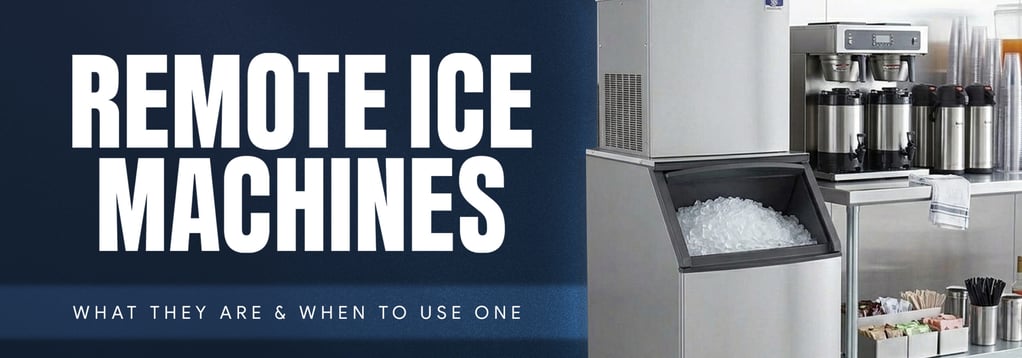
A remote condenser ice machine is a commercial ice maker that uses a condenser—the part of the refrigeration system that rejects heat—installed away from the ice machine itself, often on a rooftop, exterior wall, or other approved outdoor location. Moving heat- and noise-generating refrigeration components away from the kitchen or service area helps remote ice machines maintain ice production while supporting a comfortable environment for staff and guests.
Key Takeaways
- Remote ice machines use an external condenser installed away from the ice maker itself
- These systems are designed to reduce noise and heat inside commercial kitchens
- Remote condenser ice machines are commonly used in high-volume foodservice operations
- Remote ice machines differ from self-contained units because major refrigeration components are located separately
- While remote systems offer operational advantages, they typically require more installation planning than self-contained machines
- Restaurants, hotels, healthcare facilities, bars, cafeterias, and institutions often use remote ice machines for quieter, cooler operation
How Does a Remote Ice Machine Work?
A remote ice machine separates the ice-making head from the condenser. In a self-contained ice machine, the condenser sits inside the ice maker’s cabinet and vents heat into the surrounding area. In a remote-cooled ice machine, refrigerant lines connect the ice maker to a condenser installed in a separate location, moving heat and mechanical noise away from the workspace.
Benefits of Remote Ice Machines
Remote ice machines can support high-volume use while reducing some of the drawbacks associated with placing a full refrigeration system inside the kitchen.
Quieter Facility Operation
Remote condensers move the mechanical noise of compressors and fan motors away from prep stations and customer areas, creating a quieter work environment for staff and a more comfortable experience for guests.
Reduced Heat in the Facility
Because the condenser is installed away from the ice machine, less thermal exhaust is released into the kitchen. This can help reduce heat near prep areas, beverage stations, and nearby refrigeration equipment.
High-Volume Ice Production
Remote condenser systems help high-volume operations maintain steady ice output during busy service periods by moving heat-generating components away from the ice maker’s environment. In kitchens where traditional self-contained units may struggle with elevated room temperatures, a remote-cooled ice machine can help reduce equipment strain and support consistent production.
Remote Ice Machines vs. Self-Contained Ice Machines
Remote ice machines and self-contained ice machines both produce ice for foodservice operations. The right choice depends on the facility’s ice demand, available installation space, ventilation, and budget.
| Feature | Remote Ice Machine | Self-Contained Ice Machine |
|---|---|---|
| Condenser Location | Installed remotely (typically on a rooftop or exterior wall) | Built directly into the indoor chassis unit |
| Kitchen Noise | Quieter operation; removes motor noise from workspace | Louder operation; compressor vents locally |
| Heat Output | Less kitchen heat; routes thermal load outdoors | Releases significant ambient heat into surrounding indoor area |
| Installation | More complex; requires line sets and field charging | Easier installation; standard utility connections |
| Best For | High-volume operations with ventilation, heat, or noise concerns | Smaller operations and low-clearance areas |
Although remote ice machines offer operational advantages, they typically involve more complex installation requirements and higher upfront costs than self-contained systems.
How to Choose the Best Remote Ice Machine
The best remote ice machine depends on daily ice needs, facility layout, ambient kitchen temperatures, and the type of ice required for the operation.
Daily Ice Production Needs
Operators should estimate daily ice usage around peak demand rather than average service. Choosing a production capacity that matches the busiest periods helps prevent shortages during rushes.
Kitchen Environment and Layout Constraints
Hot kitchens, compact prep areas, and utility rooms with poor ventilation may benefit from a remote condenser layout. Before choosing a unit, operators should confirm the facility can support the kitchen requirements, such as the required condenser location, line routing, drainage, and electrical setup.
Ice Type Preferences
Different operations may prefer cube, nugget, or flake ice depending on the application. Full- and half-cube ice often suit beverage service, nugget ice is popular for soft drinks and healthcare settings, and flake ice is commonly used for food displays, blended drinks, and ingredient cooling. For a closer look at the differences, check out KaTom’s guide on the different types of commercial ice.

Which Types of Operations Use Remote Ice Machines?
Remote condenser ice machines are often used in facilities where ice demand is high and the placement of heat-generating equipment affects comfort, workflow, or HVAC performance. These systems are especially useful when the operation needs large volumes of ice without adding noise and heat to areas occupied by staff and guests.
| Operation Type | Primary Benefit | Operational Scenario |
|---|---|---|
| High-Volume Restaurants | Saves floor space and reduces ambient heat | Fits busy kitchens where line heat is a concern and floor space is limited |
| Hotel Ice Stations | Eliminates guest-facing noise | Removes loud mechanical humming sounds from guest hallways for guest comfort |
| Hospitals and Healthcare | Quieter operation and reliability | Fits seamlessly near patient care wings while reliably producing clean, touch-free ice |
| Bars and High-Volume Beverage | Quiet customer environment and high capacity | Keeps guest-facing bar areas quiet while supporting heavy drink demands |
| Cafeterias and Institutions | High bulk capacity without HVAC strain | Supports continuous food production without overloading local air conditioning systems |
| Hot Kitchens / Poor Ventilation | Prevents equipment short-cycling | Addresses ice machines overheating when installed in small, unventilated utility closets |
How to Maintain a Remote Ice Machine
- Replace Water Filters Regularly: Water filtration systems help reduce mineral buildup that can affect ice taste and machine efficiency while protecting internal components from scale accumulation.
- Keep the Condenser Area Clear: Outdoor condensers should remain free of leaves, grease buildup, debris, and other obstructions that can restrict airflow and reduce cooling performance.
- Schedule Preventative Maintenance: Routine professional inspections can help identify refrigerant issues, water leaks, or worn components before they cause unexpected downtime during busy service periods.
- Clean and Sanitize the Ice Machine: Regular cleaning helps maintain food safety standards while preventing mold, slime, and mineral buildup inside the machine.
Because these systems include components installed away from the ice maker, maintenance should include both the indoor ice machine and the remote condenser.
Shop KaTom for Remote Ice Makers & Machines
KaTom offers a selection of remote condenser ice machines and commercial ice equipment for restaurants, hotels, healthcare facilities, bars, cafeterias, and other high-volume operations. Operators can compare remote-cooled ice machines from leading brands such as Manitowoc, Scotsman, Ice-O-Matic, Hoshizaki, and Follett to find the right production capacity, ice type, and system configuration for their facility.
