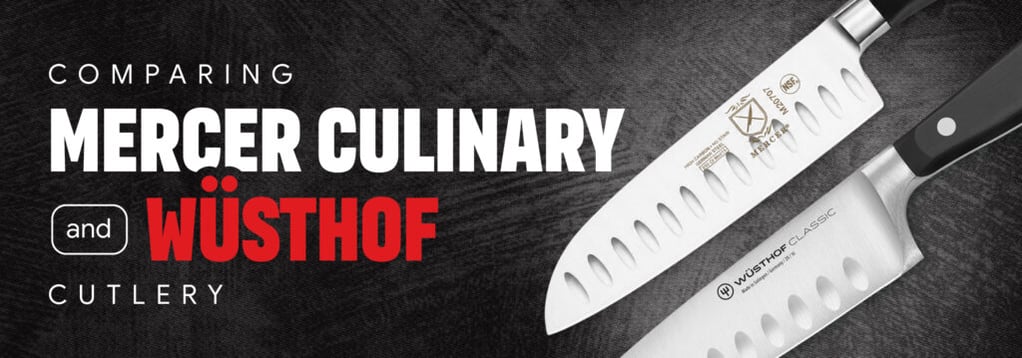
Mercer Culinary vs. Wüsthof
Mercer Culinary and Wüsthof offer professional kitchen knives designed for continuous use in cafes, restaurants, institutional kitchens, and other foodservice environments. While Wüsthof emphasizes traditional craftsmanship and precise German design, Mercer Culinary offers a broad selection of styles and materials for different kitchen applications. The right blade for your needs depends on performance, blade shape, and handle feel.
Mercer Culinary vs. Wüsthof: Comparison Snapshot
About Mercer Culinary
Founded in 1976 in Ronkonkoma, N.Y., Mercer Culinary produces "chef-centric" products designed to enhance performance in modern professional kitchens. Its lineup includes knife collections, turners and servers, kitchen apparel, and safety gear. The company is owned by CFS Foodservice and sources most of its knives from Taiwan or China.
Key Features:
- High-carbon German and VG-10 Japanese steel
- Ergonomic Santoprene® handles
- Finger guards and cut gloves
About Wüsthof
Wüsthof was founded as a scissors factory in Solingen, Germany, in 1814 and has since become one of the world's most recognized cutlery brands. A seventh-generation family-run business, Wüsthof crafts durable German steel knives built for both residential and commercial kitchens.
Key Features:
- German steel is corrosion resistant and easy to sharpen
- Elegant blade and handle styles
- Forged, full-tang construction
Key Differences Explained
Blade Material and Function
Mercer Culinary produces blades with varying levels of hardness and durability from high-carbon German or Japanese steel. In general, German knives offer greater durability for high-volume prep and breaking down dense ingredients. Japanese knives are typically harder and sharpened to finer angles, making them ideal for quick slices and precise cuts. Mercer's catalog includes everything from standard Western silhouettes to Asian and specialty designs, including cheese knives and pizza cutters. Depending on the series, blades are either stamped or forged.
Wüsthof blades are exclusively made with German steel and are designed for long-lasting use. Wüsthof steel includes materials like chrome, molybdenum, and vanadium, which help increase toughness and rust resistance. Though some models are stamped, Wüsthof blades are primarily forged, and each blade undergoes laser-guided sharpening and hand finishing. They feature thicker spines for added weight, improved edge retention, and reliable sharpening performance.


Handle Design and Performance
Mercer Culinary offers multiple handle materials and shapes. Santoprene is a rubber-like substance that resists moisture, chemicals, and oils. Mercer Culinary uses Santoprene on its Genesis® and Millennia® models, which include textured grip points and finger guards for comfort and safety.
Wüsthof Classic knives feature signature three-rivet designs and use durable polyoxymethylene (POM) handles that resist fading and cracking with use. Forged knives feature full-tang construction and full or partial bolsters. Both brands offer knives with wood handles and colored designs.
Knife Maintenance
Most Mercer Culinary knives are NSF rated, featuring easy-clean designs and sanitary materials. While most models can be placed in the dishwasher, it's best to wash these knives by hand to maintain blade sharpness and quality. The same is true for Wüsthof knives, which require frequent honing due to their softer steel. Wüsthof models are easy to sharpen and maintain their appearance through years of regular use.
Price and Value
Mercer Culinary focuses on practical performance at an accessible price point, making its knives popular in commercial kitchens. A 25-year limited lifetime warranty, ergonomic handle materials, and a variety of blade shapes add to the brand’s value. Wüsthof knives come with a premium price, but they offer traditional German construction, proprietary steel formulations, and a limited lifetime warranty.
Which Brand Is Best for You
The better choice depends on your intended use and expected performance. Mercer Culinary provides entry-level blades that accommodate most skill levels for a variety of prep tasks. The lower pricing makes it easier to collect specialty knives for specific tasks. Wüsthof knives offer excellent multipurpose performance for professional chefs and culinary enthusiasts who prioritize design and durability. Some Wüsthof blades emphasize visual appeal, which may serve well in open-kitchen settings or as showpiece items.
| Scenario | Best Choice | Why |
|---|---|---|
| Small / Medium Kitchen | Mercer Culinary | Accessible cost; versatile blade options |
| High-Volume Prep | Wüsthof | Durable blades withstand steady use |
| Fine Dining / High-End Hospitality | Wüsthof | Recognized German designs maintain professional appearance |
| Culinary School | Mercer Culinary | Comfortable handles and variety of designs for entry-level foodservice professionals |
Shop Mercer Culinary & Wüsthof at KaTom
KaTom offers Mercer Culinary and Wüsthof knives at competitive prices. Compare blade design, handle material, and application to find the right knife for your needs.
