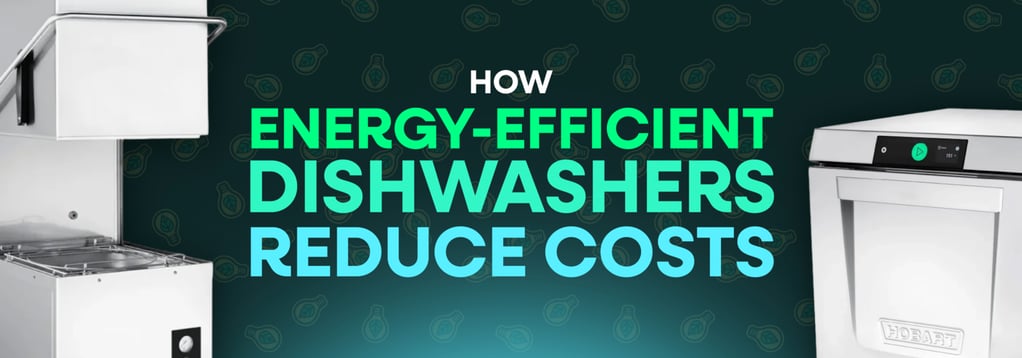
How Energy-Efficient Commercial Dishwashers Reduce Costs
Modern commercial dishwashers can improve energy efficiency by using less water and electricity per cycle. Smart soil sensors, water recirculation, low operating temperatures, targeted water jets, and advanced drying systems can further reduce resource use while maintaining effective cleaning and sanitation.
"A commercial dishwasher can improve speed, sanitation, and consistency for operations that struggle with labor, washroom performance, or high dish volume." — Taylor Heilbronner, Business Development Manager of Hobart Warewash and Waste
Whether you need an undercounter, door-type, or conveyor dishwasher, KaTom offers a wide range of energy-efficient dishwashers for different operations.

Energy Recovery
Some dishwashing systems reduce energy use and operating costs by capturing and reusing thermal energy that would otherwise be wasted. These heat recovery systems capture heat from hot drain water or steam and transfer it to incoming water, reducing the energy needed to reach sanitizing temperatures. Preheating the water also reduces the workload on booster heaters or boilers. Ventless models can capture and condense steam rather than releasing it into the dishroom.
"Drain Water Energy Recovery captures heat from outgoing drain water and uses it to preheat incoming water, reducing the energy needed for heating," Heilbronner told KaTom.
Reusing this heat also lowers the heat and humidity released into the kitchen. This can reduce the load on HVAC systems, and some ventless models may eliminate the need for a separate exhaust hood. A cooler, less humid dishroom can also create a more comfortable environment for employees.
Benefits of Heat Recovery Systems:
- Reduces energy consumption and utility costs
- Decreases the workload on booster heaters or boilers
- Reduces HVAC demand by limiting heat and humidity
- May eliminate the need for a separate exhaust hood
- Creates a cooler, more comfortable dishroom for employees
Automatic Soil Removal
With traditional machines, staff spend time scraping or rinsing debris from plates to avoid clogging lines. The automatic soil removal feature on certain commercial dishwashers reduces the need for prescraping by filtering and pumping heavy food solids out of the wash tank and into an external scrap basket during operation. Dishwashers with ASR technology feature an internal fine-strainer system that isolates food residue from the water path. A dedicated pump automatically draws the debris out of the wash cycle and deposits it into an external scrap bin, which staff can empty without stopping the machine.
"Automatic Soil Removal helps keep wash water cleaner longer by removing fats and food particles from the tank," said Heilbronner.
Benefits of Automatic Soil Removal:
- Reduces manual scraping and prerinsing
- Saves water by reducing prerinse requirements
- Cuts labor spent handling food debris
- Keeps food solids out of the wash water
- Enables staff to empty scrap baskets without stopping dish cycles
- Helps maintain warewashing performance
Consistent Sanitization
Both low- and high-temperature sanitizing systems reduce harmful, disease-causing microorganisms during each cycle, removing the risk of human error.
"In most commercial kitchens, a dishwasher is more efficient and consistent than hand washing because it improves throughput and provides more reliable sanitization," said Heilbronner. Consistent sanitization also creates a more predictable dishwashing process, helping operators maintain reliable results throughout service. This consistency can make it easier to establish repeatable cleaning procedures and maintain standards across shifts.
Benefits of Consistent Sanitization:
- Predictable water and energy costs through efficient dishwashing cycles
- Reduced chemical costs through precise detergent and sanitizer dosing
- Lower labor costs through faster dishwashing and drying
- Reduced restocking and maintenance costs by preventing grease and food residue buildup
- Fewer costs associated with food safety violations
Reduced Rewashing & Labor
Washing dishes by hand may seem more economical, but that isn't always the case. Energy-efficient commercial dishwashers can help lower operating costs by improving wash performance and reducing the need to rewash items. Automated controls help maintain consistent wash conditions, while filtration systems can keep food particles from settling back onto clean dishware. Faster cycles move more racks through the dishroom, reducing the time employees spend handling and inspecting dishes. Together, these features can improve productivity while reducing unnecessary water, energy, chemical, and labor expenses.
Benefits of Energy-Efficient Dishwashers:
- Fewer rewashes due to thorough, consistent soil removal
- More efficient use of water and energy during each wash cycle
- Less employee time spent monitoring cycles, checking dishes, and rewashing items
- Greater dishroom throughput with faster, more consistent cycles
Shop Dishwashers at KaTom
With more than 39 years of experience in the foodservice equipment industry, KaTom is a trusted source for commercial dishwashers. Choose from a variety of configurations, sizes, and features to find a dishwasher that fits your operation's needs.
