Hood Cleaning and Grease Fire Prevention
Commercial hoods are essential devices in kitchens that must be regularly maintained to ensure performance and safety. Type 1 hoods accommodate grease-producing cooking appliances and are regularly found above ranges and ovens. While their baffle filters capture much of the grease, some residue passes through and builds up overtime in the ductwork, increasing the risk of grease fires if not addressed.
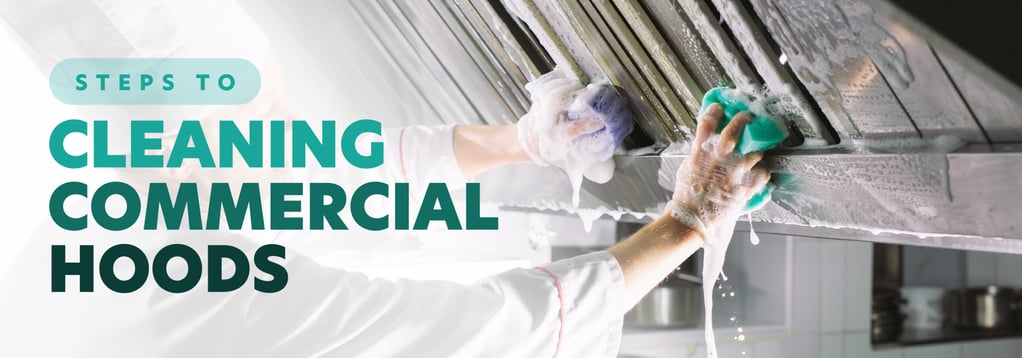
Type 1 Range Hood Cleaning Steps
Key Takeaways
- Ensure your hood system maintains compliance with local safety codes with regular cleaning
- Operators may clean filters and canopies themselves, but professionals are often required for complete system cleaning
- Inspect hood fire suppression systems but avoid contact when cleaning
Step 1 - Preparation
Cleaning greasy hoods is dirty work, so before you start, ensure your space is safe to work in and can contain any messes you make.
- Inspect the hood and fire suppression system then test the fan
- Turn off and disconnect all appliances beneath the hood
- Shut off nearby electrical switches
- Remove wheeled appliances or cover stationary ones
- Remove baffle filters and set aside
- Wrap the hood and surrounding area with plastic to capture grease

Step 2 - Degrease
Once you're ready to clean your hood, you'll need to prepare a degreasing solution. Professional hood cleaners use spray guns or power washers to clean hood canopies, ducts, and fans. Avoid tampering with or spraying fire suppression systems with water or the degreaser, as these systems can trigger if handled improperly, causing costly damage.
- Spray or soak baffle filters with degreaser
- Empty grease trays and collection systems
- Apply degreaser to the canopy hood and accessible ductwork
- Spray all surfaces with water to remove any buildup
Step 3 - Polish and Reassemble
After removing grime from the canopy and duct work, you'll need to perform finer detailing to achieve a sparkling finish.
- Remove any plastic
- Completely dry accessible components with rags
- Rub all visible metal with stainless steel polish
- Rinse, dry, and replace baffle filters
- Properly dispose of grease waste, replace all equipment, and test the fan
What to Know About Cleaning Commercial Hoods
How Often Should You Clean Your Hood System?
Cleaning frequency depends on fuel used, foods cooked, and cooking volume. Hoods used for solid fuel cooking should be inspected every month. High-volume or grease-heavy operations require quarterly cleaning, while medium- or low-volume kitchens can go 6 months to a year before needing deep cleaning. Type 1 hood grease-collection devices should be inspected or emptied at least once a week.
A commercial hood that needs cleaning exhibits symptoms such as smoky or greasy odors, reduced airflow, dripping grease, or odd noises.
How Do You Know Your Restaurant Hood Is Up to Code?
Commercial hoods are regulated by local fire codes, many of which follow NFPA 96,1 the National Fire Protection Association's Guidelines on Ventilation Control and Fire Protection of Commercial Cooking Operations. This resource provides guidelines on safe installation, operation, and maintenance of commercial hood systems.
Is It Worth Hiring Professional Hood Cleaners?
Professional hood cleaners are the best option for thorough cleaning jobs. They use specialized equipment like pressure washers and degreaser sprayers that can reach all ductwork and most are trained on NFPA 96 standards and local fire safety codes.
Can You Clean Only the Filters and Canopy?
While thorough hood cleaning is required for proper function and safety, many operators more frequently clean hood filters and canopies themselves, using rags or hood degreasing wipes, which reduces the need for frequent professional cleaning. However, ductwork and exhaust fans require regular inspection and professional cleaning.
How Do You Clean a Range Hood Safely?
Completely turn off all appliances underneath a hood before cleaning it and give yourself ample room to work. Wear proper protective equipment when working with degreasing chemicals, including glasses, gloves, and a mask. Never use flammable solvents or cleaning aids on hoods.
References
- NFPA 96. National Fire Prevention Association. Accessed January 2026.
