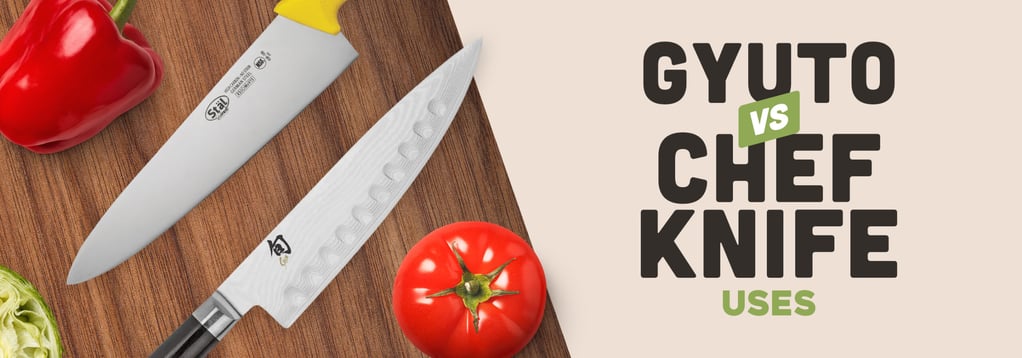
Gyuto vs. Chef Knife: What's the Difference?
While both gyuto and chef knives are ideal for all-purpose use in commercial kitchens, they differ in design, balance, performance, and other key areas. Gyuto knives typically feature a thinner blade and pointed tip that excel at fine cuts, while chef knives emphasize power with a slightly shorter, broader blade great for chopping and push cutting. The best choice for your kitchen ultimately depends on your cooking style and specific needs.
Key Takeaways
- Gyuto knives feature thinner blades and sharper edge angles, offering precision and agility for delicate slicing and versatile prep.
- Western chef knives are heavier, more durable, and designed for rocking and chopping motions better for high-volume and heavy-duty tasks.
- Choosing between them depends on cooking style, skill level, and kitchen needs.
- Many chefs keep both knives on hand to cover a wide range of tasks, from refined cuts to rugged prep work.
Gyuto vs. Chef Knife: Side-by-Side Comparison
While both are multi-purpose kitchen knives, the gyuto and chef knife differ in design, balance, and overall performance.
| Attribute | Gyuto | Chef Knife |
|---|---|---|
| Origin | Japan; inspired by Western chef’s knives | Western; developed as a versatile, multi-purpose kitchen knife |
| Blade profile | Longer blade with a pointed tip and slight curve for rocking cuts | Shorter, wider blade with a flatter edge for push and chop cuts |
| Edge angle | Typically 15 degrees per side (sharper edge) | Commonly 15-17 degrees per side, sometimes single-beveled |
| Weight & balance | Lighter, thinner blade with forward balance for agility | Heavier feel with more centered balance for control |
| Durability & steel type | Often made with harder steel; holds a fine edge but requires care | Made with durable stainless or carbon steel; built for everyday resilience |
| Best uses | Slicing meats, precision cuts, and versatile prep work | Chopping vegetables, mincing, and handling denser ingredients |
| Cost | Generally higher, especially premium Japanese brands | Often more affordable, with wide options for home cooks |
What Is a Gyuto Knife?
The gyuto knife is a Japanese version of the Western chef knife, so it's designed as a versatile tool that can serve a variety of kitchen purposes. The gyuto knife is characterized by its thinner blade and sharper edge angle that place an emphasis on precise cuts. "Japanese knives are known for their precision, their lightness, and their intense sharpness with very, very thin blades," Mariah Mattoon, Senior Digital Marketing Manager at Shun Cutlery, told KaTom. Because of its lightweight build and focus on balance, this knife is ideal for making meticulous cuts when working with vegetables and proteins.
Pros:
- Razor-sharp edge
- Lightweight construction
- Excellent for cutting vegetables and proteins
- Balanced design
Cons:
- Fragile edge
- Higher maintenance requirements
- Less effective for heavy-duty tasks
What Is a Chef Knife?
The Western chef knife is a heavier, more durable knife designed for a wide range of prep tasks, particularly accomplished through rocking and chopping motions. "Some people prefer a rocking cut, and that's more of a Western cut," Mattoon said. Its thicker blade gives it the strength needed to work with more heavy-duty ingredients, adding a versatile design to commercial kitchens.
Pros:
- Durability
- Simple sharpening
- Capable of tougher prep tasks
Cons:
- Heavier design
- Difficulty making delicate cuts
- More strain on user
Which Knife Should You Choose?
The best knife for your kitchen depends on your cooking style and the demands of your kitchen. For Japanese cuisine or tasks that require more elegant cuts and knife control, the gyuto is the better option. If your operation requires high volumes of prep work or works with larger cuts of meat, the Western chef knife's broader design makes more sense. "People are just looking for knives, and they just want the best knife. That doesn't necessarily mean that they understand the difference between the two types of knives," Mattoon said. Many restaurants benefit from owning both knives, using the gyuto knife for refined cuts and utilizing the chef's knife when a more rugged cut is required.
FAQs On Gyuto vs. Chef Knife
Is a gyuto the same as a chef knife?
No. A gyuto is a Japanese version of the chef’s knife that's usually lighter, thinner, and sharper, while the Western chef’s knife is heavier and more durable.
Is a gyuto better than a chef knife?
A gyuto isn’t necessarily better than a chef’s knife, but it is different. A gyuto excels at precision slicing and lighter handling, while a Western chef’s knife is more durable and suited for heavy-duty prep. The better choice depends on your cooking style, skill level, and kitchen needs.
Is a gyuto good for beginners?
A gyuto can be good for beginners who want a lighter knife with sharp, precise performance, but it requires careful handling to avoid chipping and dulling. For brand-new cooks, a Western chef’s knife is often more forgiving and durable, while a gyuto is best if you’re ready to practice proper technique and maintenance.
Do professional chefs use gyuto knives?
Yes, many professional chefs use gyuto knives, especially in kitchens where precision and versatility are required. Some chefs pair it with a Western chef’s knife to cover both delicate and heavy-duty tasks.
Shop Professional Knives at KaTom
KaTom offers a wide variety of chef knives, Japanese knives, and professional cutlery, ensuring you can find a knife for any use or purpose. "I think as people get more educated and comfortable in the kitchen, they continue to explore what makes that experience better for them," Mattoon said. Whether you need a durable Western knife to prepare bulky proteins or a thinner Japanese blade to make precise, accurate cuts, KaTom has the selection of knives to outfit your commercial kitchen.

