Commercial Batch Brew Coffee Maker Guide
Brewing a consistent, flavorful pot of coffee requires more than high-quality beans and reliable equipment. Consistent results depend on controlling several factors that influence extraction and flavor. Programmable settings let operators adjust water temperature, brew time, water volume, and preinfusion to improve flavor extraction, maintain consistency, and accommodate different coffee roasts. Understanding how each setting affects the final cup helps operators refine recipes, troubleshoot brewing issues, and maintain quality across batches and service periods.
Learn how each setting affects extraction and flavor and when operators should adjust them for optimal brewing results.

Understanding Programmable Brewing Parameters
Programmable brewing parameters give operators control over important stages of the brewing cycle. Available settings vary by machine, but each function can help operators develop recipes for different coffees and service requirements.
"Brew volume, brew time, pulse settings, pre-wet percentage, and delay timing are the parameters that give operators meaningful control over extraction." — Mark Tilson, Regional Sales Manager, FETCO
Brew Temperature and Extraction
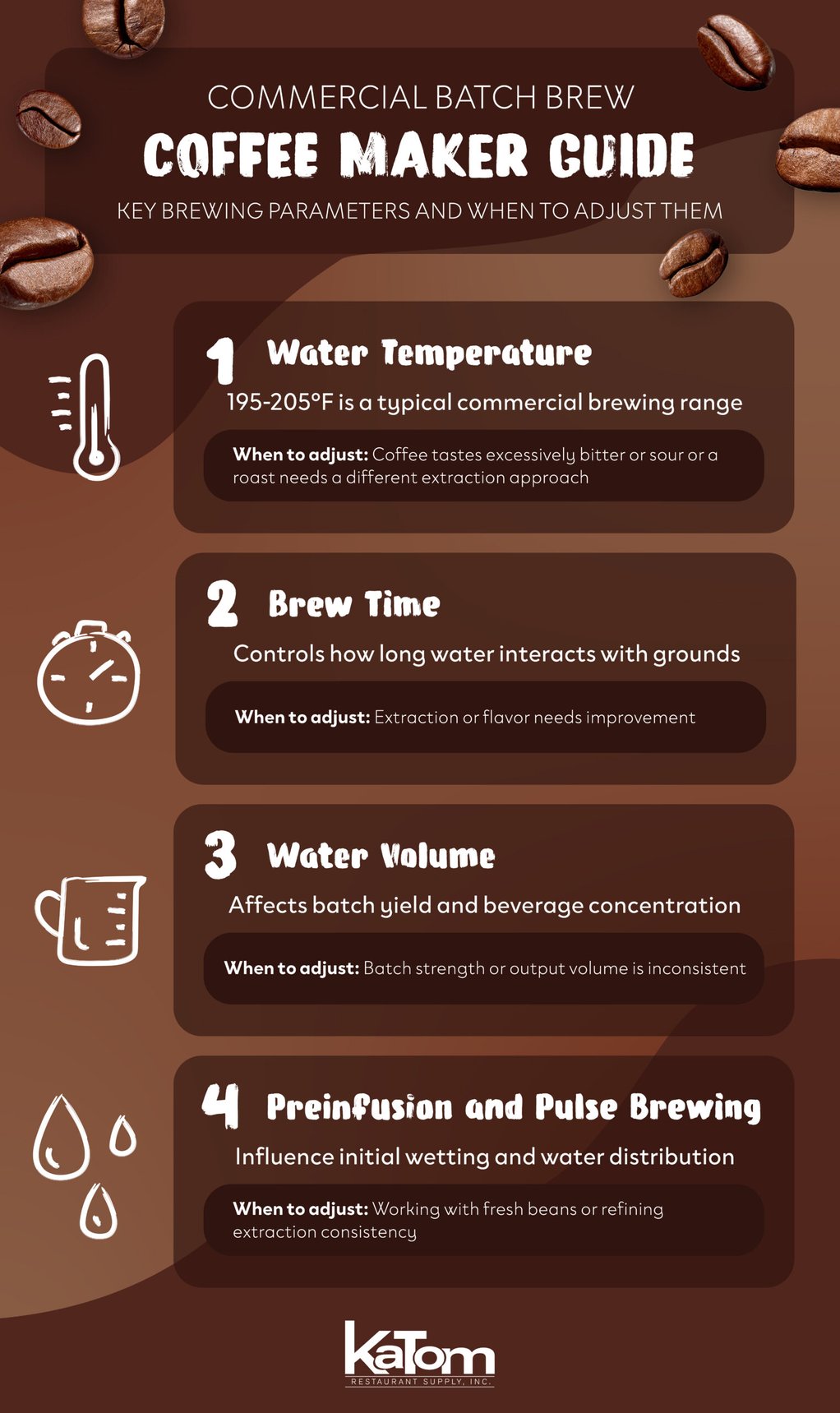
Water temperature refers to the temperature of the water dispensed onto the coffee bed from the boiler. Commercial coffee brewers typically operate between 195 and 205 degrees Fahrenheit, though the appropriate setting depends on the coffee and equipment.
Higher temperatures accelerate extraction, while lower temperatures slow it down. Water that's too hot can contribute to excessive bitterness or burnt flavors, while water that's too cool may result in under-extracted coffee with sour or weak notes.
When to adjust: Increasing the temperature may improve extraction for light roasts, high-altitude coffees, or dense beans. For dark roasts, lowering the temperature may help reduce harsh or bitter flavors. Make changes and evaluate the results before adjusting further.
Brew Time and Water Volume
Brew time determines how long water interacts with the coffee grounds. Water volume controls how much water passes through the coffee bed and how much finished coffee the brewer produces. Both settings influence extraction and the strength of the final beverage.
Longer contact time can increase extraction, while insufficient contact time may leave desirable coffee compounds under-extracted. Using more water with the same amount of coffee can produce a less concentrated pour, while using less water generally increases concentration.
When to adjust: Evaluate brew time if coffee tastes sour or bitter, and check water volume if the finished batch is consistently too weak or too strong. Maintain the recommended coffee-to-water ratio when changing batch sizes, and follow the brewer manufacturer's recommended settings.
Preinfusion and Pulse Brewing
Preinfusion is a programmable stage in which a small amount of water wets the coffee grounds before the main brew cycle begins. A brief pause lets the grounds release trapped carbon dioxide, which can help water penetrate the coffee bed more evenly and reduce channeling. "Pre-wet programming acts like the bloom in a pour-over, giving coffee grounds time to expand and release carbon dioxide before the full brew continues," Tilson told KaTom. Channeling occurs when water follows established paths through the grounds rather than distributing uniformly.
Proper preinfusion can promote more even extraction, fuller body, and clearer flavor notes. Pulse brewing provides additional control over water distribution by delivering water in intervals rather than in one continuous flow. "Pulsed water delivery helps a batch brewers behave more like a skilled barista pouring from a kettle in stages," Tilson said.
When to adjust: Increase preinfusion for very fresh coffee beans, particularly those roasted within the previous one to two weeks, because they typically contain more trapped carbon dioxide. Consider shortening preinfusion for older beans that have released more of their gas. If the machine supports pulse brewing, adjust the intervals to improve saturation and extraction consistency. The ideal settings depend on the coffee, brewer design, and recipe.
How Brewing Settings Affect Coffee Flavor
Brewing parameters work together to determine the balance, strength, and flavor of the finished coffee. Understanding their effects helps operators identify the likely cause of problems and make targeted adjustments instead of changing several settings at once.
Adjusting Strength and Extraction
Coffee strength describes the concentration of dissolved coffee solids in the finished beverage, while extraction refers to the amount of soluble material removed from the grounds. A strong cup isn't necessarily well extracted, and a weak cup isn't always under-extracted.
Increasing the amount of coffee relative to water may create a stronger brew. Adjusting grind size, water temperature, or contact time can influence extraction. Operators should evaluate strength and extraction separately to avoid confusing a concentrated brew with a well-balanced one.
Reducing Bitterness and Sourness
Under-extracted coffee can taste sour, while excessive bitterness may indicate over-extraction. Roast characteristics and other brewing variables can also affect these flavors.
If the coffee tastes sour, check the water temperature, grind size, and contact time to see whether extraction needs to increase. If it tastes excessively bitter, test a coarser grind, shorter contact time, or lower temperature, depending on the roast. Change one variable at a time to help identify the cause of an undesirable flavor.
When to Adjust Brewing Parameters
Brewing recipes may need refinement when operators change coffee beans, increase batch sizes, or notice differences in flavor. Consistent measurements and routine taste checks help determine whether a setting needs adjustment.
Adapting Settings to Different Coffee Beans
Different roast levels and bean characteristics respond differently to brewing conditions. Light roasts and dense beans may benefit from higher temperatures to promote extraction, while dark roasts may require lower temperatures to avoid harsh flavors.
Freshly roasted beans may also benefit from additional preinfusion to release trapped carbon dioxide. As coffee ages and releases gas, the preinfusion time may need to be shortened. Start with the brewer's recommended recipe, then make small adjustments based on flavor.
Adjusting Recipes for Batch Size and Demand
Changes in batch size can affect brew strength and extraction if the coffee-to-water ratio or brewing cycle isn't maintained appropriately. Follow the brewer's recommended settings for each batch volume and measure coffee and water amounts consistently.
Programmable recipes can help standardize brewing during busy service periods, particularly when staff prepare different batch sizes throughout the day. "FETCO brewers use programmed parameters to control how water is applied, giving operators a way to mimic the steps of a manual pour-over," said Tilson. After changing the batch volume or recipe, evaluate the finished coffee to confirm that the adjustment maintains the desired strength and flavor.
Frequently Asked Questions About Batch Brewing
How can you correct weak or over-extracted coffee?
For weak coffee, increase the coffee dose or reduce water volume. For over-extracted coffee, try a coarser grind, shorter contact time, or a lower water temperature.
How can you maintain consistent brew quality?
Use standardized recipes, measure coffee and water accurately, and check that the brewer maintains its programmed settings. Regular cleaning and descaling also help prevent inconsistent results.
What is the ideal brewing temperature for commercial coffee brewers?
Commercial brewers typically use water temperatures between 195 and 205 degrees Fahrenheit, though the ideal setting depends on the coffee and brewer specifications.
How often should you adjust brewing parameters?
Adjust settings when changing coffee beans, batch sizes, or desired flavor profiles, or when quality checks reveal changes in taste. Avoid unnecessary adjustments when the coffee consistently meets quality standards.
Does brew volume affect coffee strength?
Yes. Using more water with the same amount of coffee can produce a weaker brew, while using less water generally increases strength. Maintain a consistent coffee-to-water ratio when changing batch sizes.
Shop Coffee Brewers at KaTom
For more than 39 years, KaTom has helped foodservice operations find dependable equipment for commercial kitchens. Compare coffee brewers from trusted brands to select the right unit for your operation or contact a foodservice specialist to explore options suited to your specific needs.
