Coffee Brewer Sizes
Choosing the right commercial coffee brewer starts with determining how much coffee the operation serves during peak demand and how quickly each brewer can replace the coffee being poured. The basic calculation is to multiply the number of servings needed during the busiest service period by the actual ounces in each serving, then convert that volume to gallons and compare it with the brewer’s listed gallons-per-hour rating.
"Operators should calculate demand before choosing a brewer instead of guessing based on size or appearance." — Mark Tilson, Regional Sales Manager for FETCO
It’s important to use peak demand instead of the total amount of coffee sold each day, as the right coffee brewer must keep up when demand is at its highest point.
How Is Coffee Maker Capacity Measured?
Coffee brewer capacity is measured by:
- Batch Size: The amount of coffee brewed in one cycle
- Gallons per Hour: The volume the brewer can produce in one hour under normal operating conditions
- Tank Capacity: The amount of hot water held inside the brewer
- Server Capacity: The amount of brewed coffee held in a decanter, airpot, shuttle, or urn
- Number of Brew Heads: Determines whether the machine can brew one or multiple batches simultaneously
It’s important to look at all five measurements because a brewer with a large tank may still have a limited hourly output if its heating system needs substantial time to recover between batches. Similarly, a high-output brewer may not support peak service unless the operation has enough servers to hold and dispense the finished coffee. For equipment selection, gallons-per-hour ratings typically provide the most useful performance measurement.
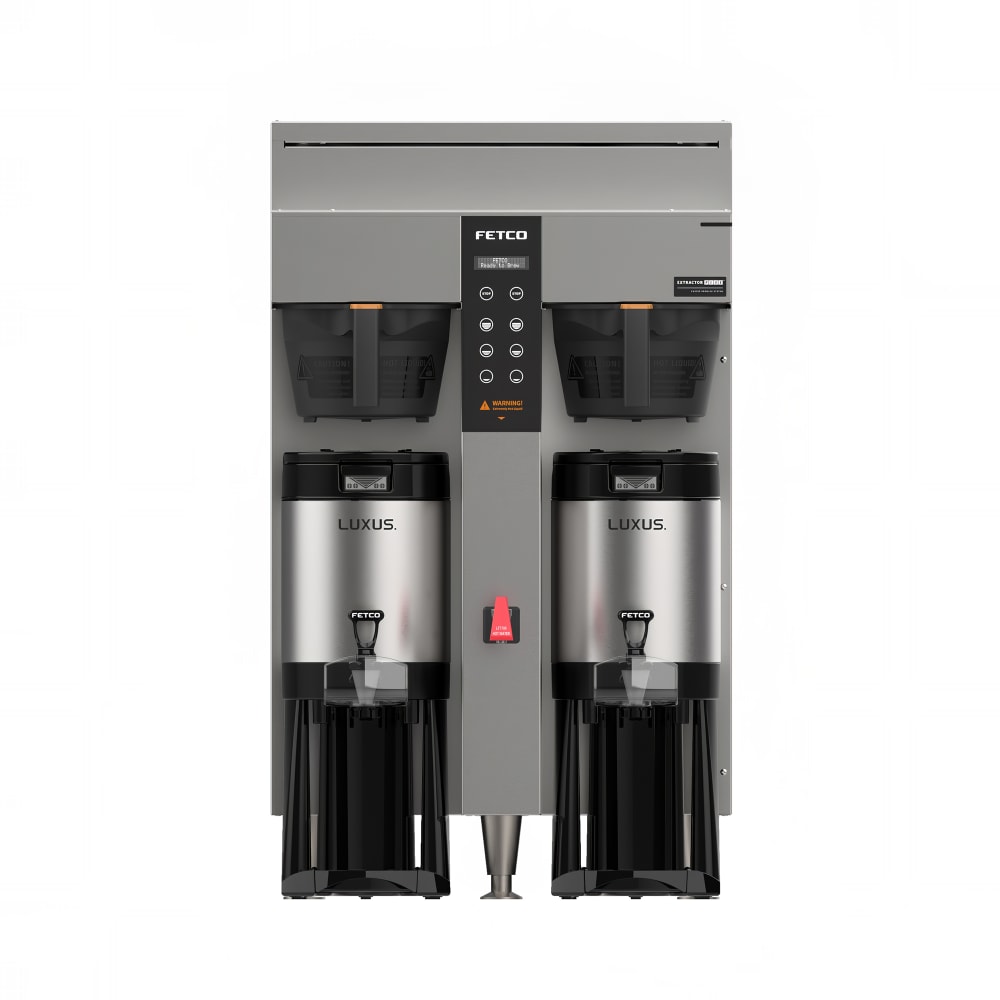
"Gallons-per-hour ratings give operators a practical way to determine whether a brewer can keep up during peak service." — Mark Tilson
How Many Cups of Coffee Are in a Coffee Pot?
To find out how many cups of coffee a single pot can make, you must first determine how many ounces are in a coffee pot. A standard commercial decanter usually holds 64 ounces, though airpots, thermal servers, shuttles, and urns are available in larger capacities. Common container capacities include:
| Container | Approximate Capacity |
|---|---|
| Commercial decanter | 64 ounces |
| 2.2-liter airpot | 74 ounces |
| 2.5-liter airpot | 85 ounces |
| 3-liter airpot | 101 ounces |
| 1-gallon server | 128 ounces |
| 1.5-gallon server | 192 ounces |
The next step is to define the size of one cup, which varies by operation. Some diners use 8-ounce mugs, while many cafes offer 12- and 16-ounce disposable cups. To determine how many cups a coffee brewer can make, divide the container’s capacity by the serving size.
Capacity ÷ Serving Size = Number of Cups
"Serving size matters when estimating brewer capacity because the actual pour volume affects how many cups a batch can produce." — Mark Tilson
What Size Brewer Do You Need?
Brewer sizing starts with four pieces of information:
- The number of ounces in each serving
- The number of coffee servings sold or poured
- The length of the peak service period
- A reasonable buffer for refills, waste, and demand fluctuations
Step 1: Identify the Peak Service Period
Calculate demand based on the busiest part of the day rather than the daily average. A restaurant may serve coffee steadily for several hours, but most orders might occur during a 30-minute breakfast rush. This is when container capacity becomes important. Review sales records, cup usage, server refills, or point-of-sale data to identify the busiest 15-, 30-, or 60-minute period. For a new operation, projections can be based on expected customer count, beverage attachment rate, and anticipated refills.
"A brewer may produce excellent coffee, but operators still need to confirm it can support the busiest part of the day." — Mark Tilson
Step 2: Calculate the Coffee Volume Needed
Use this formula:
Number of servings × Ounces per serving = Total ounces required
For example, an operation expecting 80 servings at 10 ounces each needs:
80 × 10 ounces = 800 ounces
Because 1 gallon contains 128 ounces, convert the total to gallons:
800 ÷ 128 = 6.25 gallons
The operation must produce 6.25 gallons of coffee during the measured service period.
Step 3: Convert Peak Periods to an Hourly Rate
Brewer output is commonly listed in gallons per hour. For example, if an operation needs 6.25 gallons during its busiest 30-minute period, the brewer must support a production pace of approximately 12.5 gallons per hour unless staff can prepare and hold part of the required volume before the rush. Although the machine may rarely need to produce that much coffee, a smaller-capacity machine could cause staff to fall behind, making it difficult to catch up afterward.
Step 4: Add a Capacity Buffer
Equipment shouldn't operate at its absolute maximum throughout every peak period. Unexpected customer traffic, spills, sampling, refills, and delayed batches can cause staff to fall behind even with a machine that should meet demand. For this reason, it's useful to add a buffer of approximately 15 to 25 percent to the capacity needed. Using a 20-percent buffer, 12.5 gallons per hour becomes 15 gallons per hour, meaning the operator should consider a 15-gallon-per-hour brewer, provided its batch sizes, electrical requirements, and server configuration also fit the operation.
Coffee Brewer Capacity Calculation Example
Now let’s look at a real-world example. Consider a breakfast restaurant that serves 120 cups of coffee during its busiest hour. Each mug receives an 8-ounce pour, which is the average coffee cup size.
120 servings × 8 ounces = 960 ounces
Convert ounces to gallons:
960 ÷ 128 = 7.5 gallons
Add a 20-percent buffer:
7.5 × 1.20 = 9 gallons per hour
The operation should evaluate brewers that can produce approximately 9 gallons per hour or more under the restaurant’s available electrical conditions.
Now, let’s say the restaurant uses 64-ounce decanters, and each pot supplies eight complete 8-ounce servings:
120 servings ÷ 8 servings per pot = 15 pots
With a 20-percent buffer, the operation should be prepared to brew or stage the equivalent of approximately 18 pots during the peak hour. This calculation also helps determine whether decanter service remains practical. Brewing and replacing 15 to 18 individual pots may require more staff attention than producing larger batches in thermal servers.
Undersized vs. Oversized Coffee Brewers
Brewer performance and coffee waste can reveal whether the equipment matches actual demand.
| Overview | Sign of an Undersized Brewer | Sign of an Oversized Brewer |
|---|---|---|
| Coffee Availability | Coffee runs out during rushes | Large amounts of coffee are discarded |
| Service Speed | Customers wait for fresh batches | Servers remain partially full for extended periods |
| Brewer Recovery | Staff start brew cycles before the brewer has fully recovered | The smallest batch setting still exceeds normal demand |
| Batch Planning | Employees brew excessive amounts before service to compensate for slow recovery | Staff regularly prepare partial batches |
| Coverage | Regular, decaffeinated, or specialty coffee becomes unavailable during peak periods | The brewer occupies more counter space or requires more electrical capacity than the operation needs |
| Workflow and Quality | Staff transfer incomplete batches or interrupt normal brewing procedures to keep up with demand | Coffee remains in holding equipment longer than the operation's quality standard permits |
An undersized brewer can slow service and create inconsistent brewing practices, while an oversized brewer can increase waste and reduce coffee quality. A correctly sized brewer with programmable batch sizes can help operations manage substantial differences between peak and off-peak demand.
"One of the most common mistakes is buying a brewer that is too large or too small because the operator never calculated real demand." — Mark Tilson
Coffee Maker Capacity Checklist
Before purchasing a commercial coffee brewer, determine:
- The average number of servings per day
- The number of servings during the busiest service period
- The number of ounces dispensed per serving
- The amount of regular, decaffeinated, and specialty coffee required
- The total gallons needed during the peak period
- Whether coffee can be prepared before the rush
- The available voltage, amperage, water connection, and counter space
Shop Commercial Coffee Brewers at KaTom
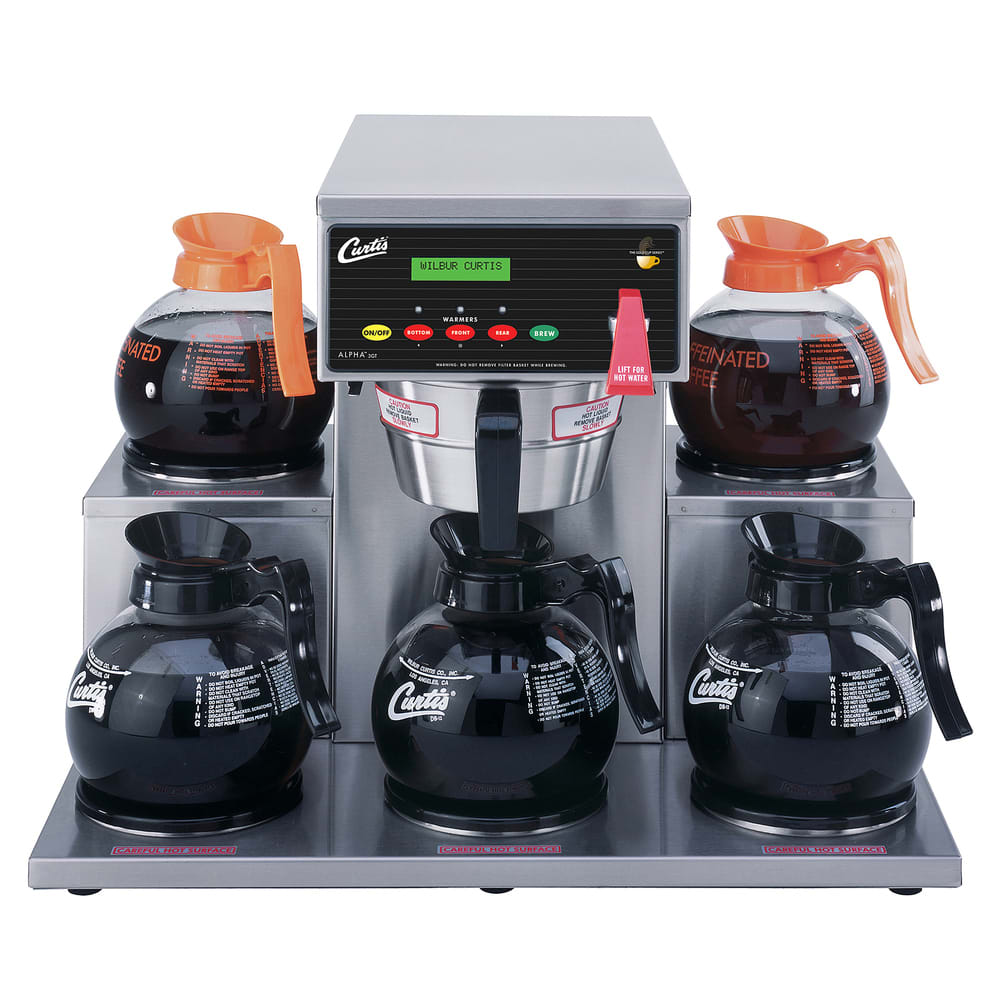
KaTom offers commercial coffee brewers with a range of batch sizes and output ratings for restaurants, cafes, hotels, convenience stores, banquet facilities, and other foodservice operations. Compare brewer capacity, batch-size options, server configurations, and electrical requirements to find the right equipment for your operation.
