
Pizza Dough Mixer Buyers' Guide
A dough mixer is one of the most important pieces of equipment in a pizza shop, making mixer selection a critical decision for daily production. Operators should consider the type of dough being produced, hydration level, the weight of each batch, peak production requirements, and mixing action needed to develop the desired dough texture.
Key Takeaways
- Spiral mixers specialize in pizza dough production, while planetary mixers support a wider range of kitchen tasks
- Bowl volume doesn't indicate how many pounds of pizza dough a mixer can process
- Mixer capacity should cover peak production without requiring every batch to run at the machine’s maximum limit
- Mixing speed, torque, timers, bowl movement, and heat generation can affect dough consistency
What Is a Commercial Pizza Dough Mixer?
Commercial pizza dough mixers mix and knead flour, water, yeast, salt, and other ingredients into dough that can then be topped and baked to make a pizza. Unlike mixers intended primarily for batters or light prep, pizza dough mixers need enough torque and structural strength to process dense mixtures repeatedly.
There are two main types of mixers that can support pizza dough production:
- Spiral Mixers: These mixers mimic hand-kneading, supporting excellent dough production while minimizing heat from friction. They're well suited for high-hydration doughs, sourdough, and thick crust recipes and can handle large batches ranging from 10 to 100 kilograms. These mixers are less versatile for general kitchen prep but excel at consistent dough development.
- Planetary Mixers: These versatile mixers are suitable for operations that prepare more than just pizza dough. They can mix dough, batters, creams, sauces, and other bakery items. Planetary mixers are ideal for small to medium dough batches and often come with interchangeable attachments, including dough hooks, whisks, and flat beaters.
"Operators need to know what they are making before choosing a mixer because pastry cream, bread dough, and pizza dough may require different mixing action." — Vitangelo Recchia, Owner, Bella Napoli Pizzeria & Restaurant; Marra Forni Ambassador
Spiral vs. Planetary Mixers for Pizza Dough
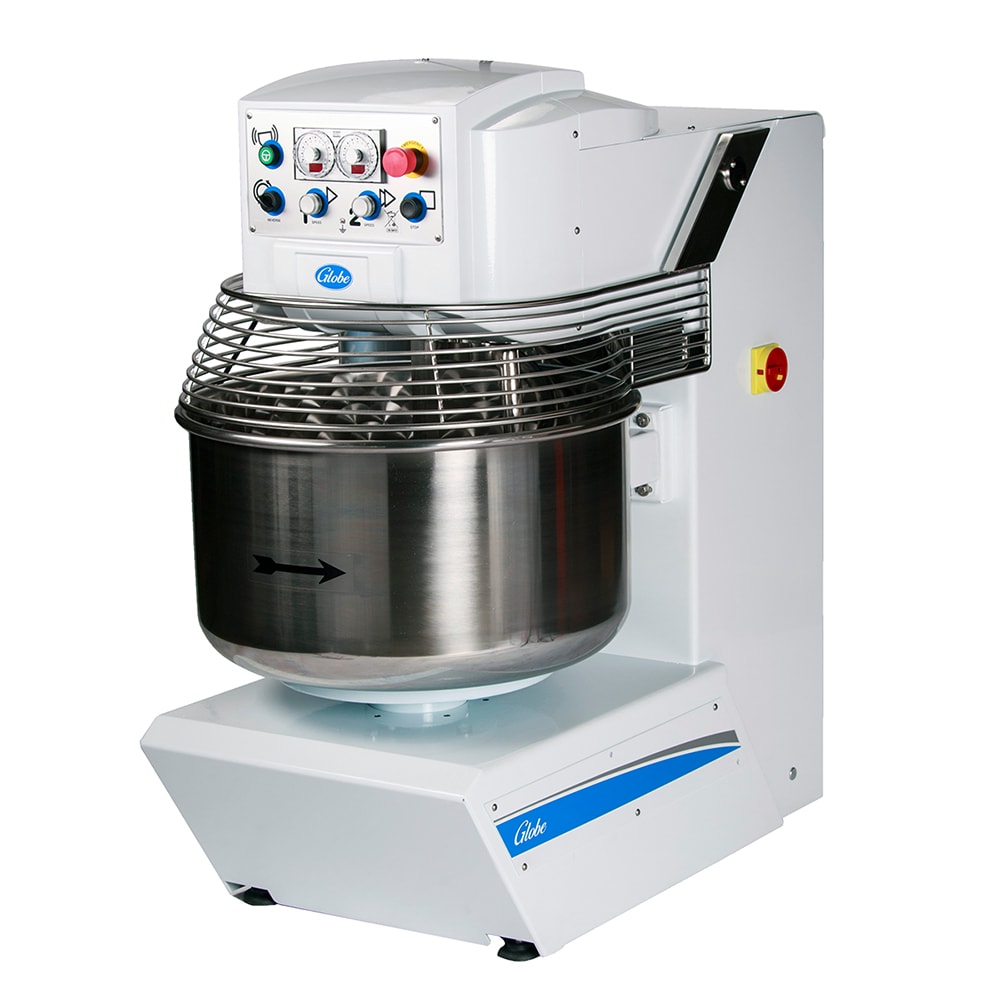
Spiral Mixers
Spiral mixers use a spiral-shaped mixing arm and rotating bowl to stretch, fold, and develop dough. This dual-rotation mechanism supports steady gluten development for high-hydration doughs like bread and pizza. Available models range from compact units for smaller pizzerias to high-capacity machines for commissaries and industrial production. Available configurations include fixed-bowl, removable-bowl, and bowl-lift models that can be chosen based on operational needs.
"For bread and pizza dough, a spiral mixer may be the right choice when the goal is dough development and consistent mixing." — Vitangelo Recchia
Planetary Mixers
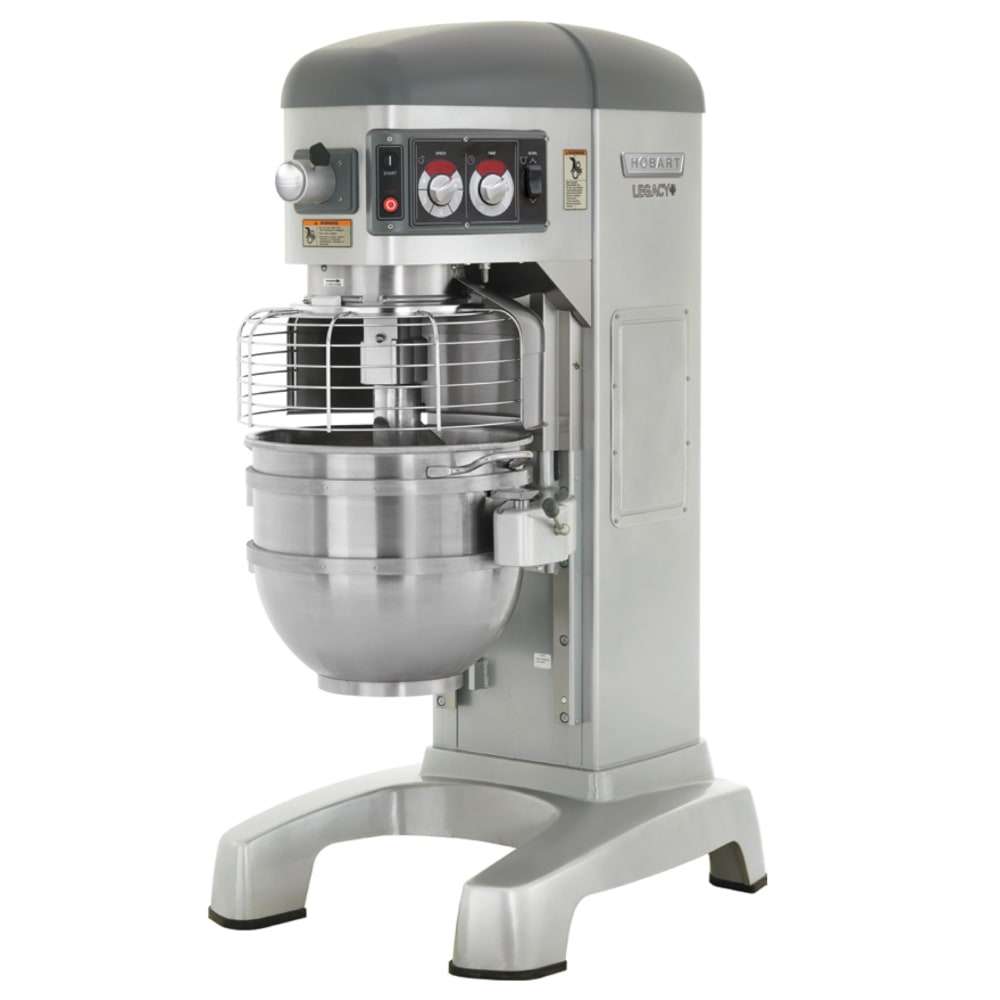
Planetary mixers have a stationary bowl and a mixing attachment that rotates on its axis while revolving around the bowl. Operators can exchange the dough hook for a flat beater, wire whip, or another compatible attachment, depending on the model. This design supports a wider range of prep tasks, such as whipping cream or mixing batters and sauces. Planetary mixers are available in countertop and floor configurations, with bowl capacities ranging from small prep units to large production machines.
"Planetary mixers still have an important place in foodservice because they can handle tasks that spiral mixers are not designed for." — Vitangelo Recchia
How to Choose the Best Pizza Dough Mixer
The best mixer should consistently produce the required dough without overloading the motor, transmission, bowl, or agitator. Five factors have the greatest influence on that decision: dough type, hydration, batch size, production volume, and available space.
1. Start With the Dough Type
Different pizza styles create different mixing demands, so the mixer must match the product the operation intends to produce. A stiff, crispy thin-crust dough doesn't behave like a soft pan dough or an extensible artisan formula. Flour protein, oil, sugar, preferments, ingredient temperature, and fermentation method can also affect how the dough develops.
Before comparing mixers, document:
- Whether the recipe contains oil, sugar, eggs, or other enrichments
- The required mixing stages and speeds
- Whether the kitchen also prepares bread, pretzels, bagels, pastries, or batters
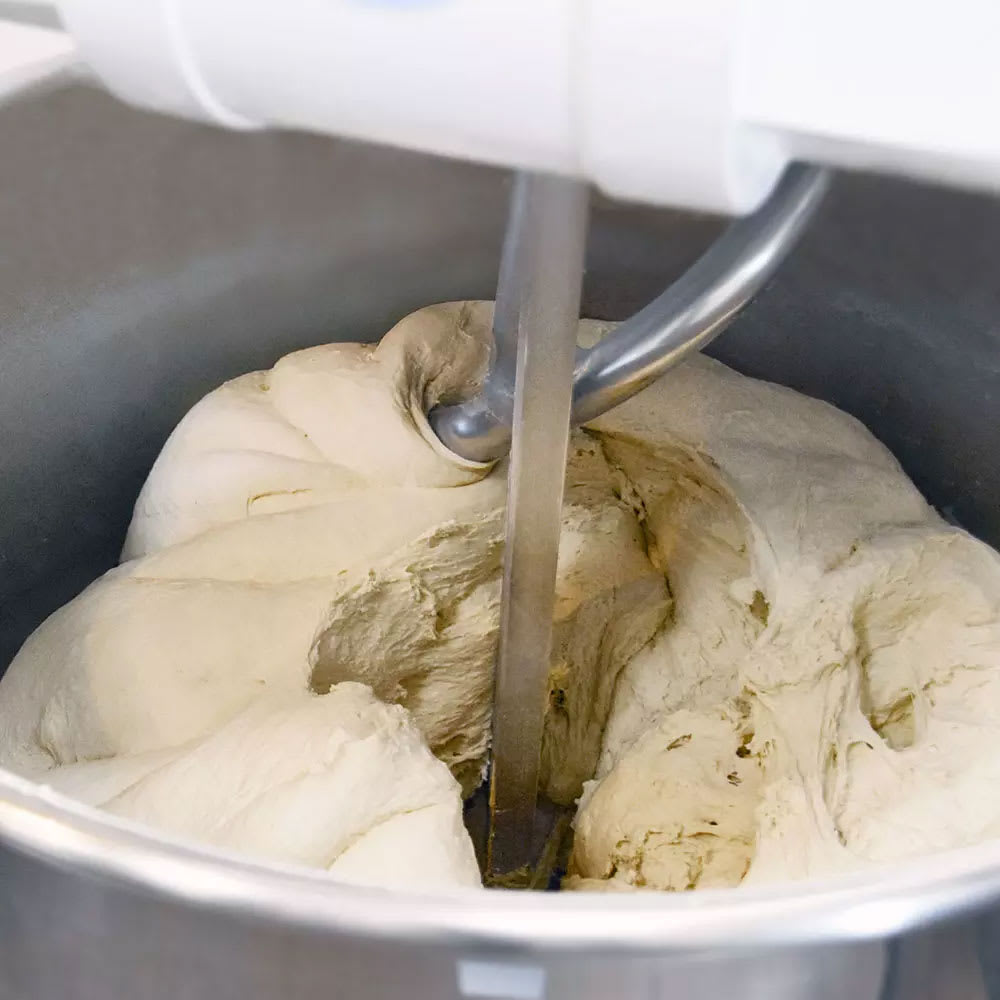
"Different mixer styles affect the dough differently, so operators should understand whether the machine is developing the dough the way their product requires." — Vitangelo Recchia
2. Calculate the Dough’s Hydration Level
Hydration measures the amount of water in relation to flour weight. Equipment manufacturers may refer to this measurement as the absorption ratio, or AR. Hobart uses absorption ratio and recipe information to determine the appropriate mixer size and maximum batch capacity. Ingredient temperature also influences mixer performance. Globe notes that flour-to-water ratio, chilled water, and high-gluten flour can affect usable mixer capacity. Dough hydration can be estimated using the following calculator:
Pizza Dough Hydration Calculator
Enter the flour and water weights using the same unit.
Hydration = Water Weight ÷ Flour Weight × 100
Reference Table
| Hydration | Typical Dough Behavior | Mixer Consideration |
|---|---|---|
| Less than 55% | Stiff, dense dough with limited extensibility | Places greater demand on the motor and drive system; batch capacity may need to be reduced |
| 55%–62% | Firm to moderately soft dough that is generally manageable | Confirm the recipe-specific capacity listed by the mixer manufacturer |
| 63%–70% | Softer, more extensible dough with increased moisture | Controlled mixing supports gluten development without overmixing the dough |
| More than 70% | Very soft or sticky dough that may require specialized handling | Mixing action, speed control, and finished dough temperature are especially important |
Hydration matters because dry, stiff dough creates more resistance than wetter dough of the same total weight. As resistance increases, so does the load on the mixer’s motor, transmission, and dough tool, which can lead to overheating or overworking the batch.
"Drier doughs, such as pretzel or crispy pizza dough, place more demand on the mixer, so hydration level is an important sizing factor." — Samantha Hanson, Senior Sales Development Manager for Hobart Food Machines
Don’t assume a mixer can process its maximum advertised dough weight with every recipe. Check the manufacturer’s capacity chart for the closest dough type and absorption ratio. When a recipe has a lower absorption ratio than the listed product, the batch size may need to be reduced.
3. Determine the Required Batch Size
Determine batch size by finished dough weight, not flour weight alone. Finished dough weight includes flour, water, yeast, salt, oil, sugar, and any other ingredients in the mixture. Operators can estimate a target batch using the following calculator:
Finished Dough Calculator
Required Finished Dough = Dough-Ball Weight × Number of Pizzas
Reference Table
| Pizza Style | 12 in. (30 cm) | 14 in. (35 cm) | 16 in. (40 cm) |
|---|---|---|---|
| Neapolitan | 280 g | 370 g | 470 g |
| New York | 230–280 g | 300–350 g | 400–450 g |
| Detroit | 370–470 g | 470–550 g | 550–650 g |
| Roman | 180–220 g | 240–290 g | 320–370 g |
| Sicilian | 500–550 g | 700–750 g | 900–950 g |
Once the target weight is known, compare it with the manufacturer’s rated dough capacity at the recipe’s absorption ratio. Don't rely solely on the mixer’s quart rating. A 60-quart bowl doesn't indicate that every 60-quart mixer can process the same weight or style of dough.
Equally important, pay attention to the mixer’s minimum operating range. An oversized fixed-bowl spiral mixer may not effectively engage a very small quantity of dough. Some spiral mixers use reversible bowl drives to help improve mixing performance with smaller batches. For example, Globe’s GSM130 and GSM175 spiral mixers include reversible bowl drives intended to support smaller batches.
4. Match the Mixer to Production Volume
Batch size measures how much dough the mixer processes at one time. Production volume measures how much dough the operation needs over a shift or day. A mixer that can produce one appropriately sized batch may still be too small if staff must run it continuously to keep up with demand. Operators should calculate the number of mixing cycles needed during the production window and consider the time required for ingredient loading, mixing, dough removal, cleaning, dividing, and rounding.
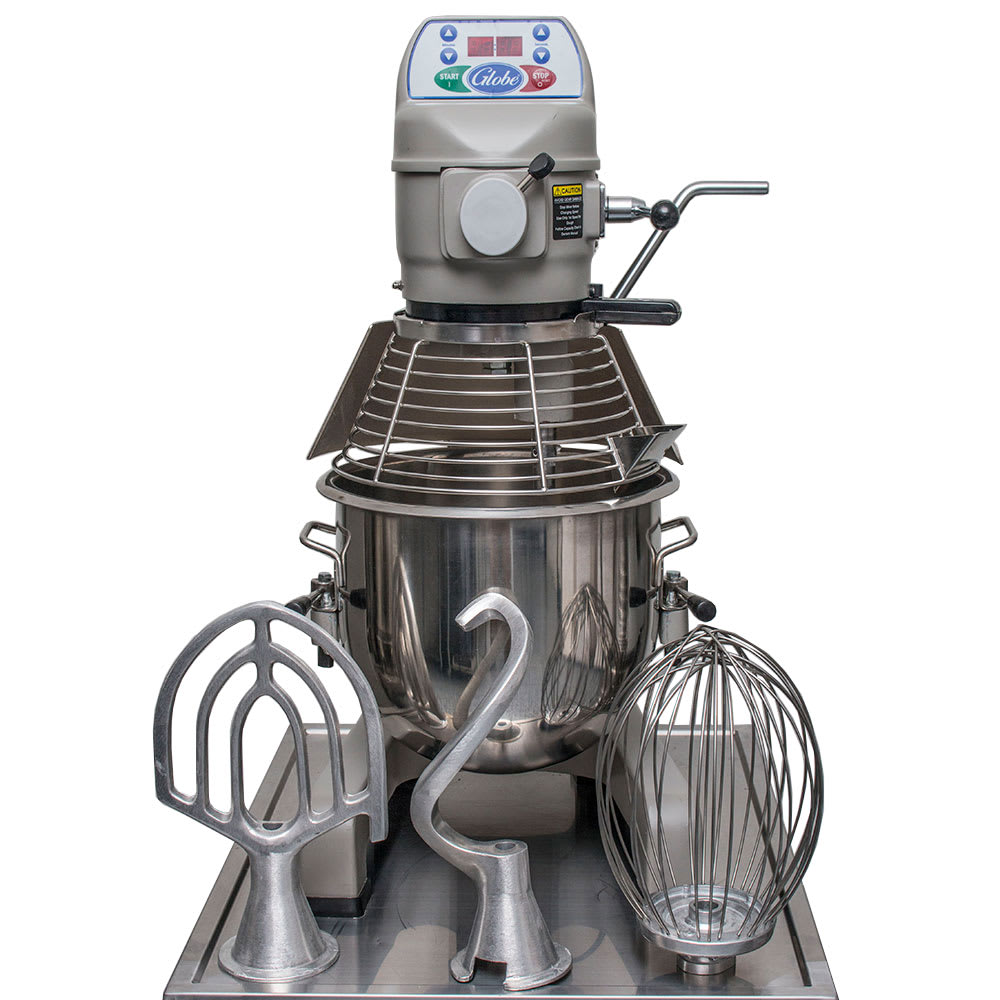
Operations using a planetary mixer should also consider attachment needs. Before selecting a model, determine which attachments are needed and which are included, which tasks the mixer will support, and which accessories may need to be purchased separately.
5. Confirm Space, Utilities, and Dough Handling
Before selecting a mixer, confirm that the operation can install and use it safely. Review:
- Overall width, depth, and height
- Electrical voltage and hardwiring requirements
- Ventilation and ambient conditions
- Cleaning and service clearance
Large spiral mixers often require three-phase electrical service. Smaller models may use single-phase power, although their voltage may still differ from standard countertop equipment. The Doyon AEF015SP, for example, requires 208- to 240-volt single-phase service.
Top-Rated Pizza Dough Mixers
Compare pizza dough mixers by mixer type, bowl capacity, dough capacity, and production features.
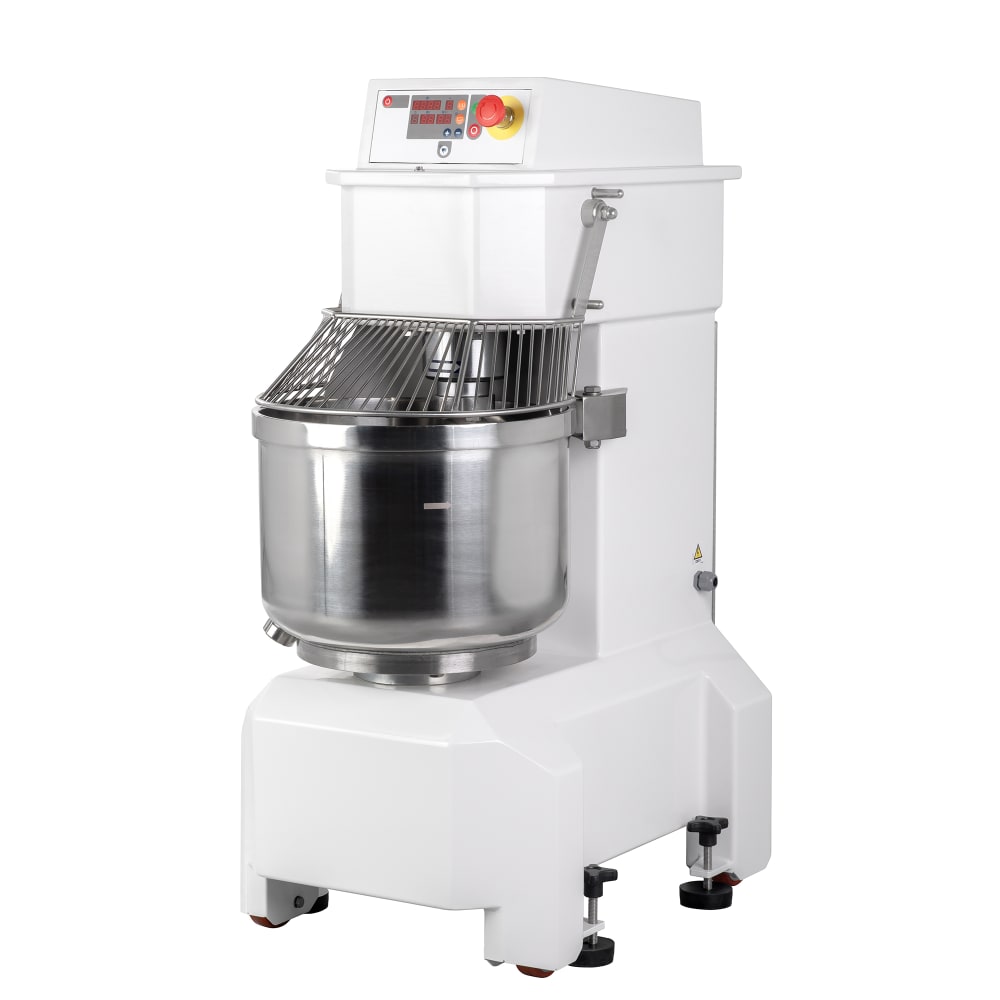
Best compact spiral mixer
Doyon AEF015SP
Two speeds, digital controls, and nine programmable speed-and-time settings for repeatable pizza dough batches.
- Mixer Type: Spiral
- Bowl Capacity: 30 qt.
- Dough Capacity: 50 lbs.
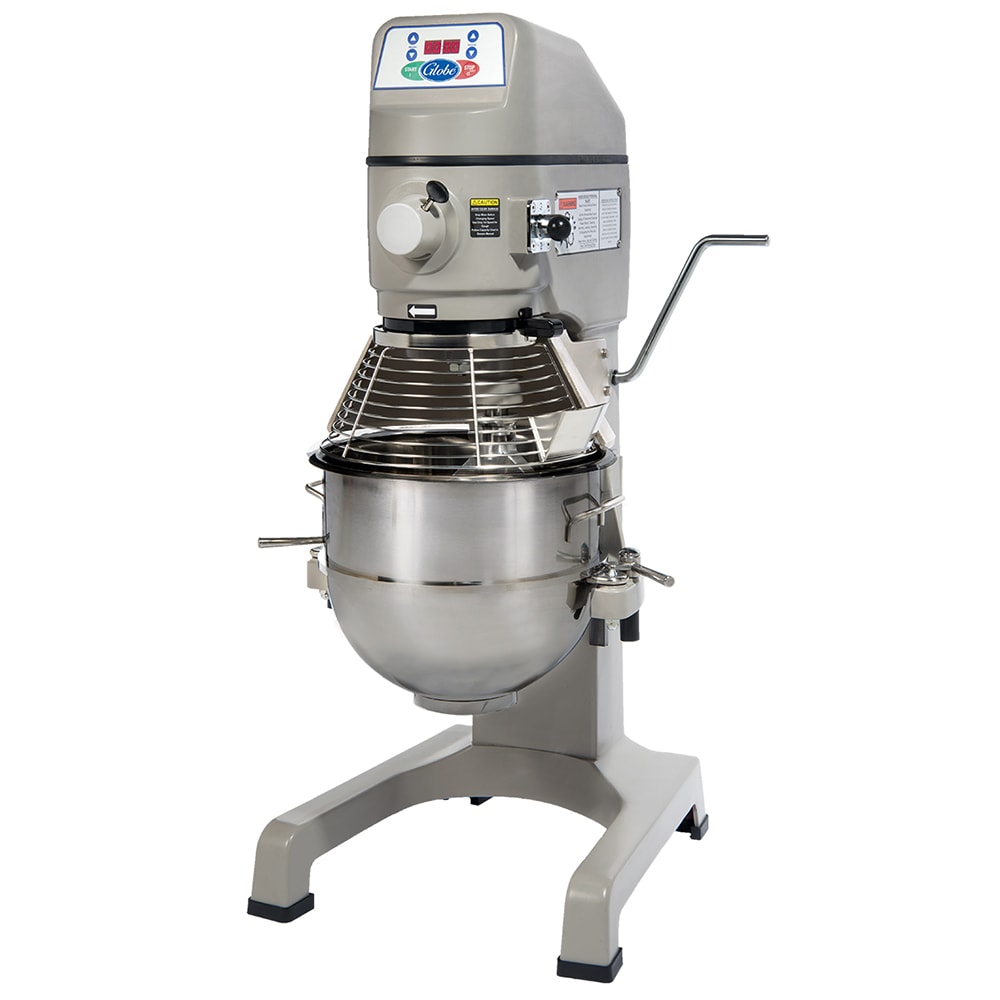
Best multipurpose pizza mixer
Globe SP30P
Three fixed speeds, a high-torque transmission, and included dough hook, flat beater, and wire whip attachments for varied prep tasks.
- Mixer Type: Planetary
- Bowl Capacity: 31.7 qt.
- Dough Capacity: 45 lbs.
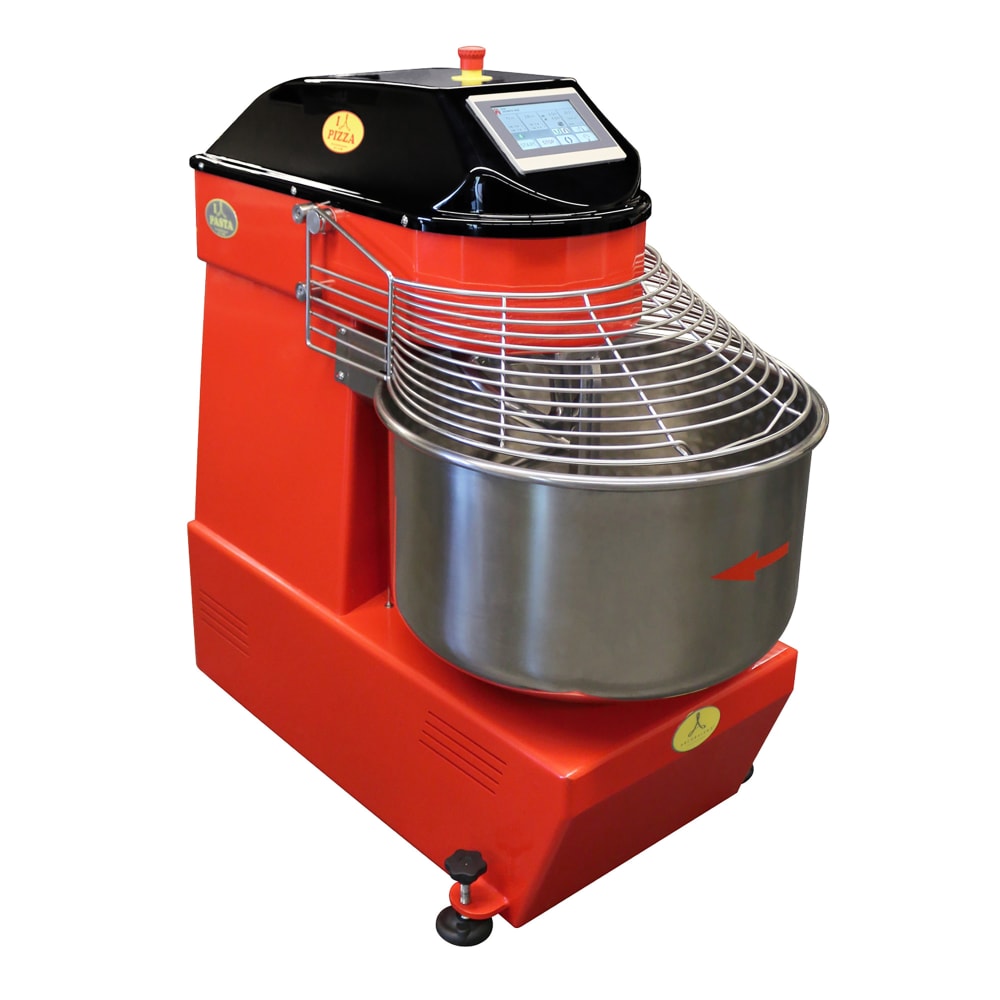
Best for programmable controls
Arcobaleno ASM100 Noemi
Touchscreen controls with programmable recipe storage help support repeatable dough production.
- Mixer Type: Spiral
- Bowl Capacity: 105 qt.
- Dough Capacity: 155 lbs.
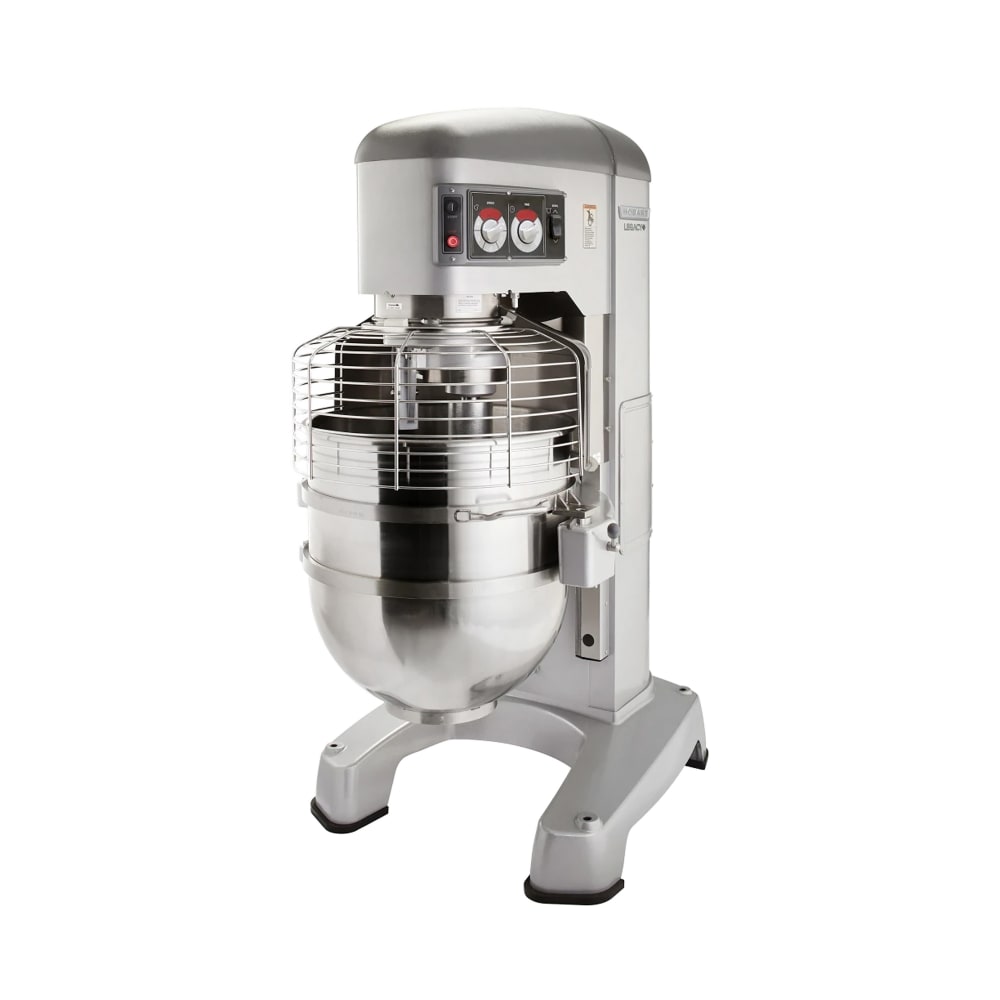
Best large-batch planetary mixer
Hobart HL1400-1STD
Automatic Time Recall, 20-minute SmartTimer, power bowl lift, and included attachments support large-batch dough production.
- Mixer Type: Planetary
- Bowl Capacity: 140 qt.
- Dough Capacity: 210 lbs.
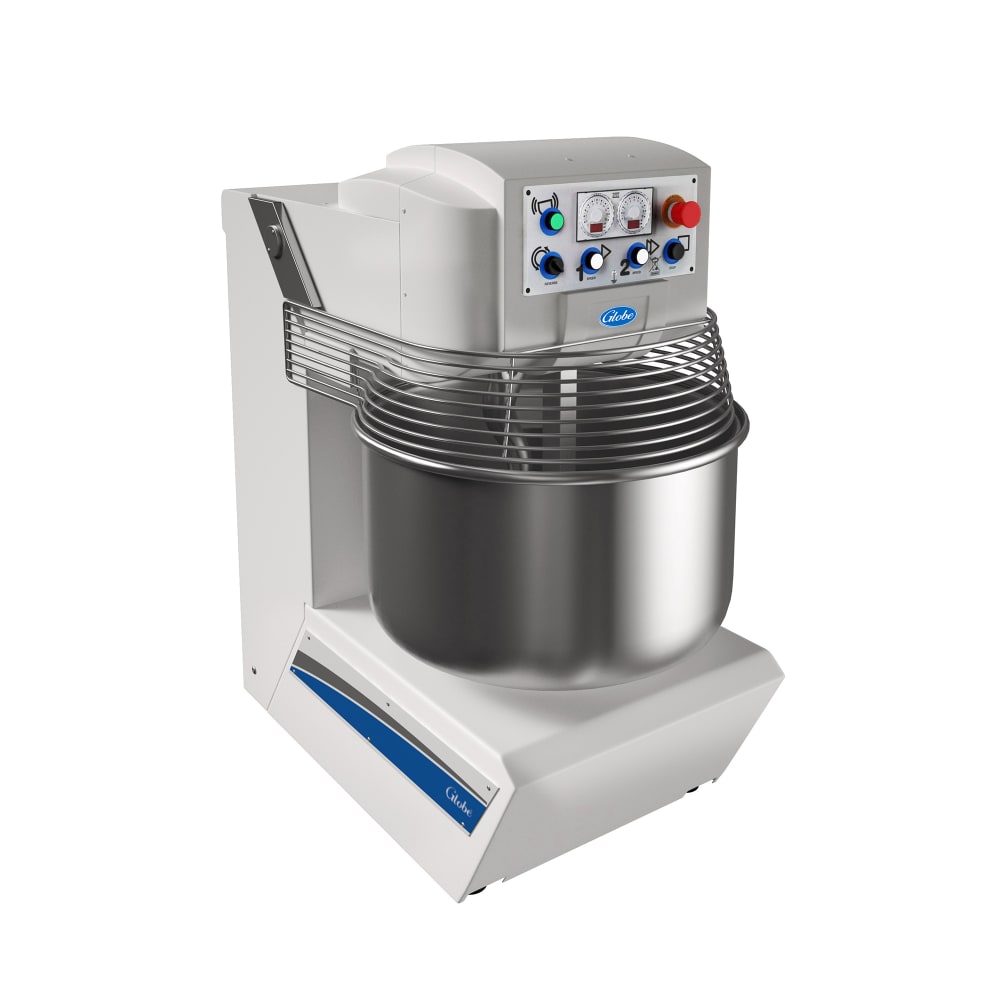
Best large-batch spiral mixer
Globe GSM175
High-capacity mixer with two speeds, dual digital timers, automatic speed changes, a reversible bowl drive, and a bowl-jog control.
- Mixer Type: Spiral
- Bowl Capacity: 143 qt.
- Dough Capacity: 175 lbs.
Shop Commercial Pizza Dough Mixers at KaTom
KaTom offers commercial mixers for pizza operations ranging from compact planetary models to high-capacity spiral mixers designed for pizzerias. Compare dough capacity, bowl size, speeds, programmable controls, and electrical requirements to find the right mixer for your operation.
Frequently Asked Questions
Is a spiral mixer better than a planetary mixer for pizza dough?
A spiral mixer is generally the more specialized choice for repeated pizza and bread dough production. A planetary mixer provides more versatility by enabling staff to change agitators and use the machine for dough, batter, sauces, whipped products, and other prep.
How large should a pizza dough mixer be?
The mixer should hold the required finished-dough batch without exceeding the manufacturer’s capacity for the recipe’s hydration or absorption ratio. Operators should also consider minimum batch requirements and daily production volume.
Can a planetary mixer handle high-volume pizza dough?
Some planetary mixers are designed specifically for dense pizza dough and high-volume pizzeria use, though spiral mixers are usually more specialized for tasks involving pizza dough. Always verify a model’s capacity at the recipe’s absorption ratio rather than assuming any planetary mixer of the same bowl size will perform equally.
