Cambro vs. Rubbermaid Food Storage Containers
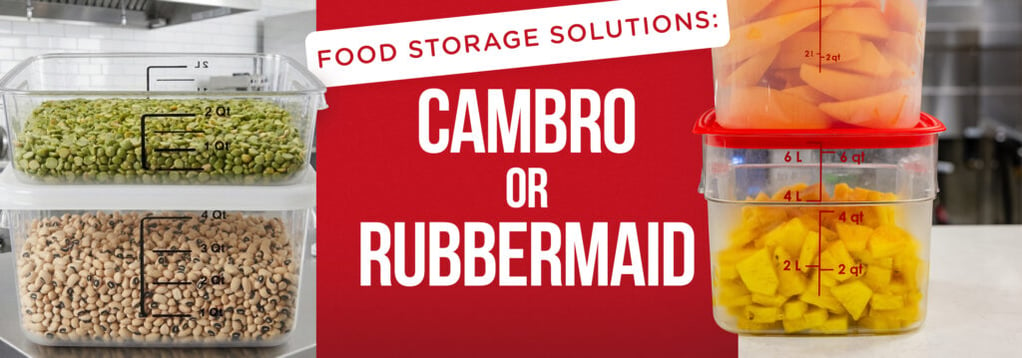
Cambro and Rubbermaid are two recognizable commercial food storage brands offering durable containers designed to improve organization, food safety, and efficiency in professional kitchens. Cambro offers a specialized, system-based approach, while Rubbermaid focuses on user-friendly, HACCP-aligned solutions. Both brands deliver reliable storage solutions, but they differ in design and workflow optimization.
Cambro vs. Rubbermaid: Comparison Snapshot
| Category | Cambro | Rubbermaid |
|---|---|---|
| Overview | Comprehensive foodservice storage and transport systems with versatile features | User-friendly food storage and prep tools with strong HACCP integration |
| Typical Price Range | $$–$$$ | $$ |
| Strengths | Wide product ecosystem, antimicrobial features, highly customizable | Durable designs, integrated prep tools, easy measurements |
| Considerations | Higher upfront cost and bulk product purchasing | Less specialized transport and fewer advanced storage configurations |
| Best For | High-volume kitchens, catering, and operations requiring full storage systems | Restaurants needing straightforward, efficient, or high-capacity ingredient storage |
Though both brands support food safety and organization, Cambro emphasizes full-system solutions, while Rubbermaid prioritizes accessibility and ease of use.
About Cambro
In 75 years, Cambro has grown from producing hospital meal trays to leading commercial foodservice storage, transport, and workflow solutions. The company's massive catalog extends beyond containers into insulated carriers, shelving, and product delivery systems.
Key Strengths:
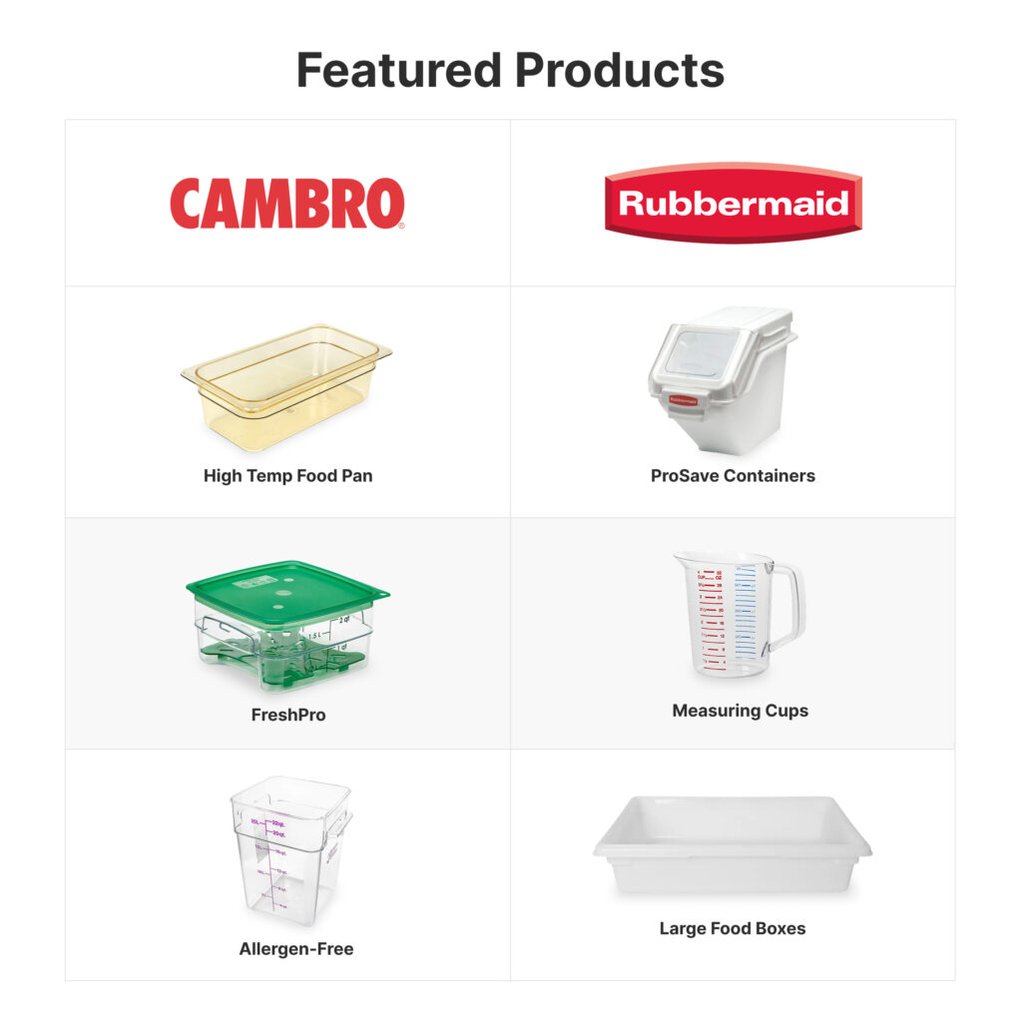
- Compatible CamSquares® and CamRounds® with FreshPro technology
- Stackable, space-saving designs with recessed handles
- Color-coded lids and allergen management tools
Cambro’s storage lines include square and round containers sized as large as 22 quarts, ingredient bins, dough boxes, and specialized solutions like CamCrispers® and brining tanks. These products integrate seamlessly with Cambro’s shelving and transport systems for a fully operational system.
About Rubbermaid
Rubbermaid started with a simple dustpan patent in 1933 and has since developed large residential and commercial product lines. It's widely known for producing durable, practical janitorial tools, heavy-duty transport containers, and versatile storage solutions.
Key Strengths:
- Durable, dishwasher-safe plastic construction
- Stackable containers with space-saving designs
- Thoughtful food safety features
Rubbermaid’s containers range from small food boxes to large ingredient bins holding up to 304/5 gallons, offering flexibility for dry storage and prep stations.
Key Differences Explained
Performance and Reliability
Cambro containers are engineered for long-term use, utilizing thick materials, airtight lids, and compatibility across product lines. Cambro's FreshPro containers come with tight-sealing lids and drain shelves that extend food quality and freshness. Rubbermaid containers also preserve ingredients but focus more on everyday reliability, offering features like clear, dual-colored graduations on food containers and textured bottoms on food boxes to reduce scratching.
Design and Ease of Use
Cambro containers feature ergonomic recessed handles and compatibility between square and round container lids. Clear containers can be used as custom-printed inventory management or portion control to streamline operations. Rubbermaid prioritizes intuitive use, offering integrated scoops, compatible ProSave wire shelving, and sliding lids that simplify daily prep tasks. Products like Brute Greenskeeper containers provide durable options for washing, draining, and crisping produce. Both Rubbermaid and Cambro products are designed to comply with strict NSF standards for food safety.
Maintenance and Durability
Both brands offer dishwasher-safe options with stackable designs and drainage holes in handles for sanitary air drying. Cambro is known for durable Camware, and its hot food pans can withstand temperatures between -40 and 375 degrees Fahrenheit. Rubbermaid containers are made with crystal-clear, stain- and odor-resistant plastic, available in polypropylene for freezer use or use with foods as hot as 212 degrees F. They're also available in polyethylene for extra durability.
Cost and Value
Rubbermaid generally offers a lower cost with a more simple product catalog, while Cambro products often cost more but deliver long-term value through wider functionality and integration.
Which Brand Is Best for Your Operation?
Choosing between Cambro and Rubbermaid depends on your kitchen’s scale, workflow complexity, and storage requirements. Cambro is ideal for operations needing integrated transport, storage, and serving systems, such as catering, healthcare, or institutional kitchens. Rubbermaid is better suited for kitchens wanting reliable, easy-to-use storage without investing in a complete ecosystem.
| Scenario | Best Choice | Why |
|---|---|---|
| High-volume commercial kitchens | Cambro | Durable containers with advanced compatibility and transport solutions |
| Catering and food delivery | Cambro | Insulated carriers, GoBags®, and mobile food transport options |
| Quick-service restaurants | Rubbermaid | Simple, efficient ingredient storage with easy access and measurement |
| Dry ingredient storage | Rubbermaid | ProSave® system with first-in, first-out dividers and integrated scoops improve workflow |
Shop Cambro & Rubbermaid at KaTom
Both Cambro and Rubbermaid offer dependable food storage solutions for commercial kitchens. KaTom carries a wide selection of food storage containers, ingredient bins, and accessories from each brand to help streamline your operation. Browse available models and sizes to find the right fit for your needs.
