How to Open a Brewery: Equipment Checklist
An efficient brewery must coordinate production, keg storage, draft service, glasswashing, and taproom workflow, every part of which depends on the available space and utilities. The right equipment plan starts with two separate demand estimates:
- Production volume determines how much beer the brewery can make, ferment, condition, and package.
- Service volume determines how many taps, kegs, glasses, growlers, underbar stations, and staff members the taproom needs during its busiest periods.
Planning both volumes before ordering equipment helps prevent production bottlenecks caused by undersized equipment or areas.
In this article, we'll cover everything a brewery needs before the grand opening.
Already planning your space?
Talk to a KaTom Foodservice Equipment Specialist about product selection, sizing, utilities, and layout.
Contact UsKey Takeaways
- Your concept and menu should drive your equipment list, not the other way around
- Size beer dispensers, keg racks, underbar stations, and glassware around peak demand rather than daily demand
- Evaluate water, drainage, electrical service, gas, ventilation, wastewater capacity, and equipment clearances before signing a lease or ordering major equipment
- Plan bartender and barback workflow before finalizing the layout
- Budget for startup costs plus working capital needed after opening
- Use a soft opening to test staff, equipment, and service flow
Brewery Startup Planning at a Glance
1. Decide What Type of Brewery to Open
Your concept affects nearly every equipment decision. A production brewery that distributes most of its beer has different storage and packaging needs than a neighborhood taproom built around flights and pours.
Before choosing equipment, answer the following questions:
- Who are the target customers?
- How much beer must be ready before opening each day?
- Will the menu include food, and if so, what food will be served?
- How many customers should the bar accommodate?
- How many bartenders will work during peak service?
- What operational features will distinguish the business from nearby competitors?
Not sure what equipment your concept requires? Talk to a KaTom specialist before finalizing the equipment list.
2. Research Your Market and Evaluate Locations
Market research helps determine whether the area can support your concept, and location evaluation determines whether the building can support the equipment required to produce and serve it. Production equipment may require high ceilings, reinforced floors, floor drains, substantial electrical or gas service, water treatment, ventilation, and a route large enough to move tanks and other equipment into position.
Evaluating a new space? KaTom Design+Build can help assess equipment layout and site requirements before you make major purchasing decisions.
3. Create Your Brewery Business Plan
The business plan should translate the brewery concept into operating assumptions, and those assumptions should become the basis for equipment sizing. Include planned batch frequency, annual output, fermentation and conditioning schedules, the percentage of beer sold through the taproom, growler sales, food sales, distribution plans, and staffing.
4. Estimate Brewery Startup Costs
Brewery startup costs vary widely by location, menu, seating options, and equipment. Instead of relying on a broad national average, build the budget by category and separate necessary opening costs from expenses that can wait.
5. Fund Your Brewery
Funding should cover construction, equipment, installation, preopening payroll, initial inventory, and a defined period of operating expenses. Avoid using the entire equipment budget on production while leaving too little for cold storage, dispensing, warewashing, and service infrastructure. Beer that cannot be stored, poured, or sold efficiently does not generate revenue. Common funding sources include:
- Owner capital
- Business partners
- Commercial loans or SBA-backed loans
- Investors
- Equipment financing or leasing, where appropriate
6. Register the Business and Secure Licenses
Breweries must qualify with the Alcohol and Tobacco Tax and Trade Bureau (TTB) by submitting a Brewer's Notice before beginning operations.1 TTB does not charge a federal fee to apply for or maintain approval, although bond requirements can apply depending on the brewery's tax liability and payment arrangement.
Since equipment planning and licensing are closely connected, TTB requires a premises diagram showing the brewery's dimensions, doors, brewpub area, and equipment. Resolve the basic layout before filing so the approved premises and final installation match.
Additional requirements vary by jurisdiction and may include:
- Business registration
- Federal tax identification number
- State and local tax registration
- Foodservice permits
- Health department approval
- Certificate of occupancy
- Fire inspection
- Building permits
- Sign permits
- Alcohol transportation licenses
To apply for a Brewer's Notice and other required documents, visit "https://www.ttb.gov/permits-rd/brewery".
7. Finalize the Menu and Supplier Plan
Determine the menu first, then select equipment that supports it. The number of beers on draft affects dispenser capacity, keg storage, draft-line configuration, and glassware needs. The food menu outlines the need for kitchen equipment, including ovens and fryers.
8. Design the Layout for Efficient Workflow
A productive layout reduces lifting, cross-traffic, product loss, and unnecessary staff movement. Map the complete path of beer, kegs, glassware, customers, and waste. A typical brewery process may look like this:
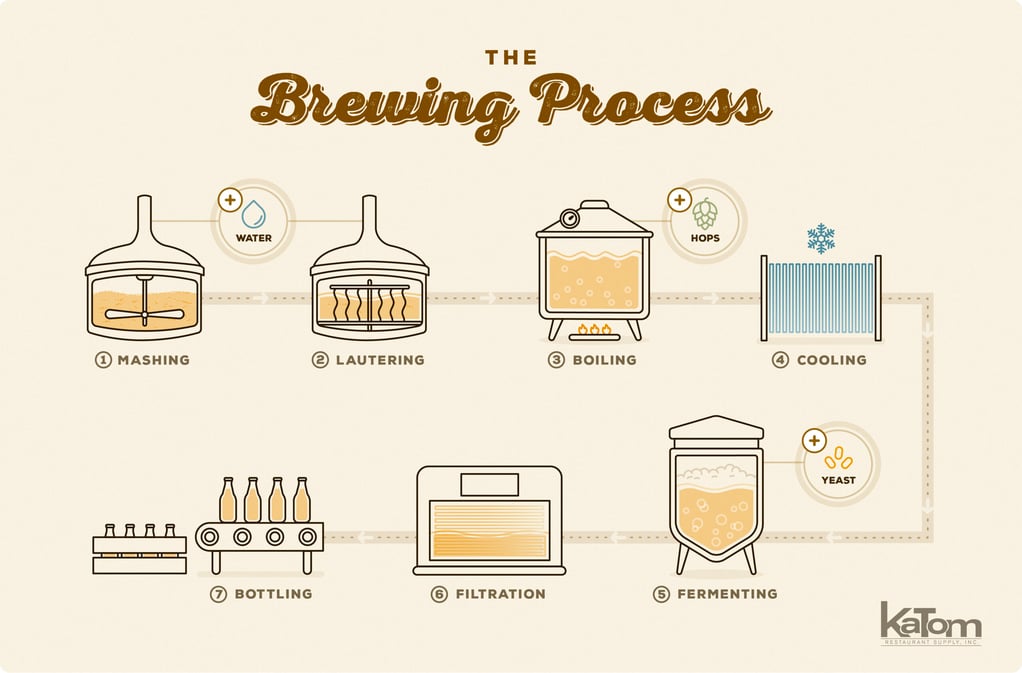
Need help turning your menu and service model into a workable layout? Explore KaTom Design+Build.
9. Build the Brewery Equipment List
Underbar Equipment — Support the Workflow
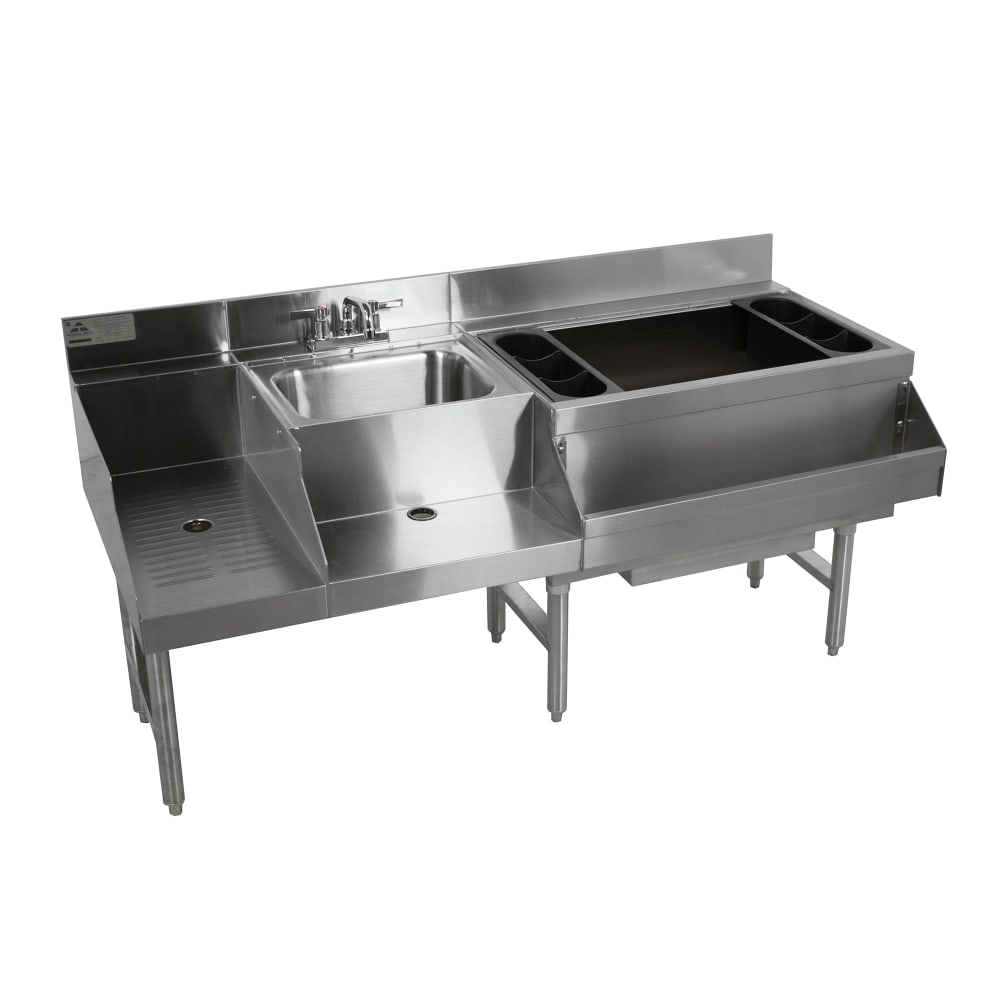
Underbar equipment should support an efficient workflow while keeping frequently used supplies within reach. Choose underbar equipment based on:
- Number of bartenders working at one time
- Peak service volume
- Ice needs
- Available bar length and depth
- Glasswashing needs
- Water and electrical connections
- Storage and cleaning access
Commercial Beer Dispensers — Match Capacity to Demand
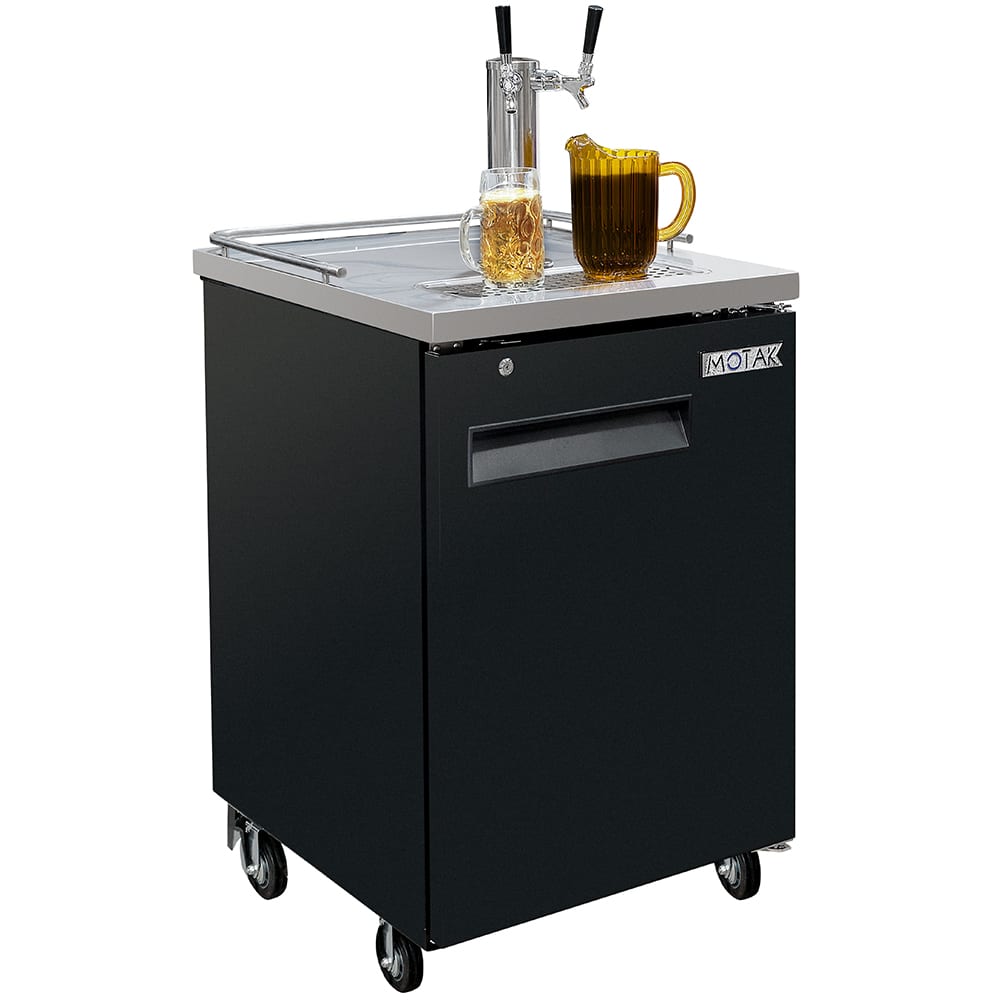
Commercial beer dispensers keep beer kegs refrigerated and ready for draft service. Choose a dispenser based on:
- Number of beers served on draft
- Keg sizes used
- Direct-draw or remote dispensing setup
- Expected pours during peak service
- Tower and faucet configuration
- Gas, drain, and line-cleaning access
A larger brewery may use a remote system supplied from a walk-in cooler rather than storing all active kegs beneath the bar. Remote systems add design considerations such as line length, cooling, gas balance, insulation, and maintenance access.
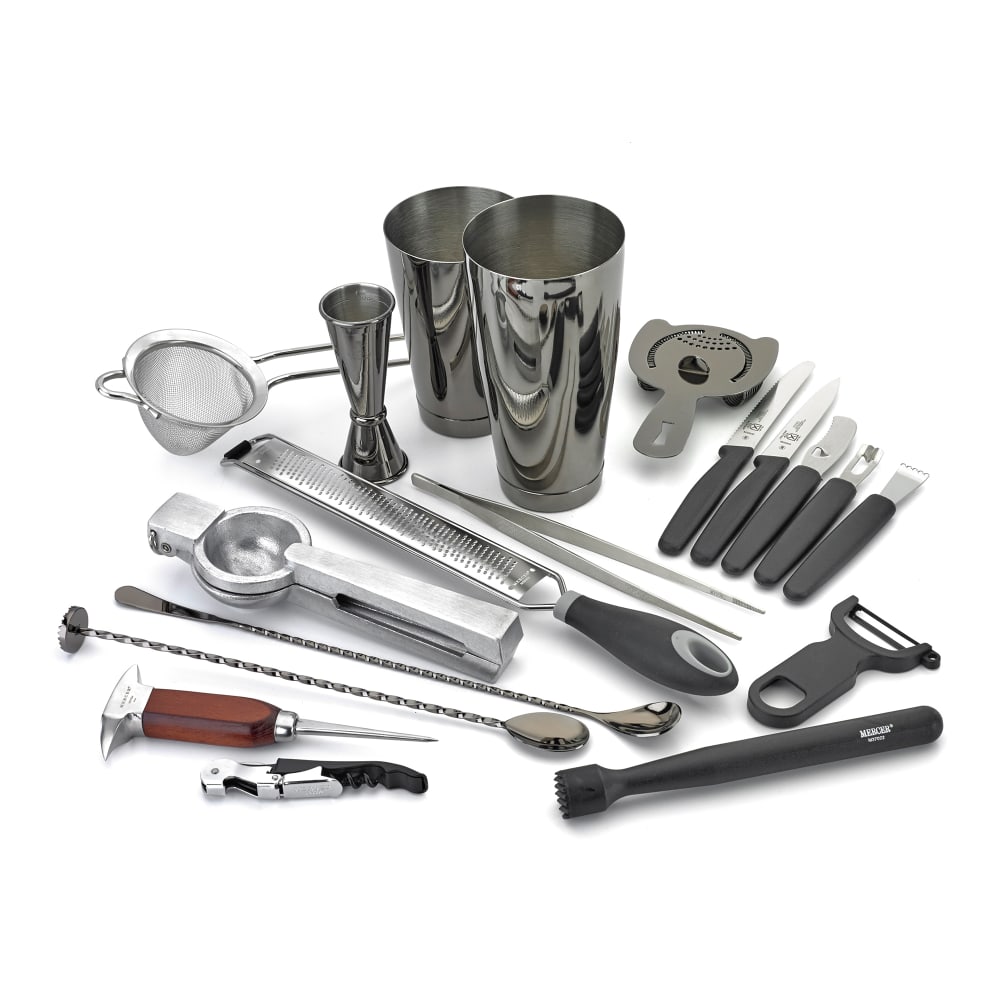
Bartending Supplies — Equip Each Service Station
A brewery serving only beer needs a different supply package than a brewpub with cocktails, wine, and nonalcoholic drinks. Start with the daily tasks performed at each service station, then provide every active station with its own frequently used tools. Choose supplies based on:
- Beer, cocktail, wine, and nonalcoholic beverage menus
- Flight and tasting service
- Pitcher and bottled beer service
- Available drawer, rail, and shelf space
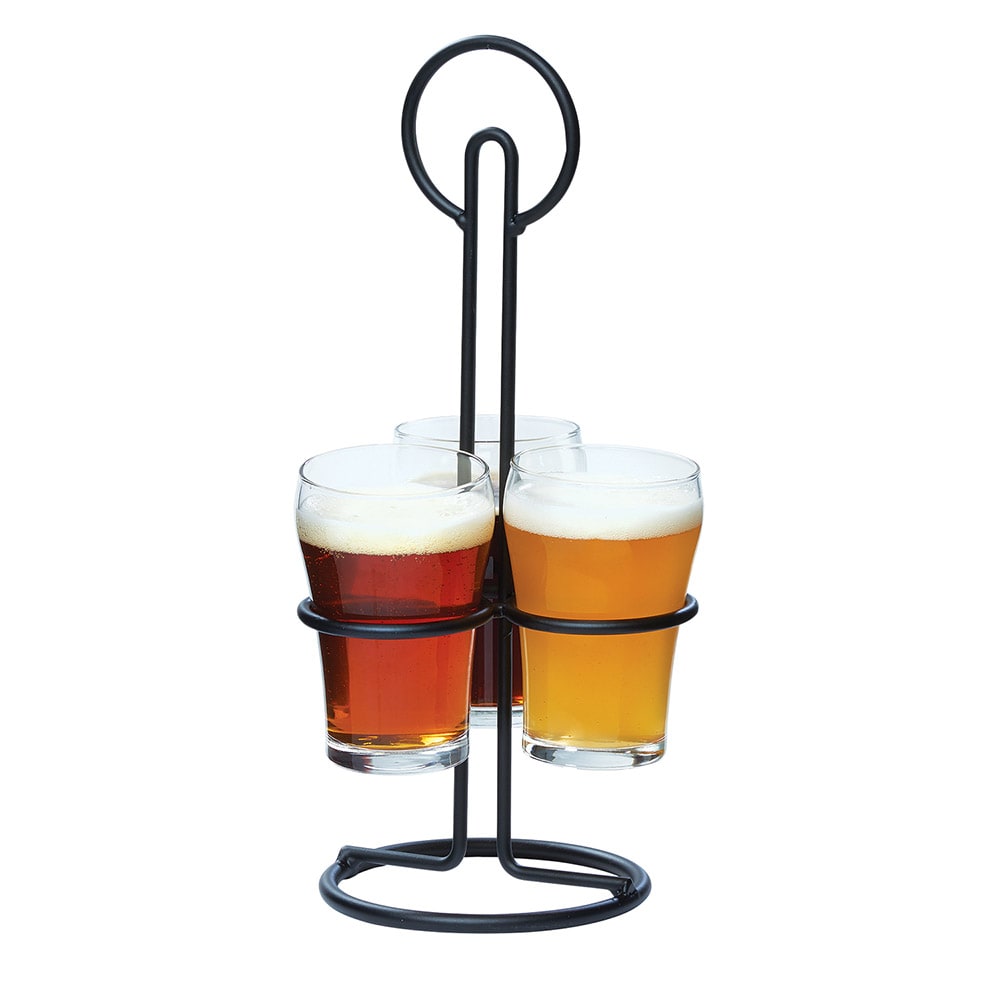
Beer Glasses — Plan for Peak Demand
Ensure you have enough glasses to support peak service. Running out of glasses can create serious bottlenecks. Choose glasses based on:
- Beer styles and serving formats
- Peak number of drinks in service
- Glasswasher cycle time
- Glass rack compatibility
- Shelf and overhead storage space
- Pitcher capacity and weight
- Breakage and backup inventory
Keg Racks — Organize Refrigerated Storage
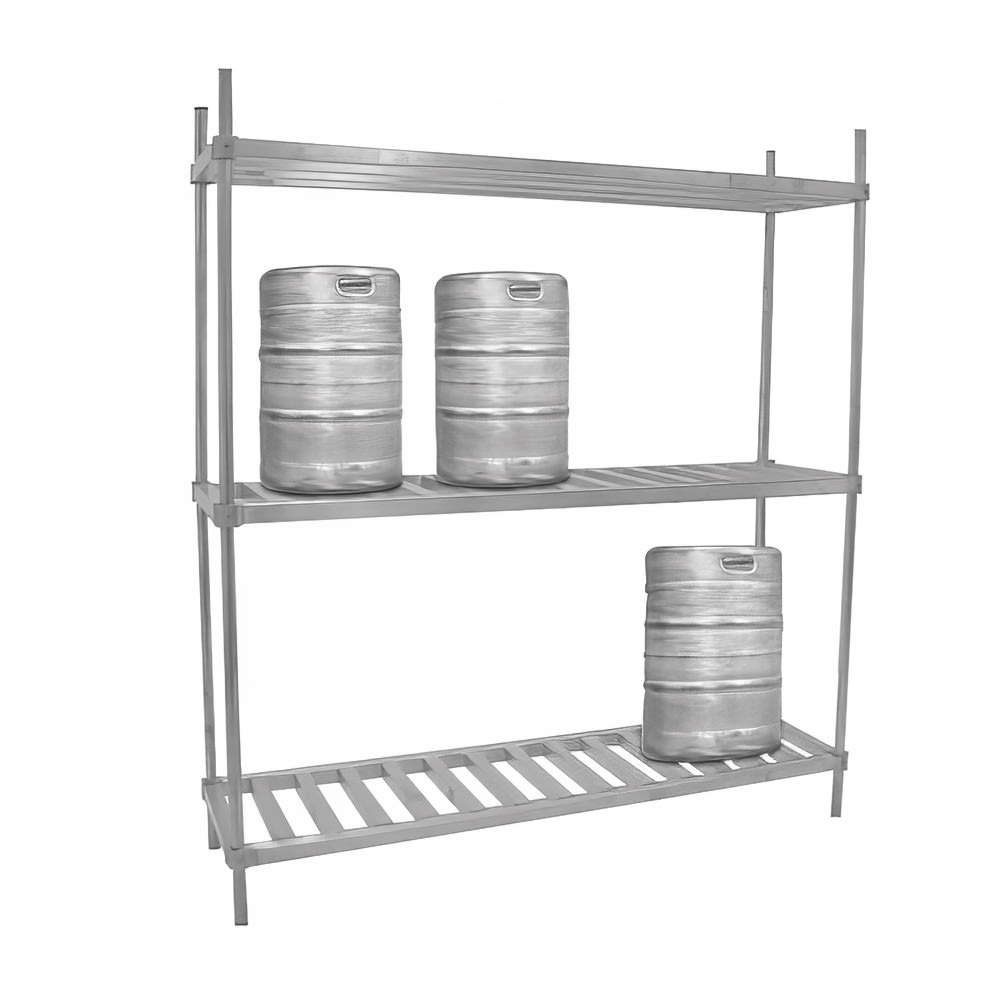
Keg racks keep inventory organized and off the floor while using vertical space in a walk-in or storage area. Choose keg racks based on:
- Number of kegs stored at peak inventory
- Keg sizes
- Shelf and total load ratings
- Cooler width, depth, and ceiling height
- Aisle space for keg handling
- Rack construction and cleaning access
Size the rack from the maximum number of full kegs expected at one time and choose material based on operational needs. Aluminum resists corrosion in moist environments and may offer a lower-cost option, while chrome-coated steel can support heavier loads but requires inspection if its finish becomes damaged.
Growlers — Support Take-Home Beer Sales
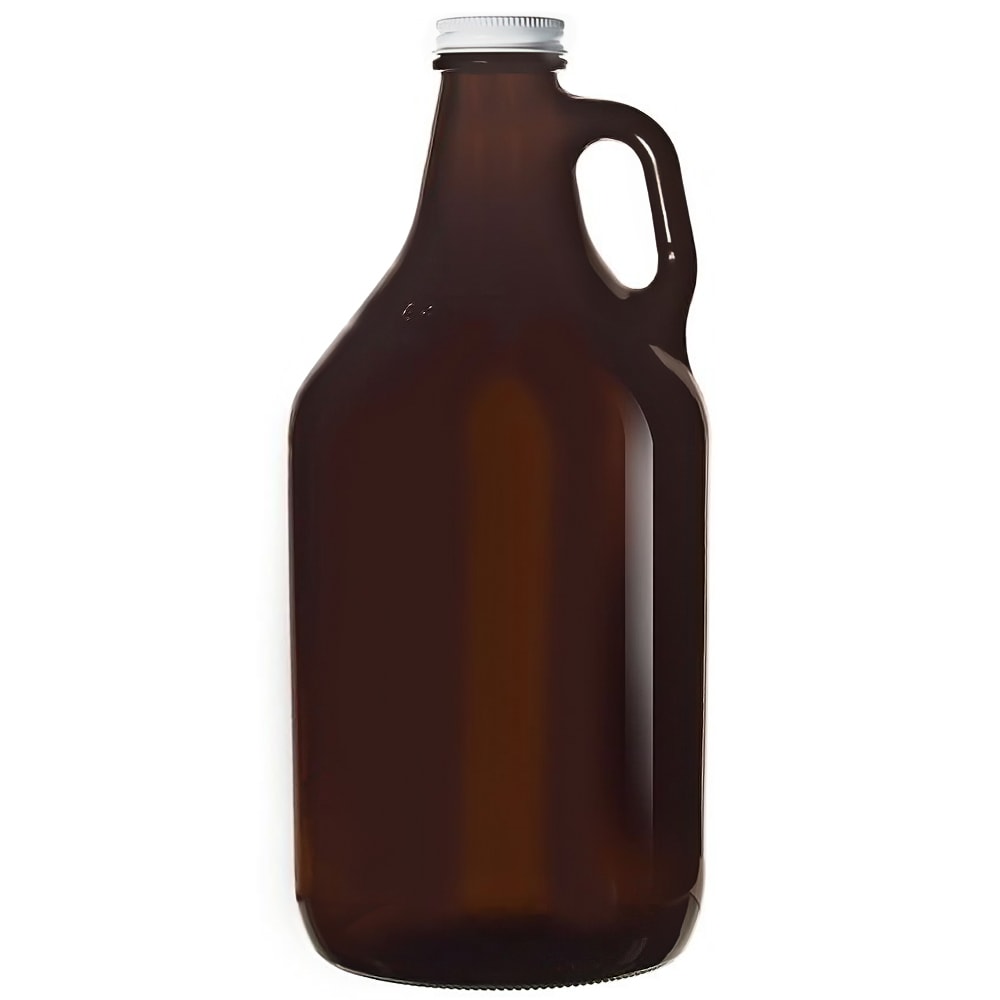
Growlers provide a take-home option for draft beer and require a consistent filling, closing, and labeling process. Common growlers hold 32 or 64 ounces and are available in materials such as glass and stainless steel. Choose growlers based on:
- Container capacity
- Glass or stainless steel construction
- New-container and refill policies
- Labeling and sealing requirements
Steam Generators — Match the Connected Equipment
Steam generators supply steam to compatible kettles, steamers, warmers, and other equipment that requires an external source. Choose a generator based on:
- Connected equipment requirements
- Steam output
- Operating pressure
- Electric, natural gas, or LP power
- Ventilation and service clearances
- Drain and blow down requirements
Do not select a steam generator by physical size or listed output alone. Instead, have the equipment manufacturer, project engineer, and qualified installer verify compatibility.

Refrigeration — Keep Beer Cold
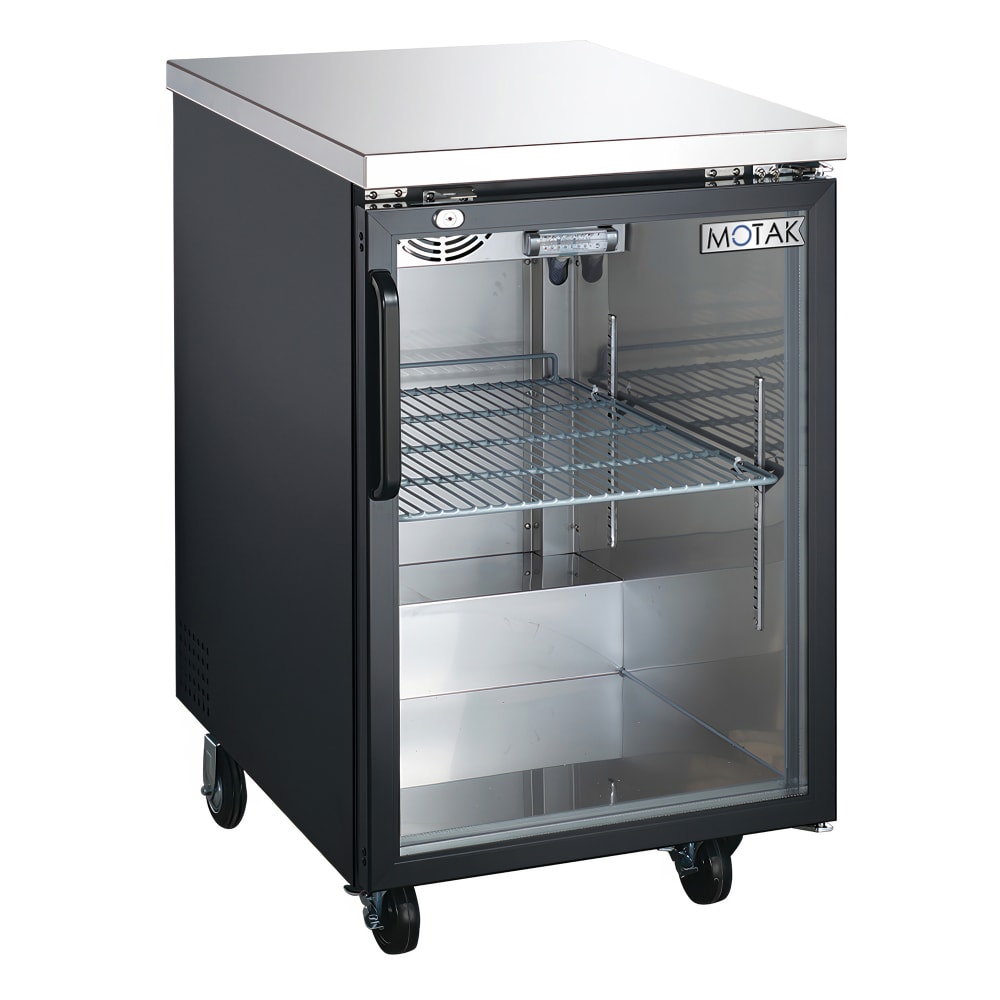
Undercounter refrigerators provide cold storage beneath workstations and bar counters, while back bar coolers keep bottled and canned beer, mixers, and other beverages close to the service area. Determine refrigeration needs based on:
- Products being stored
- Solid or glass doors
- Sliding or swinging doors
- Cabinet width, depth, and height
- Temperature range and recovery
- Electrical requirements
For additional information on choosing refrigeration for your bar, check out KaTom's bar refrigeration equipment guide.
Where to Spend vs. Where to Save on Brewery Equipment
A higher price does not automatically mean a better fit. Prioritize spending where equipment capacity, temperature control, durability, and service speed affect beer quality or taproom output, and save where a simpler configuration can support the planned beverage menu and peak volume.
Don't Order Until You Know
Do not order major brewery equipment until the menu, production volume, site conditions, and installation requirements are clear. Know the following before buying:
- Equipment dimensions
- Doorway and hallway clearance
- Voltage, phase, and amperage
- Water, drain, gas, steam, and ventilation requirements
- Refrigeration needs
- Production and capacity requirements
- Local code requirements
- Cleaning and service access
Not sure whether a unit will work in your space? Ask a KaTom equipment specialist before ordering.
10. Set Up Inventory, Technology, and Operating Systems
A brewery needs systems for tracking production and service. Establish receiving, storage, counting, maintenance, and reorder points and procedures before opening.
11. Hire and Train Staff
Staffing should match both the menu and the equipment layout. Even excellent equipment won't solve problems involving a workforce that lacks proper training. Common roles for breweries include:
- Brewers
- Cellar workers
- Packaging employees
- Taproom managers
- Bartenders and servers
- Kitchen employees
Training should cover:
- Recipes
- POS system
- Safe equipment operation and shutdown
- Keg movement and storage
- Draft-system operation and quality checks
- Glasswashing and handling
- Growler filling and labeling
- Chemical handling and sanitation
- Spill response, lockout procedures, and incident reporting
- Opening, closing, maintenance, and escalation procedures
12. Market the Brewery and Prepare for Opening
Marketing should create awareness and test operations before the grand opening. Promote the concept, location, menu, hours, and opening date while staff practice real production and service flow. Provide:
- A website with accurate contact, hours, menu, location, and parking information
- A Google Business Profile and other local business listings
- Social media profiles
- Menu and location photography
- Local partnerships and community outreach
- Opening-date promotion
- Email and SMS marketing, where appropriate
Host a Soft Opening
Use a soft opening to test the brewery under controlled demand and identify bottlenecks before the grand opening. Run a realistic production schedule and track where delays occur. Test:
- Pours per hour and drink ticket time
- Foam and draft consistency
- Keg-change time
- Refrigeration recovery
- Glasswasher throughput
- Underbar reach and bartender movement
- Water and drain performance
- POS and payment speed
- Packaging
- Staff communication
- Equipment performance
- Storage
Record each bottleneck, assign a corrective action, and repeat the test where necessary before the grand opening.
Brewery Opening Checklist
Use this checklist to track key planning, equipment, staffing, inspection, and opening tasks before launching a brewery.
| Task | Complete? |
|---|---|
| Choose a brewery concept | |
| Research competitors and local demand | |
| Develop preliminary menu | |
| Determine startup and operating costs; secure funding | |
| Evaluate location and utilities | |
| Register business | |
| Obtain licenses and permits, including a Brewer’s Notice | |
| Secure insurance | |
| Finalize menu and suppliers | |
| Design production workflow | |
| Create supplies and equipment list | |
| Verify equipment specs match available utilities | |
| Order and install equipment | |
| Set up POS and inventory systems | |
| Order and receive opening inventory | |
| Hire and train staff | |
| Complete required inspections | |
| Hold soft opening | |
| Address operational bottlenecks | |
| Host grand opening |
Ready to Build Your Brewery Equipment List?
KaTom can help operators compare underbar equipment, commercial beer dispensers, bartending supplies, beer glasses and pitchers, keg racks, growlers, steam generators, and related foodservice equipment according to volume, space, utilities, and workflow. Choose equipment that supports the way the brewery receives, stores, prepares, and serves beer during peak periods.
Frequently Asked Questions About Opening a Brewery
How much does it cost to open a brewery?
Starting a brewery typically costs between $50,000 and $2 million or more, depending on scale, equipment, and location. Nanobreweries can often be started with just $50,000 to $150,000, while brewpubs can cost between $500,000 and $1.5 million depending on kitchen and dining area construction.
How should brewery equipment be sized?
Size production equipment based on batch volume, fermentation schedules, yield, and packaging plans. Size taproom equipment based on the busiest expected hour, including the number of pours, active taps, keg changes, growler fills, and staff.
Should a taproom use a direct-draw beer dispenser or a remote draft system?
A direct-draw dispenser works well when the kegs can remain immediately below or beside the faucets. It combines refrigerated storage and dispensing in one unit. A remote system may suit operations storing kegs in a walk-in cooler away from the bar. Remote systems require more detailed line, gas, cooling, and installation planning.
Does every brewery need a steam generator?
No. A steam generator is only necessary when equipment requires an external steam source for brewing and sanitation. Smaller breweries can use direct electric, gas-fired, or other heating methods instead.
References
- Brewer's Notice. Alcohol and Tobacco Tax and Trade Bureau. Accessed September 2026.
