Why to Keep Commercial Equipment Out of Residential Spaces
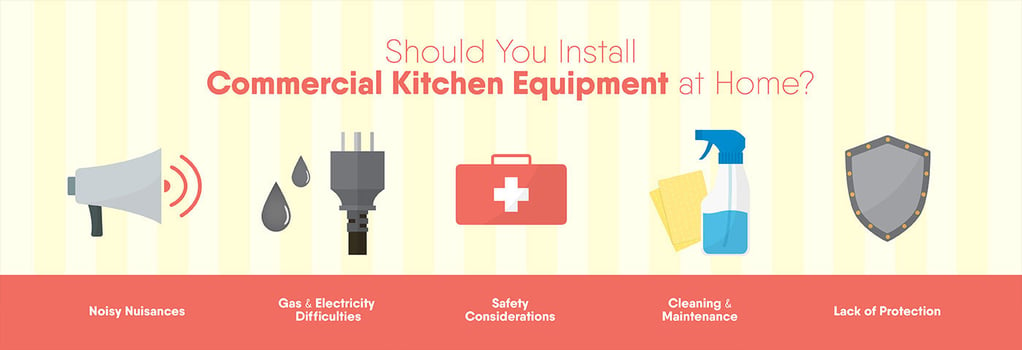
For those wanting to take their home cooking to the next level, commercial restaurant equipment can be tempting. The stainless steel exteriors, large sizes, and powerful heating and motors make commercial equipment seem like the obvious choice for those looking to entertain crowds or cook specialty dishes. However, bigger is not always better, and leaving the commercial equipment in the restaurant where it belongs can help you avoid getting burned.
1. Noisy Nuisances
A commercial kitchen is a noisy place, full of beeping equipment, clattering dishes, and shouting cooks calling out orders. In that type of environment, a refrigerator compressor kicking on isn't going to make much difference. However, in a home kitchen, a commercial-grade refrigerator compressor turning on regularly throughout the day and night will sound incredibly loud. While some models have sound dampeners, they will still be louder than a typical residential model. On top of that, commercial units are likely to run more frequently than their residential counterparts in a home setting because they're built to hold higher volumes of food and have their doors opened more frequently. This constant performance will end up costing you more in utilities.
Noise isn't restricted just to refrigerators. While commercial dishwashers and ranges may not be significantly louder than their residential counterparts, they both require ventilation hoods. Most residential hoods are hardly quiet, but they make barely a sound compared to the noise commercial ventilation can generate.
2. Gas and Electricity Difficulties
Because commercial equipment is meant for constant, heavy-duty use, these units have power requirements exceeding what most residences can produce. If you are installing an electric unit, in some cases you may need to rewire your outlet from 120V to 220V or from single phase to three phase. Most homes aren't wired for this, meaning you would need an expensive new circuit installed. If you're installing multiple commercial units in your kitchen, you may even find your power supply inadequate, which can result in blown fuses or fires. This can result in the need to install a larger power supply for the whole kitchen. For hard-wired equipment – which doesn't come with a cord and plug – you will also need to hire an electrician to come wire the unit.
If you're able to get the equipment wired correctly, you'll find yourself paying a lot more on your power bill even if you invest in an ENERGY STAR unit. Commercial refrigerators have much larger compressors, larger cabinets to cool, and – especially on models with glass doors – less insulation than residential units. Additionally, commercial refrigerators will put out more heat than a residential version, causing your HVAC to work harder to maintain cool temperatures in warmer months.
Gas-powered appliances, such as commercial ranges, can be even more difficult to install. Most of these are available in models that can run off natural gas or propane, but the incoming gas lines on commercial models are wider than those in a residential location. While the smaller line may be made to work with a commercial range, it will void any warranty you might have on the unit. Similar to the higher costs of electric equipment, the fact most commercial ranges have a standing pilot light for each burner and the oven means they use a lot of gas, which will cost you quite a bit over the unit's lifetime.
Even if you're willing to modify your home to the degree necessary to install commercial kitchen equipment, getting it to your kitchen will be another hurdle. Commercial shipping doesn't work the same as residential shipping: You may be expected to have a loading dock, forklift, or other shipping equipment. The dimensions of commercial equipment may not fit through the doors of your house, as well. If you do end up ordering commercial equipment for a residential kitchen, you'll need to make sure you're ready to accept the equipment. Commercial appliances are often customized, meaning you'll need to allow more time between ordering and delivery.
3. Safety Considerations
Engineers who design residential ranges know many of them will be used by amateur cooks in homes with children and pets. They are designed with safety in mind above all, with exteriors that remain cool to the touch and the capability to be installed next to the combustible surfaces present in most homes. This level of safety is more difficult to accomplish with a commercial unit, and because the equipment is expected to be used in professional kitchens by experienced chefs, the safety considerations are vastly different. As a result, these powerful pieces of equipment get very hot and generally require large side or rear clearances. Even with proper spacing, most units specify that all adjacent surfaces must be non-combustible, meaning you will have to invest in stainless steel wall coverings and counters to surround the range.
This additional heat also means you will have to invest in more powerful ventilation than is available from most residential units. Commercial ventilation systems, while powerful enough to add a measure of safety and comfort to an overheated kitchen, require a lot of energy that will be reflected in your power bill.
4. Cleaning and Maintenance
Most residential appliances are hands off, requiring very little in the way of cleaning and maintenance. Residential ovens have self-cleaning cycles, and most refrigerators just need to be occasionally wiped down. Cleaning for commercial products is a little more complicated; you'll have to open the grill of a refrigerator or ice machine to wipe off the condenser coils weekly and disassemble the top of a range to clean the burners. For products like ice machines, it is also important to keep up with water filters and water softening systems, or your ice machine will suffer the consequences. For a kitchen with a staff trained in how to clean and maintain each unit, these maintenance requirements aren’t a big deal, but for a home cook, a bit of forgetfulness can lead to breakdowns and repairs on your already expensive machine.
As you might expect, service calls for commercial kitchen equipment aren't as simple as they are for residential kitchen supplies. You will have to find a technician certified to service the brand of commercial equipment you have and then hope their company has liability insurance that allows them to come into a private residence. If you're able to find someone to do the work in your home, the cost may come as a surprise when it's significantly more than similar residential work.
5. Lack of Protection
Your first line of protection when it comes to any costly purchase is the warranty. Warranties can be a major consideration in the buying process to ensure you don't have to pay for expensive repairs soon after purchasing the equipment. However, most manufacturers of commercial equipment will not provide warranty coverage for a unit installed in a private residence, meaning you'll foot the bill for all needed repairs, no matter how soon after the purchase they arise. With the modifications you might have to make to install commercial equipment, issues are more likely to arise than with residential equipment.
The protection you can lose goes beyond the warranty. Many home insurance policies are voided by installing equipment not rated for residential use as these units violate fire and safety codes. In some cases, you can add a variance to your policy that keeps it valid, but that will cost you more each month.
Residential Solutions
Whether you want a high-volume residential ice maker or the sleek look of stainless steel for your stove or refrigerator, there are units designed for residential use to meet your needs without the additional costs and risks of commercial equipment.
- Home ice machines are available in stainless steel and cabinet-style units. These can make nugget, cube, or gourmet top hat ice.
- KaTom's residential refrigerators are available in professional-looking stainless steel or in the more traditional white or black laminate exteriors. Residential units are also available in undercounter sizes for when you need to add cold storage to your kitchen.
- Residential toasters are available in a variety of colors or with a stainless steel exterior. These toasters have two or four slots, and many have features commonly found on commercial models, such as high-lift levers, wide slots, and LCD displays.
- Residential dishwashers measure 18 to 24 inches wide and are available in white or stainless. Many models have preprogrammed settings that make washing different dish types simple.
Other available residential kitchen appliances include stand mixers, coffee makers, blenders, food processors, and microwaves. These items are all made for use in residential kitchens to help ensure your safety and comfort. Shop KaTom's selection of residential kitchen appliances online or contact a KaTom representative at 1-800-541-8683 to find the perfect appliance for your home kitchen.
