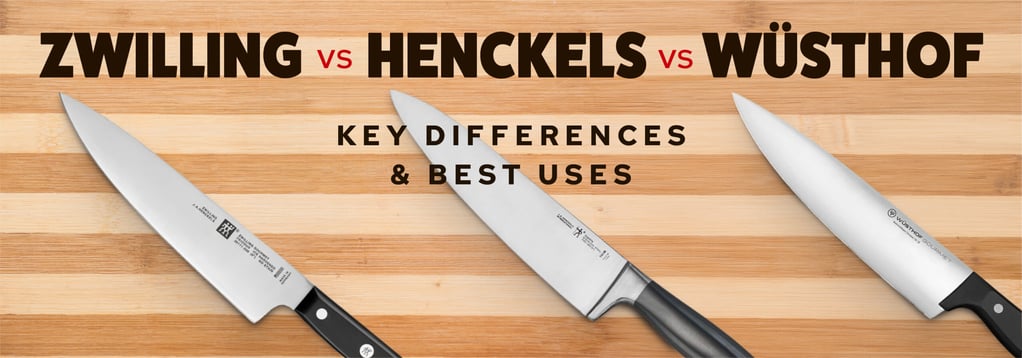
Zwilling vs. Henckels vs. Wüsthof Knives: Key Differences & Best Uses
Zwilling, Henckels, and Wüsthof are three established German knife brands, each positioned for different buyers with distinct priorities. Wüsthof competes in the premium segment with a deep lineup built around German knife-making tradition, while Henckels covers more value-driven everyday essentials. Zwilling sits between these two brands in both price and performance. Zwilling and Henckels are also owned by the same parent company, Zwilling J.A. Henckels, though they are distinct brands with different assortments and price tiers.
Zwilling vs. Henckels vs. Wüsthof: Comparison Snapshot
| Category | Zwilling | Henckels | Wüsthof |
|---|---|---|---|
| Overview | Long-standing brand with broad lineup | Value-oriented brand focused on standard use | Premium brand focused on high-quality knives for professional chefs |
| Typical Price Range | $$$ | $-$$ | $$$-$$$$ |
| Strengths | Polished design and broad selection | Fits small kitchens with low entry barrier | Premium forged construction for serious chefs |
| Considerations | Quality varies between product lines | Mass produced, less stringent quality control | Premium pricing increases entry barrier |
| Best For | Chefs seeking quality and affordability | Home cooks seeking budget-friendly cutlery | Professional chefs in high-end restaurants |
About Zwilling
Zwilling began in 1731 in Solingen, Germany, and has positioned itself as a solid German-engineered knife brand suited for users seeking quality without entering the premium market. It emphasizes craftsmanship, performance, corrosion resistance, and durability. Zwilling offers greater design variety than Henckels or Wüsthof, selling both forged knives, such as its SIGMAFORGE® line, and stamped knives.
Key Features:
- Broad lineup includes both forged and stamped options
- Step up from entry-level cutlery
- Softer steel eases sharpening
About Henckels
Henckels was created in 1895 and is a value-driven brand focused on everyday kitchen use. Its knives are stamped, meaning they're cut from thin sheets of steel using a laser, making them lighter and more flexible. While positioned as the most accessible of the three brands, Henckels still reflects German engineering and is great for home chefs looking for an affordable knife set.
Key Features:
- Budget-friendly entry point
- Simple, versatile assortment
- Focused on light, everyday use
About Wüsthof
Wüsthof is a family-owned knife manufacturer founded in Solingen in 1814, with a focus on German craftsmanship and precision-forged construction. It remains a premium brand in the German market, utilizing its unique WÜSTHOF steel—a mixture of chrome, vanadium, molybdenum, and stainless steel—to craft quality knives with exceptional consistency. Wüsthof knives are built to last decades.
Key Features:
- Premium forged construction
- Refined edge and long-term durability
- Wide range of blade styles
Key Differences Explained
Brand Positioning
Wüsthof operates in the premium knife market, while Henckels is positioned as a value brand. Zwilling sits between these two brands, providing higher-quality knives than Henckels at a more affordable price than Wüsthof. Henckels is often considered when budget matters most, Zwilling suits daily kitchen needs, and Wüsthof is a great fit for buyers seeking a premium experience in feel and finish.
Performance
Wüsthof knives come out of the box with refined sharpness and strong edge retention. Their heavy, stable feel is ideal for precise slicing, and they're built for long-term performance. Zwilling also boasts strong performance, though the level of quality depends on which knife is purchased, as it varies between the brand’s wide selection. Its softer steel supports easier sharpening but may require more frequent maintenance. Finally, Henckels is built around accessibility and light kitchen work. Its performance expectations are more closely tied to general residential prep, making it a great choice for home chefs looking for a reliable knife.
Durability
Wüsthof and Zwilling are generally the stronger choices for durability because of their forged knives, which support stronger balance and long-term resilience. Henckels still offers dependable knives, though it’s typically chosen for affordability.
Price and Value
Henckels offers the lowest entry barrier, while Wüsthof occupies a premium price, though value extends beyond initial pricing. Although Henckels delivers value through accessibility, which is especially important for buyers outfitting a small kitchen on a tight budget, Wüsthof knives are built to last decades, eliminating the need for repeat purchases. Zwilling stands between these two extremes, balancing cost and performance with its broad, high-quality lineup.
Which Knife Brand Is Best for You?
While all three brands cover basic cutting needs in the kitchen, each fits a different type of user.
| Scenario | Best Choice | Why |
|---|---|---|
| Home Cook | Henckels | Lower entry barrier suits basic kitchen needs |
| Restaurant Chef | Zwilling | Durable knives support daily prep at a standard price |
| Fine Dining | Wüsthof | Premium knives suit demanding prep and elevated kitchen standards |
Shop Zwilling, Henckels, & Wüsthof at KaTom
KaTom offers a wide selection of knives from Zwilling, Henckels, and Wüsthof. Check out KaTom’s catalog to find the best knives at the right price for your operation.
