
Water Quality: An Invisible Ceiling on Coffee Flavor
When making coffee, many people focus on the coffee grounds and brewing method. While these do affect the end result, coffee is more than 98 percent water. If the water quality is poor, there is an invisible ceiling on every cup you make. Water chemistry affects how coffee compounds extract and can change the balance of the finished brew.
Water also moves through the brewer's valves, heating system, tubing, and spray head. A change in water quality may first show up as an off taste or inconsistent extraction. Over time, minerals and sediment can build up inside the brewer, affect its performance, and increase service needs.
Water Quality at a Glance
How Water Quality Affects Coffee Flavor

Coffee flavor depends partly on how water draws soluble compounds from the grounds. The minerals in water help extract flavor from coffee, so too much or too little of certain minerals can cause over- or under-extraction, making coffee too bitter or acidic. Water can also carry flavors and odors of its own. Chlorine, sediment, or other contaminants may affect the finished drink, even when the beans and brewing recipe stay the same.
To determine what's in your water, conduct a water test. This procedure analyzes water quality by detecting contaminants and measuring chemical properties. It can identify bacteria, chemicals, heavy metals, minerals, and other pollutants that may pose health risks or affect water taste, odor, and appearance. Test kits vary in what they measure.
How Water Quality Affects Brewer Performance & Lifespan

Hard water can leave mineral deposits inside a brewer as it heats and moves through the system, causing scale to build up on heating elements and in tanks, valves, fittings, tubing, and spray heads. Those deposits may restrict water flow, affect heating, reduce tank capacity, or contribute to longer and less consistent brew cycles.
"Water quality is one of the biggest factors affecting brewer lifespan because hard water can damage valves, fittings, and internal components." — Mark Tilson, Regional Sales Manager, FETCO
A brewer that takes longer to brew or produces inconsistent batches may need routine service, though poor water quality can also be part of the cause. Checking the water and filter system can help technicians identify whether scale or sediment is interfering with internal parts.
"Many service issues that appear to be brewer problems are really water quality problems affecting internal components." — Mark Tilson
Conducting a Water Test
Water testing can be done at home using kits to provide quick results for pH, chlorine, and water hardness. Municipal water systems are required to regularly conduct water tests to comply with the U.S. Safe Drinking Water Act, but if you notice unusual taste, odor, color, or suspect any amount of contamination, it's a good idea to test your water to confirm it's clean and safe to drink.
Private well owners should test their water regularly. The U.S. Environmental Protection Agency recommends well owners test their water at least once a year. Test sooner if the water changes or if flooding, repairs, or other events may have.
Hardness measures minerals such as calcium and magnesium, while alkalinity describes water's ability to neutralize acids. A Total Dissolved Solids (TDS) reading estimates the amount of dissolved material in water, usually in parts per million (ppm). TDS can help track changes in a water supply for consistent coffee extraction. However, a TDS reading doesn't identify which substances are in the water.
What Am I Testing For?
A standard at-home water test typically looks at the following:
- pH Level: This measures how acidic or alkaline water is on a scale from 0 to 14, with 7 to 8 being considered ideal for drinking water. A pH reading alone doesn't determine whether water is suitable for brewing or safe to drink.
- Chlorine: High levels of chlorine can affect taste and irritate skin.
- Hardness: This measures the amount of dissolved calcium and magnesium in the water. Optimal hardness for brewing is generally 75 to 250 ppm, with a target of 150 ppm. A ppm over 500 indicates a need for additional testing.
- Alkalinity: These levels indicate water's ability to neutralize acids, which can affect coffee's perceived brightness.
Filtration & Water Treatment
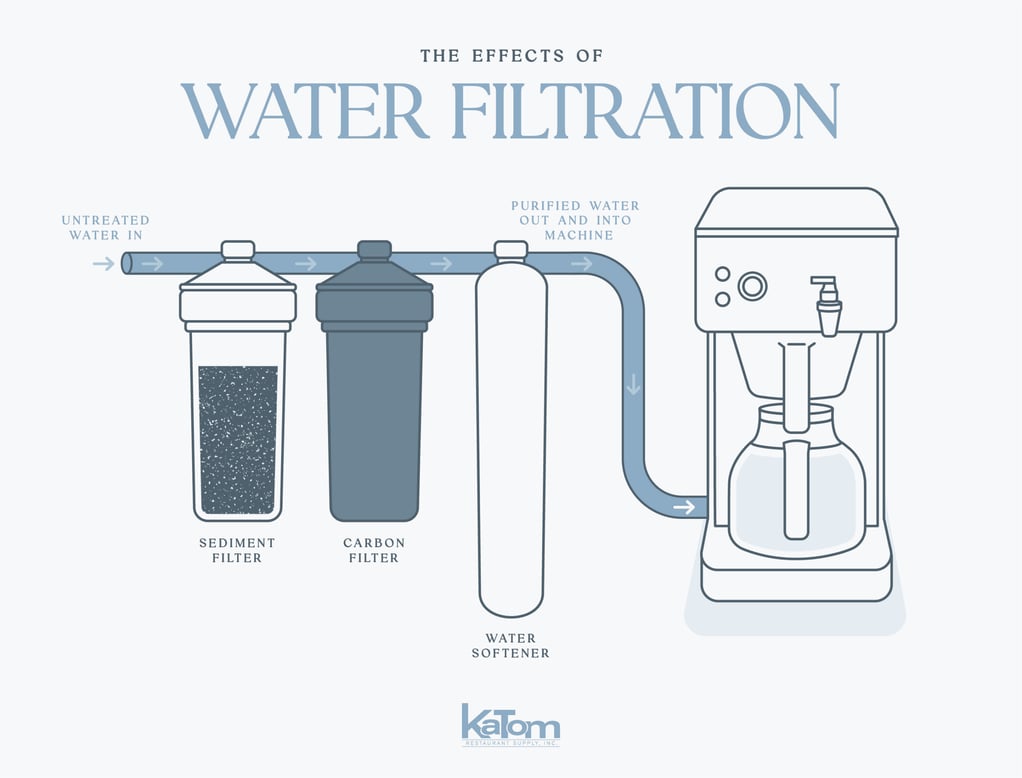
Once you understand how water quality is affecting your coffee and equipment, look at filtration and treatment options to help ensure a balanced water profile. Filtration removes or reduces certain substances in water. Water conditioning can change the way minerals behave or reduce hardness, while some systems combine multiple methods. The system should be selected according to your water test results, brewer requirements, and operation's needs.


The filter should match the brewer's flow requirements and the operation's volume. A cartridge's stated capacity is based on specific conditions, and its actual service life can vary with water quality and usage. Confirm that the selected system is compatible with the brewer, then follow the manufacturer's installation, flushing, and replacement instructions.
"Proper water filtration protects brewing equipment from mineral buildup and helps maintain long-term reliability." — Mark Tilson
Matching Treatment to Local Water Conditions
Water can contain different combinations of minerals, disinfectants, and sediment depending on the location. If you believe there's an issue with your water, use a water test kit or work with a qualified water-treatment supplier to assess the water quality, then take the necessary steps to clean or filter your water.
"Water treatment should match the local water conditions because every region presents different challenges for equipment and coffee quality." — Mark Tilson
Building Water Treatment Into Routine Maintenance
Water treatment works best as part of the brewer's regular care schedule. Use the following steps to keep the system on track:
- Establish a Water Baseline: Check the brewer's manual for acceptable water conditions, then test the supply at installation and keep the results on file.
- Track Filter Service: Record cartridge installation dates and usage. Replace cartridges according to the treatment system's schedule and rated capacity.
- Watch for Changes: White deposits near a spray head or hot-water outlet can indicate scale. Slower brew cycles, inconsistent batches, visible sediment, or new off flavors may warrant a water test and filter check.
- Clean the Brewer Regularly: Water treatment doesn't remove coffee oils or replace routine cleaning. Follow the brewer's cleaning and descaling instructions.
When to Call a Qualified Service Technician
Routine cleaning, filter changes, and water testing can help operators maintain a coffee program. While these practices can extend a machine's lifespan, repairs will eventually be needed. Any repairs involving electrical components, internal parts, or failed valves require qualified service.
Testing the water, selecting treatment for local conditions, and keeping to a maintenance schedule give operators a practical way to protect coffee flavor and brewer performance. These steps can also help catch water-related issues before they lead to more extensive service needs.
Proper water treatment lets the coffee flavors and extraction process reach their full potential. If the water is chemically flawed, it will compete with coffee flavors and alter extraction balance, creating a ceiling that no amount of grind adjustment or ratio tweaks can overcome.
"Once an issue involves electrical components, internal repairs, or failed valves, operators should call a qualified service technician." — Mark Tilson
