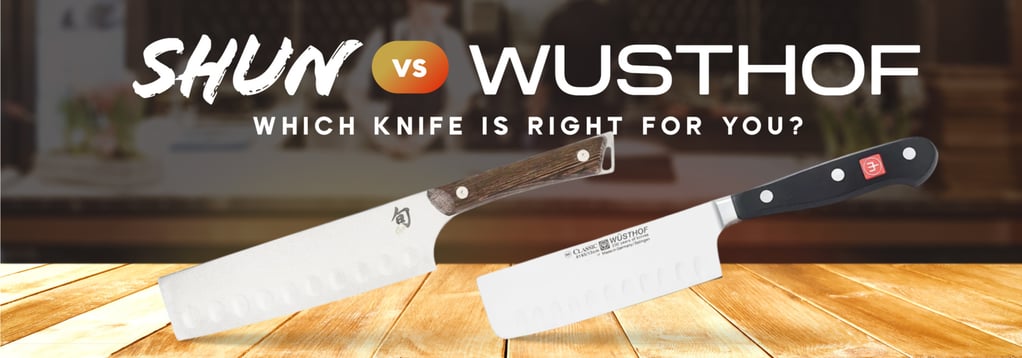
Shun vs. Wusthof
Shun and Wusthof, two of the most respected names in premium kitchen cutlery, are both known for distinct craftsmanship traditions. Shun produces Japanese-style knives with thin, sharp edges, while Wusthof specializes in heavier German blades built for force and durability. Both brands deliver professional performance, but they suit different cutting styles and user preferences.
Shun vs. Wusthof: Comparison Snapshot
| Category | Shun | Wusthof |
|---|---|---|
| Overview | Japanese knife brand known for layered steel, razor-thin edges, and precise cutting | German knife brand focused on durability, balanced weight, and long-lasting forged blades |
| Typical Price Range | $$ | $$ |
| Strengths | Sharpness, fine slicing performance, hand-crafted designs | Study construction, edge retention, wide series lineup for different skill levels |
| Weaknesses | Thinner blades may chip if used harshly or on dense foods or bones | Less precise cuts, heavier feel may be tiring for users who prefer lightweight knives |
| Best For | Chefs who prefer precision slicing, lightweight feel, and Japanese-style profiles | Chefs who want sturdy, versatile knives with Western-style weight and balance |
About Shun Knives
Shun is a Japanese knife brand rooted in Seki City, a region known for centuries of blade craftsmanship. Produced by skilled artisans since the early 1900s, Shun knives blend traditional handcrafting methods with modern materials to create precise, lightweight culinary tools. The brand's name comes from the Japanese concept of "shun ," which refers to the moment ingredients reach peak flavor.
Key Strengths:
- Made in Seki City, Japan
- VG-MAX and layered Damascus steel constructions
- Extremely sharp, thin blades designed for precision slicing
- Lightweight profiles with fine Japanese edge angles and traditional blade shapes
- Multiple series with varied handle shapes, materials, and aesthetics
About Wusthof Knives
After more than two centuries, Wusthof continues to craft its forged knives exclusively in Solingen, combing modern precision manufacturing with traditional European blade making. Wusthof focuses on durable, well-balanced knives designed for both professional and home cooks, with many collections built around their signature German steel.
Key Strengths:
- Made in Solingen, Germany
- Constructed of proprietary high-carbon stainless steel
- Robust, well-balanced designs
- Suits heavier chopping and Western cutting techniques
- Broad selection of handles and finishes
Key Differences Explained
Performance and Reliability
Both brands deliver dependable, high-quality performance, but each brand excels in different ways. Shun knives use harder Japanese steels, such as VG-MAX or SG2, which support exceptionally thin, razor-sharp edges and maintain sharpness longer. Their layered Damascus cladding also adds corrosion resistance while reducing drag. Wusthof knives rely on a softer German steel alloy and forged, full-tang construction that provides weight, stability, and long-term durability. Their slightly softer steel makes the edge easier to hone and maintain after forceful chopping and repetitive prep.
Design and Ease of Use
Shun and Wusthof differ notably in feel, balance, and overall design, giving cooks two distinct experiences. Shun knives follow traditional Japanese profiles, with lighter bodies, thinner blades, and tapered "wa" handles or contoured pakkawood grips. Their narrow edges and forward-balanced design streamline delicate slicing and detailed prep work. Wusthof knives, however, use classic German silhouettes, with thickened spines and study, triple-riveted handles that provide a secure, weighty grip for power cuts. Their ergonomic handles and balanced heft make them comfortable for longer prep sessions but may feel heavy to users not used to their weight.
Maintenance and Durability
Both knife brands are designed to last for decades with proper care, but their maintenance needs differ slightly due to their blade materials. Shun's harder Japanese steel holds an edge longer, but can it can easily chip if misused, so gentle handling and correct cutting technique are key. Wusthof's tougher, more impact-resistant German steel requires frequent honing and sharpening, but it's less likely to chip and generally easier for most users to sharpen at home .
Price and Value
Shun and Wusthof both sit in the premium knife category, but they deliver value in different ways. Shun knives emphasize handcrafted construction and high-performance steels, offering tools for cooks who prioritize precision. At around the same price , Wusthof provides long-term durability and easier day-to-day maintenance, making them ideal for heavy, repeated use.
Which Knife Brand Is Best for You?
Choosing between Shun and Wusthof depends on your cutting style, maintenance preferences, and the blade feel you want. Shun excels in fine, delicate cuts with lightweight blades, while Wusthof offers heavier, durable knives designed for long-term reliability. The right fit for you comes down to how much prep you do, your sharpening comfort level, and the demands of your kitchen.
| Scenario | Best Choice | Why |
|---|---|---|
| High-volume or heavy use | Wusthof | Forged blades, easier resharpening, long-term reliability |
| Fine prep work or precision slicing | Shun | Lightweight construction, sharp edges |
| Startup or small restaurant | Wusthof | Lower maintenance demands, all-purpose performance |
| Home use | Either | Choose based on preferred weight, balance, and blade style |
Shop Shun and Wusthof at KaTom
KaTom carries a wide selection of Shun and Wusthof knives for both professional and home cooks. Compare blade styles, handle designs, and series options to find the best knives for your kitchen.
