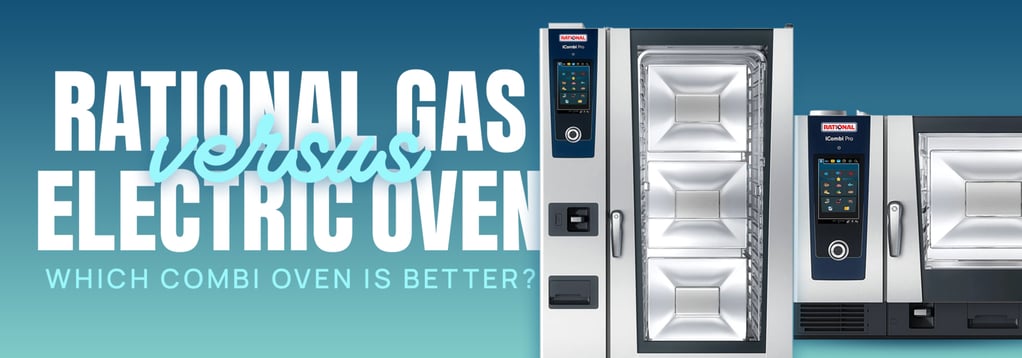
Combi ovens combine hot air and steam in one appliance, both eliminating the need for multiple units and reducing a kitchen's footprint. While electric and gas units differ in installation, cost, and environmental impact, they offer the same results. These units steam, roast, bake, grill, and poach without flavor transfer in a single appliance. Rational, a top-tier manufacturer of combi ovens, is known for its advanced cooking technology and consistent performance.
Electric vs. Gas Comparison Snapshot
Category
Electric
Gas
Overview
Electric combi ovens offer simple installation, consistent heat, and precise control
Gas combi ovens offer quick heat-up times and temperature recovery for high-volume production
Typical Price Range
$$$
$$$$
Strengths
Flexible installation supports placement in various kitchen layouts
Rapid heat up and quick temperature recovery
Considerations
Slow to heat, complete power dependence, requires high-voltage 3-phase electrical connection
High upfront cost, generates additional heat and humidity, safety concerns with a live flame
Best For
Small- to mid-volume kitchens; operations without gas lines
High-volume operations
About Rational
Founded in 1973 by Siegfried Meister in Germany, Rational AG produced the first combi steamer a few years later and began exclusively manufacturing combi steamers in 1978. Still headquartered in Germany, Rational AG focuses on its iCombi series, known for intelligent cooking technology and consistent results across a range of operations.
Rational Combi Oven Series Overview
Rational produces two combi oven lines: the iCombi Classic® and the iCombi Pro®. The Classic line delivers dependable units with manual controls, while the Pro series utilizes intelligent technology that automatically adjusts settings based on food type.
Rational Combi Ovens:
Offer precise humidity and temperature control
Feature intelligent cooking paths for consistent results
Include automated cleaning and descaling features
Key Strengths of Electric Combi Ovens:
Simple installation
Precise results
Lower ambient heat output
Key Strengths of Gas Combi Ovens:
High-volume power and heat recovery
Low running costs
Reliability under heavy use
Key Differences Explained
Performance and Reliability
Rational combi ovens deliver consistent results with 5-speed fan controls. Gas combi ovens heat up and recover quickly, while electric models offer precise control for delicate baking. Gas units perform well when roasting and are engineered for demanding, long-term performance. The iCombi Pro uses intelligent technology to monitor food and automatically adjust cooking conditions.
Design and Ease of Use
Rational combi ovens offer similar cooking technology but differ in installation and operation. Typically, electric combi ovens are simpler to install because they don't require a gas line or ventilation system. While both use the same cooking system, they vary in heat generation method, impact on kitchen temperature, and ventilation and maintenance requirements. Both options feature iCookingSuite, which automatically adjusts cooking settings.
Maintenance and Durability
Both models feature the iCareSystem, which provides automatic, tablet-based cleaning and descaling. Electric units are simpler to maintain since they don't produce soot buildup, while gas models include components that require more specialized service. With proper care and maintenance, both electric and gas combi ovens can last up to 15 years.
Price and Value
Electric combi ovens generally have a lower initial cost than gas, making them suitable for small or startup operations. While gas combi ovens offer quick, consistent heat-up and recovery times, their initial cost is higher. Over time, gas models offer strong long-term value because of energy efficiency and sustained performance.
Which Combi Oven Is Right for You?
Scenario
Best Choice
Why
High-Volume Operations
Gas
Handle high-volume batch cooking
Small / Startup Businesses
Electric
Lower initial cost
Heat-Up and Recover Speed
Gas
Quick heat-up and recovery during continuous use
Ease of Maintenance
Electric
Fewer components and simpler servicing
Shop Rational Gas & Electric Combi Ovens at KaTom
Explore KaTom to find Rational combi ovens or contact our foodservice equipment specialists to choose the best fit for your operation. Electric and gas units differ in installation and performance, so the right choice depends on your kitchen setup.