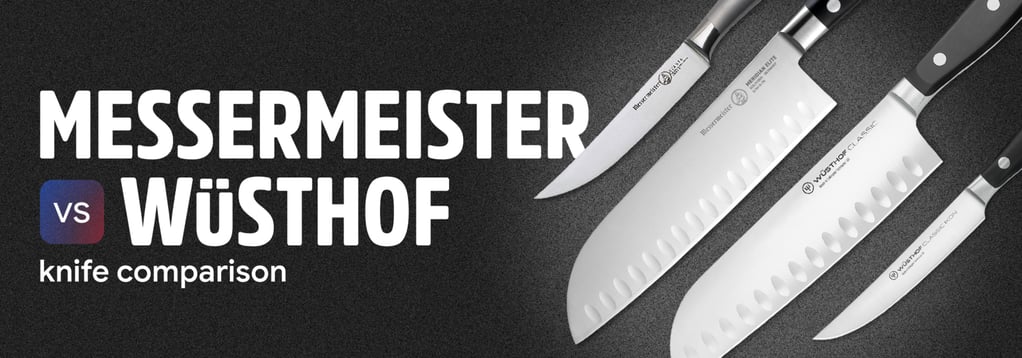
Both Messermeister and Wüsthof brands provide traditional German-made knives known for their quality and craftsmanship. While they differ in feel and design, varying in bolster and weight, they both offer strong value.
Messermeister vs. Wüsthof Comparison Snapshot
Category
Messermeister
Wüsthof
Overview
German-made knives known for quality, balance, and craftsmanship
German-made knives known for durability, strength, and traditional feel
Bernd and Debra Dressler founded DAMCO in 1981 and later launched the knife line Messermeister, which means "knife master" in German. The Dresslers' daughters, Chelcea and Kirsten, later stepped into leadership roles, making Messermeister the only women-owned and operated knife manufacturer of traditional, forged cutlery in the world. The brand is known for its hot-drop, hammer-forged German knives.
Key Strengths:
Traditional German craftsmanship
Innovative designs
Developed of Stealth chef's knife featuring a thinner, lighter design
About Wüsthof
Founded in 1814 in Solingen, Germany, Wüsthof continues to be a family-owned company. The brand established an American presence in the 1880s when it introduced the Classic series, which is still produced today. Wüsthof knives are forged in Solingen, reflecting the brand's quality and traditional craftsmanship.
Key Strengths:
Forged from a single piece of a proprietary high-carbon stainless steel blend
Full-tang construction
Longevity
Key Differences Explained
Performance and Reliability
Messermeister knives feature durable, handcrafted German construction, while the curved blade supports a rocking cut. Its Stealth model's blades are thin and agile for more refined cuts. Messermeister knives are primarily forged from a single piece of high-carbon stainless steel, ensuring durability. Wüsthof knives are reliable tools known for their longevity. Wüsthof knives feature a hardness between 53 and 58 HRC, delivering consistent cutting performance and long-lasting edge retention. Wüsthof knives may feel heavier because of their full-tang construction, which adds balance and stability.
Design and Ease of Use
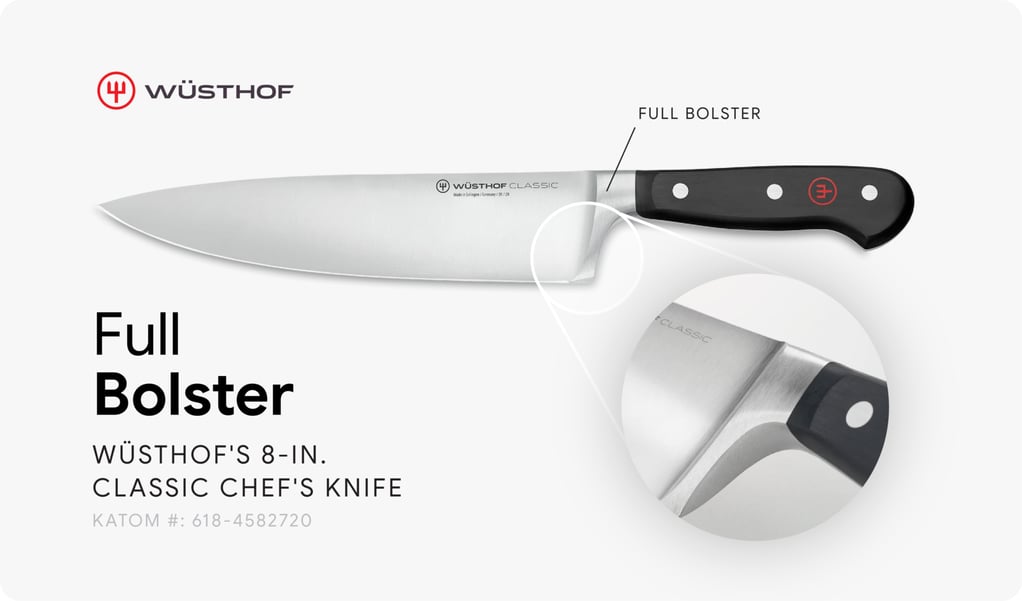
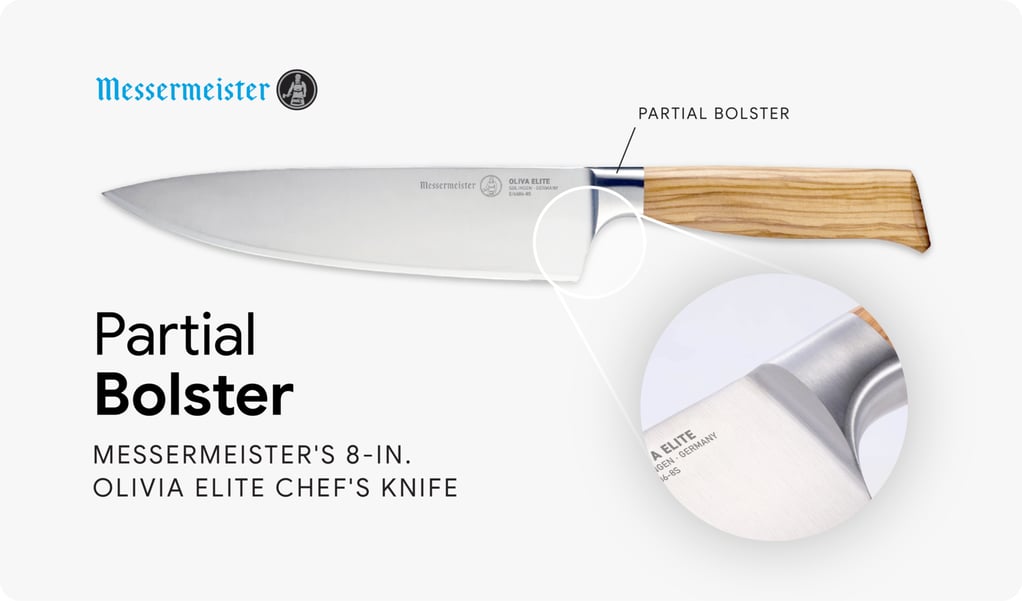
Messermeister produces forged and stamped knives. The stamped knives are often thinner, lighter, and more budget friendly. Many models feature bolsterless handles to enable the knife to be sharpened from heel to tip and provide a more forward-balanced feel. Some Wüsthof knives feature a full bolster that both acts as finger protection and adds a heavy feel. Combined with a full tang, this design enhances balance and strength. Though both brands produce durable knives designed for precise cutting, they differ in weight and feel, so the best fit comes down to personal preference.
Maintenance and Durability
Both Messermeister and Wüsthof use German steel, producing knives that are durable and resistant to chipping through heavy use. Both brands also offer forged, full-tang designs with synthetic handles, while Messermeister's Oliva Elite lines feature olive wood handles that are sturdy but require regular oiling. None of these knives should be placed in the dishwasher.
Price and Value
Although Messermeister and Wüsthof offer comparable, high-quality knives at similar price points, they differ in feel and design. Wüsthof emphasizes durability and brand recognition, while Messermeister is known for its balance and thinner blades, making it a comfortable choice for precise cutting.
Which Knife Brand Is Right for You?
Scenario
Best Choice
Why
High-Volume Operations
Either
Both brands produce well-built knives, but they differ slightly in priorities. Wüsthof provides a sturdy, traditional knife, while Messermeister prioritizes comfort and simple sharpening.
Small or Startup Operation
Either
Both Wüsthof and Messermeister are suited for small or startup kitchens, offering dependable performance for daily use. Each provides a reliable option for building a functional knife setup, making either brand a practical investment for new operations.
Ease of Maintenance
Messermeister
Partial bolster makes it simple to sharpen the full blade from heel to tip, requiring less effort over time
Heavy-Duty Prep Tasks
Wüsthof
Full bolster and slightly heavier build provide a sturdy feel for demanding cutting tasks
Shop Wüsthof at KaTom
Browse KaTom's selection of Wüsthof knives, sets, and accessories to find durable, quality options for your kitchen. Whether you're outfitting a new operation or upgrading current tools, you'll find competitive prices at KaTom.