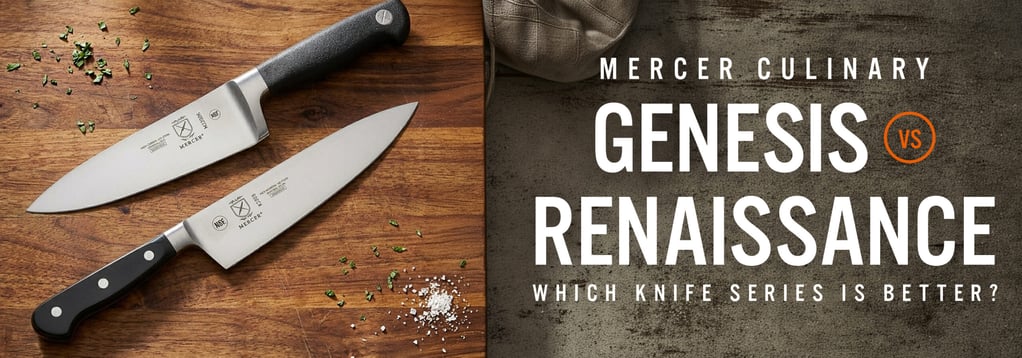
Genesis vs. Renaissance
Genesis® and Renaissance® are two knife lines forged by Mercer Culinary for professional prep and foodservice teams that need dependable cutlery at an affordable price. Both lineups use high-carbon German steel, NSF-certified construction, a 15-degree blade angle, and a 56 +/-1 HRC hardness rating, so the main difference comes down to handle design, knife feel, and sharpening needs.
Genesis vs. Renaissance: Comparison Snapshot
Genesis is a strong choice for operators who want a secure grip during fast-paced, repeated prep, while Renaissance suits chefs who prefer the heavier feel of traditional knives.
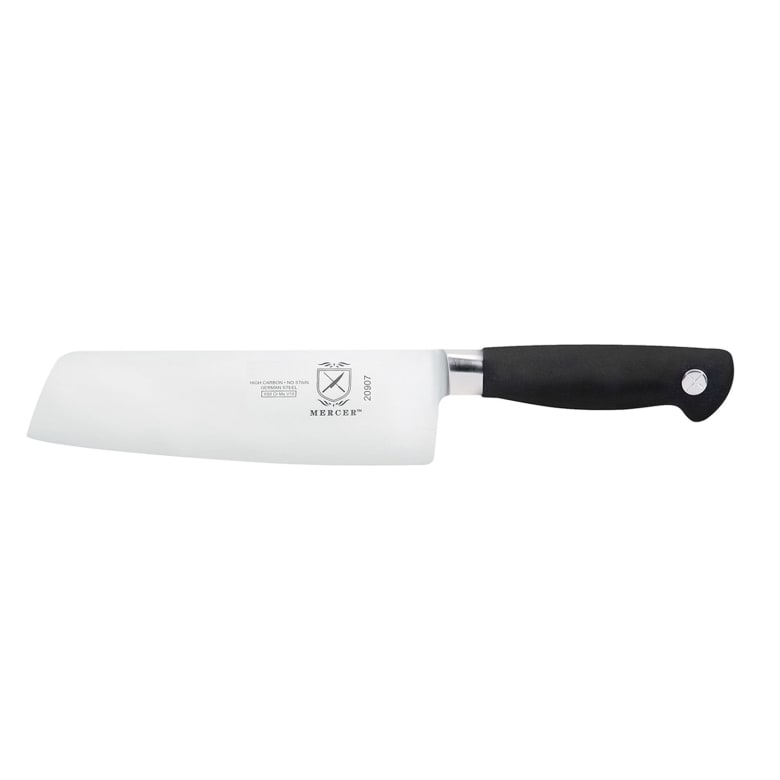
About Genesis
Genesis is a forged series built for lightweight use. Its high-carbon, no-stain steel resists rust and corrosion, and the blade’s precision-forged construction provides increased durability. The Santoprene® thermoplastic elastomer handles help ensure a secure, nonslip grip even when wet.
Key Features:
- Santoprene ergonomic handle with nonslip grip
- Taper-ground edge for honing, stability, and cutting efficiency
- Full bolster options offer complete finger protection and increased knife balance
About Renaissance
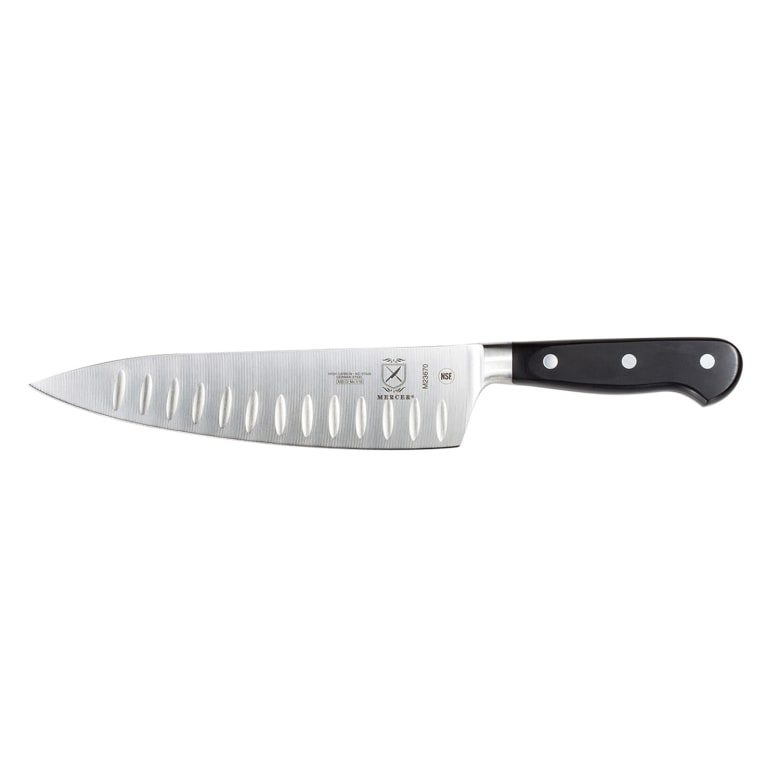
Renaissance knives are made of high-carbon German steel and feature one-piece, precision-forged construction with a full-tang design, meaning the steel extends the full length of the handle for optimal balance and durability. Taper-ground edges support added stability, easy honing, and long-lasting sharpness.
Key Features:
- Triple-riveted ergonomic Delrin® handle
- Rounded spine supports a comfortable grip
- Full tang runs the length of the handle for superior balance
Key Differences Explained
Handle Design and Grip
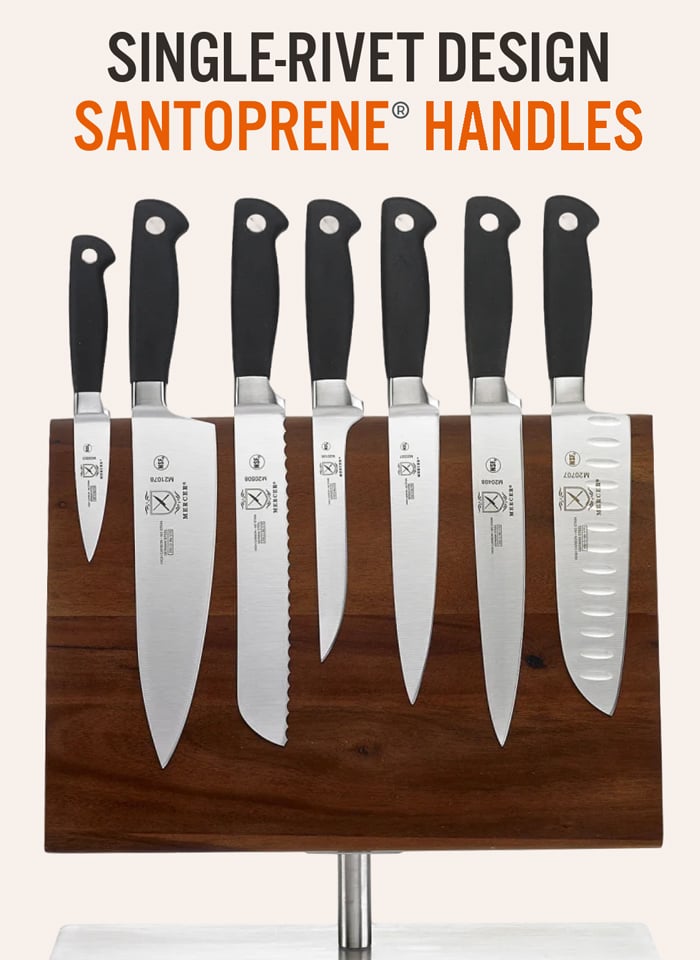
Genesis is the stronger choice for grip security, especially in wet or fast-paced prep environments. Its Santoprene handles are designed to provide a nonslip grip that helps users maintain control during repeated slicing and chopping.
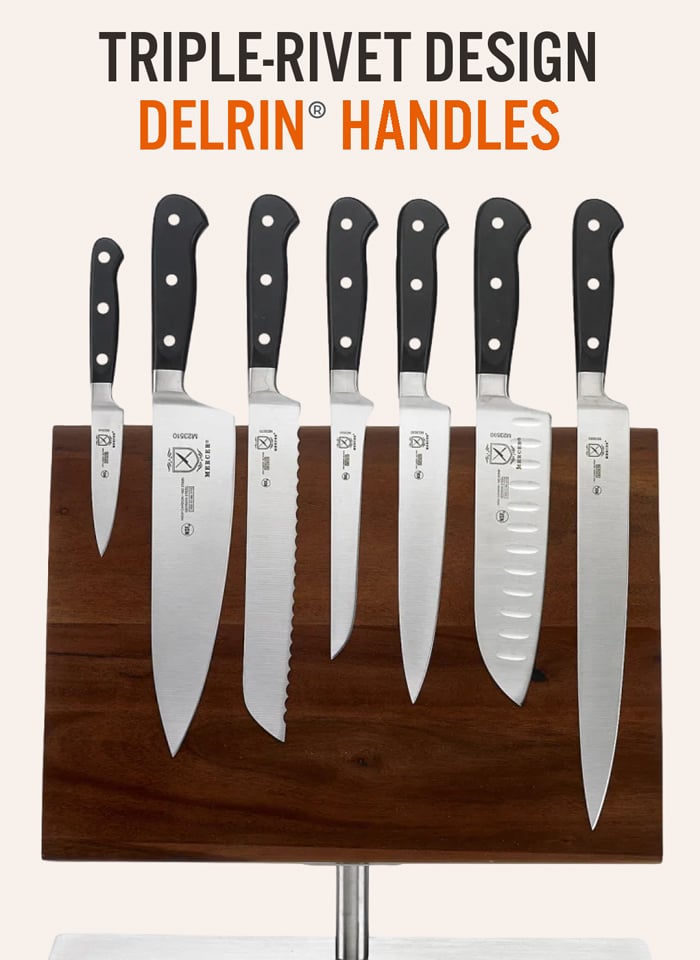
Renaissance uses an ergonomic Delrin handle with triple rivets and a full tang for balance and comfort. Although it doesn't provide the same grip as Santoprene, this handle is durable and gives the knife a polished, classic look.
Cutting Performance
Genesis and Renaissance are similar in blade performance, as both knives use high-carbon German steel, a 15-degree blade angle, and a 56 +/-1 HRC rating. Both also use taper-ground edges that support honing, stability, and cutting efficiency. The main difference is that Renaissance knives are generally heavier, which provides added strength that may be useful during heavy-duty prep. Genesis knives feature a lighter feel for fine slicing.
Sharpening and Maintenance
Renaissance knives’ shortened bolster exposes the full blade edge, enabling users to sharpen closer to the heel of the knife. This matters in kitchens that maintain knives frequently or rely on consistent edge geometry over time. Genesis uses a bolster that strengthens the knife, supports durability, and contributes to balance during cutting. Certain models feature a full bolster, which extends from the top to the bottom of the blade at its heel, acting as a shield between the blade and the handle.
Both Genesis and Renaissance require proper care to preserve edge performance and handle condition. Knives should be handwashed after each use, as heat and caustic soap from a dishwasher can dull edges, damage handles, and contribute to staining.
Price and Value
Since both knives sit at a similar price point, value will depend on the specific needs of the kitchen. Genesis is usually better for teams that prioritize grip, comfort, and daily utility, while Renaissance may be the better long-term choice for users who care more about a classic feel and easy sharpening.
Which Knife Is Best for You?
| Scenario | Best Choice | Why |
|---|---|---|
| Culinary School | Genesis | Ergonomic handle provides a comfortable grip fit for repeated practice |
| Fine Dining | Renaissance | Heavier feel and full-edge sharpening access suit precise prep work |
| General Daily Prep | Either | Durable forged construction supports consistent use |
Shop Mercer Culinary Genesis & Renaissance at KaTom
KaTom offers a wide selection of Genesis and Renaissance knives for foodservice operations seeking dependable cutlery. Check out KaTom's catalog to find reliable knives at the right price for your operation.
