Rooted in Maryville
Over the last three decades, DENSO has become an integral part of Blount County's DNA. The company's Maryville journey commenced in 1988, when DENSO Manufacturing Tennessee was established to localize key automotive components. By 1990, instrument-cluster production was under way, and that fall, as starters, alternators, and meters began to roll off the assembly line, DENSO held its Maryville grand opening.
Today, DENSO Maryville operates a multi-building campus covering more than 2.6 million square feet and producing a range of automotive parts and electronic systems for hybrid and electric vehicles. This work has helped make DENSO Maryville one of the region's most significant employers and the largest employer in Blount County.
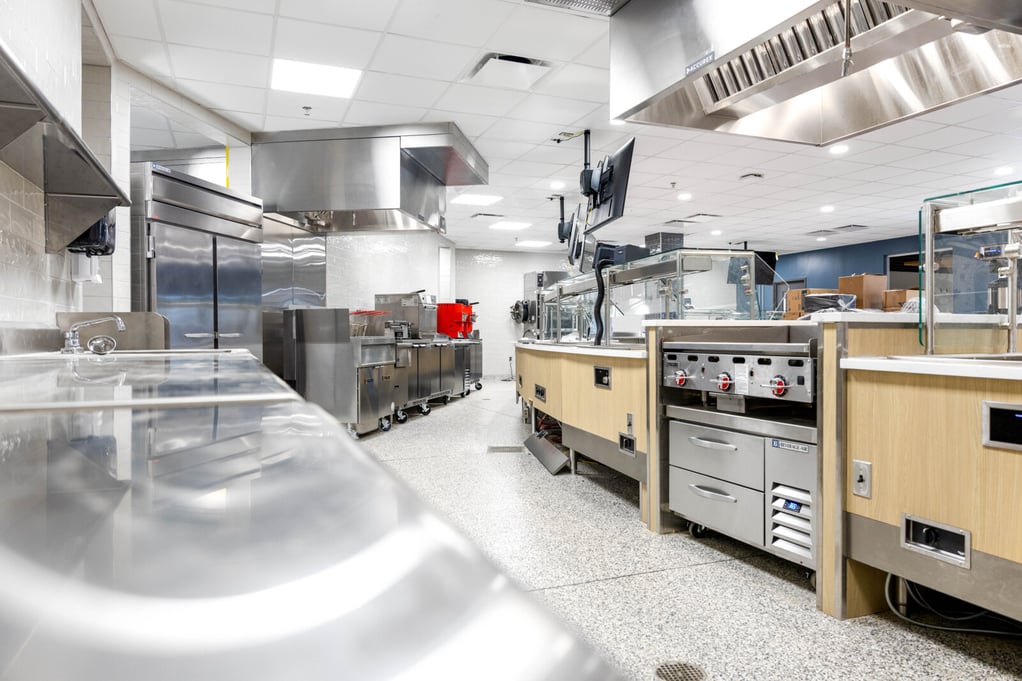
Feeding a workforce of that scale means its cafeterias need to function like mission control for daily life on campus. After nearly 30 years of use, the first of DENSO's three cafeterias was slated to undergo renovations and expansions to better support its ever-growing labor force.
After suffering a few setbacks and headaches during this process, DENSO had a list of do's and don'ts when it came time to begin renovations on the company's second cafeteria located in the 202 plant.
KaTom Comes on Board
According to Melissa Burns, Senior Specialist - General Administration of DENSO Manufacturing Tennessee, DENSO's first cafeteria renovation left concerns. So, when DENSO began constructing its second cafeteria, it sought a more personal touch.
"I felt that the attention to detail [from KaTom] was 1,000 percent better than our last project," Burns told KaTom. "We still have problems there that have not been fixed."
The shift to KaTom started with a recommendation from a vendor DENSO had worked with previously. When DENSO partnered with KaTom on the second cafeteria, KaTom stepped into the design process, collaborating on the layout and specifications. Strategic Accounts Manager Harrison Genseal joined the project to focus on integrating equipment selections with the evolving design, ensuring every piece fit the plan. The second cafeteria's equipment was selected for reliability, warranty coverage, and the way it supported a consistent workflow, even during catering and holiday meals.
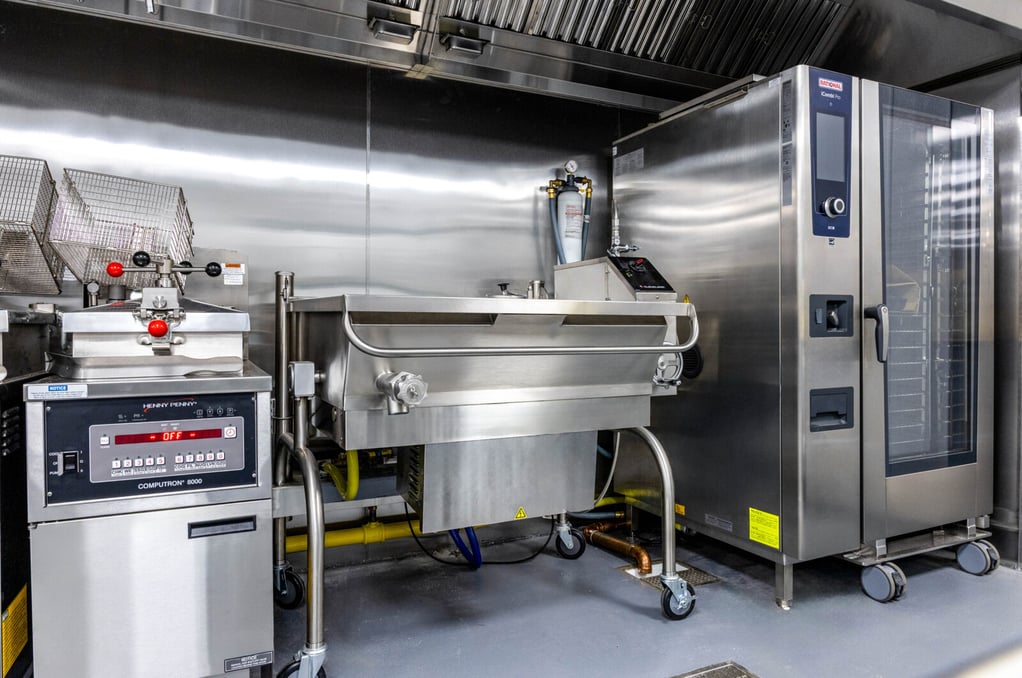
Genseal laid out side-by-side options: initial price versus life cycle comparisons, accessories that cut down on labor, and small upgrades that paid off during peak service. This approach led to acquiring a roll-in rack setup on a combi oven with an added backup rack for holiday crowds; these simple changes were made to reduce pan transfers and keep the line moving when hundreds of meals (even thousands during holidays) had to be served on time.
"You don't have to have this, but let me show you the benefits of having it," Burns remembers Genseal saying. "And when he shows it, it's a rack that rolls right into the combi oven where you don't have to keep transferring [pans], and I'm like, 'I'm gonna have it.'"
A Shared East Tennessee Vision
Proximity turned out to be beneficial as the project continued to unfold. With KaTom being a local company, this meant more site time and fewer surprises. No one had to trade educated guesswork over email; instead, Genseal was in the room resolving questions about hoods, spacing, and other concerns.
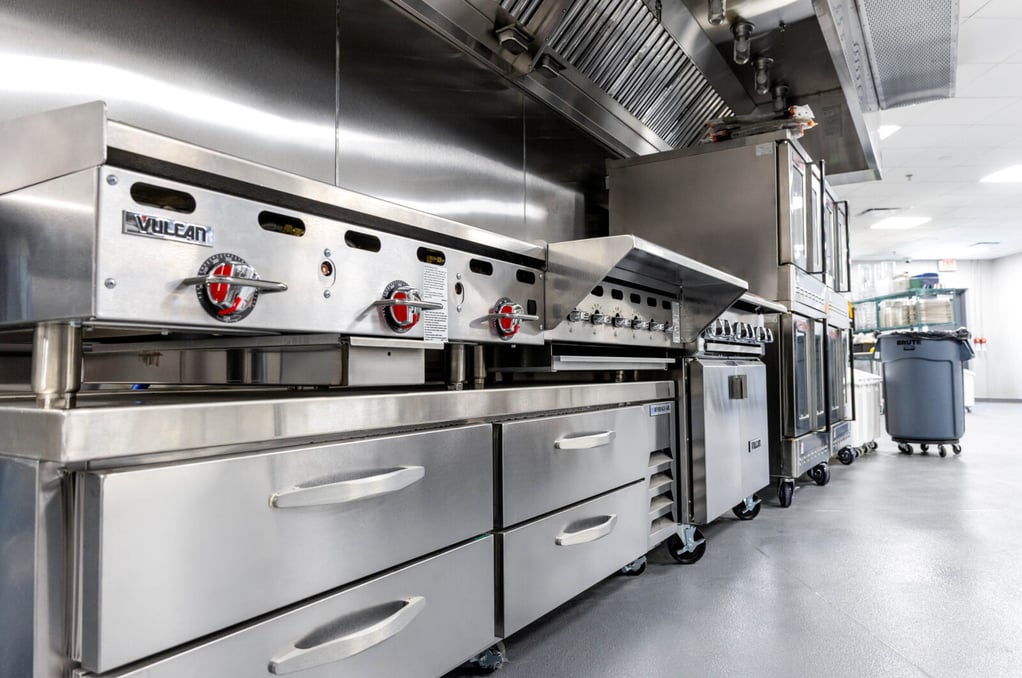
"We had weekly construction meetings. And almost every single one, [Harrison's] here… Harrison would tell me, 'Before you even see it, we've got this,'" Burns said of equipment arriving with dings or scratches. "He was already on it before we would even get to view it or say, 'Hey, there's an issue.'"
The cafeterias reflect DENSO and KaTom's people-first approach and how the company shows up for its employees; that means planning for a large workforce and investing in everyday experiences to streamline workflow. DENSO's recent 35-year Maryville milestone and its community-minded projects prove that this ethos expands beyond the kitchen.
DENSO's priorities are easy to spot in its cafeterias: preservation of back-of-house capacity, simplified movement, and consistent service. For the most part, the second cafeteria will feature the same menu and equipment specifications as the first, so teams can cover for each other without missing a beat.
"We rotate staff. If somebody's sick, our staff needs to be able to go from one kitchen to the other and still know how to cook in it," Burns said.
In a community where DENSO has long been a major employer and continues to invest in training, clean energy, and shared spaces, these cafeterias are proof of that commitment. They underline the simple idea that foodservice is another way to care for people.
Building Toward Cafeteria No. 3
The second cafeteria delivered more than just a finished room; it was both a kitchen that staff could step seamlessly into work and the beginnings of a playbook for a remodel on the third and final cafeteria. With KaTom again involved at the design table, the opening for the next cafeteria feels less like a new project and more like a familiar, finely tuned operation.
Burns described Genseal as an extra set of hands on their side: available, informed, and in the room when it mattered. What fully earned DENSO's trust wasn't a single moment but a pattern of effectiveness. Burns remains confident KaTom and DENSO will continue to work in lockstep throughout the partnership.
"KaTom has been even more extensive in the next cafeteria. They’ve already helped us completely, even with the plans, the layouts…everything."