Does a Commercial Dishwasher Require a Hood?
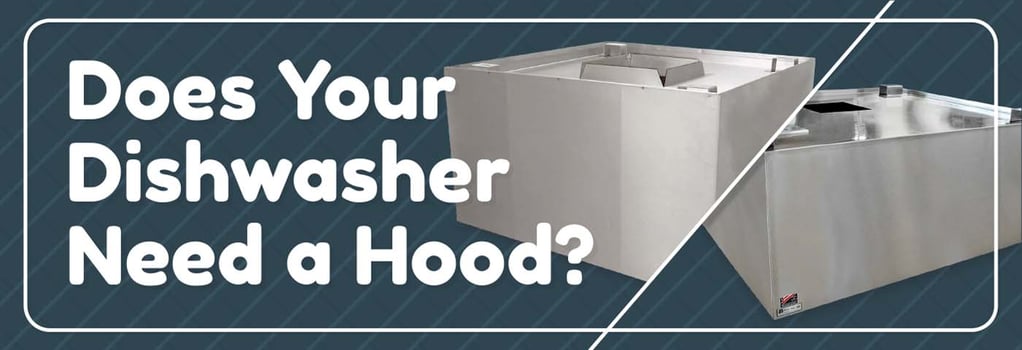
Commercial dishwasher hoods aren't legally required in most jurisdictions, but that doesn't necessarily mean you don't need one. The high temperatures utilized in a commercial dishwasher produce copious amounts of steam and heat that are immediately vented into your kitchen when the door is opened. Not only does this create an uncomfortable environment for those working in the kitchen, it stresses your HVAC system and drives up a significant utility bill every month.
Depending on the conditions in your kitchen, the frequency with which you use your dishwasher, and the style of dishwasher you own, you may well need a hood to get rid of all that steam and heat. For more information on hoods, consult our hoods and accessories buyers' guide.
Commercial Dishwasher Hoods: Table of Contents
- What type of hood is required over a commercial dishwasher?
- How do condensate hoods work?
- Do high-temp dishwashers need a hood?
- How do ventless dishwashers work?
What Type of Hood Is Required Over a Commercial Dishwasher?
How Does a Condensate Hood Work?
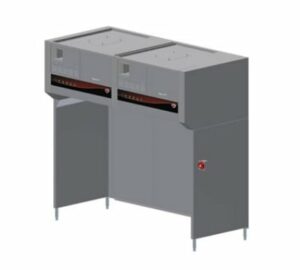
Condensate hoods utilize fans to pull in heat, steam, and odor, passing these undesirable elements in the air to an exhaust port (right below the main port) on the outside of the building. To compensate for the air being expelled from the building, condensate hoods must bring in make-up air to relieve negative pressure. This process cycles fresh air into your kitchen, creating a more pleasant atmosphere and preventing damage that could be caused by excess heat or moisture.
Some condensate hoods are ventless. These units circulate warm, moist air within the equipment itself then release clean air back into the room. Most commonly, they condense water vapor out of the air back into liquid water, which can then be drained away. Ventless hoods are easier to install because there's no ductwork to run outside the building, but they generally don't remove heat and moisture as quickly as a ducted hood.
Do High-temperature Dishwashers Need a Hood?
If they're not required by law, do operators really need to install a condensate hood? Even the cheaper Type II hoods can be a significant expense, so kitchen managers need to know their purchase is going to have some concrete benefits to their business. High-temperature dishwashers can run dozens of cycles an hour, with each cycle releasing a cloud of heat and water vapor. This can generate a sauna effect in your kitchen, creating major problems for your staff. Kitchens are already hot, given the cooking equipment constantly running, the hurried people moving around, and the cramped quarters, and the steam of a dishwasher can make it miserable.
Adding ventilation can make the environment significantly more comfortable, improving your staff's output and reducing your HVAC costs.
HVAC systems account for about 30 percent of the energy consumed by restaurants.3 When you consider the power needed to cook commercial volumes of food, this statistic is even more impressive. Even next to your convection ovens, wok ranges, and deep fryers, the HVAC is a power hog, so adding moisture and heat to the kitchen from a dishwasher only makes your HVAC work harder and cost more. Condensate hoods can reduce the load on your HVAC system by directly removing much of the heat and moisture before it can circulate around the building.
The size and configuration of your kitchen determines whether or not you'll need a condensate hood over your dishwasher. High ceilings give steam room to dissipate, while low ceilings keep the heat and moisture in the work area. Some operators solve this problem by moving the dishwasher away from the rest of the kitchen, sterilizing wares in a different room altogether, but this adds steps between cleaning and serving. Moving the dishwasher to a better ventilated area is a good temporary solution if you can't add a condensate hood, but it's not the only option. Ventless dishwashers offer a different way to deal with that excess steam.
What is a Ventless Dishwasher?
Ventless dishwashers collect the heat released by the prior sanitizing cycle and use it to heat the water for the next sanitizing cycle. Instead of steam and heat being released into your kitchen, ventless dishwashers reuse heat to make the next batch of high-temperature sanitizing water hotter. This both protects you from excessive kitchen heat and saves money by reducing the work your booster heater will have to do.4 The extra step does slow down the warewashing cycle slightly, but the savings can be well worth it. Check out our Hobart ventless dishwasher explainer for more information.
References
- Type 1 vs Type 2 Hoods. Duravent. Accessed November 2021.
- Dishwasher Hood Requirements. Chef's Deal. Accessed August 2023.
- Guidance on Demand-Controlled Kitchen Ventilation. Energy.gov. Accessed November 2021.
- Hobart Advansys Dishwashers PDF. Hobart. Accessed November 2021.
